The OSINT factor in Hamas’ operational success and Israel’s intelligence failure
December 5, 2023 1 Comment
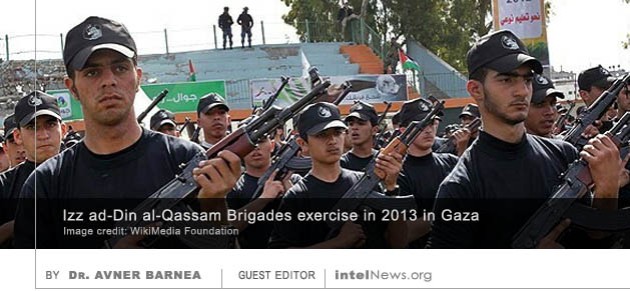 IT HAS BECOME CLEAR that Hamas had up-to-date intelligence on Israeli targets prior to the attack on October 7, 2023, the largest and most devastating terrorist attack in Israel’s history. Hamas did not have access to clandestine information sources but rather relied on open-source intelligence (OSINT) to understand the structure and weaknesses of Israel’s defense system along the border fence. In addition to publicly available maps, Hamas meticulously gathered online intelligence about specific sites within the Israeli communities near the Gaza Strip.
It is also possible that some of the intelligence came from human intelligence (HUMINT) sources, largely through Gazan workers who were employed in Israel. Moreover, Hamas had access to constant Israeli media broadcasts, which supplied them with invaluable intelligence on the border communities and adjacent military facilities, as well as on communities that were located further to the north and east. Although the Israeli state exercises censorship in the  interests of national security, the public’s ‘right to know’ purview is substantial. Thus, significant amounts of information are available online.
In assessing the behavior of Hamas in recent years, one can observe that it did not act as a terrorist group for quite some time. Rather, it operated as a government organization, while monitoring its enemy and waiting patiently for an opportune moment to attack. Simultaneously, Hamas utilized disinformation tools to conceal its attack plans. It trained its fighters within commando units that employed information effectively and relied on actionable intelligence, rather than chance. This can be observed from interrogations of Hamas members who were detained by Israeli authorities after October 7. In one example, Hamas used detailed maps of Israeli communities near the Gaza border, which are available on Google Earth, to plan its attacks of October 7. Printouts of these maps were found among the belongings of Hamas assailants that were killed during the attacks.
Some in Israel are now advocating for increased protection of OSINT, particularly for Israeli sites related to security, including civilian first-response units, defense systems guarding settlements, and civil technological assets. However, implementing such measures within the current framework of Israel’s open society seems challenging. Despite the known importance of OSINT to Hamas and its potential risk to Israel’s security, significant changes in this regard may not occur, as they could impact the country’s democratic values. However, it is still possible to improve the quality of security censorship regarding sensitive civilian information that can be used by adversaries. Such moves would include protecting databases, limiting information relating to the addresses of senior officials, or putting in place stricter policies on the movement of Gazan workers in Israel.
Contrary to Hamas’, Israel’s OSINT systems underperformed in the run-up to the October 7 attacks. That was so especially after the central OSINT unit of  the Israeli Military Intelligence was dissolved, for reasons that remain to be investigated. CNN was among many news outlets that have revealed how Hamas advertised its military drills on social media, but somehow Israeli intelligence failed to pay attention to them.
When Hamas openly declared its intention to attack communities near the Gaza border, and trained its units for that purpose, the Israeli intelligence community, including the IMI and the Israel Security Agency (ISA), underestimated its real attack capabilities based on OSINT materials. This miscalculation stemmed from incorrectly assessing Hamas’s capabilities and overestimating the Israel Defense Forces’ ability to swiftly respond and prevent the attack on civil and military targets. Unfortunately, this assessment proved to be a significant mistake.
The effective use of OSINT lies at the heart of Hamas’ operational plan to attack simultaneously several Israeli targets and to cause extensive damage. It appears that Hamas was able to utilize the OSINT factor to its maximum extent, thus adding significant value to the success of the attack.
► Author: Dr. Avner Barnea | Date: 05 December 2023 | Permalink
Dr. Avner Barnea is research fellow at the National Security Studies Center of the University of Haifa in Israel. He served as a senior officer in the Israel Security Agency (ISA). He is the author of We Never Expected That: A Comparative Study of Failures in National and Business Intelligence (Lexington Books, 2021).











 intelNews.org
Researchers uncover secretive Russian spy unit by studying its commemorative badges
July 21, 2025 by Joseph Fitsanakis 2 Comments
Earlier this month, CheckFirst published its latest report titled “OSINT & Phaleristics: Unveiling FSB’s 16th Center SIGINT Capabilities”. The 36-page report focuses on the study of Russian government-issued commemorative badges—also known as challenge coins—relating to Center 16 (16-й Центр). Also known as Military Unit 71330, Center 16 is a secretive SIGINT unit that houses most of the cyber espionage capabilities of Russia’s Federal Security Service (FSB).
Challenge coins are custom-made medallions given by military, intelligence, and government agencies to recognize service, commemorate achievements, or build morale. Originating in the United States military during World War I, and popularized during the Vietnam War, challenge coins are routinely exchanged in ceremonies or offered to personnel as tokens of camaraderie and loyalty within a specific unit or mission.
Often regarded as collectors’ items, challenge coins from various agencies are often resold on websites such as eBay, or displayed online on websites maintained by private collectors. CheckFirst researchers tracked down several versions of Center 16 challenge coins found on a variety of publicly available websites, as well as on the websites of Russian challenge coin manufacturers, such as GosZnak, SpetsZnak, or Breget.
Based on this OSINT methodology, CheckFirst researchers were able to identify 10 distinct directorates within Center 16, which specialize on various aspects of defensive and offensive cyber espionage. Previously only a single Center 16 directorate had been identified in the unclassified domain. Moreover, by examining geographic indicators found on several of challenge coins, such as maps or coordinates, CheckFirst researchers were able to partly map out the geographic structure of Center 16, locating nearly a dozen interception facilities throughout Russia.
► Author: Joseph Fitsanakis | Date: 21 July 2025 | Permalink
Filed under Expert news and commentary on intelligence, espionage, spies and spying Tagged with challenge coins, commemorative badges, cyberespionage, Finland, FSB, FSB Center 16, News, OSINT, Russia, SIGINT