News you may have missed #539

Milt Bearden

Milt Bearden

By IAN ALLEN | intelNews.org |
►►Former CIA officer urges US-Pakistan reconciliation. During the 1980s, CIA officer Milt Bearden managed the CIA’s covert assistance to the Mujahedeen, who were fighting the Soviet army in Afghanistan. This means Bearden was dealing with Pakistan’s Inter-Services Intelligence directorate (ISI) on an almost daily basis. He has now written an article for Foreign Policy journal, in which he advises CIA and ISI officials to “cut through the shrillness, the schoolyard taunts that characterize […] the current feud between their services; decide on what is worth fixing; agree on important common goals; and get to work”. He also reminds policymakers in Washington that America’s “influence in the Indian Ocean is slipping as China and India flex their growing economic muscle”, and that the US needs Pakistan’s assistance to remain relevant in that part of the world. ►►Pakistan spy director comes to US following aid cut. Meanwhile, Washington’s decision to withhold nearly a billion dollars in annual military aid to Pakistan has shaken up Islamabad. The Associated Press reports that high-level US-Pakistan meetings are quickly “unfolding”. One such meeting involves ISI’s fiery Director, Lt. Gen. Ahmed Shuja Pasha, who just made an emergency visit to Washington, reportedly “for talks”. Pakistani officials insist, however, that “the trip was planned for some time”. Sure. In case you are wondering, Pasha’s visit went “very well“, according to both US and Pakistani officials. ►►Secret CIA site in Somalia revealed. While most intelligence observers are concerned with the latest US-Pakistan spat, Jeremy Scahill, one of America’s most tireless investigative reporters, has revealed that the CIA maintains a large secret site in Somalia. Read more of this post

News you may have missed #537 (bin Laden edition)

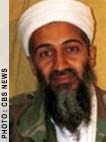
Osama bin Laden

Osama bin Laden

By IAN ALLEN | intelNews.org |
►►Ex-CIA chief speaks on al-Qaida after Osama. The killing of Osama bin Laden will force al-Qaeda to limit its ambitions and scope of its operations, according to former CIA and NSA director Michael Hayden. General Hayden’s comments on numerous issues tend to make the news almost every other week. In his latest interview, with The Associated Press, Hayden expressed the opinion that al-Qaeda’s “future attacks are going to be more numerous but less complex, less well organized, less likely to succeed, and less lethal if they do succeed”. ►►CIA organized fake vaccination drive to get bin Laden family DNA. Speaking of Osama bin Laden, British newspaper The Guardian reported earlier this week that the CIA tried to collect DNA evidence on the late al-Qaeda founder by running a phony vaccination program in Abbottabad, the quiet Pakistani town where bin Laden was believed to be hiding along with his family. But Shakil Afridi, the Pakistani doctor who administered the vaccination program, failed to get access to bin Laden’s family DNA, even though he managed to enter the family’s compound, said the paper. It is worth noting that, as soon as Pakistani authorities learned of the fake vaccination program, they arrested Dr Afridi for collaborating with a foreign intelligence agency. ►►CIA moves to protect key analyst in bin Laden raid. Bin Laden may be dead, but it seems that he still haunts the CIA. The Agency had to move one of its senior analysts undercover this week, after he was identified in a photograph that was published by US media, following the Obama administrator’s celebratory announcement of the al-Qaeda leader’s assassination. The photo showed President Obama and other national security officials gathered in the White House situation room on the night of the bin Laden raid. Most media outlets have been referring to the analyst by his middle name, John.

News you may have missed #528

News you may have missed #524 (analysis edition)

  • US intelligence shift shows change in Afghan war aims. American military intelligence officers were scrambling a year ago to collect and analyze the social, economic and tribal ins and outs of each valley and hamlet in Afghanistan. But the gradual scaling back of US operations (and ambitions) in Afghanistan is driving a shift away from that labor-intensive attention to detail. Now targeting insurgent leaders and their close support networks is seen as an important part of the US exit strategy (some would call this settling old scores before the US leaves the area).
  • Ex-CIA officer questions West’s motives in Syria. The European and American intervention in Syria is designed to harm Iran and to protect Israel and Lebanese Christians, not Syrian people, according to Robert Baer, a retired CIA officer with direct experience in the region.
  • Will new CIA director rein in the drone war? When General David Petraeus takes heads to the CIA, he’ll put “relentless pressure” against al-Qaida, he told senators last week. But in a rare public discussion of the CIA’s drone war in Afghanistan and Pakistan, Petraeus suggested it may not be his first counterterrorism option.

News you may have missed #523

  • Archbishop of Canterbury branded ‘subversive’ by MI5. A senior officer of MI5, Britain’s domestic intelligence agency, labeled Rowan Williams ‘a subversive’ in the 1980s, over his involvement with a group of leftwing campaigners.
  • Pakistan ambassador defends arrest of bin Laden informants. Pakistan Ambassador to the United States Husain Haqqani has defended his country’s decision to round up more than 30 people, some of whom may have helped US intelligence track down Osama bin Laden. Meanwhile, the US government is still bankrolling the Pakistani intelligence services. No changes there.
  • US weighs harsher penalties in wake of CIA/FBI hacker attacks. Under a new White House proposal, the 10-year maximum sentence for potentially endangering national security would double, and so would the five-year sentence for computer thefts up to $5,000. Also, the one year maximum for accessing a government computer —either to deface it or download an unimportant file— could become a three-year sentence.

News you may have missed #519

  • Australian ex-spy wins right to compensation. The former spy, known only as FXWZ, worked for the Australian Security Intelligence Organisation for almost 15 years before leaving it in 1979. Now at 67, he has won the right to compensation claiming that his work for ASIO induced a mental disorder.
  • Eritrea releases UK citizens detained for espionage. The four British men, two of whom are former Royal Marines, were arrested in Eritrea last December on suspicion of espionage, after they were caught in possession of arms including 18 different types of snipers, ammunition and night vision equipment. They have been released after a months-long diplomatic row between Eritrea and Britain.
  • Pakistan to deport US national suspected of spying. Twenty-seven year-old Matthew Craig Barrett has been arrested for allegedly scouting nuclear facilities near the Pakistani capital Islamabad, and is expected to be deported soon.

News you may have missed #518

  • Pakistan to intensify intel collaboration with China. Pakistan has assured China of full co-operation in providing intelligence about the activities of the East Turkestan Islamic Movement (ETIM), which aims to separate Xinjiang, an autonomous region, from China.
  • US spy community launches ‘Analytical Olympics’. This new competition for analysts to see who makes the best predictions, was outlined in a recent report by the US National Research Council, which suggests practical ways to apply insights from the behavioral and social sciences to the intelligence community.
  • UAE mercenaries say they have no Blackwater contacts. Michael Roumi, president of Reflex Responses, a company training foreign mercenary troops for the United Arab Emirates, has told the US State Department and members of Congress that Erik Prince, the former head of the security firm Blackwater Worldwide, plays no role in operating the business.

US SEALs ‘pocket guide’ left behind in bin Laden hideout

Osama bin Laden

Osama bin Laden

By JOSEPH FITSANAKIS | intelNews.org |
A document provided to members of the US Navy SEALs who assassinated Osama bin Laden, was left behind in bin Laden’s compound by mistake, and has reportedly been accessed by The London Times. It contains remarkably detailed descriptions of the compound’s occupants and frequent visitors, including their ages and legal names, all the way down to bin Laden’s wives, children and grandchildren. It also details the approximate timing of the arrival of each of the compound’s residents, as well as the precise location of their bedrooms and living quarters. Furthermore, the guidebook discusses the possibility that bin Laden’s youngest wife, Amal Ahmed Abdel-Fatah al-Sada, who also lived in the compound, may have given birth to twins in recent years. Remarkably, the pocket guide, which must have been carried by every member of the SEALs team that attacked the al-Qaeda founder’s hideout in Abbottabad, Pakistan, earlier this month, describes even bin Laden’s usual clothing preferences. It states that he “[a]lways wears light-colored shawal kameez with a dark vest” and that he “occasionally wears light-colored prayer cap”. Read more of this post

News you may have missed #513 (Pakistan edition)

  • Pakistan spy chief tells US to end drone strikes. Ahmed Shuja Pasha, the outgoing director of Pakistan’s Inter-Services Intelligence (ISI), has reportedly told CIA Deputy Director Michael Morell that Pakistan “will be forced to respond” if the US does not stop its drone strikes in the country.
  • CIA-ISI back in business. Overall, however, the meeting between Pasha and Morell was focused on mending CIA-ISI relations, according to Pakistan’s leading newspaper The Nation.
  • Leaked cables reveal joint US-Pakistan missions. US Special Forces were embedded with Pakistani troops on intelligence-gathering missions by 2009, confidential American diplomatic cables showed, a revelation that could hurt the Pakistani military’s public image. The Pakistani government has denied the reports.

News you may have missed #510 (bin Laden edition)

  • Europe says US slow in sharing bin Laden intel. European security officials have lots of questions about the intelligence being analyzed from Osama bin Laden’s compound in Pakistan, but so far they have seen very little of it, they say.
  • Did Pakistani official lead US to bin Laden? There are rumors in Pakistan that the CIA was tipped off about the location of bin Laden’s hideout from a walk-in informant at the US Embassy in Islamabad.
  • CIA interrogates bin Laden’s wives. US intelligence officials have interrogated the three wives of Osama Bin Laden who were left behind in his compound after Navy Seals shot dead the al-Qaeda leader. The women, Amal Ahmed Abdel-Fatah al-Sada, of Yemen, and Khairiah Sabar and Siham Sabar, both of Saudi Arabia, were apparently “hostile” and uncooperative during the interrogations

News you may have missed #508

  • US not to withdraw Pakistan CIA chief. The US has said it will not withdraw the CIA station chief in Pakistan, despite his name being leaked to local media last week. But officials quoted by US media said the name published in Pakistani news outlets was spelled incorrectly.
  • CIA, not Pentagon, ran bin Laden operation. Has anyone noticed that CIA Director Leon Panetta has said a lot more about the Navy commandos’ killing of Osama bin Laden than has the Pentagon chief? The reason Defense Secretary Robert Gates has said exactly nothing about the raid is that the CIA, not the Pentagon, ran the operation.
  • Spy vs. spy in China. Interesting summary of the case of Glenn Shriver, an American who was arrested last year for accepting $70,000 from Chinese spies as he attempted to secure jobs with the CIA and US Foreign Service that would have allowed him to expose US government secrets.

News you may have missed #507

  • Pakistani media reveal name of CIA station chief. Mark Carlton, the purported CIA station chief in Islamabad, was named by a Pakistani newspaper and a private television news network over the weekend, the second holder of that post in less than a year to have his cover blown by the media.
  • How an immigrant from Taiwan came to spy for China. Well-researched article on Tai Shen Kuo, a Taiwanese-born American citizen who is serving time in an Arizona prison for spying on the US for China.
  • Domestic surveillance grew in US in 2010. The level of domestic US intelligence surveillance activity in 2010 increased from the year before, according to a new Justice Department report to Congress. Moreover, the secretive Foreign Intelligence Surveillance Court approved all 1,506 government requests to electronically monitor suspected “agents” of a foreign power or terrorists on US soil.

News you may have missed #506 (bin Laden edition)

Comment: Five Surprising Truths About the Killing of Bin Laden

Osama bin Laden

Osama bin Laden

By JOSEPH FITSANAKIS* | intelNews.org |
For intelligence and terrorism experts, the frustrating part of Osama bin Laden’s assassination is not the lack of details on the operation, nor the diplomatic ping-pong currently taking place between America and Pakistan. Rather it is the media spectacle that has unfolded around the story ever since it first made headlines. The cacophony of conjecture that has hijacked the global news agenda is maintained by an army of talking heads, who rely on rumor and speculation to satisfy sensationalist media editors. The outcome is a sterile media circus, devoid of substance, which leaves news consumers confused and uninformed. To counter this trend, intelNews lists here five truths of critical importance about Osama bin Laden’s assassination. In summary: One, America does not have to prove it killed bin Laden. Two, bin Laden’s assassination is not a victory against terrorism. Three, it likely will not reduce —and may even increase— terrorism. Four, it will not have the slightest effect on the Taliban or the war in Afghanistan. Five, even if the Pakistani government consciously shielded bin Laden, there is not much the US can do about it. More specifically:

Read more of this post

News you may have missed #505 (bin Laden edition)

  • Bin Laden assassins confiscated digital devices. According to US officials, members of the US elite forces that raided Osama bin Laden’s residence in Pakistan “carried off five computers, 10 hard drives and more than 100 storage devices, such as DVDs and removable flash drives”.
  • Bin Laden compound was once spy agency safe house. Reports from the United Arab Emirates suggest that the compound in Abbottabad where Osama bin Laden was killed was once used as a safe house by the Inter-Services Intelligence Directorate, Pakistan’s premier spy agency.
  • CIA says it will release bin Laden pictures. The White House says that it intends to release images of Osama bin Laden’s assassination, but warns that they are “gruesome” and “could be inflammatory”.