UK spy agency to launch offensive cyber operation against anti-vaccine propaganda
November 9, 2020 2 Comments
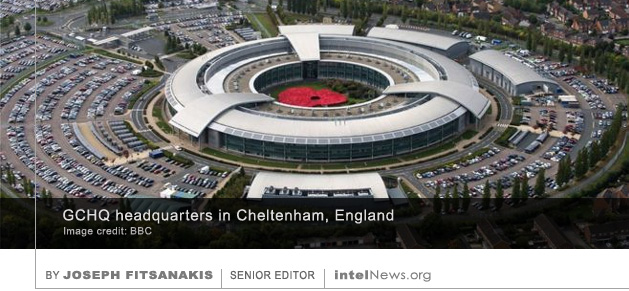
BRITAIN’S SIGNALS INTELLIGENCE AGENCY is preparing to launch a major offensive cyber operation against state-sponsored propaganda aimed at undermining research on the COVID-19 vaccine. According to the London-based Times newspaper, which published the information about the purported cyber operation, it will be aimed mostly against disinformation campaigns coming out of Russia.
The alleged disinformation campaigns appear to be targeting research taking place at Oxford University, which seeks to create an effective vaccine against the novel coronavirus. A main theme in these campaigns promotes the claim that the vaccine will turn those who take it in to chimpanzees. Dozens of memes around this theme are said to have flooded Russian social media websites, with English-language translations making the rounds on Facebook, Twitter and Instagram.
The Times reports that the British government considers shutting down the alleged Russian disinformation campaign a strategic priority, which grows in significance the closer British scientists get to their goal of creating a successful vaccine against the pandemic. London has therefore ordered the British Army’s 77th Brigade, which specializes in information operations, to launch an online campaign that will counter deceptive narratives about a potential vaccine against the coronavirus.
Whitehall has also mobilized the Government Communications Headquarters (GCHQ), Britain’s signals intelligence agency, which focuses on cyber-security, to launch offensive operations against the sources of the disinformation, says The Times. The paper cites a government source as saying that the spy agency will be using tools originally developed to monitor and incapacitate websites and other online platforms used by the Islamic State for recruitment.
According to the paper, the operational mandate of the 77th Brigade and GCHQ prevents them from tackling disinformation and misinformation originating from ordinary social media users, rather than state agencies. Additionally, the offensive cyber campaign cannot target websites that are based in Britain’s so-called Five Eyes allies, namely Australia, New Zealand, Canada and the United States. Instead, British spies are required to notify their Five Eyes counterparts, so they can take action instead.
► Author: Joseph Fitsanakis | Date: 09 November 2020 | Permalink
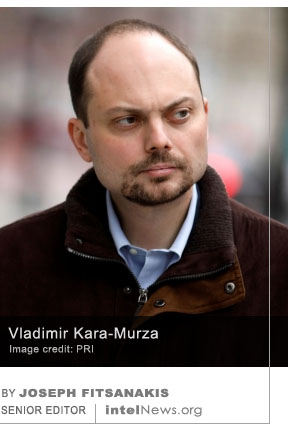 A United States-based Russian opposition activist, who claims he was poisoned twice by the Kremlin, is suing the United States government to force the release of records about his case, but is being met with resistance. The plaintiff is Vladimir Kara-Murza, 38, a senior figure in the Open Russia Foundation, a political pressure group founded by Mikhail Khodorkovsky. Khodorkovsky, an ultra-wealthy Russian businessman living in self-exile in Switzerland, is one of Vladimir Putin’s arch-enemies.
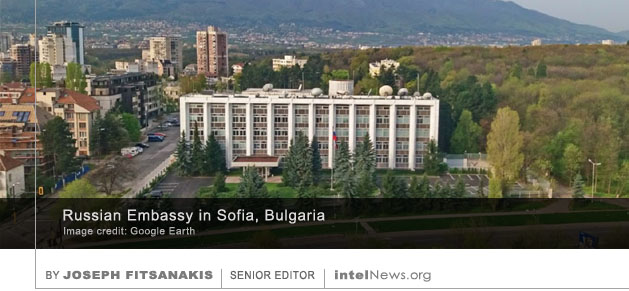 Bulgaria, a once close Soviet ally, which is now a member of the European Union and the North Atlantic Treaty Organization, has expelled two Russian diplomats whom it accuses of conducting military espionage. This raises to five the number of Russian diplomats who have been expelled from Bulgaria for espionage in the past year.
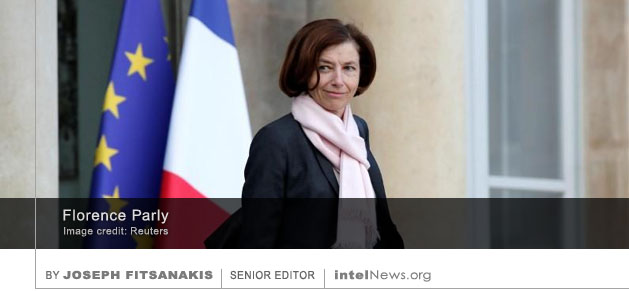 French authorities are reportedly investigating a senior military officer, who is serving with the North Atlantic Treaty Organization in Italy, for spying on behalf of Russia, according to a news report from France. On Sunday, France’s Minister of the Armed Forces, Florence Parly (pictured), gave a press conference in Paris, during which she provided limited information about the ongoing investigation. Parly
  Russian President Vladimir Putin said in an interview that a group of Russian paramilitary contractors, who were arrested in Belarus last month, were lured there as part of a joint American-Ukrainian spy operation. On July 29, Belarussian secret services
 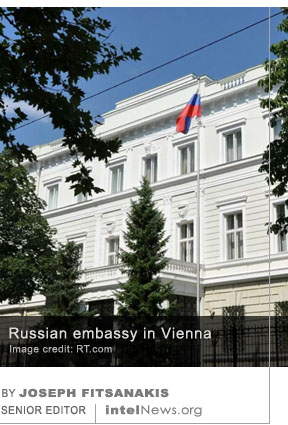 Russia has expelled a diplomat stationed at the Austrian embassy in Moscow, just hours after the Austrian Ministry of Foreign Affairs expelled a Russian diplomat from Austria, allegedly for engaging in espionage. Austrian officials reportedly gave the unnamed Russian diplomat until Tuesday, September 1, to leave Austrian soil, in a move that surprised observers, given the close relations between Austria and Russia in recent years.
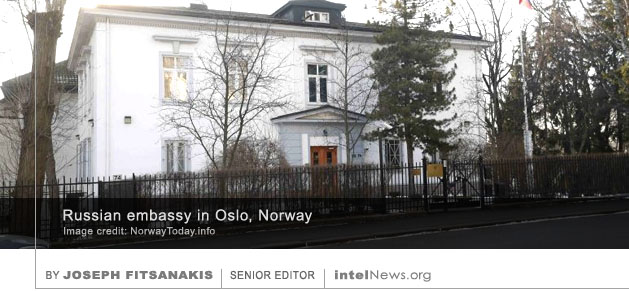 The government of Norway expelled a Russian diplomat on Wednesday, accusing him of committing espionage in a case that involves a Norwegian citizen, who has been arrested on charges of spying for Russia. Meanwhile local media named the Norwegian citizen involved in the case, while the Russian diplomat was also named yesterday in media reports.
 Authorities in Norway will not release the name of a man who was arrested on Saturday, reportedly after he met with a Russian intelligence officer in Oslo. The arrest of the unnamed man, who is a Norwegian citizen, was announced on Monday by the Norwegian Police Security Service, Norway’s counterintelligence agency.
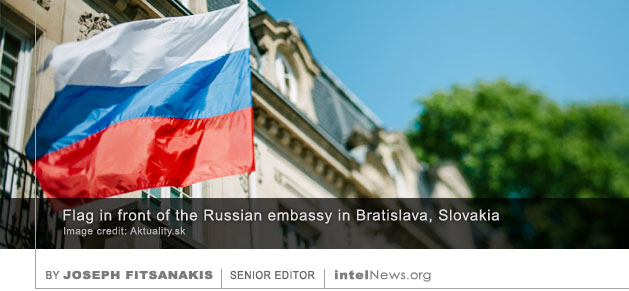 Three Russian diplomats have been ordered to leave Slovakia, reportedly in connection with the killing in Germany of a Chechen former separatist, which many believed was ordered by Moscow. On Monday, the Foreign Ministry of Slovakia confirmed media reports that three Russian diplomats had been declared ‘unwanted persons’ and ordered to leave the country.
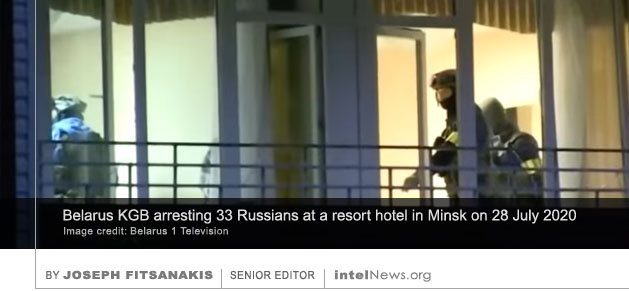 Belarussian secret services announced on Wednesday the arrest of 33 Russian citizens, who are allegedly members of a Kremlin-backed private military firm. The government of Belarus accuses the Russians of trying to subvert next month’s presidential elections on behalf of Moscow. The 33 Russians were charged with terrorism against the state on Thursday. They are allegedly employees of Wagner Group, a private Russian military company that some believe is in reality a private paramilitary wing of the Russian Armed Forces. However, the Kremlin has denied these accusations and says it has no connections with Wagner.
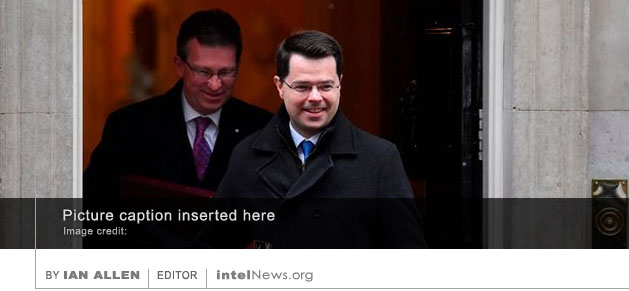 Senior United Kingdom officials have said the country will seek to “modernize” its laws on counterespionage, after a long-awaited parliamentary report criticized the government for failing to stop Russian spy operations. Earlier this week saw the release of the report by the British Parliament’s Intelligence and Security Committee. The
 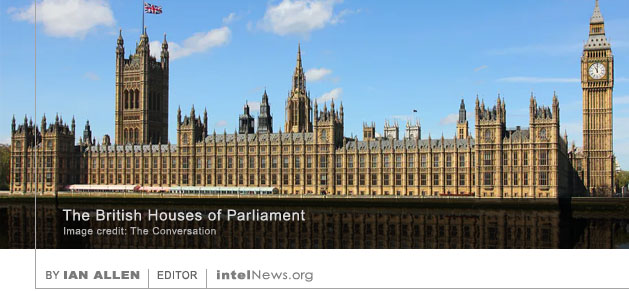 Britain is abuzz today with news of the long-awaited release of the Parliament’s
  considerably longer. It was given to the prime minister on October 17. But by November 6, when parliament was dissolved in preparation for the election that brought Boris Johnson to power, it had not been approved. It finally came out yesterday, after numerous and inexplicable delays. Many speculated that the government did not want to deal with the uncomfortable conclusions in the report.
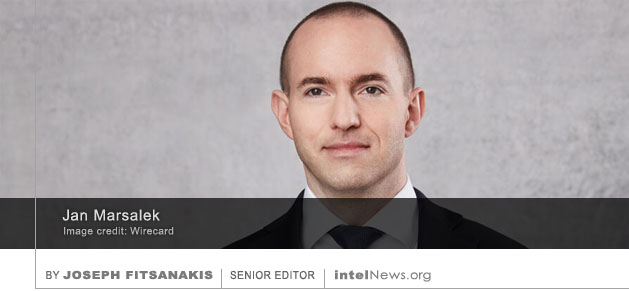 An Austrian financier, who disappeared following the outbreak of a massive financial scandal in Germany last month, and is wanted by several Western spy agencies, is reportedly hiding under Russian protection. The financier, Jan Marsalek, dubbed by some as “the world’s most wanted man”, is connected with the sudden collapse of Wirecard AG in Germany last month.








Holland expels two Russian diplomats, summons Kremlin envoy to issue protest
December 14, 2020 by intelNews 1 Comment
In connection with Ollongren’s revelations, two Russians using a diplomatic cover to commit espionage on behalf of the Russian Foreign Intelligence Service (SVR) were expelled from the Netherlands. The Russian ambassador to the Netherlands was summoned by the Dutch ministry of Foreign Affairs, which informed him that the two Russians have been designated as persona non grata (unwanted persons). In an unusual move, the AIVD also issued a press statement about this incident in English. The AIVD also released surveillance footage (see 32nd minute of video) of one of the two Russian SVR officers meeting an asset at a park and exchanging material.
The two expelled persons were officially accredited as diplomats at the Russian embassy in The Hague. Minister Ollongren says one of the two SVR intelligence officers built a “substantial” network of sources working in the Dutch high-tech sector. He pursued unspecified information about artificial intelligence, semiconductors, and nano technology that has both civilian and military applications. The Netherlands has designated “High Tech Systems and Materials” (HTSM) as one of 10 “Top Sectors” for the Dutch economy.
In some cases the sources of the SVR officers received payments for their cooperation. According to Erik Akerboom, Director-General of the AIVD, said the agency had detected “relatively intensive” contact between sources and the SVR officers in ten cases. The case involves multiple companies and one educational institute, whose identities have not been revealed. The minister states in her letter that the espionage operation “has very likely caused damage to the organizations where the sources are or were active, and thereby to the Dutch economy and national security”.
The minister announced that the Immigration and Naturalization Service (IND) will take legal action against one source of the two Russians, on the basis of immigration law. The minister also announced that the government will look into possibilities to criminalize the act of cooperating with a foreign intelligence service. Currently, that act on and by itself is not a punishable offense. Under current Dutch and European law, legal possibilities do exist to prosecute persons for violation of confidentiality of official secrets or company secrets.
This newly revealed espionage operation follows other incidents in the Netherlands, including a GRU operation in 2018 that targeted the Organization for the Prohibition of Chemical Weapons in The Hague, and a case in 2015 involving a talented Russian physicist working on quantum optics at the Eindhoven University of Technology. In the latter case, no information was made public about what information the physicist sold to Russian intelligence services. And in 2012, a senior official of the Dutch Ministry of Foreign Affairs was arrested for intending to sell classified official information to a Russian couple in Germany who spied for Russia. He was eventually given an eight year prison sentence.
► Author: Matthijs Koot | Date: 14 December 2020 | Permalink
Filed under Expert news and commentary on intelligence, espionage, spies and spying Tagged with AIVD (Netherlands), counterintelligence, espionage, Kajsa Ollongren, Netherlands, News, Russia, SVR (Russia)