US arrests Mexican man for spying for Russia in mystery case involving informant
February 20, 2020 2 Comments
 The United States Federal Bureau of Investigation has arrested a Mexican man, who is accused of spying in the city of Miami on behalf of the Russian government. Local media reports suggest that the target of the man’s spying was a Russian defector who gave American authorities information about Russian espionage activities on US soil.
In a news release issued on Tuesday, the US Department of Justice identified the man as Hector Alejandro Cabrera Fuentes, a Mexican citizen residing in Singapore. The statement said that Fuentes was arrested on Monday and was charged with “conspiracy” and “acting within the United States on behalf of a foreign government”.
According to the statement, Fuentes was recruited in April of 2019 by an unnamed Russian government official. His first assignment was to rent an apartment in Miami-Dade County using fake identification. One he carried out the assignment, Fuentes allegedly traveled to Russia, where he briefed his handler. He was then asked to return to Miami and drive to an apartment complex, where he was to observe a vehicle belonging to an individual that the Department of Justice statement describes as a “US government source”. Fuentes was tasked with providing his Russian handler with the vehicle’s license plate number.
Having been given a detailed physical description of the vehicle by his Russian handler, Fuentes drove to the apartment complex in Miami, but was stopped at the entrance to the complex by a security guard. While Fuentes was speaking with the security guard, Fuentes’ wife allegedly exited the car and took a photograph of the vehicle in question. According to the FBI, she later shared the photograph with Fuentes’ Russian handler on the mobile phone application WhatsApp. The photograph was discovered by US Customs and Border Protection agents on the smartphone of Fuentes’ wife on Sunday, as the pair tried to board a flight to Mexico City.
The US Department of Justice news release does not identify Fuentes’ alleged espionage target. But an article in The Miami Herald claims that the target is an FBI informant who has provided the Bureau’s counterintelligence division with critical information about Russian espionage operations in the Miami area. Fuentes is scheduled to appear in court for a pretrial detention hearing this coming Friday. His arraignment has been scheduled for March 3. The press release does not explain why Fuentes’ wife was not arrested.
► Author: Joseph Fitsanakis | Date: 20 February 2020 | Permalink
 The Russian government sent a team of spies to Ireland to monitor undersea fiber-optic cables, which enable communications traffic between North America and Western Europe, according to a new report. The spies were allegedly sent to Ireland by the Main Directorate of the General Staff of the Russian Armed Forces, which is known in Russia as GU, and formerly as GRU.
 Russian authorities detained a Japanese journalist last month, and eventually expelled him after accusing him of espionage, according to sources. Even though it occurred last month, the incident was reported only on Monday by Russia’s RIA Novosty news agency.
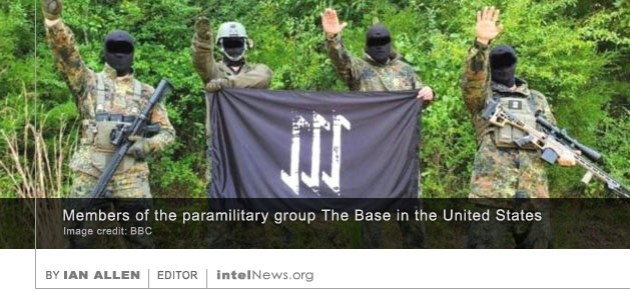 The mysterious leader of an American far-right paramilitary group, which authorities say is seeking to overthrow the United States government, runs the organization from Russia, according to a probe conducted by the BBC. The group, which calls itself The Base, is thought to have been formed in the summer of 2018. Since then, it is believed to have recruited dozens of members using encrypted messaging applications.
 A Swiss newspaper has revealed a previously unreported detention of two Russian diplomats in the luxury Swiss Alpine resort of Davos, which is currently hosting the annual meeting of the World Economic Forum (WEF). The development prompted British authorities to warn some British citizens participating in the WEF meeting that they may be in physical danger.
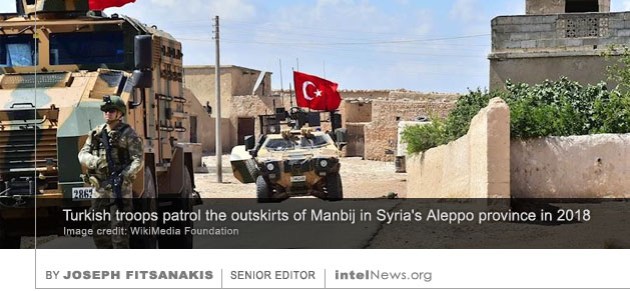 In a move that surprised observers, the intelligence chiefs of Turkey and Syria —two bitter rivals in the ongoing Syrian civil war— met in Russia on Monday. The meeting was held in Moscow and was acknowledged by officials from both sides, making it the first explicit contact between Turkish and Syrian intelligence in over a decade.
 The son of a Russian couple, who fraudulently acquired Canadian citizenship before being arrested for espionage in the United States, has won the right to keep his Canadian citizenship, which was effectively annulled when his parents were found to be Russian spies.
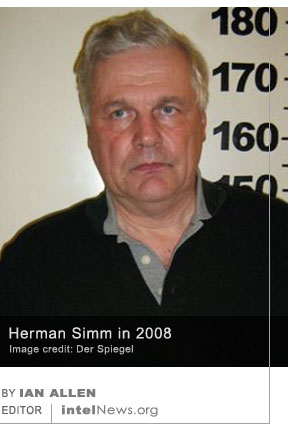 A court in Estonia has ordered the release of a former senior defense official who spied on the North Atlantic Treaty Organization for Russia, causing what experts
  An elite group Russian military intelligence officers, who have participated in assassinations across Europe, have been using resorts in the French Alps as logistical and supply bases, according to a new report. The report concerns Unit 29155 of the Main Directorate of the General Staff of the Russian Armed Forces, commonly known as GRU.
  The United States Federal Bureau of Investigation says it is examining possible counterintelligence threats in connection with the popular online application FaceApp, which is headquartered in Russia. The application first made its appearance in January of 2017 and quickly became popular among smartphone users around the world. It allows users to upload a photograph of their face and then edit it with the help of artificial-intelligence software. The software can change the user’s photograph to make it look younger or older, or make it look as if it is from the opposite gender. The result can be impressively realistic and life-like.
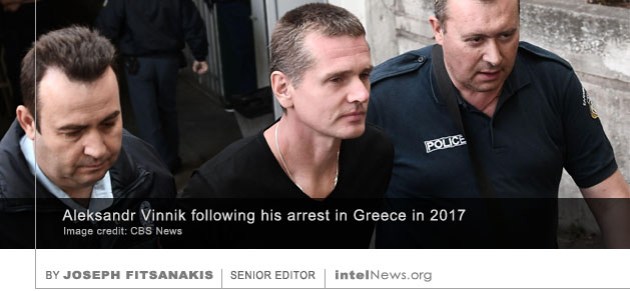 An intense fight between the United States and Russia over the extradition of a Russian cryptocurrency tycoon being held in Greece, is raising questions about the possible use of cryptocurrencies by spies. The tycoon in question is Aleksandr Vinnik, 39, who in 2011 co-founded BTC-e, an international cryptocurrency-trading platform. BTC-e allowed users to buy or sell several popular cryptocurrencies, including bitcoin and litecoin, using Russian rubles, United States dollars, or European Union euro currencies. Although headquartered in Russia, BTC-e’s servers were located in Bulgaria, while its operations were conducted through its offshore components in Cyprus and the Seychelles.
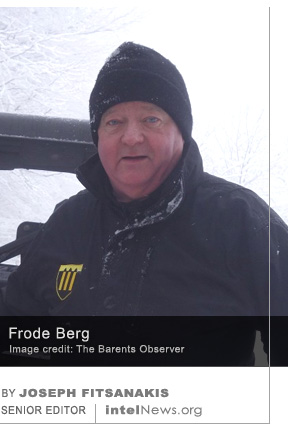 A rare three-way spy-swap has reportedly taken place between Russia and two North Atlantic Treaty Organization (NATO) members, Lithuania and Norway. Rumors of a possible exchange of imprisoned spies between the three countries first
 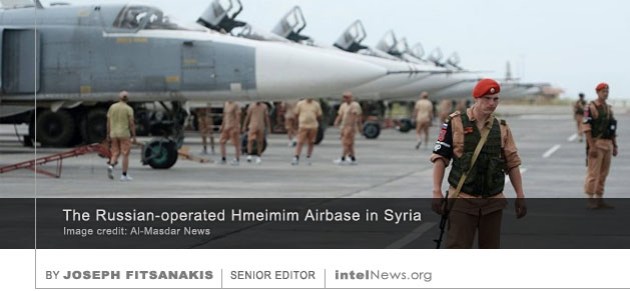 Authorities in Turkey were concerned that Russia might bomb the presidential palace in Ankara in 2015, to retaliate against the downing of a Russian fighter jet by the Turkish military, according to an intelligence report. On November 25 of that year, a Russian Sukhoi Su-24M attack bomber was shot down by a Turkish F-16 fighter jet over the Syrian-Turkish border. Ankara claimed that the Russian aircraft had violated Turkish airspace for longer than five minutes and had failed to respond to 10 warning messages communicated by radio. By the time the Russian plane was fired upon it was nearly 1.5 miles inside Turkish airspace, according to Turkey’s Ministry of Defense. But the Kremlin claimed that the downed aircraft had been flying a mile south of the Turkish border when it was shot down.
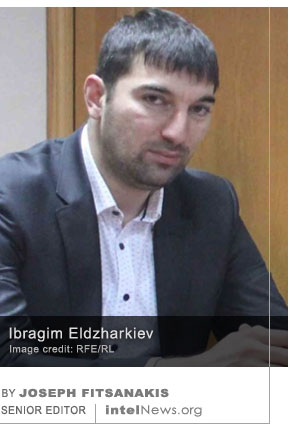 A senior counter-terrorism officer in the Russian police has been gunned down along with his brother in a downtown Moscow street, in what authorities describe as a contract killing. One of the two victims has been named as Ibragim Eldzharkiev (pictured), who headed the Russian Interior Ministry’s Anti-Extremism Center in the Republic of Ingushetia in the Russian Caucasus. His younger brother was reportedly also killed in the attack.








Russian spy who tried to kill Bulgarian arms dealer is now a diplomat, report claims
February 26, 2020 by Joseph Fitsanakis Leave a comment
In January, prosecutors in Bulgaria charged three Russian men with attempted murder. The men were identified as Sergei Fedotov, Sergei Pavlov and Georgy Gorshkov, all of them residents of Moscow, according to Bulgarian prosecutors. They were charged with attempting to kill Emilian Gebrev (pictured), a wealthy Bulgarian defense industry entrepreneur and trader. Gebrev was hospitalized for several days for signs of poisoning, along with his son and one of his company’s executives. All of them eventually made a full recovery. Gebrev’s lawyers claim that he suffered from “intoxication with an unidentified organophosphorus substance”.
The case had been shelved for several years, but the Bulgarian state revived it following the attempted assassination of Skripal, which British officials blamed on the Russian state. British authorities charged two men, Anatoly Chepiga and Alexander Miskin —both of them allegedly Russian military intelligence officers— with attempting to kill Skripal. In February of 2019, Bulgarian officials claimed that there might have been a link between the attacks on Skripal and Gebrev. Last December, Bulgaria’s chief prosecutor announced that his office was investigating the alleged link between the two cases.
Now Bellingcat has said that it has discovered the real name of one of the three Russian men who were allegedly involved in the attempted killing of Gebrev. According to Bellingcat, the man, identified by Bulgarian authorities as Georgy Gorshkov, is in fact Yegor Gordienko, who is currently posted under diplomatic in Switzerland. According to the investigative website, Gordienko, 41, is currently serving as third secretary at the Russian Federation’s mission to the World Trade Organization in Geneva. State prosecutors in Bulgaria and the United Kingdom are investigating reports that Gordienko/Gorshkov was present in those countries when the attacks against Gebrev and Skripal took place, said Bellingcat.
► Author: Joseph Fitsanakis | Date: 26 February 2020 | Permalink
Filed under Expert news and commentary on intelligence, espionage, spies and spying Tagged with assassinations, Bulgaria, Emilian Gebrev, Georgy Gorshkov, GRU, News, Russia, Sergei Fedotov, Sergei Pavlov, UK, Yegor Gordienko