Veil of secrecy may soon be lifted on Novichok nerve agent used to attack Skripal
October 24, 2019 5 Comments
 The chemical structure and action mechanism of a top-secret family of nerve agents known as novichoks may soon be available to a wider pool of researchers through its inclusion into the Chemical Weapons Convention (CWC) list of the Organization for the Prohibition of Chemical Weapons (OPCW). The term novichok (meaning ‘newbie’ in Russian) was given by Western scientists to a class of rarely used nerve agents that were developed in the Soviet Union and Russia between 1971 and the early 1990s.
The first public discussion about the existence of these agents took place in the early 1990s, when Vil Mirzayanov, a chemical warfare expert working for the Soviet military, revealed their existence. However, Western intelligence agencies have discouraged public scientific research on these nerve agents, fearing that such activities could reveal their chemical structure and mechanism of action. That could in turn facilitate the proliferation of novichok nerve agents worldwide.
But this attitude shifted drastically after March 2018, when —according to British intelligence— Russian spies used novichok in an attempt to kill Sergei Skripal, a Russian defector to Britain. The British government claims that Russians spies smuggled novichok into Britain by hiding it inside an imitation perfume bottle.
The attempt on Skripal’s life failed, but it prompted the United States, Canada and the Netherlands to propose that two categories of novichoks be chemically identified and added to the CWC list of Schedule 1 chemical weapons. If that were to happen, members of the OPCW —including Russia— would be required to declare and promptly destroy any stockpiles of novichoks in their possession.
Russia’s initial reaction was to oppose the proposal by the United States, Canada and the Netherlands. The Russian OPCW delegation questioned the proposal’s scientific validity and dismissed it as politically motivated. However, according to a report published yesterday in the leading scientific journal Science, Moscow has now agreed with the proposal to list two classes of novichoks in the CWC list, and even proposed adding a third class of the obscure nerve agent to the list. Russia also proposed the inclusion into the CWC list of two families of carbamates —organic compounds with insecticide properties, which the United States is reputed to have included in its chemical weapons arsenal during the Cold War.
According to the Science report, the OPCW Executive Council has already approved Russia’s proposal, which means that the organization is now close to classifying novichoks as Schedule 1 nerve agents. If this happens, academic researchers in the West and elsewhere will be able for the first time to collaborate with defense laboratories in order to research the chemical structure, as well as the mechanism of action, of novichoks. This is likely to produce computer models that will shed unprecedented light on the symptoms of novichoks and the various methods of treating them. But they will also provide information about the chemical structure of the nerve agent, which may eventually lead to proliferation concerns.
► Author: Joseph Fitsanakis | Date: 24 October 2019 | Permalink
 Russian hackers hijacked an Iranian cyber espionage group and used its infrastructure to launch attacks, hoping that their victims would blame Iran, according to British and American intelligence officials. The information,
  The Russian government is preparing to swap a number of imprisoned spies with at least two member states of the North Atlantic Treaty Organization (NATO), according to reports. The Estonia-based news agency BNS, which is the largest news agency in the Baltics,
  Russian authorities detained three American diplomats because they allegedly tried to enter a highly secret weapons testing site in northern Russia, according to reports. The site in question is located near the northern Russian city of Severodvinsk. The city is home to a number of military shipyards and is thus restricted for non-Russians. The latter require a special permit to enter it.
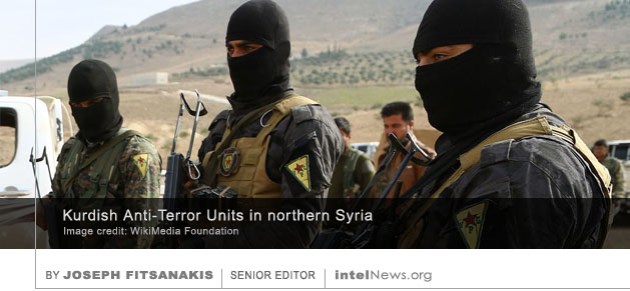 American defense officials with knowledge of Special Operations Forces activities in Syria are concerned that their secrets may fall into the hands of the Russians, as the Kurds switch their allegiance to the Moscow-backed Syrian government. Members of the United States Special Operations Forces and the Central Intelligence Agency (CIA) have had a presence in Kurdish-dominated northern Syria since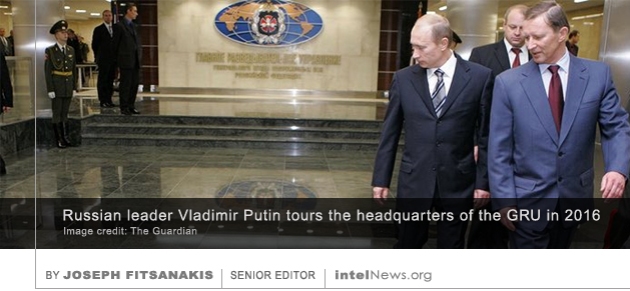
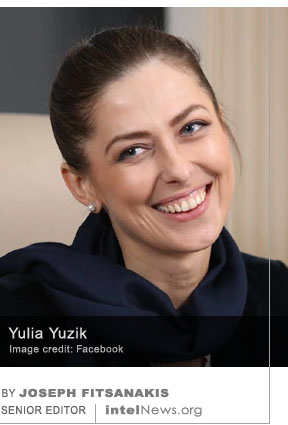 In a surprising move last week, Iranian authorities arrested a Russian journalist and expert on the Caucasus region, whom they accused of spying for Israel. They later agreed to release her following significant diplomatic pressure from Russia. But the move surprised observers, because Iran rarely acts in ways that have the potential to damage its close relations with Moscow.
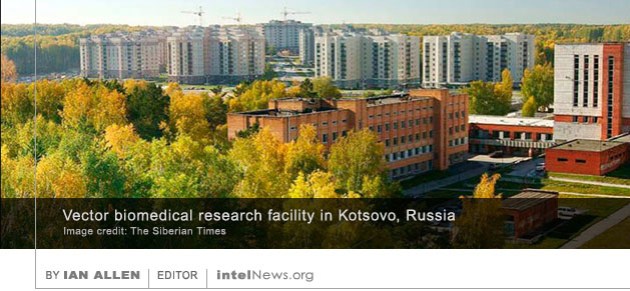 Russian authorities announced on Tuesday that a gas explosion had damaged a section of a medical facility in Siberia that houses live samples of viruses such as Ebola and smallpox, but added that there was no need to declare a biomedical emergency. The explosion reportedly took place on Monday at the State Research Center of Virology and Biotechnology, known as Vector. The six-floor concrete and steel facility is located in the isolated Siberian town of Kotsovo, near the city of Novosibirsk, 600 miles from the Mongolian border.
 The Russian government reportedly fired a number of officials over the defection of a senior Kremlin aide, who alleged worked as an American spy. Meanwhile, Moscow has filed a search request with INTERPOL about the alleged defector’s whereabouts. News of the defection was
 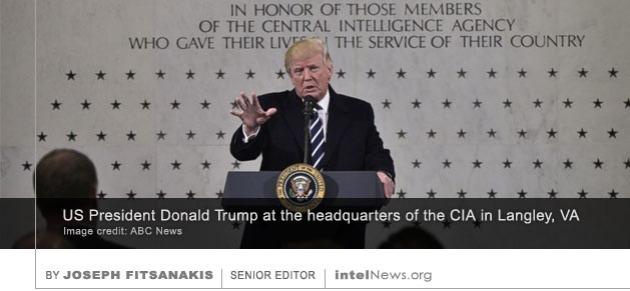 The United States Central Intelligence Agency has questioned the accuracy of a media report, which claimed that “repeated mishandling” of intelligence by President Donald Trump resulted in the exfiltration of a high-level source from Russia. According to the American news network CNN, the CIA carried out the exfiltration operation in 2017. Despite the success of the operation, the removal of the asset has left the US without this high-level source at a time when it is most needed, said CNN. The network
 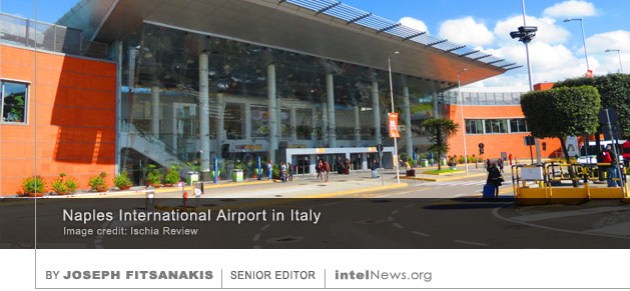 Italy has arrested a Russian business executive and former foreign ministry official who is wanted by the United States for carrying out espionage against an American aviation firm. Alexander Yuryevich Korshunov, 57, who is a former official in Russia’s Ministry of Foreign Affairs, was reportedly
 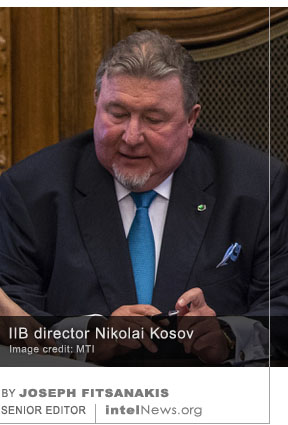 A Russian-backed development bank, which is
 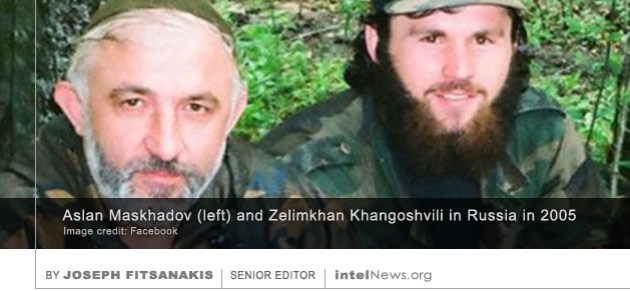 Authorities in Germany suspect that Moscow may have been behind the assassination of a Chechen separatist who was shot in broad daylight in Berlin by a man wearing a wig and carrying a pistol fitted with a silencer. The victim of the attack was Zelimkhan Khangoshvili, 40, who was a leading figure in the so-called Second Chechen War. The conflict pitted the Russian military against groups of Muslim fighters in the North Caucasus between 1999 and 2009.
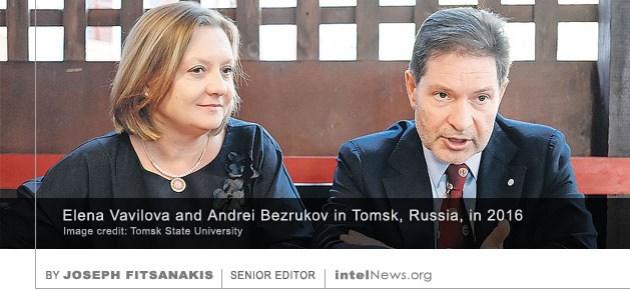 One of the ten Russian deep-cover spies who were arrested in the United States in 2010, and swapped with American- and British-handled spies held by Moscow, has spoken to Western media for the first time. Elena Vavilova was








London accused of hiding report about Russian meddling in Brexit referendum
November 4, 2019 by Ian Allen 1 Comment
The investigation was carried out by the British Parliament’s Intelligence and Security Committee and is largely based on closed-door testimony by senior officials from Britain’s intelligence community. It reportedly contains evidence from Russia experts in agencies such as the Security Service (MI5), the Secret Intelligence Service (MI6) and the Government Communications Headquarters (GCHQ).
According to media reports the probe was completed in March of this year and underwent a redaction process to safeguard intelligence methods and sources. On October 15 it was submitted to Downing Street and on October 17 it reportedly landed on the desk of British Prime Minister Boris Johnson. British opposition politicians allege that even sensitive reports are usually made public no later than 10 days after they are submitted to Downing Street, which means that the document should have been released prior to October 28.
Some fear that, with Parliament about to suspend operations on Tuesday, in anticipation for December’s general election, the report will effectively remain hidden from public view until the spring of 2020. On Friday, Labour Party leader Jeremy Corbyn publicly urged the government to release the report and claimed that the prime minster may have “something to hide”. But cabinet minister Andrea Leadsom argued that it is not unusual for parliamentary committee reports to remain in the government’s hands until they are properly evaluated. “The government has to respond properly, it cannot respond in haste”, said Leadsom.
► Author: Ian Allen | Date: 04 November 2019 | Permalink
Filed under Expert news and commentary on intelligence, espionage, spies and spying Tagged with Boris Johnson, Brexit, Intelligence and Security Committee (UK), News, Russia, UK