Israel leaked video that brought down Austrian government, says German ex-spy chief
May 28, 2019 1 Comment
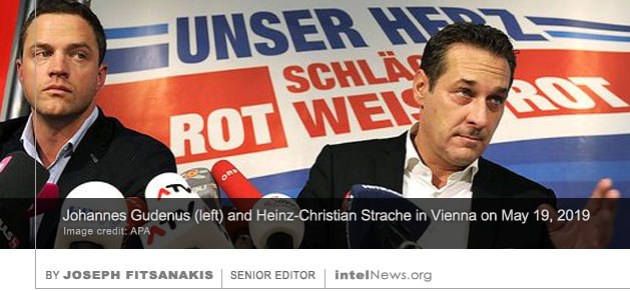 Israeli intelligence was likely behind the leaked video that brought down the far-right governing coalition in Austria on Monday, according to the former deputy director of Germany’s spy agency. The surreptitiously recorded video was leaked to two German media outlets on May 17, days before Austrian voters participated in the continent-wide elections for the European Union. In the video, two senior members of Austria’s governing far-right Freedom Party are seen conversing with an unnamed woman posing as a Russian investor. The two men in the video were Heinz-Christian Strache, the the Freedom Party’s leader and until recently Austria’s Vice Chancellor, and Johannes Gudenus, the party’s deputy leader and a member of parliament. In the video, Gudenus and Strache promise to award the woman’s firm state contracts if her uncle —a Russian oligarch— purchases an Austrian newspaper and uses it to support the Freedom Party. The video threw Austria’s political system into disarray and prompted the resignations of both Strache and Gudenus. On Monday, Austria’s Chancellor, Sebastian Kurz, was removed from power during a special parliamentary session in Vienna.
But the question is who leaked the video, and why? In an article in the Cicero, a monthly political magazine based in Berlin, a former senior official in Germany’s Federal Intelligence Service (BND) argues that Israeli intelligence was probably behind the leak. The article’s author is Rudolf Adam, who served as deputy director of the BND from 2001 to 2004, before serving as president of the Federal Academy for Security Policy of the German Ministry of Defense. Adam argues that the actions of Strache and Gudenus, as shown in the leaked video, seem “half mafia-like and half-treasonable”, and that the two should face legal consequences. But he goes on to ask “a far more interesting question”, namely “who is behind this intrigue [and] what were the intentions of its initiators?”. Adam points out that nothing is known about the woman in the video; she reportedly met Gudenus several months before the video was filmed. She posed as the Latvian niece of a Russian oligarch with ties to Russia’s President Vladimir Putin. In exchanges that lasted for several months, the woman told Gudenus that she planned to move with her daughter to Vienna and was interested in investment opportunities. She eventually invited him and Strache to a meeting in a villa in the Spanish resort island of Ibiza. It was there where the video was recorded. Read more of this post
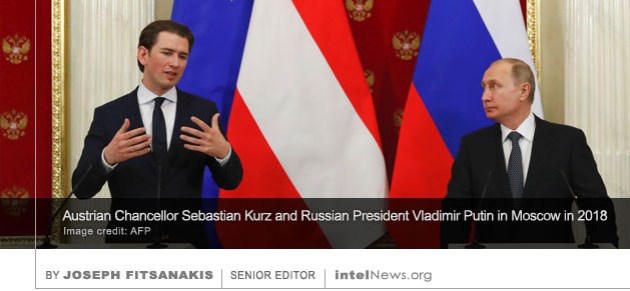 A day after Austria’s political system was thrown into a disarray by a covert video featuring the country’s vice chancellor and a woman posing as a Russian investor, German intelligence sources have raised fears that Russia may have penetrated the Austrian government with informants. Heinz-Christian Strache, who heads Austria’s far-right Freedom Party, stepped down from the post of vice chancellor on Saturday. His resignation came a day after two German media outlets aired a
  Teams of “Russian technical specialists” bribed several leading candidates in last year’s presidential elections in Madagascar, in an effort to influence the outcome, according to an investigation by the BBC. The 2018 presidential campaign was among the most closely fought in Madagascar’s 60-year post-independence history. The electorate’s attention concentrated mostly on two former presidents, Marc Ravalomanana, and Andry Rajoelina. Following a closely contested second round in late December, Rajoelina was elected president, having received 500,000 votes more than his opponent. Since his election, Rajoelina has promoted closer ties with Russia. Most notably, he has strengthened his country’s military cooperation with Moscow —a process that was
 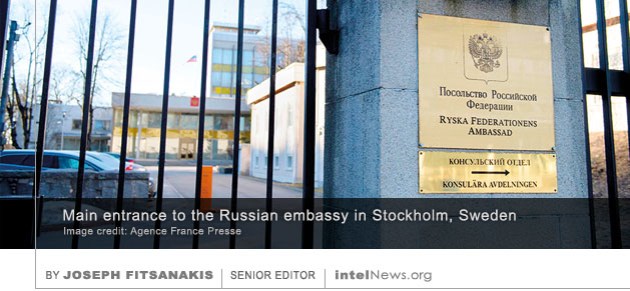 Russia has recalled one of its diplomats from Sweden after he was caught receiving classified information from a computer expert at a nightclub in Stockholm. The computer expert was later identified as Kristian Dmitrievski, a 45-year-old naturalized Swede who was born in Russia. The Swedish government accuses him of having been recruited by Russian intelligence in 2017 or earlier. He allegedly met with his Russian handlers on a regular basis since his recruitment, passing them classified information of a technical nature.
 Russian media reports have confirmed that an airplane carrying 100 Russian troops arrived in Caracas on Saturday, causing tensions to rise between Washington and Moscow over the deepening crisis in Venezuela. The arrival of the Russian troops in the Venezuelan capital was first reported on Saturday morning by Venezuelan reporter Javier Mayorca, who said on Twitter that two Russian military airplanes had landed in Caracas. The reporter said that an Antonov An-124 Ruslan cargo plane belonging to the Russian Air Force could be seen on the tarmac of the Simón Bolívar International Airport in the Venezuelan capital. Another, smaller aircraft, also bearing the Russian flag on its fuselage, landed shortly afterwards, said Mayorca.
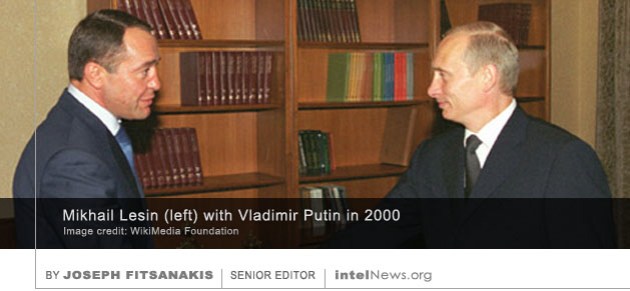 A former senior adviser to Russian President Vladimir Putin, who died allegedly by falling while intoxicated in a luxury hotel room in Washington, may in fact have been strangled to death, according to a newly released medical examination. The body of Mikhail Yuriyevich Lesin, a well-known Russian media mogul, was found in the luxury Dupont Circle Hotel on November 5, 2015. He became famous in Russia soon after the collapse of the communist system, when he founded Video International, an advertising and public-relations agency that was hired by Russian President Boris Yeltsin to run his reelection campaign in 1995.
 Russian spy agencies use front companies to purchase directorates that contain the contact details of United States government employees, according to a new intelligence report. The contact details are contained in multi-page directories of Congressional staff members and employees of US federal agencies. They are published every January by a specialist vendor called Leadership Connect with the cooperation of a Washington, DC-based provider of publishing services. The directories contain the names, job titles, professional addresses and telephone numbers of US government employees.
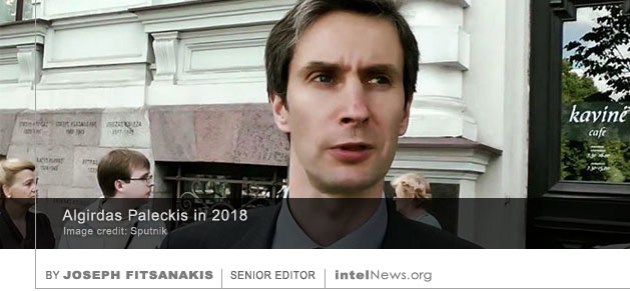 A growing number of individuals are in custody in Lithuania, as the Baltic state continues a probe into an alleged Russian espionage ring whose members reportedly included a former diplomat and member of one of the country’s most revered political families. On Tuesday, government prosecutors
  A senior counterintelligence official in Belgium’s external intelligence service is under house arrest on suspicion of sharing classified documents with Russian spies, according to a Belgian newspaper. Additionally, the chief of the agency’s counterintelligence directorate has been barred from his office while an internal investigation is underway on allegations that he illegally destroyed government documents. These allegations surfaced last Thursday in a leading article in De Morgen, a Flemish-language daily based in Brussels.
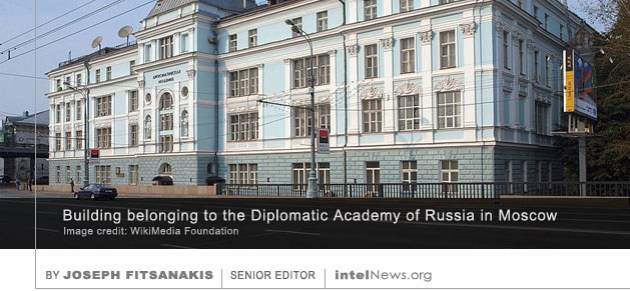 An investigative website has linked a graduate of an elite intelligence academy in Moscow with the attempted assassination of a Russian former double spy in Britain last year. Reports last year identified Dr. Alexander Yevgenyevich Mishkin (cover name ‘Alexander Petrov’) and Colonel Anatoliy Chepiga (cover name ‘Ruslan Boshirov’) as the two men that tried to kill Sergei Skripal in the English town of Salisbury in March 2018. Skripal, a former officer in Russia’s military intelligence service, the GRU, was resettled in Salisbury in 2010, after spending several years in a Russian prison for spying on behalf of Britain. But he and his daughter Yulia almost died last March, after they were
 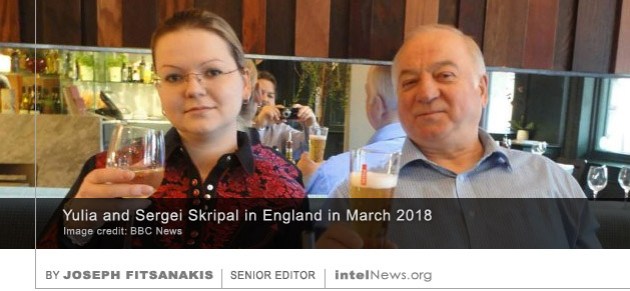 New reports from Russian investigative sites claim that a third man using a fake name was involved in the attempted assassination of former double spy Sergei Skripal in England last year. Skripal, a former military intelligence officer, was resettled in the English town of Salisbury in 2010, after spending several years in a Russian prison for spying on behalf of Britain. But he and his daughter Yulia almost died in March 2018, after they were
 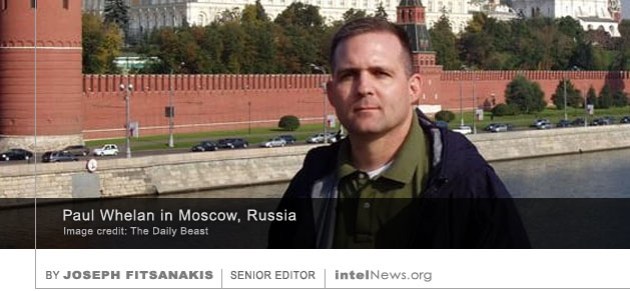 An American former Marine, who faces espionage charges in Russia, is a citizen of at least three other countries, namely Canada, Britain and the Republic of Ireland, according to reports. Paul Whelan, 48, was arrested by Russia’s Federal Security Service (FSB) on December 28 at the Metropol, a five-star hotel in downtown Moscow. News of Whelan’s arrest first emerged on January 3 in a
 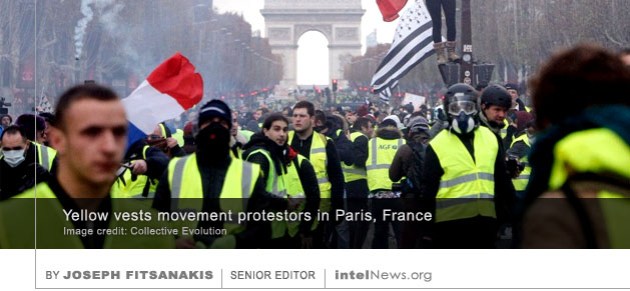 Intelligence and security services in France are investigating whether Russian involvement on social media and other platforms is playing a role in amplifying the so-called ‘yellow vests’ movement. Known in French as le mouvement des gilets jaunes, the campaign began online in May of this year as a popular protest against rising fuel prices and the high cost of living in France. In mid-November, the movement made its first public appearance with large demonstrations that have continued every weekend since then. Yellow vest protestors claim that tax increases are disproportionally affecting working- and middle-class people and that everyday life is becoming economically unsustainable in France. Some of the demonstrations have turned violent, and so far at least eight people have died as a result. The ensuing crisis has become the most significant threat to the government of Emmanuel Macron, as the protests are increasingly evolving into an anti-Macron rallies.








Western spies used ‘crown jewel’ of espionage tools to hack into Russia’s Google
June 28, 2019 by Joseph Fitsanakis Leave a comment
On Thursday, Reuters cited “four people with knowledge on the matter […] in Russia and elsewhere”, who said that Yandex was targeted by a sophisticated hacking operation between October and November of 2018. The news agency said that three of its sources had direct knowledge of the details of the cyber-espionage operation against Yandex. According to the unnamed sources, the hackers appeared to be primarily interested in breaching the accounts of specific employees in Yandex’s research and development unit. Their purpose was to acquire technical information about how Yandex authenticates user accounts. That information could potentially enable them to impersonate Yandex users and access private information, including email messages, geolocation information, and other sensitive private data. Reuters said that the hackers attempted to breach Yandex for purposes of espionage, not sabotage or disruption, or stealing intellectual property for commercial purposes.
Moreover, the hackers used Regin, a highly sophisticated malware that a technical expert from the Symantec Corporation described as “the crown jewel of attack frameworks used for espionage”. Regin was identified as a malware employed by intelligence services of the so-called Five Eyes intelligence alliance between spy agencies of the United Kingdom, Canada, New Zealand, Australia and the United States. It was identified as a Western cyber-espionage tool in 2014, based on revelations made by Edward Snowden, the American former employee of the National Security Agency and the Central Intelligence Agency who defected to Russia. The same malware was used in 2013 to access about a dozen mainframe computers of Belgacom, Belgium’s largest telecommunications service provider, which is partly state-owned. The attack was widely attributed to a consortium of Western intelligence services led by the NSA.
According to Reuters, the hackers were able to penetrate Yandex’s networks for several weeks or longer, without being noticed by the company’s cyber-security monitors. When the penetration was detected, Yandex hired a cyber-security team from the Russian anti-virus firm Kaspersky. The Kaspersky team identified Regin and, according to Reuters, concluded that the hackers behind the cyber-espionage operation were tied to Western intelligence agencies. Kaspersky, the Russian government, and intelligence agencies from the Five Eyes alliance declined requests by Reuters to comment on the story. Yandex confirmed the cyber-espionage attack in a statement to Reuters, but said that its cyber-security experts had been able to detect and “fully neutralize [it] before any damage was done”. Consequently, said Yandex, “no user data was compromised in the attack”.
► Author: Joseph Fitsanakis | Date: 28 June 2019 | Permalink
Filed under Expert news and commentary on intelligence, espionage, spies and spying Tagged with cyber security, cyberespionage, Kaspersky Lab, News, Regin, Russia, Yandex