Russia accuses UK of deliberately delaying visas for its diplomats in London
October 24, 2016 Leave a comment
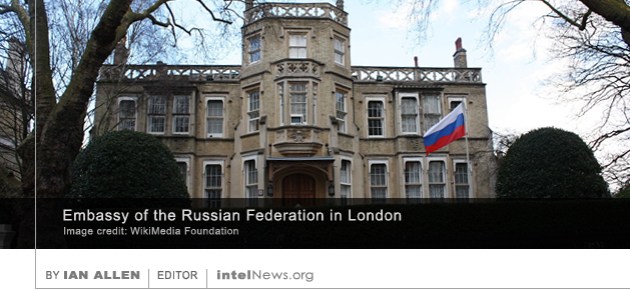 Russia’s ambassador to the United Kingdom has accused the British Foreign Office of deliberately delaying the issuance of visas for its diplomatic officials who have been assigned to join the Russian embassy in London. Alexander Yakovenko, Russia’s former Deputy Minister of Foreign Affairs, who has been heading the Russian embassy in London since 2011, said last week that the size of his staff was “shrinking” to unprecedented numbers. The reason, said Yakovenko, was that the government in London appeared to be following a systematic policy of delaying visa requests for Russian diplomats assigned to serve in London.
“As our people return home or go on to other postings, visas for their replacements are not being issued”, said Yakovenko. Consequently, the Russian embassy’s personnel numbers were shrinking, and would shrink even further unless the issue was resolved by Whitehall, he said. The Russian ambassador added that his embassy did not understand “the strategy of this country on visa issues”, implying that London was following a deliberate plan to prevent Russian diplomats from staffing the embassy. But the British Foreign Office responded on Saturday that it was not following a deliberate policy of delaying the issuance of visas for Russian diplomats. The BBC quoted a Foreign Office spokesman who said that the British government had “made it clear to the Russians that the queues [for visa issuances] need to be cleared on both sides”. The comment implies that London’s stance may be a response to efforts by Moscow to reduce the size of the British diplomatic core stationed in the Russian capital.
Bilateral relations between Britain and Russia have suffered since 2006, when the murder of former Russian intelligence officer Alexander Litvinenko in London prompted Whitehall to expel four Russian diplomats stationed there. The Russian involvement in Ukraine and Syria has further strained relations between Moscow and London in recent years. In August of 2015, the Russian Embassy accused the British government of “effectively expelling” four of its diplomats from London by refusing to grant them visas for more than three months.
► Author: Ian Allen | Date: 24 October 2016 | Permalink

 By IAN ALLEN | intelNews.org |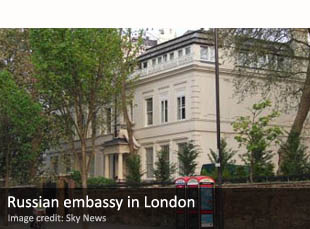









 intelNews.org
Analysis: Decoding Britain’s response to the poisoning of Sergei Skripal
March 15, 2018 by Joseph Fitsanakis 8 Comments
Just hours after the attack on the Skripals, British defense and intelligence experts concluded that it had been authorized by the Kremlin. On Wednesday, Prime Minister May laid out a series of measures that the British government will be taking in response to what London claims was a Russian-sponsored criminal assault on British soil. Some of the measures announced by May, such as asking the home secretary whether additional counter-espionage measures are needed to combat hostile activities by foreign agents in the UK, are speculative. The British prime minister also said that the state would develop new proposals for legislative powers to “harden our defenses against all forms of hostile state activity”. But she did not specify what these proposals will be, and it may be months —even years— before such measures are implemented.
The primary direct measure taken by Britain in response to the attack against Skripal centers on the immediate expulsion of 23 Russian diplomats from Britain. They have reportedly been given a week to leave the country, along with their families. When they do so, they will become part of the largest expulsion of foreign diplomats from British soil since 1985, when London expelled 31 Soviet diplomats in response to revelations of espionage against Britain made by Soviet intelligence defector Oleg Gordievsky. Although impressive in size, the latest expulsions are dwarfed by the dramatic expulsion in 1971 of no fewer than 105 Soviet diplomats from Britain, following yet another defection of a Soviet intelligence officer, who remained anonymous.
It is important to note, however, that in 1971 there were more than 500 Soviet diplomats stationed in Britain. Today there are fewer than 60. This means that nearly 40 percent of the Russian diplomatic presence in the UK will expelled from the country by next week. What is more, the 23 diplomats selected for expulsion are, according to Mrs. May, “undeclared intelligence officers”. In other words, according to the British government, they are essentially masquerading as diplomats, when in fact they are intelligence officers, whose job is to facilitate espionage on British soil. It appears that these 23 so-called intelligence officers make up almost the entirety of Russia’s “official-cover” network on British soil. This means that the UK Foreign Office has decided to expel from Britain nearly every Russian diplomat that it believes is an intelligence officer. Read more of this post
Filed under Expert news and commentary on intelligence, espionage, spies and spying Tagged with Analysis, diplomatic expulsions, Joseph Fitsanakis, Newstex, Russia, Russian embassy in the UK, Sergei Skripal, UK