News you may have missed #718 (GCHQ edition)
April 24, 2012 Leave a comment
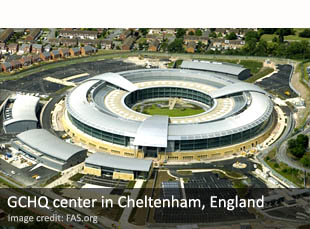 By IAN ALLEN | intelNews.org |
►►GCHQ releases Alan Turing papers. Britain’s signals intelligence agency, GCHQ has released two mathematical papers written by cryptographer Alan Turing after keeping the works secret for over half a century. The intelligence agency believes the handwritten papers were produced by Turing during his time at Bletchley Park, the World War II code-breaking center. The year 2012 marks the centenary of Alan Turing’s birth. Turing, whose work heavily contributing to the Allied war effort, committed suicide in 1954 by taking cyanide. Turing had been convicted of homosexuality, which was then a crime, and was given the choice between prison or chemical castration. The UK government officially apologized over Turing’s treatment in 2009, over 50 years after his death.
►►Britain’s GCHQ sued for ‘racism’. Alfred Bacchus, 42, claims he was bullied by bosses while he was a senior press officer at the Government Communications Headquarters in Cheltenham. He says he wanted to publish an official report in 2010 into race bias inside GCHQ which warned that not enough ethnic minority staff were being recruited to help fight terrorism. It found that black and Asian intelligence officers at GCHQ complained of a racist culture in which they were insulted by white colleagues and challenged over their loyalty to Britain.
►►Ex-GCHQ chief wants more surveillance of Facebook and Twitter. Sir David Omand, an ex-Cabinet Office security chief and former director of Britain’s GCHQ electronic eavesdropping agency, said it was essential that monitoring of social media was put on a proper legal footing. A report by the think-tank Demos, which Sir David co-authored, said existing laws regulating the interception of communications by police and intelligence agencies needed to be overhauled to meet the complexities of social media. However, the ability of state security agencies and the police to intercept social network communications such as tweets must be placed on a clear legal footing, the report says.










 intelNews.org
Announcement: Conference on social media and intelligence
January 22, 2014 by Joseph Fitsanakis 3 Comments
During the past four years, this blog has reported several incidents pointing to the increasing frequency with which spy agencies of various countries are utilizing social networking media as sources of tactical intelligence. But are we at a point where we can speak of a trend? In other words, is the rapid rise of social networking creating the conditions for the emergence of a new domain in tactical intelligence collection? Some experts now contend that the growth of social networking has given rise to a new form of intelligence-gathering: social media intelligence (SOCMINT). There are even some who believe SOCMINT should become a separate entity altogether in the intelligence process. On March 7, 2014, the Netherlands Intelligence Studies Association (NISA) will be holding a one-day conference in Amsterdam, to discuss this new phenomenon and consider some of the practical, ethical and political dilemmas involved in SOCMINT. The conference will open with a keynote speech by Sir David Omand, former director of Britain’s’ signals intelligence agency, the GCHQ, who currently teaches at the War Studies Department at King’s College, London. Other speakers come from intelligence and security services in Holland and Belgium, as well as from a variety of academic centers and non-governmental organizations in Europe and the United States. Longtime readers of this website will be familiar with NISA. The group was founded in 1991 with a mission to help focus and streamline academic work on intelligence, security and law enforcement. Read more of this post
Filed under Expert news and commentary on intelligence, espionage, spies and spying Tagged with academic research, conferences, Netherlands, Netherlands Intelligence Studies Association, Sir David Omand, social networking