Moscow names intersection after Kim Philby, British spy for the USSR
November 9, 2018 1 Comment
 In a sign of worsening relations between the United Kingdom and Russia, a busy intersection in Moscow has been named after Kim Philby, the British senior intelligence officer who secretly spied for the Soviet Union. While working as a senior member of British intelligence, Harold Adrian Russell Philby, known as ‘Kim’ to his friends, spied on behalf of the Soviet NKVD and KGB. His espionage activities lasted from about 1933 until 1963, when he secretly defected to the USSR from his home in Beirut, Lebanon. Philby’s defection sent ripples of shock across Western intelligence and is often seen as one of the most dramatic incidents of the Cold War. He was part of a wider ring of upper-class British spies, known collectively as ‘the Cambridge spies’ because they were recruited by Soviet intelligence during their student days at the University of Cambridge in England.
Following his sensational defection, Philby lived in the Soviet capital until his death in 1988 at the age of 76. On Tuesday, a statement published on the website of the Moscow City Council announced that a busy intersection in the city’s southeast would be renamed to ‘Kim Philby Square’ in honor of the British defector. The statement said that the name change had been agreed upon by the city council and decreed by Moscow Mayor Sergei Sbyanin, a close associate of Russian President Vladimir Putin. Interestingly, Philby lived nowhere near the intersection named after him. His apartment —provided to him by the Soviet state in exchange for services rendered during his 30 years of spying— was located in a residential area of central Moscow. However, the intersection in question is situated near the headquarters of the SVR, Russia’s Foreign Intelligence Service, which is the primary successor agency to the Soviet-era KGB. In September of last year, SVR Director Sergei Naryshkin attended an exhibition in Moscow entitled “Kim Philby: His Intelligence Work and Personal Life”, organized by the Russian Historical Society. While there, Naryshkin was told by veterans of the KGB that Philby liked to take long walks through the streets of Moscow and that a street should be named after him in his honor.
French news agency Agence France Presse reported that it contacted the Moscow City Council but a spokeswoman said she was not in a position to comment on the Kim Philby Square renaming. The move comes a few months after a small pedestrian thoroughfare located across from the front entrance of the Russian embassy in Washington DC was symbolically named ‘Boris Nemtsov’, after a Russian opposition leader who was gunned down in downtown Moscow in February of 2015.
► Author: Joseph Fitsanakis | Date: 09 November 2018 | Permalink
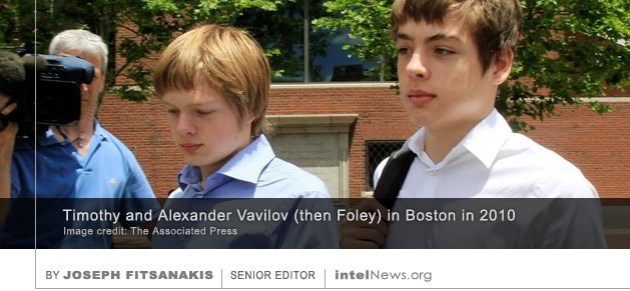 Two Canadian brothers, whose Russian-born parents fraudulently acquired Canadian citizenship before being arrested for spying on the United States for Moscow, are not entitled to Canadian citizenship, according to the government of Canada. Tim and Alex Vavilov are the sons of Donald Heathfield and Tracey Foley, a married couple arrested in 2010 under Operation GHOST STORIES, a counterintelligence program run by the US Federal Bureau of Investigation (FBI). Following the couple’s arrest, their sons, who allegedly grew up thinking their parents were Canadian,
 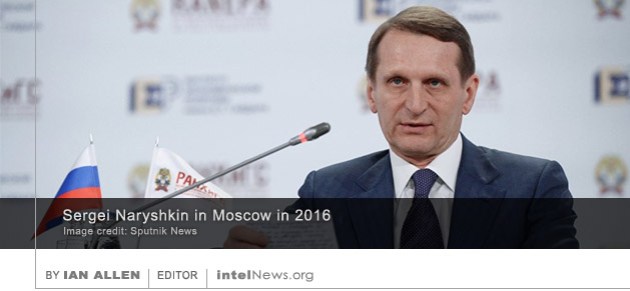 Intelligence directors from Russia, China, Iran and Pakistan met on Tuesday to discuss regional cooperation with particular reference to combating the Islamic State in Afghanistan. Information about the high-level meeting was
 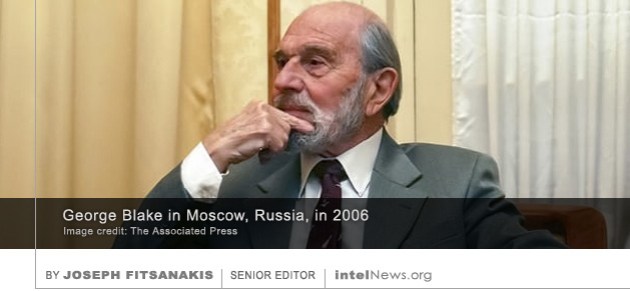 One of the Cold War’s most recognizable spy figures, George Blake, who escaped to the Soviet Union after betraying British intelligence, issued a rare statement last week, praising the successor agency to Soviet-era KGB. Blake was born George Behar in Rotterdam, Holland, to a Dutch mother and a British father. Having fought with the Dutch resistance against the Nazis, he escaped to Britain, where he joined the Secret Intelligence Service, known as MI6, in 1944. He was serving in a British diplomatic post in Korea in 1950, when he was captured by advancing North Korean troops and spent time in a prisoner of war camp. He was eventually freed, but, unbeknownst to MI6, had become a communist and come in contact with the Soviet KGB while in captivity. Blake remained in the service of the KGB as a defector-in-place until 1961, when he was arrested and tried for espionage.
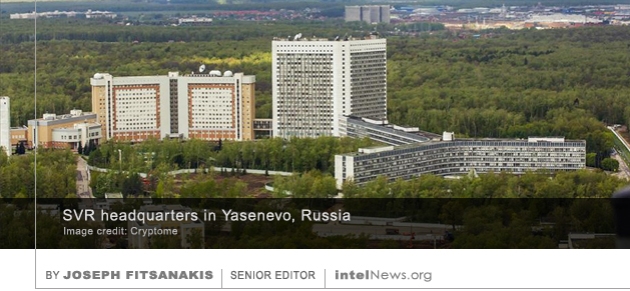
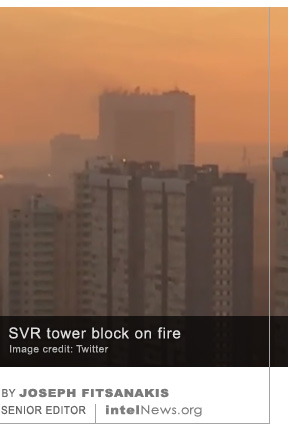 A massive fire that broke out at a top-secret spy facility in Moscow on Wednesday brought to the foreground prior reports about the unprecedented growth of the headquarters of Russia’s foreign spy service. The fire was reported at a government compound in Yasenevo, a leafy district on the southern outskirts of the Russian capital. The compound serves as the headquarters of the Russian Foreign Intelligence Service, known by its initials, SVR. The SVR is one of the successor agencies to the Soviet-era KGB. During Soviet times, the present-day SVR was known as the First Chief Directorate or First Main Directorate of the KGB. Despite its name change, however, its mission remains the same, namely to collect secrets from targets outside the Russian Federation —often through the use of espionage— and to disseminate intelligence to the president.
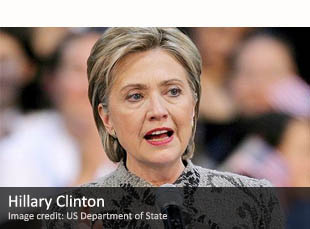 A major reason behind the Federal Bureau of Investigation’s decision to arrest ten Russian spies across the United States in 2010 was their increasing proximity to the then-Secretary of State Hillary Clinton, it has been claimed. The spies had been specifically instructed by their handlers in Moscow to target Clinton, who was seen as the most likely successor to US President Barack Obama, according to recently released FBI files. Ten Russian deep-cover spies, who had no official cover and thus no diplomatic immunity, were
 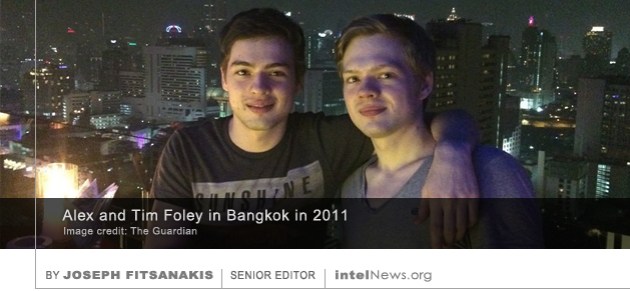 The sons of a Russian couple, who fraudulently acquired Canadian citizenship before being arrested for espionage in the United States, are seeking to reinstate their Canadian citizenship, which was annulled when their parents were found to be Russian spies. Tim and Alex Vavilov are the sons of Donald Heathfield and Tracey Foley, a married couple arrested in 2010 under Operation GHOST STORIES —a counterintelligence program run by the US Federal Bureau of Investigation (FBI). Following their arrest, their sons, who allegedly grew up thinking their parents were Canadian, were told that their parents were in fact Russian citizens and that their real names were Andrei Bezrukov and Elena Vavilova. Their English-sounding names and Canadian passports had been forged in the late 1980s by the KGB, the Soviet Union’s primary external intelligence agency.
 Last week, following the results of Russia’s parliamentary election, Russian media run a story suggesting that the Kremlin is planning to implement far-reaching changes to the country’s intelligence apparatus.
  American Scientists’ Secrecy News blog, has
 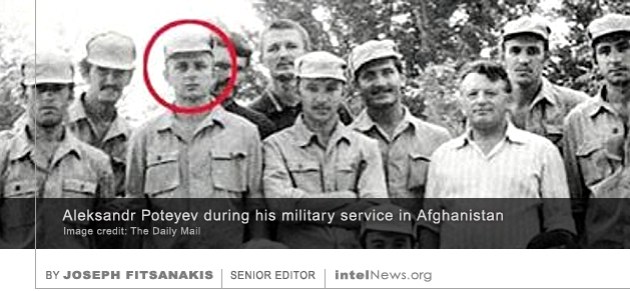 A Russian former senior intelligence officer, who reportedly defected to the United States after helping the Federal Bureau of Investigation arrest 10 Russian spies in 2010, is believed to have died. The arrests, which revealed the so-called “Russian illegals program” in the US, were part of a counterintelligence operation codenamed GHOST STORIES by the FBI. The operation culminated in June 2010 with the
 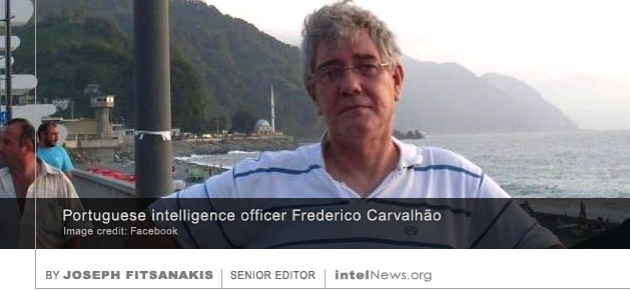 A Portuguese intelligence officer arrested a week ago in Rome, allegedly while passing classified documents to his Russian handler, may have accomplices with access to North Atlantic Treaty Organization (NATO) secrets. IntelNews
 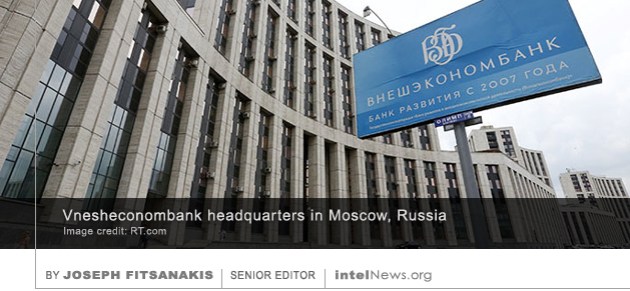 A Russian intelligence officer, who posed as a banker in the United States, has been handed a prison sentence by a court in New York. Evgeny Buryakov, 41, posed as an employee of the New York branch of Vnesheconombank, a Russian state-owned bank headquartered in Moscow. However, in January 2015, the Federal Bureau of Investigation
 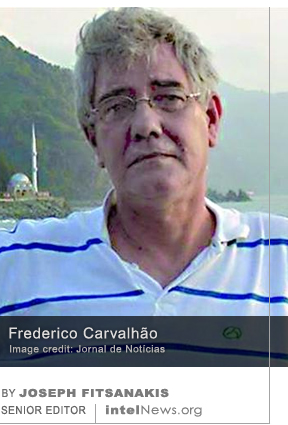 Two intelligence officers, one Russian and one Portuguese, have been arrested by Italian authorities on charges of espionage. The arrests took place in Rome on Monday by Italian police, who were reportedly accompanied by Portuguese counterintelligence officers. It is suggested in Portuguese media that the two men were arrested in the act of exchanging classified documents and money. The Portuguese intelligence officer has been identified in
 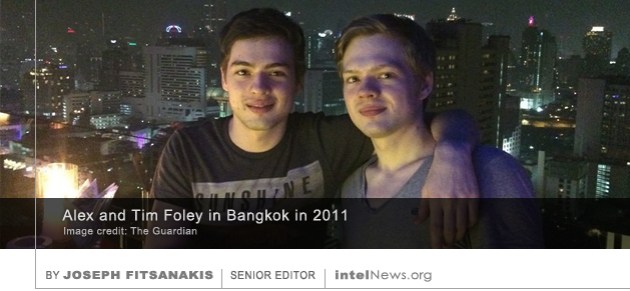 The two sons of a Russian couple, who were among 10 deep-cover spies arrested in the United States, have given an interview about their experience for the first time. Tim and Alex Foley (now Vavilov) are the sons of Donald Heathfield and Tracey Foley, a married couple arrested in 2010 under Operation GHOST STORIES, a counterintelligence program run by the US Federal Bureau of Investigation. Following their arrest, their sons, who had grown up thinking their parents were Canadian, were told that they were in fact Russian citizens and that their real names were Andrei Bezrukov and Elena Vavilova. Their English-sounding names and Canadian passports had been






 intelNews.org
Russia, Lithuania and Norway exchange prisoners in rare three-way spy-swap
November 18, 2019 by Joseph Fitsanakis 1 Comment
A major part of the process that led to last week’s spy swap was the decision of the Lithuanian parliament to approve altering the country’s criminal code. The new code allows the president of Lithuania to pardon foreign nationals who have been convicted of espionage, if doing so promotes Lithuania’s national interest. The new amendment also outlines the process by which the government can swap pardoned foreign spies with its own spies —or alleged spies— who may have been convicted of espionage abroad. On Friday, Lithuanian President Gitanas Nausėda announced he had pardoned two Russian nationals who had been convicted of espionage against Lithuania, in accordance with the new criminal code. The president’s move was approved by the country’s multi-agency State Defense Council during a secret meeting.
Shortly after President Nausėda’s announcement, Sergei Naryshkin, Director of Russia’s Foreign Intelligence Service (SVR) said that Moscow would immediately proceed with “reciprocal steps”. The Kremlin soon released from prison two Lithuanian nationals, Yevgeny Mataitis and Aristidas Tamosaitis. Tamosaitis was serving a 12-year prison sentence, allegedly for carrying out espionage for the Lithuanian Defense Ministry in 2015. Mataitis, a dual Lithuanian-Russian citizen, was serving 13 years in prison, allegedly for supplying Lithuanian intelligence with classified documents belonging to the Russian government.
The two Lithuanians were exchanged for two Russians, Nikolai Filipchenko and Sergei Moisejenko. Filipchenko is believed to be an officer in the Russian Federal Security Service (FSB), who was arrested by Lithuanian counterintelligence agents in 2015. He had been given a 10-year prison sentence for trying to recruit double agents inside Lithuania, allegedly in order to install listening bugs inside the office of the then-Lithuanian President Dalia Grybauskaite. Moisejenko was serving a 10½ year sentence for conducting espionage and for illegally possessing firearms. Lithuania alleges that Moisejenko had been tasked by Moscow with spying on the armed forces of Lithuania and NATO. Along with the two Lithuanians, Russia freed Frode Berg (pictured), a Norwegian citizen who was serving a prison sentence in Russia, allegedly for acting as a courier for the Norwegian Intelligence Service.
On Saturday, Darius Jauniškis, Director of Lithuania’s State Security Department, told reporters in Vilnius that the spy swap had taken place in a remote part of the Russian-Lithuanian border. He gave no further information about the details exchange, or about who was present at the site during the spy-swap.
► Author: Joseph Fitsanakis | Date: 18 November 2019 | Research credit: E.G. | Permalink
Filed under Expert news and commentary on intelligence, espionage, spies and spying Tagged with Aristidas Tamosaitis, espionage, Frode Berg, FSB, imprisoned spy swaps, Lithuania, News, Nikolai Filipchenko, Norway, Russia, Sergei Moisejenko, State Security Department (Lithuania), SVR (Russia), Yevgeny Mataitis