News you may have missed #0122

  • Canada authorities push for Internet spy bill. The push for new Internet surveillance capabilities in Canada –dubbed the “lawful access” initiative– dates back to 1999, when government officials began crafting proposals to institute new surveillance technologies in Canadian fifth-generation networks. Internet Service Providers are skeptical of the initiative, while law enforcement and security agencies argue that the changes are long overdue.
  • Peru’s former leader guilty of spying, bribery. Peru’s former strongman Alberto Fujimori pleaded guilty today to charges of wiretapping opponents and paying bribes to lawmakers and publishers during his rule from 1990 to 2000. Unfortunately, the CIA supported Fujimori and his right-hand man, Vladimiro Montesinos and even suppressed a CIA officer who tried to argue that supporting such lowlifes was politically wrong and ethically immoral.
  • CIA honors two spies. CIA director Leon Panetta awarded the Trailblazer Medal (the supreme decoration in the US intelligence community) to two agents, one of whom is the late John Guilsher, who recruited Soviet scientist Adolf Tolkachev at the height of the Cold War. Are we to presume that Panetta has not read the recent paper by Benjamin Fischer, former CIA clandestine operative and retired CIA historian, who claims that Tolkachev was actually a KGB double agent tasked by Soviet intelligence with providing US military strategists with false information?

Bookmark and Share

News you may have missed #0114

Bookmark and Share

News you may have missed #0098

Bookmark and Share

News you may have missed #0062

  • Hacking, Lock-Picking, Booze and Bacon. Excellent illustrated review of some of the highlights of DefCon 17, the world’s largest hacking convention, which took place in Las Vegas, Nevada.
  • Were NC terror suspect’s stories an exaggeration? There are more doubts over the genuineness of the Afghan exploits of Daniel Boyd, who was recently arrested along with seven others in North Carolina on domestic terrorism charges.
  • Ex-DHS boss comes out in support of controversial NSA project. Michael Chertoff, who directed the US Department of Homeland Security under the Bush Administration, has come out in support of EINSTEIN 3, a rumored joint project between the NSA and US telecommunication service providers, which requires the latter to route government data carried through their networks to the NSA, via secret rooms installed in exchange sites. Critics have condemned the project as “antithetical to basic civil liberties and privacy protections” in the United States.

Bookmark and Share

Wiretap whistleblower shunned by US Congress, media

Mark Klein

Mark Klein

By IAN ALLEN | intelNews.org |
Those of you who have been following the ongoing revelations about STELLAR WIND, the National Security Agency (NSA) warrantless wiretapping scheme authorized by the Bush Administration in the wake of 9/11, will know about Thomas M. Tamm. Tamm was the Justice Department official who in 2005 first notified The New York Times about the existence of the project. But Tamm was not the only whistleblower in the case. He was joined soon afterwards by another insider, Mark Klein. Klein had just retired from AT&T as a communications technician when he read The New York Times revelations about STELLAR WIND. As soon as he read the paper’s vague description of the NSA project, Klein realized he had in his possession AT&T documents describing exactly how the company shared its customers’ telephone communications with the NSA, through a secret room at the AT&T Folsom Street facility in San Francisco. To this day, Klein remains the only AT&T employee to have come forward with information on STELLAR WIND. But, apparently, nobody cares. Read more of this post

Private companies to help NSA monitor US government networks

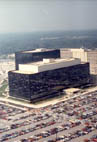
NSA HQ

NSA HQ

By IAN ALLEN | intelNews.org |
We have already mentioned on this blog that US President Barack Obama has decided to proceed with a Bush administration plan to use National Security Agency (NSA) assistance in screening government computer traffic on private-sector networks. NSA is America’s largest intelligence agency, which is tasked with worldwide communications surveillance, as well as communications security. Critics of the program suspect it may include EINSTEIN 3, a rumored joint project between the NSA and US telecommunication service providers, which requires the latter to route government data carried through their networks to the NSA, via secret rooms installed in exchange sites. Read more of this post

Fears raised of Iranian-style surveillance in the US

NSN Logo

NSN Logo

By JOSEPH FITSANAKIS | intelNews.org |
Nokia Siemens Networks has denied allegations, published in The Wall Street Journal and reported by intelNews, that it helped the Iranian government acquire what experts describe as “one of the world’s most sophisticated mechanisms” for spying on Iranian telecommunications users. But critics remain unconvinced and are raising concerns about the use of similar intrusive capabilities by Internet service providers (ISPs) in the US. The Open Internet Coalition, a consortium of online business and consumer groups, has sent letters [.pdf] to US Congress members urging them to consider regulating the use of deep packet inspection technology. In addition to blocking or monitoring target communications, deep packet inspection enables ISPs and monitoring agencies to trace and alter the content of messages exchanged between users. Read more of this post

News you may have missed #0011

  • Honduran coup a blow for Latin American leftist alliance. The Honduran coup is seen as a “regional test” for Washington’s post-Bush influence in Latin America, as Venezuelan President Hugo Chavez appears to be losing a political ally with the military ouster of Honduran President Manuel Zelaya. Interestingly, Zelaya took control of foreign-owned oil storage terminals in Honduras in 2007, thus effectively sidelining the traditional control of Honduran oil imports by Exxon Mobil and Chevron. 
  • Bulgaria chief spy’s car raided by thieves. The thieves apparently knew the car belonged to Petko Sertov, director of Bulgaria’s State National Security Agency (DANS), “since they managed to unlock it with a special key”. Note that the car was equipped with specially authorized fake license plates designed to prevent identification of the car’s owner. 
  • FBI refuses to reveal contents of wiretap gag order. The FBI had been ordered by a US federal court to justify the gag order it had placed on the telecommunication service provider (TSP) of “John Doe” in the Doe v. Holder. The FBI has now cooperated by justifying the gag order, but it’s done so in secret, because it maintains that revealing the TSP’s identity would result in various harms.

Western companies help Tehran spy on protestors

NSN Logo

NSN Logo

By JOSEPH FITSANAKIS | intelNews.org |
Numerous celebratory articles have appeared recently in several blogs that praise Western Internet firms for “help[ing] out the pro-democracy movement inside [Iran]”. These articles overlook Tehran’s extremely powerful Internet and telephone spying capabilities, which experts describe as “one of the world’s most sophisticated mechanisms”. Moreover, as intelNews reported last April, the Iranian government acquired these mechanisms with the help of some of Europe’s leading telecommunications hardware and software manufacturers, who were all too happy to supply Tehran with advanced means to spy on its own people. Read more of this post

News you may have missed #0001

Western companies sold phone spy equipment to Iran

By JOSEPH FITSANAKIS | intelNews.org |
For about a year now, political dissidents in Iran have suspected that the Iranian government’s ability to spy on private communications has intensified, covering for the first time cell phone and instant messaging exchanges. Last Monday it emerged that two European telecommunications hardware manufacturers are actually behind the Iranian government’s increased surveillance capabilities. The Wall Street Journal reports that Nokia Siemens Networks (NSN) sold Iran Telecom –Iran’s government-owned telecommunications provider– a sophisticated surveillance system, in the summer of 2008. NSN is an engineering partnership between Finland’s Nokia Corporation and German hardware manufacturer Siemens AG, Europe’s largest engineering firm. Read more of this post

Obama to protect immunity of TSPs who assisted in warrantless wiretapping

Holder

Holder

By JOSEPH FITSANAKIS | intelNews |
After assuring the CIA that “he has no plans to launch a legal inquiry” into its use of torture methods to interrogate prisoners, Barack Obama is now sending a similar message to telecommunications service providers (TSPs) who participated in the Bush Administration’s warrantless surveillance program. Eric Holder, who is Obama’s nominee for the position of US Attorney General, told the US Senate Committee on the Judiciary that the Obama Administration intends to safeguard the immunity of all TSPs that participated in warrantless wiretapping. Speaking before the Committee last Thursday, Holder said the new Administration will keep protecting TSPs from privacy lawsuits “[u]nless there are compelling reasons” to do otherwise. He did not specify what such “compelling reasons” might be. Read more of this post

UK Home Office to propose outsourcing interception database

A few months ago, UK Home Office Minister, Jacqui Smith, postponed the proposal of a controversial legislation placing in the hands of private companies a database containing all of the country’s intercepted telephone call and Internet traffic use data. The huge database collects the identity and location of all telephone callers and website visitors in the UK. Smith was eventually forced to abandon the plan, but now says she intends to publish a consultation paper re-introducing it to the public. She enjoys the backing of British law enforcement and intelligence services, who say “it is no longer good enough for communications companies to be left to retrieve such data when requested” to do so. Read more of this post

US federal appeals court upholds National Security Letters

National Security Letters (NSLs) are types of warrantless subpoenas issued by US government agencies. They are typically used to force organizations or companies to surrender information pertaining to individuals or groups. In the late 1970s, NSLs were used in rare instances by the FBI during investigations. The 2001 USA PATRIOT Act marked an unparalleled expansion of the power of NSLs, allowing their use against American citizens even in cases when they are not targets of criminal investigations. The USA PATRIOT Act also ratified a gag order provision preventing NSL recipients from disclosing the letter’s existence. The CIA, FBI and the US Department of Defense are all known to have issued several NSLs in recent years. Read more of this post