EgyptAir Flight MS804: Was it a terrorist attack?

EgyptAir MS804In the early hours of Thursday, May 19, EgyptAir, Egypt’s national airline carrier, announced via Twitter that flight MS804 had vanished from the radar. The regularly scheduled flight had departed Paris, France, on time at 11:09 p.m. and had been scheduled to arrive in Egyptian capital Cairo at 3:05 local time. The airplane, an Airbus A320-232, was carrying 59 passengers and 10 crew. According to reports, the airplane disappeared over the eastern Mediterranean, southeast of the island of Crete.

Was this a terrorist attack? It will be several hours before this question can be conclusively answered. However, there are some early indicators that can help shed some light on the incident.

1. What has happened to the plane? The plane has almost certainly crashed into the sea. It has now been five hours since it disappeared from the radar. The eastern Mediterranean is not like the vast Indian Ocean, where Malaysia Airlines Flight 370 literally disappeared in March 2014, never to be found. In the case of EgyptAir MS804, if the plane had landed at a regional airport, the sighting would have been reported immediately —even if it was in rebel-held Syrian regions, or Islamic State-controlled territory in Iraq.

2. If the plane has indeed crashed, what brought it down? The possibility of a mechanical failure cannot be excluded. However, the plane is relatively new; it was built in France in 2003 and is less than 13 years old, which may mean that a serious mechanical failure is relatively unlikely. Additionally, weather conditions over the eastern Mediterranean were reportedly “clear and calm” at the time when the plane vanished from the radar. Last but not least, it must be stressed that there was reportedly no distress call made by the pilots or crew before the flight disappeared from radar screens. Which brings us to the next question, namely:

3. Was this a terrorist attack? American and European intelligence agencies, including France’s own DGSE, have warned repeatedly in previous weeks that the Islamic State was “planning new attacks […] and that France [was] clearly targeted”. The Islamic State is currently one of very few terrorist organizations that have the technical expertise and momentum to compromise security measures at a European airport. Moreover, the Islamic State has declared war on France, has attacked the country numerous times, and has stated repeatedly that it intends to continue and even intensify itsQ Quote efforts. The group has remained silent since early this morning, when EgyptAir announced the disappearance of flight MS804. However, it typically waits for several hours, and sometimes days, before assuming responsibility for high-profile attacks.

4. If it was a terrorist attack, how was the plane brought down? It is important to note that the plane is believed to have been flying at 37,000 feet when it vanished from radar screens. This means that, assuming that a non-state actor caused the aircraft’s disappearance, the attack must have been perpetrated from inside the plane. At least three of the 10-member crew are believed to be armed security guards. If that is the case, a team of hijackers would have to have been sizeable enough and sufficiently armed to overpower three armed security guards. What is more likely is that a bomb may have been planted on the plane, either in Paris or Cairo (the plane was returning to Cairo, having left from there for Paris earlier on Wednesday). The last time that the Islamic State assumed responsibility for downing an airliner, it did so by planting a bomb aboard the plane with the help of a ground worker in Egypt who had secretly joined the militant group.

5. If it was a terrorist attack, what does it mean? Should the Islamic State assume responsibility for this attack, it will make it increasingly difficult for France —and possibly other Western European nations— to resist putting boots on the ground in Iraq and Syria. Moreover, if a bomb was planted on the plane at Paris’ Charles De Gaulle airport, it will mean that the Islamic State, or possibly another militant group, has found a way to beat what are perhaps the most stringent airline travel security measures in all of Europe. It could be that the group behind this possible terrorist attack has found a unique and thus far unforeseen way to defeat the latest technological measures used to secure airline travel. Such a possibility could spell even more massive changes for the world’s airline industry, which is already reeling from all sorts of financial and administrative pressures in the post 9/11 era.

Comment: Europe’s answer to Brussels bombs may be more damaging than ISIS

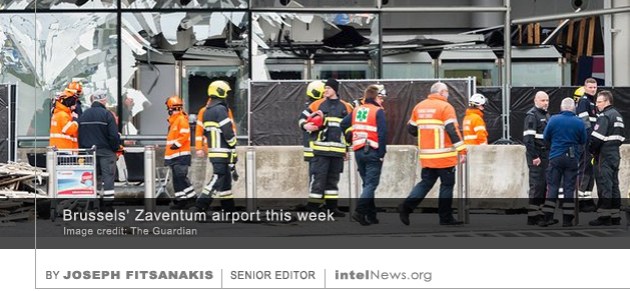
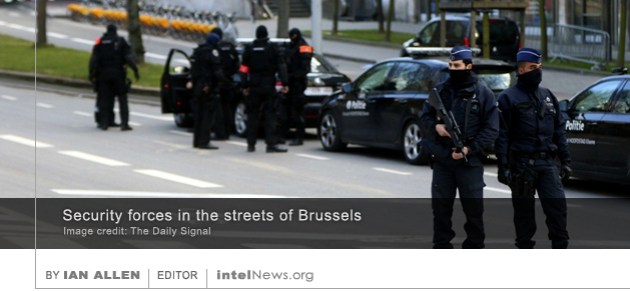
Brussels airportIn the past year, the Islamic State has claimed responsibility for at least nine terrorist attacks on foreign capitals. The growing list, which features Jakarta, Tunis, Paris, Beirut, Ankara, and Kuwait City, now includes the Belgian capital, Brussels. At least 34 people died in the attacks that rocked Brussels’ Zaventum airport and Maelbeek metro station on March 22, while another 300 were injured, 60 of them critically. This week’s bombings officially constitute the bloodiest terrorist attacks in Belgium’s history, prompting the country’s government to declare three days of national mourning.

Why did the Islamic State attack one of Europe’s smallest countries, with a population of just over 11 million? Some have suggested that Brussels was targeted by the terrorist group because it was an easy target. Observers noted that Belgium’s security and intelligence services are underfunded and demoralized —a “weak link in Europe”, in the words of one expert. There is no question that Belgium’s security apparatus is in need of serious overhaul; but the need is equally great in Amsterdam, in Athens, in Madrid, in Dublin, and elsewhere in Europe. In fact, the Islamic State could have struck any of these European capitals with the same ease that it attacked Brussels —and might still do so.

In reality, the Islamic State’s decision to attack Brussels was carefully calculated and consistent with the group’s overall strategy. The primary reason that the Islamists attacked Brussels is that Belgium is one of 30 countries that actively participate in the Combined Joint Task Force, the international group behind Operation Inherent Resolve. Led by the United States military, the operation has been targeting Islamic State forces in Iraq and Syria since October 2014. The Islamic State wished to send a message to Europeans that their military intervention in the Middle East will be costly at home. Secondly, Brussels was struck because it is the headquarters of the European Union, which last month declared the Islamic State’s campaign against religious and ethnic minorities in Syria and Iraq as an act of genocide. Third, and perhaps most importantly, Belgium was targeted because a significant percentage of its population —as much as 7 percent by some estimates— is Muslim.

What is more, the degree of integration of Belgian Muslims in mainstream life is markedly limited and partly explains why so many of them —400 by some estimates, the highest per-capita number in Europe—have emigrated to Syria and Iraq in order to join the Islamic State. It is worth remembering that the Islamic State emerged as the de facto guarantor or Sunni Muslims by essentially provoking Iraq’s Shiites to attack and marginalize the country’s Sunni Arab minority. Following a series of Shiite attacks against Sunni communities in Iraq, which were part of a broader post-2003 sectarian conflict between Sunnis and Shiites, the Islamic State emerged as the protector of Sunni Arabs and has since fought against Syrian Alawites, Hezbollah, Iranian forces, Iraqi Shiites, and others. Its popular support in Iraq and Syria stems from the fear held by Sunni Arabs that, if the Islamic State is defeated, their communities will be exterminated by vengeful and unforgiving Shiites.

Having gained from sectarianism in the Middle East, the Islamic State is now implementing the same tactic in Europe. It is thus targeting countries like France and Belgium, which have significant Muslim populations, in order to provoke aggressive reactions against domestic Muslim communities. In other words, it expects that attacks like those in Belgium will favor extremist ideologies throughout the European continent, and in turn further-marginalize European Muslims. The rise of Islamophobia, the strengthening of extremist political parties, and the disintegration of European values such as acceptance and tolerance, are likely to create a new generation of disaffected European Muslim youth, many of whom will be prime candidates for Islamic State membership.

European societies must not allow the Islamic State to change the political identity of an entire continent through violence. Along with meticulous police and intelligence work, the bombs in Brussels must be answered with concerted attempts to deepen the social integration of European Muslims, and more broadly to promote cohesion between ethnic and religious groups in Europe. Anything short of that will provide the Islamic State with the same strategic advantage it has enjoyed in the Middle East for nearly a decade.

* Joseph Fitsanakis is Assistant Professor in the Intelligence and National Security Studies program at Coastal Carolina University in the United States.
News you may have missed #893: Intelligence and the attacks in Belgium

BrusselsBelgian Intelligence Services ‘Overwhelmed and Outnumbered’. Tuesday’s deadly attacks on Brussels airport and a metro station, which left at least 30 people dead, demonstrate that the Belgian security forces are overwhelmed and outnumbered by the threat posed by radical Islamists, experts say. Belgium’s security services are not so much incompetent, say experts, as understaffed—that leaves them outnumbered by the high number of suspected radical Islamists, some home-grown and some who have traveled to Syria and back.
Belgian intelligence service seen as weak link in Europe. Following the Paris attacks last November, it became apparent that the real intelligence failure had not been French but Belgian. Before those attacks one of the Belgian intelligence services, Surete de L’Etat, had only 600 personnel to keep tabs on 900 “persons of interest”, many of them potential jihadis who have travelled to Syria and Iraq. Apart from the lack of capacity, the Belgian intel services also lack the capability to deal with an internal ISIS threat.

Belgium feared tragedy was coming but couldn’t stop it. Belgium feared tragedy was coming but couldn’t stop it. Belgium has been trying to fight a growing threat with a relatively small security apparatus. Although Brussels is the diplomatic capital of the world, Belgian state security has only about 600 employees (the exact figure is classified information). Its military counterpart, meanwhile, the Adiv, has a similar number. That makes just over a thousand intelligence officers to secure a country that hosts not just Nato and the EU institutions but countless other organisations.

Defector reveals thousands of Islamic State internal documents

ISIS - JFTens of thousands of classified documents belonging to the Islamic State have been released by a disillusioned former member of the organization, who says that the group has been taken over by secularists. According to British-based agency Sky News, the documents were provided on a memory stick stolen from the Islamic State by a Syrian former member of the organization, who goes by the name “Abu Hamed”. Hamed allegedly stole the documents from the Islamic State’s “internal security police”, which Sky News also refers to as “the group’s Security Service”. He took it with him when he defected from the organization, which he says he joined as a convert from the non-Islamist Free Syrian Army. He told Sky News’ Stuart Ramsay that he left the group after concluding that it had been “taken over” by former Iraqi soldiers belonging to Ba’ath, the secularist party that was at the heart of the regime led by the late Iraqi President Saddam Hussein. As a result, “Islamic rules […] have totally collapsed” inside the Islamic State, said Hamed.
The documents that Hamed gave Sky News are said to number in the “tens of thousands” and reportedly identify nationals from over 50 countries who are members of the Islamic State. Many of the documents contain the 23-question form that all prospective members of the Islamic State have to complete before being admitted into the organization. The questionnaires contain the prospective members’ names and aliases, contact information and family background, among other identifying data. Ramsay said he met Hamed “in a secret location in Turkey”, where the former Free Syrian Army soldier is now living after defecting from the Islamic State. According to the Sky News reporter, Hamed said he abandoned the Islamist organization because its current leadership consists almost exclusively of Ba’athists, who are not known for their religious views or lifestyle.

Ramsay reports that many of the names of Islamic State members that are contained in the documents are already “well-known” to Western and Middle Eastern intelligence agencies. But the collection of members’ names contains several individuals from the Middle East, Northern Africa, Europe, as well as North America, who were allegedly not included in intelligence agencies’ lists. One file surrendered by Hamed is headlined “Martyrs”, and allegedly features the names of members of a brigade that consists “entirely of fighters who wanted to carry out suicide attacks and were trained to do so”. Hamed is also reported to have told Sky News that the Islamic State is gradually abandoning its self-described state capital of Raqqa in Syria and relocating to Iraq. Sky News said it had informed Western government agencies about the documents.

Author: Joseph Fitsanakis | Date: 14 March 2016 | Permalink

Switzerland made secret deal with PLO in the 1970s, new book alleges

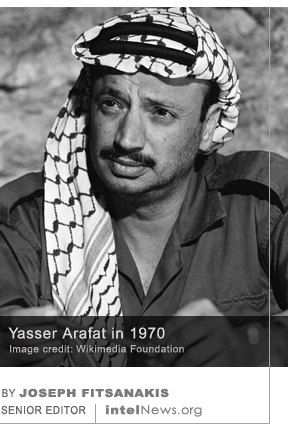
Yasser ArafatSwitzerland secretly agreed in the 1970s to support calls for Palestinian statehood, in return for not being targeted by Palestinian militants, according to a new book. Written by Marcel Gyr, a journalist with the Zurich-based Neue Zürcher Zeitung, the book alleges that the Swiss government took the unprecedented step of contacting Palestinian militants in 1970. According to Gyr, the move followed a series of attacks against Israeli targets in Switzerland by several Palestinian armed groups. In February 1969, Palestinian militants fired on an El Al airliner at Zurich’s Kloten Airport, killing the pilot. A year later, a Swissair Flight 330 from Zurich to Hong Kong with a stopover In Tel Aviv, Israel, exploded in mid-air, killing nearly 50 passengers and crew. The Syrian-backed Palestinian group Popular Front for the Liberation of Palestine – General Command (PFLP-GC) later claimed responsibility for the attack. In September 1970 another Swissair flight, headed to the United States, was hijacked and diverted to Jordan, where its passengers were held hostage.
It was during the latter incident, claims Gyr, that Switzerland’s Minister of Foreign Affairs, Pierre Graber, clandestinely contacted the Palestine Liberation Organization (PLO), the umbrella group that coordinated the activities of a multitude of Palestinian armed groups. Gyr alleges that Graber reached out to the PLO without informing his colleagues in the cabinet, and that he used a junior Swiss parliamentarian as an envoy and intermediary. Eventually, the PLO, which at the time was led by Yasser Arafat, agreed to release the hostages. He also offered to stop launching armed attacks, hijackings, and other violent operations on Swiss soil. In return, claims Gyr, Switzerland would agree to quietly abandon the investigation into the bombing of Swissair Flight 330, and to push for diplomatic recognition of the PLO as the legal representative of the Palestinian people.

Gyr claims that both sides kept their side of the bargain. The Swiss government gradually abandoned the investigation into the bombing of Swissair Flight 330. The country also led European efforts to offer diplomatic status to the PLO. Meanwhile, although the war between the PLO and Israel continued throughout Europe, no Palestinian attacks ever took place again on Swiss soil. Responding to Gyr’s book, Switzerland’s current Minister of Foreign Affairs, Didier Burkhalter, said he had no idea about the secret agreement and that he was “very surprised indeed” to know about it. Some Swiss political figures have asked for the establishment of a parliamentary inquiry to investigate Gyr’s allegations. It is unclear whether such a committee would have access to hundreds of thousands of pages about the Palestinian attacks in Switzerland, which today remain classified.

Author: Joseph Fitsanakis | Date: 25 January 2016 | Permalink

German police caught Anders Breivik with weapons prior to Norway massacre

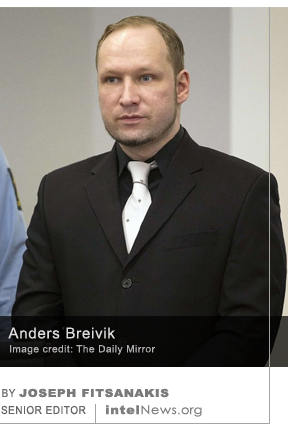
Anders BreivikPolice in Germany caught Anders Breivik with ammunition and weapon parts in 2009, two years before he killed nearly 80 people in Norway, but did not arrest him and failed to notify Norwegian police, according to a new documentary. Breivik is a jailed far-right terrorist, who in 2011 single-handedly perpetrated two terrorist attacks that killed 8 people in Norwegian capital Oslo and another 69 on the island of Utøya. During his trial, he said he killed his victims, most of whom were participants at a Norwegian Labor Party summer camp, in order to protest against “multi-culturalism” and “Islamization” in Norway. The attack, which included the use of a car bomb and semi-automatic weapons, is considered the deadliest terrorist incident in Norway’s history since World War II.
Last week, however, a new documentary aired on Franco-German television station ARTE claimed that German police could have helped stop Breivik’s deadly plans, when it caught the far-right militant with weapons parts and ammunition in 2009. The documentary, entitled Waffen für den Terror (Weapons for Terror) was directed by Daniel Harrich, a German documentary filmmaker who specializes in the international illicit weapons trade. Harrich alleges in his documentary that Breivik was stopped “in early 2009” by German police during a routine check in Wetzlar, a city of 60,000 located just north of Frankfurt.

Citing three unnamed sources, who allegedly verified the claims independently of each other, Harrich said that Breivik was found to be in possession of ammunition and was also carrying some weapons parts. But instead of detaining Breivik, who was carrying a Norwegian passport, and notifying the authorities in Oslo, the German police officers simply confiscated the ammunition and some weapons parts, before allowing him to go. According to Harrich, Breivik was even told he could hold on to a number of parts that German police determined could not be used to build a working weapon. Harrich’s documentary, which is in the German language, can be viewed at ARTE’s website, here.

Author: Joseph Fitsanakis | Date: 15 January 2016 | Permalink | News tip: C.W.

ISIS members attempting to target Russians in Thailand, FSB warns

ThailandRussian intelligence officials have warned authorities in Thailand that the Islamic State is planning to strike at Russian targets in the Southeast Asian country. Thai authorities received the warning in a memorandum dated November 27, 2015, which came from the Russian Federal Security Service (FSB). The document, marked ‘urgent’, warned of a series of coordinated attacks against Russian-related businesses and facilities in several cities across Thailand. Several Thai news sites, as well as CNN in the United States, said they had seen the memo. It was allegedly forwarded last week from the Royal Thai Police Special Branch division to police units across the country. It warned that the FSB had identified at least 10 Syrian citizens, all members of the Islamic State of Iraq and Syria (ISIS), who had entered Thailand between October 15 and October 31.
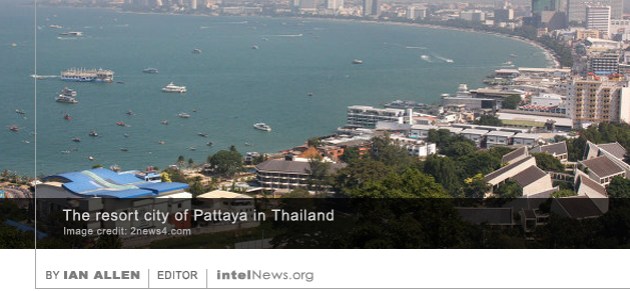
According to the FSB memorandum, the ISIS operatives had entered Thailand in three separate groups, arriving to the country from different international destinations. The largest of the groups, consisting of 4 members, is believed to have traveled to the coastal city of Pattaya (pictured), in eastern Thailand. Two more operatives went to Phuket Island in the Andaman Sea, while two other Syrians traveled to capital Bangkok. The two remaining members of the group went “to an unknown location”, said the FSB memorandum. After receiving the FSB memorandum, the Royal Thai Police issued a warning that ISIS may be trying to harm “Russians and Russia’s alliance with Thailand”. They also called for heightened security around tourist spots frequented by Russian tourists.

Phuket and Pattaya are busy resort destinations for Russian tourists, nearly 2 million of whom visit Thailand each year, many of them in December. The Russian Federation maintains consulates in both cities, in addition to the Russian embassy in Bangkok. When asked by reporters on Friday about the FSB memo, Royal Thai Police officials said they had not been able to locate the alleged ISIS members, but added that security had been increased across the country. General Thawip Netniyom, who heads the country’s National Security Council, said no “unusual movement” had been detected, and insisted that “everything is safe” in the country.

Author: Ian Allen | Date: 07 December 2015 | Permalink

New study documents views of defectors from Islamic State

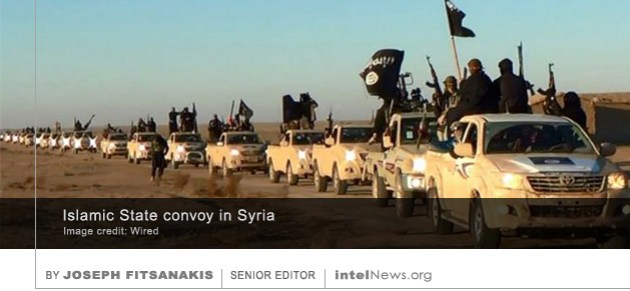
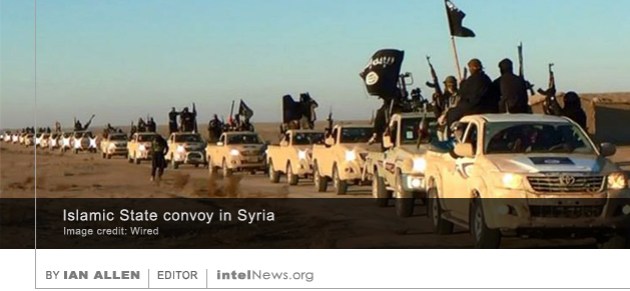
Islamic State convoy in SyriaA new study by a British-based organization details for the first time the views of dozens of former Islamic State fighters who have defected from the group in the past year. The study shows that most defectors were disillusioned after witnessing high levels of corruption among Islamic State members, or in response to the extreme violence perpetrated by the group against other Sunni Muslims. The research was carried out by the London-based International Center for the Study of Radicalization and Political Violence (ICSR), which said it gathered the publicly expressed views of nearly 60 Islamic State members who left the organization between August 2014 and August 2015.
According to ICSR Director Peter Neumann, who authored the report (.pdf), just over 30 percent of the defectors from the Islamic State are Syrian citizens, while one in four were born in other Middle Eastern countries. Neumann told a press conference held in London on Monday that many of the defectors saw life under the rule of the Islamic State as too austere. They also believed that the group was too unforgiving against fellow Sunni Muslims who did not agree with its stern doctrine. Some of the defectors complained that Islamic State commanders were more interested in launching attacks against other Sunni rebel groups than against the government of Syria, which is ostensibly the Islamic State’s foremost rival. Additionally, some defectors said that Islamic State commanders were obsessed and paranoid about alleged traitors and spies within the group’s ranks, and that they often ordered the execution of Islamic State fighters based on little or no evidence.

A smaller number of defectors said they had experienced racism from other Islamic State members, while others said that combat duties under Islamic State command was neither action-filled nor heroic. Moreover, luxury goods looted from civilians were rarely handed down to regular Islamic State troops by their commanders. Some defectors also stated that non-Arab fighters were used “as cannon fodder” by the Islamic State in battles that took place in Syria and Iraq. Neumann told reporters on Monday that the ICSR study challenged the portrayal of harmony and dedication that the Islamic State had carefully cultivated on social media.

Author: Joseph Fitsanakis | Date: 23 September 2015 | Permalink

British spy testifies in disguise in alleged al-Qaeda member’s trial

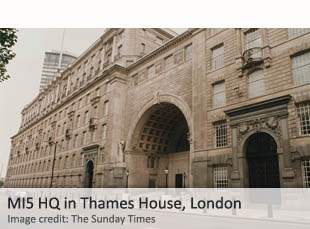
MI5 HQ Thames HouseBy IAN ALLEN | intelNews.org
A heavily disguised British intelligence officer has given evidence in the trial of the alleged leader of an al-Qaeda cell who is being tried in the United States for planning to bomb the New York subway system. Abid Naseer, 28, from Pakistan, was a studying in Britain in April 2009, when he was arrested by British police along with 12 other people for allegedly planning a series of suicide bombings in a popular shopping center in the city of Manchester. In January 2013, however, he was extradited to the US, where he also faces changes of having tried to organize suicide attacks against the New York public transportation system.

American prosecutors claim Naseer received paramilitary training in Pakistan before moving to the UK intent on carrying out terrorist attacks. Last year, the prosecution asked the judge whether six intelligence officers from the UK’s Security Service (also known as MI5), who monitored Naseer’s activities in the months leading up to his arrest, could provide evidence in court. Moreover, the prosecution requested that the MI5 officers be allowed to provide evidence without revealing their identities, since they work as surveillance operatives and are currently involved in counterterrorism investigations. The judge agreed, and the first of the six MI5 officers gave evidence this week through a video link from an undisclosed location in the Britain.

The witness concealed his identity by wearing a false goatee beard, thick spectacles and what reporters described as “a long black wig”. He was also wearing heavy make-up and was identified in court only as “serial number 1603”, according to British newspaper The Daily Telegraph. He told the court that he was part of a large team of MI5 surveillance officers who closely followed Naseer for over a month while he was allegedly planning suicide operations in Britain and the US. The physical surveillance included following the suspect as he was scouting targets in Manchester and sitting behind him on a bus traveling from Manchester to Liverpool. Naseer is defending himself in the trial and had the chance to cross-examine the MI5 officer, said The Telegraph.

Opinion: Paris attackers bring Mideast urban warfare to Europe

Attack on Charlie HebdoBy JOSEPH FITSANAKIS* | intelNews.org
Until Wednesday morning, the last time the offices of Charlie Hebdo, France’s best known satirical weekly, were attacked was on November 2, 2011. On that day, unknown assailants had thrown Molotov cocktails into the premises, setting them on fire. Since that attack, France has seen its share of Islamist-inspired terrorist incidents. In March of 2012, French citizen Mohammed Merah shot dead three French soldiers before attacking a Jewish school in Toulouse, where he killed three students and a teacher. Last May, authorities in Marseille arrested another Frenchman, Mehdi Nemmouche, for opening fire at a Jewish museum in Belgian capital Brussels earlier that month, killing a French national and two Israeli citizens. And the French public has been shocked in recent months by a number of seemingly random attacks on pedestrians by vehicles driven by Muslim Frenchmen, who appear to be politically motivated.

The common thread running through these incidents is that they were all haphazardly planned and executed by ‘lone-wolf’ attackers, who were markedly limited in both resources and skill. But the men implicated in Wednesday’s attack on Charlie Hebdo, which left 12 people dead, were different. The two brothers, Cherif and Said Kouachi, who are said to be the main perpetrators of the assault, are believed to have “returned to France from Syria in the last year”, according to MSNBC. Undoubtedly, the two siblings saw action in the Syrian armed conflict, which is primarily fought in urban settings, and were systematically trained in urban warfare by men with considerable experience in it.

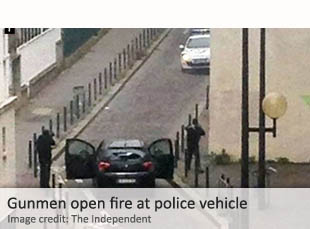
This explains their proficient delivery on Wednesday, as shown in the footage of the bloody attack, which has emerged since. The assailants arrived at their target carrying Kalashnikov rifles and magazines, neither of which can be easily acquired in France. Once inside the building, they remained there for a good 12 minutes, carefully executing their victims, some of whom they methodically sought out by name. They exited just as they entered, calm and collected. Even when they encountered a police vehicle, they stopped, aimed and shot at its passengers with considerable discipline, firing single or —in a handful of cases— double shots, instead of opting for bursts of rapid fire, which is the hallmark of inexperienced users of automatic rifles in moments of panic. After executing the police officers, they calmly walked back into their getaway vehicle and slowly drove away. It has been reported that at no point did they break the speed limit during their escape. Read more of this post

Yemeni troops kill al-Qaeda suspects disguised as women

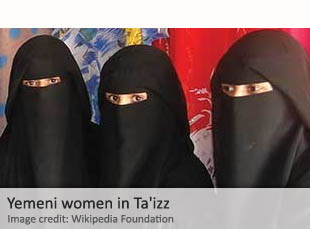
Yemeni women in Ta'izzBy IAN ALLEN | intelNews.org
Troops in Yemen shot dead five men, believed to be members of al-Qaeda, who tried to pass through a security checkpoint disguised as women. The incident reportedly happened on Saturday at an emergency roadside checkpoint set up by Yemeni troops in Harad, a dusty desert town located 10 miles south of Yemen’s border with Saudi Arabia. According to official reports, a minivan drove up to the checkpoint carrying what appeared to be six women, which was heading toward the Saudi border. All passengers were dressed in black robes and wore the niqab, a black cloth used to hide the face and worn along with the hijab, which typically covers a woman’s hair. The niqab is worn in several Arab countries, including Yemen, Saudi Arabia, Oman, and Bahrain. Yemeni soldiers conferred briefly with the male driver of the vehicle before one of them climbed onboard the minivan for a routine inspection. At that moment, one of the minivan passengers opened fire at the soldier, wounding him. The rest of the members of the inspection unit then opened fire on the passengers, killing five of them. Following the incident, the Yemeni soldiers discovered that the minivan’s passengers were all men and had been armed. An official speaking at a press conference later that day reported that at least two of those killed were Saudi citizens. He added that one of the passengers, who was also disguised as a woman, survived, as did the male driver of the minivan. All are believed to be members of al-Qaeda in the Arabian Peninsula (AQAP), an armed Islamist movement that is widely seen as the most formidable branch of al-Qaeda anywhere in the world. Following the 2011 uprising in Yemen, which was part of the Arab Spring, AQAP took advantage of the collapse of the Yemeni state and took over large swathes of territory in Sunni-dominated eastern and southern Yemen. These areas are still considered AQAP strongholds today. Security forces in Yemen often conduct roadside inspections, but they rarely enter vehicles carrying women, in an attempt to respect tribal customs in what is a very conservative part of the Arab world. Authorities in Harad said on Saturday that, following the shootout, a suicide belt and several weapons were discovered onboard the minivan. The surviving passenger is being questioned, along with the driver of the vehicle.

Ex-MI6 counterterror chief urges caution in tackling ISIS threat

Richard BarrettBy IAN ALLEN | intelNews.org
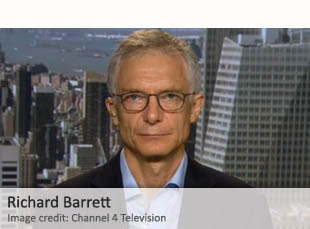
Britain should not hurriedly change its laws to counter the perceived danger posed by homegrown militants that have joined the Islamic State, according to the former head of counterterrorism for Britain’s Secret Intelligence Service (MI6). Richard Barrett, a former diplomat, served as Director of Global Counter Terrorism Operations for MI6, Britain’s foreign intelligence agency, and is considered an international authority on counterterrorism. He told The Guardian newspaper that it would be wrong for the British government to introduce legislation effectively criminalizing travel to Iraq or Syria by British subjects. Barrett was responding to a newspaper article by London mayor Boris Johnson, who criticized Britain’s conservative government for not taking active steps to prevent British citizens form traveling to Syria and Iraq in order to join the Islamic State, also known as the Islamic State of Iraq and al-Sham, or ISIS. Johnson said he supported calls for British members of the Islamic State to be stripped of their British citizenship, even if that meant they would be left stateless —a violation of United Nations law. The London mayor further suggested that all British citizens travelling to Syria and Iraq without first notifying the government, should be legally considered as having traveled there “for a terrorist purpose”. He added that the burden should be on them to prove that they were “acting innocently” while abroad. But Barrett dismissed Johnson’s proposals, saying that they would cancel age-old principles of British common law and could potentially criminalize British citizens who traveled to the Middle East for legitimate purposes. Read more of this post

White man allegedly led Kenya Islamist attack that killed 60

Mpeketoni, KenyaBy IAN ALLEN | intelNews.org
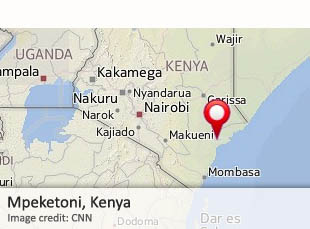
Survivors of a militant Islamist attack on a Kenyan coastal town said they witnessed a white man speaking in English and Arabic coordinating the operation that left 60 people dead. The bloody attack took place on Sunday in Mpeketoni, a small town located near the Kenya’s Lamu archipelago on the Indian Ocean. Witnesses said a group of 40 heavily armed men stormed the town in small teams and took it over last Sunday morning. Once they had established control, they visited almost every house asking residents if they were Muslim. If they failed to pass a simple test, they were executed on the spot. The attack is believed to have been carried out by al-Shabaab, a Somali-based Islamist group that has links to al-Qaeda. But survivors of the horrific raid have told British newspaper The Daily Telegraph that the leader of the attackers was “pale-skinned” and “spoke English and Arabic”. The paper quoted Mpeketoni schoolteacher Mary Gachoki, who said she saw “a white man who was speaking in fluent British English commanding the rest of the attackers”. The Telegraph report cited the accounts of several more witnesses, including a woman who saw “a white man” among the attackers, who “was commanding them and was shooting now and then”. She added that “at one point he spoke in Arabic but most of the time in English”, with a British accent. One witness said the pale skinned man “was either white or an Arab”. These accounts are believed to strengthen the view that the attack was indeed carried over by al-Shabaab. The group has strong links with foreign Arab or European-born Islamists who routinely travel to Somalia to join the group’s ranks. But the claims also bring to mind similar allegations made following last September’s attack at the upscale Westgate shopping mall in Kenyan capital Nairobi, which killed nearly 70 people. Read more of this post

British, American citizens among Kenya shopping center attackers

Westgate shpping mallBy JOSEPH FITSANAKIS | intelNews.org
Several Americans and at least one British subject were allegedly involved in planning and carrying out the armed attack on a shopping center in Kenya last week, according to the Kenyan government. The bloody attack was carried out on September 21 at the upscale Westgate shopping mall in Kenyan capital Nairobi. At least 15 attackers stormed the shopping complex and executed several shoppers in cold blood, before proceeding to take several people hostage. Responsibility for the attack has been claimed by Somali Islamist group al-Shabaab. The group has been at war with the Kenyan government since October of 2011, when Kenyan troops invaded Somalian territory. The group said that the attack had been carried out as retribution for Kenya’s invasion of Somalia. Kenyan officials have so far refused to speculate on the precise identity of the perpetrators of the Westgate attack. But on Tuesday, Kenyan President Uhuru Kenyatta said during a televised address to the nation that some of the identities of the armed militants who stormed the complex had been confirmed. He added that the perpetrators included a British woman and “two or three” American citizens. A few hours later, Kenyan Minister of Foreign Affairs, Amina Mohamed, said during a press conference that, according to information currently available, “one Brit[ish subject], a woman”, had been involved in the attack. She added that the female suspect “has done this many times before”, implying that she is a seasoned Islamist militant. Minister Mohamed added that “two or three Americans […], aged about 18 or 19”, were also involved in the attack, adding that they were Arab or Somali in origin and had moved to Africa from “Minnesota and one other place” in the United States. Read more of this post

Hezbollah cell ‘connected with Boko Haram’ arrested in Nigeria

Weapons cache discovered in KanoBy JOSEPH FITSANAKIS | intelNews.org |
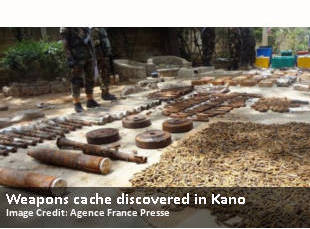
Nigerian authorities have announced the arrest of three alleged members of Lebanese group Hezbollah, following the discovery of a large weapons and explosives cache in northern Nigeria. Representatives of the West African country’s military and the State Security Service said on Thursday that three Lebanese nationals had been arrested between May 16 and 28. They were identified as Mustapha Fawaz, Abdullah Tahini and Talal Roda, with the latter being a dual Nigerian-Lebanese citizen. They are accused of being members of Hezbollah, the militant Shiite group that controls large swathes of Lebanese territory. All were reportedly arrested in Kano city, northern Nigeria’s most notable commercial center, which is home to a substantial Lebanese community of merchants. Nigerian security forces raided a warehouse adjacent to a residence belonging to a Lebanese national, where they discovered a hidden underground bunker below the master bedroom. In there they found and confiscated large quantities of assorted weapons, including a dozen anti-tank rockets, a rocket-propelled grenade launcher with 21 missiles, 19 AK-47 and submachine guns, as well as 76 grenades. Nigerian government representatives told local journalists on Thursday that the cache was “a Hezbollah armory” belonging to “a cell of Hezbollah”. A few hours later, officials of Israel’s Counter Terrorism Bureau (CTB) said Tel Aviv was aware of the Nigerian government’s operation. Read more of this post