Analysis: The Danger in Ignoring Non-Muslim Religious Terrorism
July 6, 2012 3 Comments
 By JOSEPH FITSANAKIS | intelNews.org |
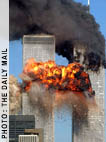
Even though over a decade separates us from the tragic events of September 11, 2001, Americans continue to be heavily preoccupied with terrorism. But what is the face of terrorism in our time? Too often, the term ‘terrorist’ conjures up the stereotypical image of an Arabic-speaking Muslim male from the Middle East —viewed by many Westerners as an abstract geopolitical notion that erroneously includes Afghanistan. There is no doubt that Islamic-inspired terrorism is both very real and very dangerous. However, consciously or subconsciously associating terrorism solely with Islam is not only flawed, but also potentially dangerous for our collective security. In reality, all religious dogmas contain extremist elements. This includes religious doctrines that are widely considered peace-loving, such as Anabaptism, or even Buddhism. A case in point that is often overlooked by Westernern observers is Aum Shinrikyo, the Japanese millenarianist cult inspired by Buddhist tenets. In 1995, Aum members used sarin gas in a large-scale terrorist attack on the Tokyo subway system, which killed 13 and injured close to a thousand commuters. In later years it was revealed that, prior to engaging in chemical terrorism, Aum had become history’s first known terrorist group to actively try to acquire nuclear material for tactical purposes. It was only after failing to obtain nuclear material that Aum’s leadership turned to sarin. This past Thursday, July 5, an interview of mine was aired on this very subject, namely the current state of homegrown, religiously-inspired terrorism in the United States. Read more of this post












 intelNews.org
Pakistani militant group ‘more dangerous than al-Qaeda’: ex-CIA official
July 11, 2012 by Joseph Fitsanakis 3 Comments
A former senior official of the United States Central Intelligence Agency has argued that al-Qaeda is no longer the most powerful group in the global Islamist insurgency. Writing in The Daily Beast earlier this month, Bruce Riedel, who served in the CIA for nearly 30 years prior to his retirement in 2006, warned that Lashkar e-Taiba is now “the most dangerous terror group in the world”. In his editorial, the former CIA analyst, who is now a professor at the Johns Hopkins School of Advanced International Studies, said that LeT operates freely inside Pakistan and continues to have strong operational connections with the Pakistani armed forces and the country’s intelligence establishment. Since its founding in 1990, LeT’s traditional political aspiration has been to end Indian rule over the predominantly Muslim state of Jammu and Kashmir, and then integrate the latter with Pakistan. But the group’s aims appeared to expand significantly in November of 2008, when it sent ten heavily armed operatives to Mumbai on speedboats. Once they landed in India’s most populous city, the LeT operatives proceeded to strike nearly a dozen tourist-related targets in well-calculated suicide missions. By the end of the four-day terrorist spree, 166 people —including six Americans and many other Western tourists— had been killed. Riedel views the 2008 Mumbai strike as “the most significant and innovative terrorist attack since 9/11”, and says that it marked LeT’s maturation “from a Punjabi-based Pakistani terror group targeting India exclusively” to an outfit with a global outlook, “targeting the enemies of al Qaeda: the Crusader West, Zionist Israel, and Hindu India”. Today, nearly four years after the Mumbai attacks, LeT maintains a global presence, with active cells throughout the Middle East and Asia, and funding operations in North America, Australia and Europe, claims Riedel. Additionally, LeT does not appear to feel threatened by Washington. Read more of this post
Filed under Expert news and commentary on intelligence, espionage, spies and spying Tagged with 2008 Mumbai attacks, Bruce Riedel, CIA, Hafeez Saeed, India, Lashkar-e-Taiba, Pakistan, terrorism, United States, War on Terrorism