British civil servants warned of listening devices in pubs near government buildings

Parliament StreetBRITAIN’S SECURITY AGENCIES HAVE reportedly warned civil servants and parliamentarians that public places located near government buildings may be bugged by foreign intelligence agencies. The warning covers the SW1 postcode district of southwest London, which encompasses the City of Westminster and includes the Houses of Parliament, the Office of the Prime Minister at 10 Downing Steet, and Whitehall. The latter is home to several ministries and departments, including the Foreign and Commonwealth Office, the Cabinet office, and the Ministry of Defense.

The historic London borough is littered with historic public houses (commonly referred to as ‘pubs’) and restaurants, where thousands of parliamentarians and civil servants, as well as their aides, gather for lunch or drinks on weekdays. The area is also home to numerous parks, where many government workers eat their lunch during breaks—weather permitting. Among them is St. James’ Park, which is adjacent to Downing Street and within a short walking distance from the Treasury and the Foreign Office.

It is for these reasons, according to Britain’s Daily Mail newspaper, that foreign intelligence agencies consider these gathering hotspots as targets. The paper reports that “Chinese and other spies, including the Russians and Iranians” consider these prime SW1 locations as “the soft underbelly of Whitehall”. Accordingly, government officials holding sensitive positions, as well as junior staff working for them, have been warned to refrain from work-related discussions when frequenting these locations for lunch of drinks after work.

One source reportedly told the paper that St. James’ Park is “full of Chinese agents”, and went on to say: “we have been told the Chinese literally have the park bugged, with devices in the bushes and under park benches”.

Author: Joseph Fitsanakis | Date: 21 April 2025 | Permalink

Reuters publishes details about alleged Russian airline sabotage plot

DHL AviationTHE REUTERS NEWS AGENCY has disclosed more information about an alleged plot by Russian intelligence to detonate bombs on cargo flights from Europe to North America. Initial details of the plot emerged in October 2024, when it was reported that explosions had occurred earlier that year at shipping warehouses in England and Germany. It later emerged that a similar explosion had occurred at a third shipping warehouse, located in Poland.

It is now understood that the explosions occurred on July 19, 20 and 21, 2024, and that at least two of them took place in facilities belonging to DHL, a German logistics firm headquartered in Bonn. Affected facilities are reportedly located in Leipzig, Warsaw, and Birmingham. All three explosions were caused by rudimentary incendiary devices hidden inside commercial shipments. European officials said at the time that the explosions were part of a broader wider campaign by Russian intelligence to sabotage Western European transportation and shipping networks.

Now the Reuters news agency claims that the explosions were meant to test security systems in preparation for a major sabotage operation. The operation aimed to detonate explosive mechanisms in mid-air on cargo flights from Europe to the United States and Canada. Moreover, a fourth incendiary device, which was found at a Warsaw shipping facility, failed to explode and has been forensically examined by bomb experts, Reuters said. Citing “interviews with more than a dozen European security officials”, including a person familiar with the case in Poland, the news agency said it was able to provide “the most granular account yet of the alleged plot”.

The report claims the incendiary devices were concealed inside pillows, bottles of cosmetics, and sex toys. They were ignited with the use of remote timers taken from cheap Chinese electronic goods. Once detonated, the timers sparked explosions with the help of gelled flammable cocktails that included compounds such as nitromethane—a highly flammable liquid chemical used in industrial applications. All ingredients used in the incendiary devices, including nitromethane, are easily accessible to consumers at a relatively low cost.

According to Reuters, the procedures followed in the DHL attacks fit the profile of similar operations that have been carried out in recent years by the Main Intelligence Directorate of the Russian Forces’ General Staff, known as GRU. Such procedures include hiring disposable agents, most of which are not Russian citizens, for one-off operations. In the case of the DHL attacks, the agents were allegedly hired on the encrypted messaging platform Telegram and paid with the use of cryptocurrencies, or in cash.

Among the alleged suspects in the case is a Ukrainian man identified by Reuters as Vladyslav Dekravets, who was recruited in southern Poland and is now facing extradition to Poland from Bosnia. Another suspect, identified in the Reuters report as Alexander Bezrukavyi, allegedly packaged parcels containing sneaker shoes for shipment to the United States and Canada. The shipments were intended to help the GRU “gather information about parcel-processing methods and timing”. During the operation, the two men came in contact with individuals who appeared to be GRU officers, using the cryptonyms WARRIOR and MARY.

The DHL cases remain at a pre-trial stage in several European countries, Reuters said. They involve the pending extradition of suspects from elsewhere in Europe. The trials are going to feature evidence gathered from criminal investigators and intelligence agencies, according to the report.

Author: Joseph Fitsanakis | Date: 07 April 2025 | Permalink
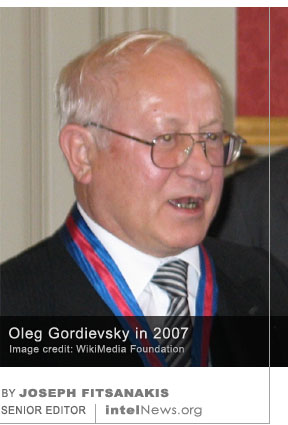
Death of Soviet defector Gordievsky not seen as suspicious, British police say

Oleg GordievskyBRITISH MEDIA REPORTED THE death on Saturday of Oleg Gordievsky, arguably the most significant double spy of the closing stages of the Cold War, whose disclosures informed the highest executive levels of the West. Having joined the Soviet KGB in 1963, Gordievsky became increasingly disillusioned with the Soviet system of rule following the 1968 invasion of Czechoslovakia.

By 1974, Gordievsky had established contact with Danish and British intelligence and was regularly providing information to Britain’s Secret Intelligence Service (MI6). After 1982, when Gordievsky was posted to the Soviet embassy in London, MI6 deliberately subverted his superiors at the embassy by expelling them. This effectively enabled Gordievsky to take their place and rise to the position of resident-designate of the KGB station in London.

Intelligence historians credit Gordievsky’s intelligence with having shaped the strategic thinking of British and American decision-makers in relation to the Soviet Union. Crucially, Gordievsky’s warnings to MI6 that the Kremlin was genuinely concerned about a possible nuclear attack by the West prompted British and American leaders to temper their public rhetoric against the Soviet Union in the mid-1980s. Some even credit Gordievsky with having helped the West avoid a nuclear confrontation with the Soviet Union.

In 1985, while undergoing interrogation by the Soviet authorities, Gordievsky was smuggled out of Russia by British intelligence, hidden inside a car that made its way to Finnish territory. He was subsequently sentenced in absentia to death for treason against the Soviet Union. In 1991, following an agreement between British and Soviet authorities, Gordievsky’s wife and daughters were allowed to join him in England.

According to Surrey Police, officers were called to a residential address in the city of Godalming on Tuesday March 4, where they found 86-year-old Gordievsky’s body, surrounded by members of his family. Godalming is a small market town in southeastern England, located around 30 miles from London. Surrey Police noted in a statement that the investigation into Gordievsky’s death was led by counterterrorism officers. However, his death was “not being treated as suspicious”.

Gordievsky spent nearly 40 hours in a coma in 2007, from which he eventually recovered. He subsequently claimed that he had been poisoned after taking sleeping pills tainted with a lethal toxin, which had been supplied to him by a man he referred to as a “business associate” with a Russian background.

Author: Joseph Fitsanakis | Date: 24 March 2025 | Permalink

Russia expels two UK diplomats, accuses London of sabotaging Trump peace plan

FSB RussiaTHE RUSSIAN FEDERATION HAS revoked the accreditation of two British diplomats over espionage allegations, while also accusing the United Kingdom of sabotaging the United States’ “peace plan” for Ukraine. The Russian Federal Security Service (FSB) said on Monday that the diplomatic expulsions involved two British men, a diplomat stationed at British embassy in Moscow, as well as a spouse of another British diplomat.
According to the FSB, the two men “intentionally provided false information” to Russian authorities when they were granted official permission to enter the country, which made them ineligible for continued accreditation. Additionally, the FSB claims it has in its possession evidence that the two men have been “carrying out intelligence and subversive work” on Russian soil, which “threatens the security of the Russian Federation”.

In February of this year, the United Kingdom expelled a Russian diplomat in an apparent response to earlier expulsions of British diplomats by Russia, which occurred in November 2024. The rounds of diplomatic expulsions between London and Moscow go back to at least 2022, after Russia invaded eastern Ukraine for the second time. This week’s expulsions raise the number of British diplomats that have been expelled from Russia to seven.

Meanwhile Russia’s Foreign Intelligence Service (SVR), which carries out intelligence operations abroad, has accused Britain of being “the world’s biggest warmonger”. In a statement shared with reporters on Monday, the SVR claimed that London was actively sabotaging American efforts to “secure peace” in Ukraine by “undermining the peacekeeping efforts” of United States President Donald Trump.

In a statement issued on Monday, the British Foreign and Commonwealth Office said it was not the first time that Russia had leveled “malicious and baseless accusations” against its diplomats.

Author: Joseph Fitsanakis | Date: 10 March 2025 | Permalink

British soldier who spied for Iran found guilty of espionage and terrorism

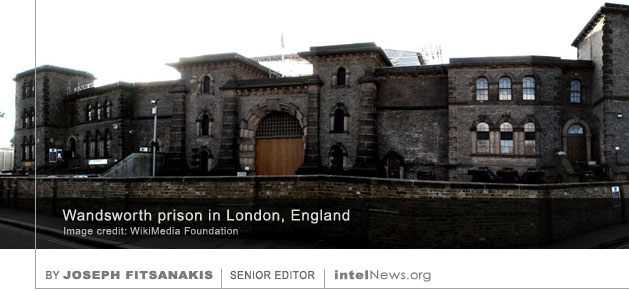
Wandsworth prisonDANIEL KHALIFE, A BRITISH soldier who spied for Iran, has been found guilty of espionage and terrorism, in a case that has revealed serious vulnerabilities in the British security clearance-vetting system. The then-20-year-old Khalife was arrested in January 2022 while serving on active duty in Staffordshire, in Britain’s Midlands region. He was charged with violating the Official Secrets Act 1911 and the Terrorism Act 2000.

Prior to his arrest, Khalife was reportedly seen by his fellow soldiers and superiors as a promising soldier. Having joined the British Army at 16, he was quickly promoted to lance corporal (the lowest ranking of a non-commissioned officer) and cleared to work in the area of signals intelligence. He had also expressed a strong interest in joining the Special Air Service (SAS), which are the British Army’s special forces.

However, on November 9, 2021, Khalife voluntarily called the national security concerns hotline of the British Security Service (MI5). He told the operator on the other end of the line that he was a British soldier who had been spying for Iran for “more than two years”, but had now decided to become a double agent by cooperating with the British government. Khalife called again, and although he did not identify himself during the telephone conversations, MI5 was able to track him.

It has since become known that Khalife began spying for Iran when he was just 17 years old, shortly after joining the British Army. Over the next two years, Khalife provided his Iranian handlers with information about the identities of SAS personnel, military computer systems, as well as government surveillance programs and hardware, including unmanned aerial vehicles. Throughout that time, he communicated with his Iranian handlers via the Telegram instant messaging service, or via dead drops in Britain, as well as during trips abroad.

Shockingly, Khalife was temporarily able to escape justice twice following his arrest. In January 2023, he disappeared while on bail. He was found after nearly a month, living in a stolen van, which he had converted into a rudimentary camper. In September of that year, Khalife escaped from Wandsworth prison (pictured) in southwest London, by hiding beneath a delivery vehicle. He was captured three days later and eventually taken to court, where he was convicted and is now awaiting sentencing.

According to reports, British authorities are still unable to piece together the entirety of the information that Khalife shared with the Iranians. Consequently, the full extent of the damage he caused to British national security remains unknown. What is clear is that the Khalife case has exposed serious vulnerabilities in the security clearance-vetting process, which is “lacking in a lot of ways” —not least in the fact that it relies largely on self-reporting, as one expert told The Guardian newspaper on Saturday.

Author: Joseph Fitsanakis | Date: 02 December 2024 | Permalink

Possible Russian role probed in incendiary devices found in Britain and Germany

DHLAUTHORITIES IN BRITAIN AND Germany are reportedly investigating the possibility that the Russian intelligence services may be behind two fires that occurred in shipping warehouses last summer. The fires occurred in late July in facilities belonging to DHL, a German logistics firm headquartered in Bonn.

On September 1, the German government issued a warning about unknown suspects allegedly shipping “unconventional incendiary devices” throughout Europe. The warning referenced a fire that occurred at a DHL logistics center in the east German city of Leipzig. Germany’s Federal Office for the Protection of the Constitution (BfV) warned at the time that “further incendiary incidents” were anticipated, but provided no further details.

Late last week, British newspaper The Guardian reported that an incident like the one that occurred in Leipzig had taken place in a DHL warehouse in Minworth, a suburb of the city of Birmingham, located in the British Midlands region. In subsequent reporting, the paper alleged that British and German authorities have been investigating a link between the two incidents. Moreover, authorities are reportedly probing the possibility that the incidents may be part of a wider campaign by Russian military intelligence to sabotage Western European transportation and shipping networks.

Meanwhile, Lithuanian media revealed on Friday that a suspect had been arrested in Lithuania in connection with the two fires in Britain and Germany. The reports suggested that the two incendiary devices had been shipped from Lithuania by the same individual. However, there have been no updates about who may be behind the apparent sabotage campaign.

Author: Joseph Fitsanakis | Date: 21 October 2024 | Permalink

China accuses married couple of spying for Britain’s MI6

MSS China - IATHE SPY CONFLICT BETWEEN China and the United Kingdom escalated last week, as the Chinese government accused a married couple of carrying out espionage missions on behalf of British intelligence. In a rare statement to the press, China’s Ministry of State Security (MSS) said it was investigating the activities of a husband-and-wife team, whom it accused of working as assets for Britain’s Secret Intelligence Service, better known as MI6.
According to the MSS statement, the husband, whose last name is Wang, participated in a student exchange program in the United Kingdom in 2015. While there, he was surreptitiously accosted by MI6 and was invited to dinners and other outings. Eventually Wang was offered part-time employment as a consultant for a British firm that operated as a front for MI6. He was eventually approached by MI6 directly and was recruited as a spy in exchange for substantial monetary rewards.

Wang was allegedly trained in espionage tradecraft and returned to China to collect intelligence on the Chinese government on behalf of MI6. The MSS claims that Wang’s MI6 handlers asked him to recruit his wife, whose last name is Zhou, as a spy. Eventually both Wang and Zhou spied for MI6 in return for money. It is not known whether the alleged spies worked for the MSS or another intelligence-related government agency.

The MSS press statement was issued a few days after the agency unveiled a seemingly unconnected case of espionage involving “a former government employee who was lured by a foreign intelligence agency through the internet” and “stole secrets for money”. The MSS also said that the man’s handler, named Xiao Jing, had been arrested and charged with operating as “a spy working for a foreign intelligence agency”.

Author: Ian Allen | Date: 03 June 2024 | Permalink

Alleged Afghan-born Russian spy tries to regain revoked British citizenship

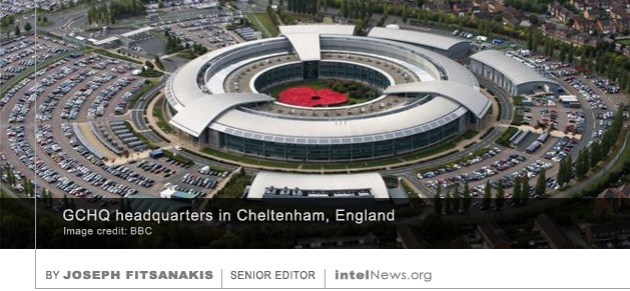
GCHQAN AFGHAN-BORN MAN, who became a naturalized British citizen and worked for British intelligence for over a decade, is attempting to regain his British citizenship, which was revoked after he was accused of being a Russian spy. The man, who is identified in court documents only as “C2”, was born in Afghanistan and grew up under the Soviet occupation in the 1980s. When the Soviets withdrew from Afghanistan he left the country alongside the Russian forces and resettled in Russia, where he attended university and married a Russian woman.

By 2000, when he entered the United Kingdom as an Afghan asylum seeker, he was in possession of Russian citizenship due to his marriage to a Russian citizen. He was eventually granted asylum in Britain and began to work as an interpreter for the Foreign Office and the Government Communications Headquarters (GCHQ), Britain’s signals intelligence agency. His fluency in Russian, Dari, and Pashto, made him invaluable to British intelligence as the United States-led ‘war on terrorism’ escalated in Afghanistan. In the late 2000s, the British Foreign Office sent C2 to Afghanistan, where he worked to build ties between the nascent post-Taliban Afghan government and the British diplomatic corps stationed in the country.

It was in Afghanistan, according to Britain’s Security Service (MI5), that C2 began to develop contacts with Russian intelligence officials. The agency claims that two Russian military attaches stationed in the Afghan capital Kabul, identified in court documents as “Boris” and “Dimitri”, recruited C2 on behalf of the Main Directorate of the Russian Armed Forces’ General Staff, which is commonly known as GRU. The British government claims that, following his recruitment by GRU, C2 traveled to Russia at least six times and once to Cyprus, where he continued to hold regular meetings with his Russian handlers.

On 2019, after he had left government service, MI5 began to question C2 about his alleged connection to Russian military intelligence. He consistently denied that he was a Russian spy. Eventually, MI5 took him “to the roof of a hotel” in London, where he was administered a polygraph examination. A few weeks later, by which time he had returned to his base in Kabul, C2 was informed that his British citizenship would be revoked due to his espionage work for the Russians.

Ironically, the British government evacuated C2 from Afghanistan in 2021 as part of Operation PITTING, during which 15,000 Afghan nationals were transported to the United Kingdom as the Taliban descended on Kabul. Upon arriving in the United Kingdom, C2 was arrested and eventually released on bail. Last week he formally appealed against the British government’s decision to strip him of his citizenship. His case was heard in secrecy at a special hearing of the United Kingdom’s Special Immigration Appeal Commission (SIAC). The SIAC is expected to rule in March or April.

Author: Joseph Fitsanakis | Date: 12 February 2024 | Permalink

Ex-Russian spy can sue British government for revealing his identity, court rules

High Court UKA FORMER SOVIET KGB officer, who now lives in the United Kingdom under witness protection, can sue the British state for revealing his identity to Latvian authorities, which may have put his life in danger, a judge has ruled. Boris Karpichkov, 64, joined the Soviet KGB in 1984, but became a defector-in-place for Latvian intelligence in 1991, when the Soviet Union disintegrated.

He then allegedly spied on Latvia for one of the KGB’s successor agencies, the Federal Security Service, before switching sides again and spying on Russia for the Latvians. He also claims to have spied on Russia for French and American intelligence. In 1998, carrying two suitcases filled with top-secret Russian government documents, and using forged passports, he arrived with his family in Britain, where he has lived ever since. Shortly after he was granted asylum, the British government issued Karpichkov with a new identity to protect him from the Russian security services. In 2018, Karpichkov claimed that, despite the British government’s efforts to protect him, Russian intelligence had tried to kill him three times since 2006.

Since Karpichkov’s relocation to the United Kingdom, Latvian authorities have twice attempted to have him extradited there. A High Court judge rejected the first extradition request, ruling that Karpichkov’s life would be in danger if he were to be handed over to Latvia. But in 2018 the Latvian authorities issued a follow-up request for Karpichkov’s extradition. At that time the United Kingdom’s National Crime Agency (NCA), which manages the UK Protected Persons Service, shared information about Karpichkov’s protected identity with the Latvians. A judge later quashed that extradition request too, warning that the former KGB intelligence officer had “an abundance of dangerous enemies in both Latvia and Russia”.

Karpichkov claims that the information that the NCA shared with the Latvians during the extradition negotiations, resulted in him receiving death threats from his enemies abroad. The NCA claims it was under a European Arrest Warrant legislation mandate to disclose Karpichkov’s protected identity to the Latvian authorities. On Friday, however, a High Court judge ruled that Karpichkov had the right to sue the NCA for unlawfully disclosing Karpichkov’s details in violation of data protection rules. This means Karpichkov is now entitled to file a lawsuit against the British government for allegedly misusing his private information.

Author: Joseph Fitsanakis | Date: 30 October 2023 | Permalink

Two arrested in Britain for spying for China, report reveals

House of Commons Parliament Britain United KingdomAUTHORITIES IN BRITAIN HAVE arrested two individuals on charges of espionage, among them a researcher for the British parliament who is being investigated for spying for China. According to the British newspaper The Sunday Times, the two individuals were arrested on March 13 of this year in two different addresses. One of the suspects, reportedly in their 30s, was arrested in or around the city of Oxford. The other, reportedly an individual in their mid-20s, was apprehended in the Scottish capital Edinburgh.
A third address, located in an eastern borough or London, was also searched by the Counter-Terrorism Command of the Metropolitan Police, which is leading the investigation into the two suspects. Notably, the parliamentary researcher had worked for prominent members of the Conservative Party, including members of parliament. These reportedly included Alicia Kearns, who chairs the Foreign Affairs Select Committee of the British House of Commons. The Times reported that the suspect had also worked for the Minister of State for Security Tom Tugendhat. The Guardian newspaper reported that Tugendhat said he had not been in touch with the suspect since he assumed his current ministerial role in September of 2022. Kearns did not comment on the case.

The last time a British newspaper reported claims of Chinese espionage was in February of 2021, when The Telegraph reported on the expulsion of three Chinese citizens, who were working as journalists. The paper claimed that the three had been “quietly expelled” after they were caught carrying out espionage. Citing an anonymous “government source”, The Telegraph said that, according to Britain’s Security Service (MI5), the three Chinese journalists were in reality employees of China’s Ministry of State Security. The report did not provide details about when the three Chinese citizens had been expelled, saying only that the expulsions had occurred at different times in the previous year.

According to The Times, the two suspects who were arrested in last March were initially transferred to a south London police station, where they were arraigned. They were then released on bail and are expected to appear in court in October.

Author: Ian Allen | Date: 11 September 2023 | Permalink

UK charges three Bulgarians with spying for Russia in ‘major national security’ case

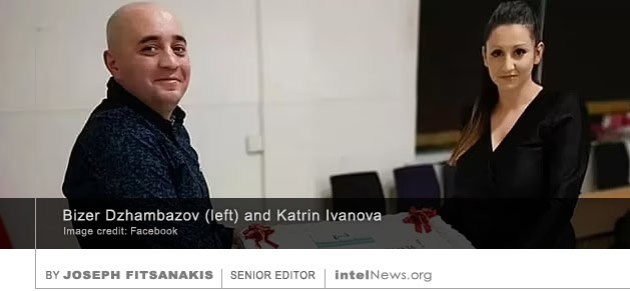
Bizer Dzhambazov and Katrin IvanovaAUTHORITIES IN BRITAIN HAVE charged three Bulgarian nationals with spying for Russia, as part of “a major national security investigation” that led to at least five arrests as early as last February. Two of the Bulgarians appear to be legally married. They have been identified as Bizer Dzhambazov, 41, and Katrin Ivanova, 31, who live in Harrow, a northwestern borrow of Greater London. The third Bulgarian, Orlin Roussev, 45, was arrested in Great Yarmouth, a seaside town in the east coast identity dof England. None of the suspect appears to have a formal diplomatic connection to either Bulgaria or Russia.
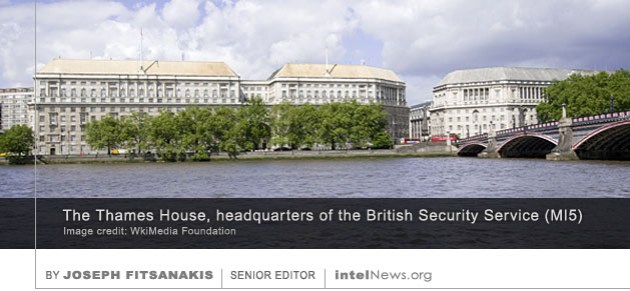
The Bulgarians were reportedly arrested in February of this year by the Counter-Terrorism Command of the Metropolitan Police, whose law enforcement mandate includes working on counterespionage cases. Two other individuals who were arrested at the time have not been charged or named. The three suspects have been charged under Section 4 of the United Kingdom’s Identity Documents Act 2010, which prohibits the possession of fake identity documents with “improper intention” and with the owner’s knowledge that they are fake. According to British government prosecutors, the suspects possessed forged passports and identity cards for Spain, France, the United Kingdom, Croatia, Italy, Greece, Bulgaria, the Czech Republic, and Slovenia.

Dzhambazov and Ivanova are believed to have moved to the United Kingdom as a couple in 2013. Both worked in the British healthcare sector —Ivanova as a laboratory assistant for a private company and Dzhambazov as a driver for a hospital. Roussev moved to the United Kingdom in 2009 and worked on the technical side of the financial services industry. He claims to have worked as an adviser for the Ministry of Energy of Bulgaria. He also claims to have previously owned a private company that operated in the area of signals intelligence (SIGINT), which involves the interception of electronic communications.

Bulgaria was one of the Soviet Union’s closest allies during the Cold War. Relations between Bulgaria and Russia plummeted in the 2000s, but pro-Russian sentiments continue to survive among some nationalist segments of the Bulgarian electorate. In June of this year, Kiril Petkov, the leader of Bulgaria’s We Continue the Change party, which today backs Bulgaria’s Prime Minister, Nikolai Denkov, spoke publicly about “Moscow-backed agents” operating inside Bulgaria’s intelligence services. Petkov proposed an ambitious plan to reform the Bulgarian intelligence services in order to “diminish the influence of Russia”. He proposed to do this through the administration of “integrity and ethical tests” to intelligence personnel.

Author: Joseph Fitsanakis | Date: 15 August 2023 | Permalink

Russian diplomat offered to fund British Conservative Party, complaint alleges

MI5 Security ServiceA DIPLOMAT STATIONED AT the embassy of the Russian Federation in London proposed to channel Russian funds to the British Conservative Party, according to a formal complaint made by a Conservative Party activist. The information was reportedly disregarded by Britain’s counterintelligence agency, the Security Service (MI5), and has now been filed as a complaint with the Investigatory Powers Tribunal (IPT). Established in 2000, the IPT is an independent judicial body that handles public complaints about the British intelligence services.

The source of the complaint is Sergei Cristo, a former reporter with the World Service of the British Broadcasting Corporation (BBC) and longtime Conservative Party organizer. Cristo’s allegations center on the Conservative Friends of Russia (CFoR), a high-profile lobby group founded by prominent Conservative Party parliamentarians, including Nigel Evans, Andrew Rosindell, John Whittingdale and Robert Buckland. The CFoR’s first honorary president was Sir Malcolm Rifkind, who served as Foreign Secretary under Conservative Prime Minister John Major.

The founding of CFoR in 2012 was celebrated at a lavish outdoor reception hosted by the Russian Ambassador to London, Alexander Yakovenko. It was followed by an all-expenses-paid trip to Russia, organized by the Russian embassy, for a group of select CFR members. Among them were prominent Euroskeptics, who later became leading figures in the campaign that resulted in Britain’s exit from the European Union. A few years later, the group was renamed the Westminster Russia Forum (WRF). In 2022, following the Russian invasion of Ukraine, the WRF disbanded altogether.

During the CFoR’s early days, In December 2010, nearly two years before CFoR was founded, Cristo says he was approached by Sergey Nalobin, first secretary of the Russian embassy’s political section. According to Cristo, Nalobin was interested in Cristo’s role as a volunteer in the finance department of the Conservative Campaign Headquarters (CCHQ). Known also as the Conservative Central Office, the CCHQ operates as the head office of the British Conservative Party. Cristo claims that Nalobin told him of his intention to introduce CCHQ officials to “Russian companies who would donate money to the Conservative party” —a proposition that was illegal under British law. Read more of this post

Iran executes former deputy defense minister, accusing him of being an MI6 spy

Ali ShamkhaniIRAN ANNOUNCED ON SATURDAY one of the most high-profile executions in its recent history, involving Alireza Akbari, who served as the Islamic Republic’s deputy minister of defense in the 2000s. Akbari, 61, a dual Iranian-British citizen, was reportedly executed by hanging on or before January 14.
As a government official, Akbari was associated with the Iranian Reformists, who were particularly prominent in the early 2000s during the presidency of Mohammad Khatami. Akbari served as deputy defense minister under Defense Minister Ali Shamkhani (1997-2005), a two-star general. General Shamkhani (pictured), an Iranian Arab, currently chairs Iran’s Supreme National Security Council. He is among the few Reformists who today remain in positions of power in Iran.

Akbari’s tenure was cut short in 2005, when Khatami was succeeded in the presidency by Mahmoud Ahmadinejad, a hardliner, who made sweeping changes in government administration. After he was briefly detained by pro-Ahmadinejad hardliners, Akbari moved to the United Kingdom in 2008, and established a small but reputable think-tank. By 2019, he had acquired British citizenship and was active in Iranian politics, but from afar. But in 2019, Akbari was invited to visit Iran by an unnamed “senior Iranian diplomat”, ostensibly to assist in negotiations with Western powers over Iran’s nuclear program. Having previously helped in international negotiations at the conclusion of the Iran-Iraq War in the late 1980s, Akbari agreed to travel to Tehran.

However, the invitation was part of what the Iranians later described as a “deception operation”, which marked the culmination of a “long and multi-layered process involving counterintelligence”. Akbari’s arrest in Tehran’s Imam Khomeini International Airport was the last time Akbari was seen in public. Iranian prosecutors later described Akbari as a “key spy” for Britain’s Secret Intelligence Service (MI6) and accused him of working for an MI6 front company. In that role, they claimed, Akbari gave MI6 information about nearly 200 Iranian officials, for which he was paid over $2 million in a variety of currencies. Read more of this post

Decades after end of Northern Irish conflict, the legacy of spies remains obscure

Northern Ireland Troubles BelfastTHE NORTHERN IRISH CONFLICT was a 30-year irregular war involving the government of the United Kingdom and an assortment of paramilitary groups. By the mid-1990s, when most of these groups had declared ceasefire, over 3,600 people had been killed and over 40,000 injured. The major paramilitary groups that participated in the conflict were the separatist Provisional Irish Republican Army (IRA) and Irish National Liberation Army (INLA), and the pro-UK, or ‘loyalist’, Ulster Volunteer Force (UVF) and Ulster Defence Association (UDA).
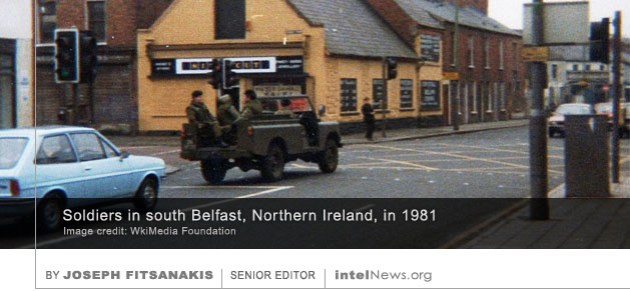
Although the bloody conflict has been the subject of numerous studies, its intelligence component is still obscure. This is especially so when it comes to the legacy of the spies who —by all accounts— were central to the day-to-day progression of this persistent conflict, which came to be known as “the Troubles”. In an insightful paper, Eleanor Williams, a PhD candidate at Queen’s University Belfast, and Thomas Leahy, Senior Lecturer at Cardiff University, examine this little-studied aspect of the Northern Irish conflict. The article, “The ‘Unforgivable’?: Irish Republican Army (IRA) informers and dealing with Northern Ireland conflict legacy, 1969-2021”, was published on Wednesday in the peer-reviewed journal Intelligence and National Security.

The authors list the substantial number of UK security agencies that had a role in recruiting and running informers during the Troubles. They include: the Security Service (MI5); the Metropolitan Police Special Branch; the Royal Ulster Constabulary Special Branch; and the Northern Irish Police Special Branch. Informants were also recruited by a host of intelligence organizations belonging to the British Armed Forces, such as the Military Reaction Force and the Force Research Unit. Although these agencies coordinated their intelligence activities to some extent, cooperation was not close. Consequently, there were hundreds of informants recruited by numerous UK state elements of the throughout the 30-year conflict. Their exact number remains unknown to this day. Read more of this post

British government phones were hacked with Pegasus spy software, group claims

NSO GroupTELEPHONE SYSTEMS BELONGING TO the British government were compromised by the Pegasus surveillance software, according to a Canadian research group. The allegation was made on Monday in an investigative report by The New Yorker, which focuses on NSO Group Technologies, an Israeli digital surveillance company based near Tel Aviv. The company is behind the development of Pegasus, which is arguably the most powerful telecommunications surveillance software available in the private sector.

As intelNews and others have previously reported, Pegasus is able to install itself on targeted telephones without requiring their users to click a link or download an application. Upon installation, the software provides the spying party with near-complete control of a targeted telephone. This includes the ability to browse through the device’s contents, such as photographs and videos, record conversations, as well as activate the telephone’s built-in microphone and camera at any time, without its user’s consent or knowledge.

According to The New Yorker, the information about the use of Pegasus software against British government telephone networks was disclosed by the Citizen Lab, a research unit of the University of Toronto’s Munk School of Global Affairs and Public Policy, which focuses on information technology, international security and human rights. The research unit said it notified the British government in 2020 and 2021 that a number of its telephone networks had been infected with the Pegasus software. The compromised networks were allegedly being used by officials in the Foreign and Commonwealth Office, as well as in 10 Downing Street, which houses the office of the prime minister.

The article claims that the compromise originated from users in the United Arab Emirates, as well as users in India, Cyprus and Jordan. This does not necessarily mean that malicious actors from these countries penetrated the British government’s telephone systems. These could be spies of third countries operating abroad; alternatively, there could be a link to unsuspecting British diplomats, whose government-issue cell phones were compromised by Pegasus in foreign countries. The Citizen Lab said it could not be sure about what kind of data may have been compromised as a result of the penetration.

NSO Group Technologies was among two Israeli firms that the US Department of Commerce placed on a sanctions list in November of 2021. According to a statement issued by the US government, the two firms engaged “in activities that [were] contrary to the national security or foreign policy interests of the United States”.

Author: Joseph Fitsanakis | Date: 19 April 2022 | Permalink