News you may have missed #363

  • Who killed ex-Mossad agent Ashraf Marwan? Dr. Marwan, son-in-law of the late Egyptian president Gamal Abdel Nasser, who spied for Israel after 1969, fell to his death from the balcony of his London home in June 2007. British investigators have now announced a new inquiry into the circumstances of his death.
  • Ex-CIA agent accused of rape says he was set up. Andrew M. Warren, the CIA’s former Algiers station chief, who is accused of drugging and raping two Algerian women at his official residence, says the Algerian government set him up in a honey trap.
  • US Senate candidate admits false military intel award. Rep. Mark Kirk, a Navy reservist who was elected to Congress in 2001, and is currently a Republican candidate for Barack Obama’s old Senate seat, has admitted to falsely claiming he received the US Navy’s Intelligence Officer of the Year award in 2000.

Bookmark and Share

We use false passports too, Australians admit

Julie Bishop

Julie Bishop

By JOSEPH FITSANAKIS | intelNews.org |
Israeli intelligence agencies are not alone in using false passports. In fact, intelligence and law enforcement agencies in Australia, the country that is currently involved in a diplomatic spat with Israel due to the latter’s use of forged Australian passports in spy operations, also use forged travel documents. This admission was made yesterday by Australian senior opposition politician Julie Bishop during a live session in the Australian parliament. The parliamentary debate concerned recent revelations that agents of Israeli intelligence agency Mossad used forged Australian passports during an assassination operation against Hamas official Mahmoud al-Mabhouh, who was found murdered in a luxury Dubai hotel last January. Australian government officials were quick to condemn Ms Bishop’s revelation as “a grievous breach of national security”. But Australian daily newspaper The Age reports that the opposition politician “merely made public an inconvenient truth”. Read more of this post
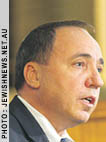
Israeli envoy ‘in alarm’ after Australia expels Mossad agent

Yuval Rotem

Yuval Rotem

By IAN ALLEN | intelNews.org |
The Israeli ambassador to Australia, who was in Israel on business, expedited his return to Canberra yesterday, immediately after Australia announced the expulsion of Israel’s senior Mossad representative in the country. Israeli newspaper Ha’aretz reports that ambassador Yuval Rotem decided to cut short his trip to Israel “in alarm”, as the “escalated crisis” between Israel and Australia appears to be deepening. As intelNews readers read on April 14, Australia had announced the pending expulsion after official investigations by Australian law enforcement and intelligence authorities revealed beyond doubt that the Israeli spy agency Mossad had forged at least four Australian passports. The passports were among several Western identity documents employed by Mossad agents in targeting Hamas official Mahmoud al-Mabhouh, who was assassinated in a luxury Dubai hotel last January. Read more of this post

News you may have missed #355

Bookmark and Share

News you may have missed #353

  • Name of British Mossad agent handed to Interpol. Dubai police have identified another suspect in the January murder of Hamas operative Mahmoud al-Mabhouh, by Israeli intelligence agency Mossad. He is reportedly a 62-year-old British citizen, who is believed to be currently hiding in western Africa.
  • Russia jails man for spying for the US. Gennady Sipachyov, a Russian whose age and profession have been kept secret by Moscow, has been sentenced to a four-year sentence for allegedly emailing secret military maps identifying classified Russian military infrastructure to the US Pentagon in 2008. Earlier this month, a Russian court rejected an appeal by another alleged US spy, Igor Sutyagin.
  • Bulgarian government wants to copy CIA. Bulgaria’s Defense Minister, Anyu Angelov, has proposed the merging of intelligence services to create a mega-structure of the CIA type. Meanwhile, a panel investigating Bulgaria’s communist-era police files has exposed two of the country’s former counterintelligence heads as former communist state security agents.

Bookmark and Share

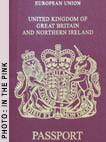
CIA ‘used fake British passports’ in kidnap operation

UK passport

British passport

By JOSEPH FITSANAKIS | intelNews.org |
British authorities are looking into allegations that a team of CIA agents made use of forged British passports during an abduction operation in 2003. The allegations surfaced last week in Spain, where a team of prosecutors is currently investigating the activities of 13 CIA agents (11 men and two women) who appear to have used the Spanish tourist resort of Majorca as a base for conducting various operations around Europe. Following the example of Italy, which last year convicted several CIA operatives for illegally abducting a Muslim cleric in Milan, Spanish authorities are now considering issuing arrest warrants for the 13 CIA agents. They are all believed to have been involved in the abduction and rendition of German citizen Khaled El-Masri. El-Masri was abducted in Skopje, Macedonia, in 2003, and later transferred on a secret CIA flight to a Syrian prison, where he says he was brutally tortured. He was later released without explanation, once US authorities realized they had the wrong man. Read more of this post

Analysis: Europe Offers Different Counterterrorism Approach

Counterterrorism

Counterterrorism

By JOSEPH FITSANAKIS | intelNews.org |
I have in the past posed the intriguing question of whether US intelligence agencies should learn from the French approach to counterterrorism. This issue has now come up again in an interesting Washington Post essay, which examines the different approaches to Islamic militancy by American and European intelligence organizations. Some of these differences are undoubtedly contextual: there are no First Amendment rights in Europe, and European law enforcement and intelligence organizations enjoy a somewhat wider legal latitude in which to operate domestically. Moreover, the Europeans, especially the French and the British, have a longer experience than the Americans in dealing with armed insurgencies. But there are also critical differences in tactics. Importantly, the European approach to Islamic militancy has not only been more pro-active than the American, but also a lot more discreet and clandestine. Read more of this post

India blacklists Chinese phone companies over spying concerns

Huawei HQ

By IAN ALLEN | intelNews.org |
The government of India has officially barred a number of Chinese telephone equipment providers from operating in India, citing their strong links with the Chinese military. At the center of the move is Huawei Technologies, one of China’s largest telephone equipment manufacturers. Several intelligence insiders see the company, based in Shenzen, China, as a covert arm of the intelligence wing of the Chinese People’s Liberation Army. The company, which has business concerns in several countries around the world, has attracted the attention of American, British and Australian counterintelligence agencies, among others. In early 2008, the US government prohibited Huawei’s purchase of a significant amount of shares in US network security equipment maker 3Com, which supplies telecommunications hardware to the US Department of Defense. Read more of this post

Analysis: An Economic Security Role for European Spy Agencies?

Economic espionage

Economic spying

By JOSEPH FITSANAKIS | intelNews.org |
Last February, Spain’s intelligence service began investigating alleged suspicious efforts by foreign financial speculators to destabilize the Spanish economy. According to newspaper El País, the Spanish government asked the country’s Centro Nacional de Inteligencia (CNI) to probe links between speculative moves in world financial markets and a series of damaging editorials “in the Anglo-Saxon media”. There are indications that the National Intelligence Service of Greece (EYP) is following in the CNI’s footsteps. In February, when Athens and Brussels began to realize the magnitude of the financial crisis threatening the European common currency, several news outlets suggested that the EYP was cooperating with Spanish, Irish and Portuguese intelligence services in investigating a series of coordinated speculative attacks on money markets, most of which allegedly originated from London and Washington. Read more of this post

News you may have missed #344

  • CIA base in Afghanistan hit again. A suicide car bomber killed one civilian and wounded two security guards at the entrance to the CIA’s Forward Operating Base Chapman, in Afghanistan’s Khost province. It is the same base where Jordanian suicide bomber Humam Khalil al-Balawi killed seven CIA officers in December of 2009.
  • Fiji to set up new spy agency. The government of Fiji plans to re-establish its intelligence agency, ten years after it was disbanded by Labour Prime Minister Mahendra Chaudhry. The new organization will be called the National Intelligence Agency of Fiji.
  • MI5 and MI6 must release Guantánamo records, says judge. MI5 and MI6 have been told by a British judge that they cannot use secret evidence to defend themselves from civil damages claims brought by six former detainees in the Guantánamo Bay detention camp, including Binyam Mohamed.

Bookmark and Share

UK barring replacement of London’s Mossad resident

Mossad seal

Mossad seal

By IAN ALLEN | intelNews.org |
The British government is officially preventing the replacement of Israeli intelligence service Mossad’s London representative, after it expelled his predecessor six weeks ago. The British Foreign and Commonwealth Office announced the expulsion in March, in response to the use of at least 12 forged British passports by a Mossad hit squad, whose members traveled to Dubai, United Arab Emirates, last January, to assassinate Hamas weapons procurer Mahmoud al-Mabhouh. According to Israeli media, the British Foreignand Commonwealth Office has requested written assurances from Israel that it will refrain from using British travel documents in future intelligence operations. But the Israeli government is so far refusing to comply with Britain’s request, claiming that doing so would amount to “an admission of culpability” in the assassination of al-Mabhouh. Read more of this post

News you may have missed #343

  • Taliban leader H. Mehsud reportedly not dead. Last February US and Pakistani officials claimed a CIA airstrike had killed Hakimullah Mehsud, the leader of the largest faction of the Pakistani Taliban. But it now appears that Mehsud is alive and well.
  • Analysis: Operation MINCEMEAT and the ethics of spying. The New Yorker‘s Malcolm Gladwell on operation MINCEMEAT, a World War II British deception plan, which helped convince the German high command that the Allies planned to invade Greece and Sardinia in 1943, instead of Sicily.
  • US DoJ announces FISA court appointment. Judge Martin L.C. Feldman, of the Eastern District of Louisiana, has been appointed to a seven-year term on the Foreign Intelligence Surveillance (FISA) Court, which reviews (and invariably approves) government applications for counterintelligence surveillance and physical search under the Foreign Intelligence Surveillance Act.

Bookmark and Share

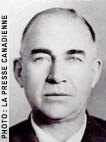
New book on Canada’s mysterious Agent 235

Johann Heinrich Amadeus de Graaf

De Graaf

By IAN ALLEN | intelNews.org |
A new book published by the Pennsylvania State University Press sheds new light into the life and work of mysterious Agent 235, Canada’s mysterious mid-20th-century spy known as ‘Johnny’. In Johnny: A Spy’s Life, R.S. Rose and Gordon Scott present the outcome of 14 years of research on ‘Johnny’, whose real name was Johann Heinrich Amadeus de Graaf. De Graaf was born in Germany in 1894, but later moved to Britain, and at the start of World War II worked as an informant for MI6. Although he conducted some of his operations in Germany, most of them took place in the UK, where he unmasked a number of native pro-Nazi sympathizers and agents of the Gestapo. Read more of this post

News you may have missed #333

  • Ex-MI6 officer allegedly betrayed spies. Daniel Houghton was arrested last month while trying to sell classified documents to MI5 spooks posing as foreign agents. But now the former MI6 employee is accused by British authorities of trying to trade lists of British intelligence personnel. It is unclear which nation’s spy service Houghton believed he was selling to at the time of his arrest, though it is believed that Dutch intelligence tipped off MI5.
  • NSA director under friendly fire in US Senate. US National Security Agency director, Army Lt. Gen. Keith Alexander, spoke last Thursday before the Senate Armed Services Committee. He addressed the synergies among the NSA, the newly created Cyber Command, and the Department of Homeland Security, as well as the concept of cyberwar: “In general terms, I do think a cyberwar could exist”, he said, but only “as part of a larger military campaign”.

Bookmark and Share

News you may have missed #331

  • CIA deputy director to step down. The Agency has denied it for months, but now the longtime rumor that its powerful deputy director, Stephen R. Kappes, was planning to resign has came true. Jeff Stein reports that “recently, grumbling about Kappes from within the CIA and without, on issues ranging from his nit-picking management style to his ties to the old order, has gotten louder. And now, apparently, Kappes has heard enough”.
  • US eyes cash deal for Kyrgyzstan base. How will the recent coup in Kyrgyzstan affect US-Kyrgyz arrangements on the Manas Air Base? A lot will depend on oil purchase deals between the US military and Kyrgyz autocrats.
  • Court case may reveal IRA spy’s role. Freddie Scappaticci, an IRA spy alleged to be the British army agent ‘Stakeknife’ could be forced into court by the wife of another IRA informer, who claims she suffered nervous breakdown after being kidnapped by him.

Bookmark and Share