Moscow names intersection after Kim Philby, British spy for the USSR

Kim PhilbyIn a sign of worsening relations between the United Kingdom and Russia, a busy intersection in Moscow has been named after Kim Philby, the British senior intelligence officer who secretly spied for the Soviet Union. While working as a senior member of British intelligence, Harold Adrian Russell Philby, known as ‘Kim’ to his friends, spied on behalf of the Soviet NKVD and KGB. His espionage activities lasted from about 1933 until 1963, when he secretly defected to the USSR from his home in Beirut, Lebanon. Philby’s defection sent ripples of shock across Western intelligence and is often seen as one of the most dramatic incidents of the Cold War. He was part of a wider ring of upper-class British spies, known collectively as ‘the Cambridge spies’ because they were recruited by Soviet intelligence during their student days at the University of Cambridge in England.

Following his sensational defection, Philby lived in the Soviet capital until his death in 1988 at the age of 76. On Tuesday, a statement published on the website of the Moscow City Council announced that a busy intersection in the city’s southeast would be renamed to ‘Kim Philby Square’ in honor of the British defector. The statement said that the name change had been agreed upon by the city council and decreed by Moscow Mayor Sergei Sbyanin, a close associate of Russian President Vladimir Putin. Interestingly, Philby lived nowhere near the intersection named after him. His apartment —provided to him by the Soviet state in exchange for services rendered during his 30 years of spying— was located in a residential area of central Moscow. However, the intersection in question is situated near the headquarters of the SVR, Russia’s Foreign Intelligence Service, which is the primary successor agency to the Soviet-era KGB. In September of last year, SVR Director Sergei Naryshkin attended an exhibition in Moscow entitled “Kim Philby: His Intelligence Work and Personal Life”, organized by the Russian Historical Society. While there, Naryshkin was told by veterans of the KGB that Philby liked to take long walks through the streets of Moscow and that a street should be named after him in his honor.

French news agency Agence France Presse reported that it contacted the Moscow City Council but a spokeswoman said she was not in a position to comment on the Kim Philby Square renaming. The move comes a few months after a small pedestrian thoroughfare located across from the front entrance of the Russian embassy in Washington DC was symbolically named ‘Boris Nemtsov’, after a Russian opposition leader who was gunned down in downtown Moscow in February of 2015.

► Author: Joseph Fitsanakis | Date: 09 November 2018 | Permalink

Britain sees Russian government hackers behind Islamic State cyber group

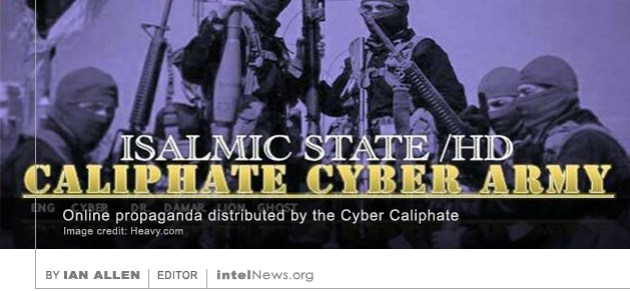
Cyber CaliphateA new report by the British government alleges that the so-called ‘Cyber Caliphate’, the online hacker wing of the Islamic State, is one of several supposedly non-state groups that are in fact operated by the Russian state. The group calling itself Cyber Caliphate first appeared in early 2014, purporting to operate as the online wing of the Islamic State of Iraq and Syria (ISIS), which was later renamed Islamic State. Today the Cyber Caliphate boasts a virtual army of hackers from dozens of countries, who are ostensibly operating as the online arm of the Islamic State. Their known activities include a strong and often concentrated social media presence, as well as computer hacking, primarily in the form of cyber espionage and cyber sabotage.

But an increasing number of reports, primarily by Western government agencies, have claimed in recent years that the Cyber Caliphate is in fact part of a Russian state-sponsored operation, ingeniously conceived to permit Moscow to hack Western targets without retaliation. On Wednesday, a new report by Britain’s National Cyber Security Centre (NCSC) described the Cyber Caliphate and other similar hacker groups as “flags of convenience” for the Kremlin. The report was authored by the NCSC in association with several British and European intelligence agencies. American spy agencies, including the National Security Agency and the Federal Bureau of Investigation, also helped compile the report, according to the NCSC. The report names several hacker groups that have been implicated in high-profile attacks in recent years, including Sofacy, Pawnstorm, Sednit, Cyber Berkut, Voodoo Bear, BlackEnergy Actors, Strontium, Tsar Team, and Sandworm. Each of these, claims the NCSC report, is “an alias of the Main Directorate of the General Staff of Russia’s Armed Forces”, more commonly known as the GRU. The report concludes that Cyber Caliphate is the same hacker group as APT 28, Fancy Bear, and Pawn Storm, three cyber espionage outfits that are believed to be online arms of the GRU.

The NCSC report echoes the conclusion of a German government report that was leaked to the media in June of 2016, which argued that the Cyber Caliphate was a fictitious front group created by Russia. In 2015, a security report by the US State Department concluded that despite the Cyber Caliphate’s proclamations of connections to the Islamic State, there were “no indications —technical or otherwise— that the groups are tied”. In a statement issued alongside the NCSC report on Wednesday, Britain’s Secretary of State for Foreign and Commonwealth Affairs, Jeremy Hunt, described the GRU as Moscow’s “chosen clandestine weapon in pursuing its geopolitical goals”. The Russian government has denied these allegations.

► Author: Ian Allen | Date: 05 October 2018 | Permalink
New clues may help locate lost intelligence files from 1938 French-British-Nazi pact

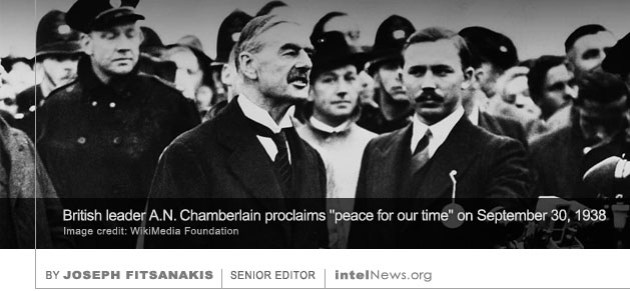
Neville Chamberlain Nearly 2,000 missing British intelligence files relating to the so-called Munich Agreement, a failed attempt by Britain, France and Italy to appease Adolf Hitler in 1938, may not have been destroyed, according to historians. On September 30, 1938, the leaders of France, Britain and Italy signed a peace treaty with the Nazi government of German Chancellor Adolf Hitler. The treaty, which became known as the Munich Agreement, gave Hitler de facto control of Czechoslovakia’s German-speaking areas, in return for him promising to resign from territorial claims against other countries, such as Poland and Hungary. Hours after the treaty was formalized, British Prime Minister Neville Chamberlain arrived by airplane at an airport near London, and boldly proclaimed that he had secured “peace for our time” (pictured above). Contrary to Chamberlain’s expectations, however, the German government was emboldened by what it saw as attempts to appease it, and promptly proceeded to invade Poland, thus firing the opening shots of World War II in Europe.
For many decades, British historians researching the Munich Agreement have indicated the absence of approximately 1,750 intelligence reports dating from May to December 1938. The missing files cover the most crucial period immediately prior and immediately after the Munich Agreement. They are believed to contain transcripts of German and other foreign diplomatic communications, which were intercepted by the Government Code and Cypher School (GC&CS), Britain’s signals intelligence agency at the time. In 1947, the documents were passed on to the GC&CS’s successor agency, the Government Communications Headquarters (GCHQ). But they subsequently disappeared, giving rise to numerous theories as to how and why. Some historians have theorized that the documents were deliberately destroyed by British officials shortly after the end of World War II. The move allegedly aimed to protect Britain’s international reputation and prevent a possible exploitation by the Soviet Union, which sharply criticized the West’s appeasement of Hitler in the run-up to the war. Another popular theory is that they were destroyed by senior civil servants connected to the Conservative Party —to which Chamberlain belonged— in order to prevent the opposition Labour Party from capitalizing on what many saw as a betrayal of British interests in September 1938 by the Conservative administration in London.

For a long time, the GCHQ’s official historians have strongly contested the view that the documents were deliberately destroyed. Now, according to The Independent newspaper, historians have found that the missing documents were still listed in GCHQ archive indexes in as late as 1968, a full 30 years after the Munich Agreement was signed. At that time it is believed that the files were temporarily transferred to another British government department in order to be used as references in an internal report about the Munich Agreement. It is very likely, some historians now say, that the documents were simply never returned to GCHQ. It is therefore possible that they may be stored in the archives of the Foreign and Commonwealth Office or the Ministry of Defence. This new clue, according to The Independent, substantially lessens the possibility that the documents may have been removed or destroyed for political reasons.

► Author: Joseph Fitsanakis | Date: 01 October 2018 | Permalink

Russia planned to smuggle Julian Assange from Ecuador’s embassy in London

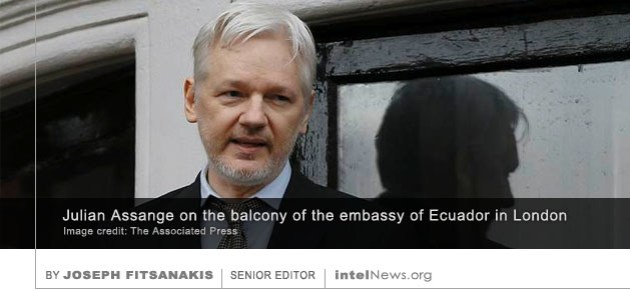
Julian AssangeRussia and Ecuador canceled at the last minute a secret plan to smuggle WikiLeaks founder Julian Assange out of the Ecuadorean embassy in London after it was deemed “too risky”, according to a report. The Australian-born founder of the whistleblower website was granted political asylum by the government of Ecuador in June of 2012, after Swedish authorities charged him with rape. He claims that the charges are part of a multinational plot to extradite him to the United States, where he is wanted for having leaked hundreds of thousands of secret government documents. He has thus refused to leave Ecuador’s embassy in the British capital since June 2012.

Last week, the British newspaper The Guardian said that Russian and Ecuadorean officials devised a complex operation to smuggle the WikiLeaks founder out of the Ecuadorean embassy, which is closely monitored by British security agencies. The London-based paper said it spoke to “four separate sources” who confirmed that a small team of Russians and Ecuadoreans met several times to plan the operation. The Ecuadorean side was allegedly represented by Fidel Narváez, a close friend and supporter of Assange, who previously served as Ecuador’s consul in London and continues to live there with his family. The Kremlin was reportedly represented by an unnamed “Russian businessman”, said The Guardian, who served as an intermediary between the Ecuadoreans and Moscow. The plan consisted of several steps, said the paper. The first step was for Assange to receive Ecuadoran citizenship and then be given diplomatic status by the government of Ecuador. That would give the WikiLeaks founder diplomatic immunity and shield him from British laws. A diplomatic vehicle would then secretly transport Assange from the Ecuadorean embassy to an unknown location. From there he would be transported to Ecuador via ship, or to Russia, where he would serve as a member of staff of the Ecuadorean embassy in Moscow. If British security services managed to intercept Assange during the operation, all they could do was expel him from the country. They would not be able to arrest him because of his diplomatic status.

The plan, said The Guardian, was scheduled for December 24, 2017. On December 15, Rommy Vallejo, the head of Ecuador’s national intelligence agency, Secretaría Nacional de Inteligencia (SENAIN), traveled secretly to London to supervise the operation. Two days later, on December 17, Assange was granted Ecuadorian citizenship as part of the plan. But the plan was aborted at the last moment after the British government refused to recognize Assange’s diplomatic status. According to British law, a foreign diplomat does not receive immunity from British law unless the British government officially accepts his or her diplomatic credentials. Although that is typically a formality, the British government reserves the right to refuse a diplomat’s credentials. That was seen by the Russians as a stumbling block and the operation was called off, said the paper.

Narváez spoke with The Guardian and strongly denied that he had any involvement with a joint Russian-Ecuadorean plan to smuggle Assange out of London. The Ecuadorean government did not return messages with questions about the paper’s allegations. The Russian embassy in the British capital tweeted late last week that The Guardian’s claims were “another example of disinformation and fake news from the British media”.

► Author: Joseph Fitsanakis | Date: 24 September 2018 | Permalink

Book alleges 1980s British Labour Party leader was Soviet agent

Michael FootThe leadership of the Labour Party in Britain has reacted with disdain after a new book by a leading author and columnist claimed that Michael Foot, who led the Party in the early 1980s was paid agent of the Soviet KGB. Foot, a staunch and vocal representative of the postwar British left, was a member of parliament for over 40 years, eventually serving as leader of the House of Commons. He rose to the post of deputy leader of the Labour Party and in 1980 succeeded Jim Callahan as head of the Party. But he stepped down in 1983 in the aftermath of Labour’s largest electoral defeat in over half a century.
Two years later, in 1985, Oleg Gordievsky, a colonel in the Soviet KGB, defected to Britain and disclosed that he had been a double spy for the British from 1974 until his defection. In 1995, Gordievsky chronicled his years as a KGB officer and his espionage for Britain in a memoir, entitled Next Stop Execution. The book was abridged and serialized in the London-based Times newspaper. In it, Gordievsky claimed that Foot had been a Soviet “agent of influence” and was codenamed “Agent BOOT” by the KGB. Foot proceeded to sue The Times for libel, after the paper published a leading article headlined “KGB: Michael Foot was our agent”. The Labour Party politician won the lawsuit and was awarded financial restitution from the paper.

This past week, however, the allegations about Foot’s connections with Soviet intelligence resurfaced with the publication of The Spy and the Traitor, a new book chronicling the life and exploits of Gordievsky. In the book, Times columnist and author Ben Macintyre alleges that Gordievsky’s 1995 allegations about Foot were accurate and that Gordievsky passed them on to British intelligence before openly defecting to Britain. According to Macintyre, Gordievsky briefed Baron Armstrong of Ilminster, a senior civil servant and cabinet secretary to British Prime Minister Margaret Thatcher. Lord Armstrong, a well-connected veteran of British politics, in turn communicated the information to the Secret Intelligence Service (MI6) in the summer of 1982, says Macintyre. The Times columnist alleges that MI6 received specific information from Lord Armstrong, according to which Foot had been in contact with the KGB for years and that he had been paid the equivalent of £37,000 ($49,000) in today’s money for his services. The spy agency eventually determined that Foot may not himself have been conscious that the Soviets were using him as an agent of influence. But MI6 officials viewed Gordievsky’s allegations significant enough to justify a warning given to Queen Elizabeth II, in case the Labour Party won the 1983 general election and Foot became Britain’s prime minister.

The latest allegations prompted a barrage of strong condemnations from current and former officials of the Labour Party. Its current leader, Jeremy Corbyn, who like Foot also comes from the left of the Party, denounced Macintyre for “smearing a dead man, who successfully defended himself [against the same allegations] when he was alive”. Labour’s deputy leader, John McDonnell, criticized The Times for “debasing [the] standards of journalism in this country. They used to be called the gutter press. Now they inhabit the sewers”, he said. Neil Kinnock, who succeeded Foot in the leadership of the Labour Party in 1983, said Macintyre’s allegations were “filthy” and described Foot as a “passionate and continual critic of the Soviet Union”.

► Author: Joseph Fitsanakis | Date: 21 September 2018 | Permalink

Dead Russian oligarch’s links to UK spy agencies must stay secret, judge rules

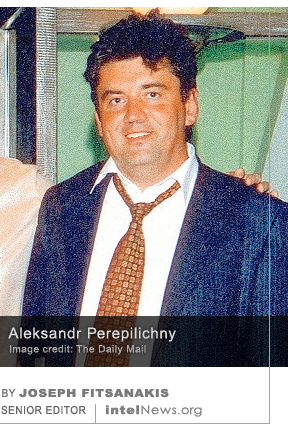
Aleksandr PerepilichnyA judge has ruled that the British government has the right to withhold information relating to alleged links between British spy agencies and a Russian millionaire who died in mysterious circumstances in England. Aleksandr Perepilichny was a wealthy and influential investment banker living in Moscow. In 2009, however, he fled Russia saying that his life had been threatened following a business disagreement. He resettled in Surrey, south of London, and began cooperating with Swiss authorities who were investigating a multimillion dollar money-laundering scheme involving senior Russian government officials. Described by some as the biggest tax fraud in Russian history, the scheme is said to have defrauded the Russian Treasury of at least $240 million.
On November 10, 2012, having just returned to his luxury Surrey home from a three-day trip to France, Perepilichny went out to jog. He was found dead later that evening, having collapsed in the middle of a side street near his house. He was 44. A postmortem examination concluded that Perepilichny had died of natural causes and pointed to the strong possibility of a heart attack. However, lawyers representing the late businessman’s family told a pre-inquest hearing that Perepilichny stomach was found to have traces of gelsemium, a shrub-like plant that is a “known weapon of assassination [used] by Chinese and Russian contract killers”.

The case is now being revisited following the failed attempt last March, allegedly by the Kremlin, to assassinate Sergei Skripal, a Russian former spy who defected to England in 2010. For the past several months, submissions have been filed for an inquest into Perepilichny’s mysterious death. But the British government said that it would not reveal any information relating to possible contacts between the late Russian businessman and British intelligence. The question was raised in June by lawyers representing Legal and General, Perepilichny’s life insurance company. They argued that if Perepilichny had close dealings with British intelligence, it would have raised significantly the threat that his life was under. But British Home Secretary Sajid Javid argued that releasing documents implicating the intelligence services with the late Russian businessman would endanger national security.

On Monday the judge leading the inquest into Perepilichny’s death ruled in favor of the British government’s position. The judge, Nicholas Hilliard QC, has security clearance and was therefore able to review the relevant evidence behind closed doors, during a secret session. He then ruled that “publicly releasing intelligence information [relating to Perepilichny] would pose a real risk of serious harm to national security”. Critics argue that the Skripal case has heightened public interest in Russian covert activities on British soil and that the public has the right to know whether the death of Perepilichny was in any way connected to the intelligence realm. The inquest continues this week.

► Author: Joseph Fitsanakis | Date: 19 September 2018 | Permalink

Poisoned Russian spy advised Spanish intelligence, say officials

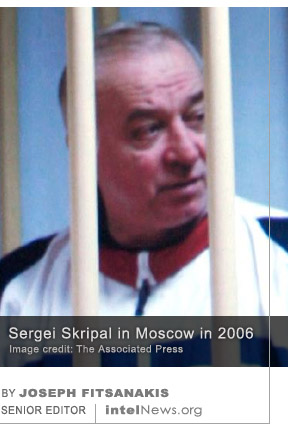
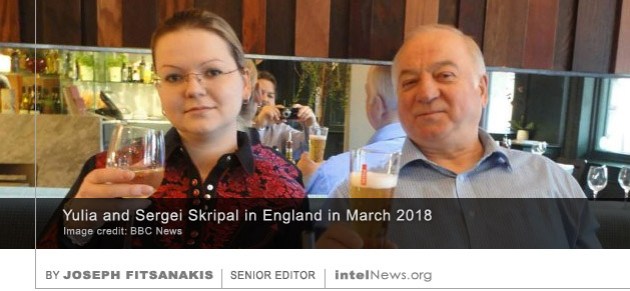
Sergei SkripalSergei Skripal, the Russian double agent who was poisoned with a military-grade nerve agent in England earlier this year, worked with Spanish intelligence after his defection to the United Kingdom, according to sources. Skripal, a former military intelligence officer who spied for Britain in the early 2000s, had kept a low profile while living in the English town of Salisbury. He was resettled there in 2010 by the British Secret Intelligence Service (MI6), after he was released from a Russian prison. But he and his daughter Yulia made international headlines in March, after they were poisoned by a powerful nerve agent that nearly killed them. The attack has been widely blamed on the Russian government, but the Kremlin denies that it had a role in it.
The attempt to kill Skripal surprised some intelligence observers due to the fact that the Russian government had officially pardoned the double agent prior to exchanging him with Russian spies who had been caught in the West. As intelNews wrote in May, “typically a spy who has been pardoned as part of an authorized spy-swap will not need to worry about being targeted by the agency that he betrayed. If it indeed tried to kill Skripal, the Russian government may therefore have broken the unwritten rules of the espionage game”. Eventually, however, it was revealed that, instead of retiring after his defection to the UK, Skripal traveled extensively in Eastern Europe, where he advised local intelligence agencies on how to defend against Russian espionage. The double agent participated in MI6-sponsored events in which he briefed intelligence practitioners in at least two countries, Estonia and the Czech Republic. These activities may have convinced the Kremlin that Skripal had broken the unwritten conditions of his release, namely that he would not participate in any intelligence-related activities against Russia.

Now The New York Times has claimed that, in addition to consulting for Czech and Estonian spies, Skripal also visited Spain, where he met with officers from the country’s National Intelligence Center (CNI). Citing an unnamed Spanish former police chief and Fernando Rueda, a Spanish intelligence expert, The Times said that Skripal advised the CNI about the activities of Russian organized crime in Spain and the alleged connections between Russian mobsters and the Kremlin. When he traveled to Spain under MI6 protection, said the paper, Skripal was effectively returning to the place where he had been initially recruited to spy for the British. Skripal spent several years in Spain, said The Times, serving as a military attaché at the Russian embassy in Madrid. It was there that he began to work secretly for MI6. However, the precise timing of Skripal’s return trips to Spain after 2010, as well as the content of his discussions with Spanish intelligence officials, remain unknown, according to The Times.

► Author: Joseph Fitsanakis | Date: 07 September 2018 | Permalink

Brussels will ‘not comment’ on reports Britain is spying on EU Brexit committee

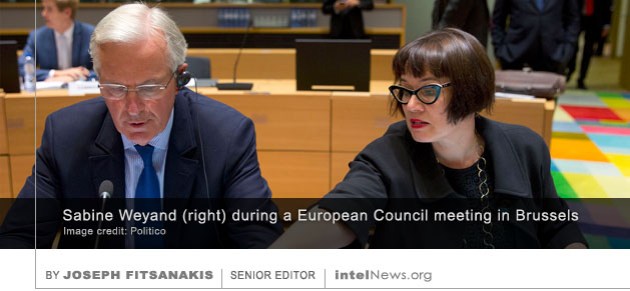
Sabine WeyandRelations between the European Union and the United Kingdom hit a new low on Thursday, as the European Council refused to comment on claims that British spy agencies have spied on Brexit negotiators in Brussels. Consultations between the two sides have progressed at an alarmingly slow pace ever since June 23, 2016, when voters in the island nation elected to leave the EU during a nationwide referendum. In March of 2017, London officially invoked Article 50 of the EU Treaty, which requires that Britain’s withdrawal from the multinational body be completed within two calendar years. But there are many who think that a mutual agreement will not be reached between the two sides.
On Wednesday, British newspaper The Daily Telegraph alleged that a number of EU Brexit negotiators believe that their closed-door meetings are being spied upon by the British Secret Intelligence Service, known as MI6. According to The Telegraph, fears of espionage were raised by Sabine Weyand, a German EU official who is currently serving as Deputy Chief of the European Council’s Article 50 Working Party. On July 13, during a meeting of the European Council, Weyand reportedly said “it could not be excluded” that British intelligence agencies had found ways to listen in to the closed-door meetings of EU Brexit negotiators. According to The Telegraph, Weyand and other EU officials became suspicious after London appeared to be privy to information discussed on July 5 at a closed-door meeting of the Article 50 Working Party. Weyand told the European Council that the information had reached London “within hours” of it having been presented in Brussels. Just hours following the secret presentation, senior British government officials were reportedly lobbying in public against the information contained in it.

On Thursday, a spokesman for the European Commission, which operates as the EU’s cabinet, did not deny that concerns about espionage were raised by EU Brexit negotiators. When asked by reporters in Brussels about The Telegraph’s allegations, the spokesperson responded: “The Commission’s position today is that we cannot comment on these press reports”. As the press conference was taking place, British negotiators were arriving in Brussels in order to resume the latest round of Brexit talks with the EU’s Article 50 Working Party.

► Author: Joseph Fitsanakis | Date: 17 August 2018 | Permalink

British police arrest man over mystery killing of Seychelles leader in 1985

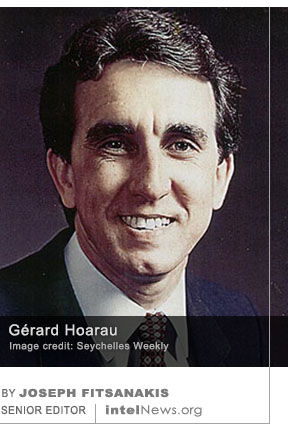
Gérard HoarauA man has been arrested by British counter-terrorism police in Northern Ireland, reportedly in connection with the assassination of a Seychelles exiled political leader in London in 1985. No-one has ever been charged with the murder of Gérard Hoarau, who was gunned down with a Sterling submachine gun in Edgware, London, on November 29, 1985. At the time of his killing, the 35-year-old Hoarau led the Mouvement Pour La Resistance (MPR), which was outlawed by the Seychelles government but was supported by Western governments and their allies in Africa. The reason was that the MPR challenged the president of the Seychelles, France-Albert René, leader of the leftwing Seychelles People’s United Party —known today as the Seychelles People’s United Party. The British-educated René assumed the presidency via a coup d’etat in 1977, which was supported by neighboring Tanzania, and remained in power in the island-country until 2004.

Despite proclaiming that he espoused a “moderate socialist ideology”, his critics —including Hoarau— accused him of being a secret admirer of Cuban-style communism and called for his removal from office. In 1979, Hoarau was one of several critics of René who were ordered to leave the Seychelles under threat of imprisonment. He initially found refuge in South Africa. But in 1981, the Seychelles security forces foiled an armed invasion by South African-supported mercenaries, which aimed to depose René. The mercenaries —most of them South African Special Forces veterans, former Rhodesian soldiers, Belgian veterans of the Congo Crisis, and American Vietnam War veterans— were led by British-Irish mercenary Thomas Michael “Mad Mike” Hoare. The group of over 50 armed men was intercepted at the Seychelles International Airport in Mahé and managed to escape only after taking hostages and hijacking an Air India passenger airplane that happened to be at the airport. However, they left behind five mercenaries, including at least one officer of South Africa’s National Intelligence Service.

In 1982, South Africa struck a deal with the Seychelles for the release of the captured mercenaries. In return, it promised to stop sheltering René’s opponents, including Hoarau. The latter was thus forced out of South Africa and sought refuge in London, England, where he was assassinated three years later. At the time of Hoarau’s killing, there was strong suspicion that the government of the Seychelles was directly involved in his assassination. There were also reports in the British press that a British hitman may have been hired to assassinate Hoarau. But despite several arrests in connection with the case, no-one was ever charged with the Seychellois exiled leader’s assassination. This, however, may soon change. In 2016, the British Metropolitan police re-opened the case and, according to a police press statement “established fresh lines of inquiry”. On Thursday, a 77-year-old man was reportedly arrested in Antrim town, Northern Ireland, by officers of the Metropolitan Police and the Police Service of Northern Ireland. The man, who has not been named, was transported to London for questioning “on suspicion of conspiracy to murder”. A police spokesman said on Thursday that the man had not previously been arrested as part of the Hoarau murder investigation.

► Author: Joseph Fitsanakis | Date: 02 August 2018 | Permalink

Revealed: British prime minister was not told about fourth Cambridge spy ring member

Anthony BluntThe Prime Minister of Britain, Sir Alec Douglas-Home, was kept in the dark by his own home secretary about the discovery of a fourth member of the infamous Cambridge Spy Ring in 1964, according to newly released files. The Cambridge Spies were a group of British diplomats and intelligence officials who worked secretly for the Soviet Union from their student days in the 1930s until the 1960s. They included Guy Burgess, Donald Maclean and H.A.R. “Kim” Philby, all of whom eventually defected to the Soviet Union. In 1964, Sir Anthony Blunt, an art history professor who in 1945 became Surveyor of the King’s Pictures and was knighted in 1954, admitted under interrogation by the British Security Service (MI5) that he had operated as the fourth member of the spy ring.
Despite his allegedly full confession, Blunt was never seriously disciplined for his espionage activities against Britain. In return for revealing his spy activities and naming others who had assisted him, he was granted immunity from prosecution. He was also allowed to remain in his academic post and retained his title of Surveyor of the Queen’s Pictures –effectively the curator of Queen Elizabeth II’s art collection. It wasn’t until 1979 when British Prime Minister Margaret Thatcher revealed in a statement to the British House of Commons that Blunt had been the fourth member of the Cambridge Spy Ring. Minutes after the prime minister’s statement entered the public record, Buckingham Palace (which had been made aware of Blunt’s espionage role back in 1964, but had been asked by Britain’s Interior Ministry to not draw attention to the scandal) stripped him of his 1954 knighthood.

It has now been revealed known that, in the days following her House of Commons statement about Blunt, Prime Minister Thatcher received several letters by Henry Brooke, who was serving as home secretary in 1964, when Blunt’s treachery was discovered. In his letters, Brooke (by then Lord Brooke of Cumnoor) expressed his support for the prime minister’s revelation. But the letters, which were previously classified but were published on Tuesday by Britain’s National Archives, also reveal that Brooke kept Blunt’s 1964 confession hidden from the then Prime Minister Sir Alec Douglas-Home. In his 1979 letter to Thatcher, Brooke states that he did not inform the prime minister in 1964 in his “well-meant effort not to add to [Douglas-Home’s] burdens”. But he adds that “I may, with hindsight, have expressed my discretion wrongly”. By that time, Blunt had voluntarily withdrawn from public life and was rarely heard of. Upon his death in 1984, his unfinished memoir was given to the British Library by the executor of his will, under the stipulation that it be kept sealed for 25 years. It was released to the public in 2009.

► Author: Joseph Fitsanakis | Date: 24 July 2018 | Permalink

High-level MI6 spy inside al-Qaeda writes book detailing his work

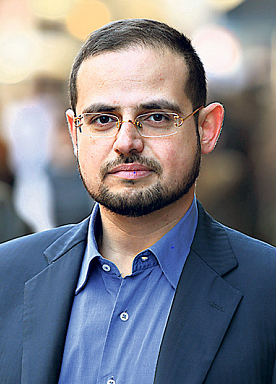
Aimen Dean, a.k.a. Ramzi

Aimen Dean, a.k.a. Ramzi

A Saudi-born man, who some refer to as the most valuable British-run spy inside al-Qaeda, has authored a soon-to-be-published book about his experiences. Aimen Dean, known in al-Qaeda circles simply as ‘Ramzi’, became radicalized in the first half of the 1990s in response to the Bosnian War. At that time, he traveled from his home country of Saudi Arabia to Bosnia, where he joined large numbers of foreign Muslim fighters who fought in support of Bosnian-Muslim forces. In subsequent interviews, Dean has said that he continues to view his participation in the Bosnian War as an “ethical and moral” act in defense of a “defenseless population”. Following the end of the Bosnian War, Dean joined many foreign-born fighters who followed al-Qaeda co-founder Osama bin Laden to Afghanistan. While there, he pledged allegiance to bin Laden and gained his trust.

Dean’s task in Afghanistan was to train new al-Qaeda recruits in Islamic theology and history. But he was also tasked with combat duties, which included bomb-making. He witnessed the drastic shift in al-Qaeda’s raison d’être from a group ostensibly fighting to defend Muslims under attack, to a center of a violent campaign against the West. Dean has stated that during his first period in Afghanistan, he sincerely believed that the West was involved in a systematic campaign to destroy Islam and Muslims. Gradually, however, Dean’s views began to conflict with those of al-Qaeda’s leaders. He especially objected to the use of suicide bombers and the deliberate targeting of civilians by al-Qaeda fighters. His disillusionment with al-Qaeda peaked in August of 1998, when the organization targeted the United States embassies in Kenya and Tanzania in coordinated strikes.

During a leave of absence from al-Qaeda’s Afghanistan stronghold, Dean was approached by the United Kingdom’s Secret Intelligence Service, more commonly known as MI6. He says that he quickly agreed to work as a spy for the British agency and did so from 1998 until 2007, when he claims that his cover was blown. Dean has now written a book, co-authored with two CNN reporters, Paul Cruickshank and Tim Lister. Entitled Nine Lives: My Time As MI6’s Top Spy Inside al-Qaeda, the book is due to appear in stores on June 7.

► Author: Ian Allen | Date: 25 May 2018 | Permalink

Britain launched first-ever military-style cyber campaign against ISIS, says spy chief

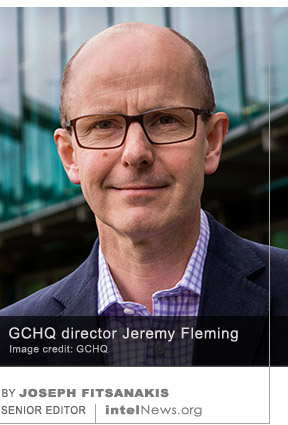
Jeremy FlemingFor the first time in its history, the United Kingdom has launched its first-ever military-style cyber campaign against an adversary, according to the director of the country’s primary cyber security agency. The target of the campaign was the Islamic State, the militant Sunni Muslim group that is also known as the Islamic State of Iraq and Syria (ISIS). The existence of the all-out cyber war was announced last week by Jeremy Fleming, the newly appointed director of the Government Communications Headquarters (GCHQ), Britain’s signals intelligence organization. Fleming, a former Security Service (MI5) officer, was speaking at the CYBERUK2018 conference, held in the northern English city of Manchester. It was his first public speech as director of GCHQ.
Fleming told his Manchester audience that the cyber operation that targeted ISIS was a “major offensive campaign” that seriously hampered the group’s ability to launch and coordinate both physical and online attacks against its enemies. The campaign also prevented ISIS from using its “normal channels” online to spread its message, effectively suppressing the group’s propaganda efforts, said Fleming. The new GCHQ director noted that large parts of the cyber operation against ISIS were “too sensitive to talk about”. But he added that the methods used to combat the Sunni Muslim group’s online operations were so aggressive that they “even destroyed equipment and networks” used by ISIS members. He did not specify what he meant by “destroyed equipment”, but his comment brought to mind the so-called Stuxnet virus, which was discovered by researchers in 2010. The virus appeared to have been designed by what experts described as “a well-resourced nation-state”, with the aim of sabotage sensitive hardware components found in centrifuges used by the Iranian government in its nuclear program.

During his Manchester speech, Fleming claimed that the British cyber war against ISIS was conducted in compliance with existing international legal frameworks. He added, however, that the “international doctrine governing the use [of cyber weapons] is still evolving”. The GCHQ director admitted that Britain’s cyber capabilities “are very powerful”, but argued that “we only use them in line with domestic and international law, when our tests of necessity and proportionality have been satisfied, and with all the usual oversight in place”.

► Author: Joseph Fitsanakis | Date: 20 April 2018 | Permalink | Research credit: K.B.

Russian ex-spy sees link between Skripal and GCHQ officer found dead in 2010

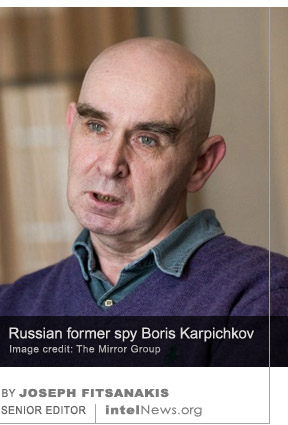
Boris KarpichkovA former officer in the Soviet KGB, who now lives in the United Kingdom, is to be questioned by British police after alleging that there is a link between the recent poisoning of Sergei Skripal and the mysterious death of a British intelligence officer in 2010. There has been extensive media coverage in the past month of the poisoning of Sergei Skripal, a Russian former military intelligence officer who spied for Britain in the early 2000s and has been living in England since 2010. Nearly every European country, as well as Canada, Australia and the United States, expelled Russian diplomats in response to the attack on the Russian former spy, which has been widely blamed on the Kremlin.
But eight years ago, another mysterious attack on a spy in Britain drew the attention of the world’s media. Gareth Williams, a mathematician in the employment of Britain’s signals intelligence agency, GCHQ, had been seconded to the Secret Intelligence Service (MI6), Britain’s external intelligence agency, to help automate intelligence collection. He had also worked with United States agencies, including the Federal Bureau of Investigation and the National Security Agency. But his career came to an abrupt end in August 2010, when he was found dead inside a padlocked sports bag at his home in Pimlico, London. It remains unknown whether his death resulted from an attack by assailants.

Last weekend, however, Boris Karpichkov, a former intelligence officer in the Soviet KGB and its post-Soviet successor, the FSB, said that Williams was killed by the Russian state. Karpichkov, 59, joined the KGB in 1984, but became a defector-in-place for Latvian intelligence in 1991, when the Soviet Union disintegrated. He claims to have also spied on Russia for French and American intelligence. In 1998, carrying two suitcases filled with top-secret Russian government documents, and using forged passports, he arrived with his family in Britain, where he has lived ever since. In an interview with the British tabloid newspaper The Sunday People, Karpichkov said that Williams was killed by Russian intelligence operatives with an untraceable poison substance, because he had discovered the identity of a Russian agent within his agency, the GCHQ. According to Karpichkov, Williams had befriended the mole, codenamed ORION by the Russians, and had realized that he was working for the Russians. The mole then allegedly told his Russian handler, a non-official-cover officer with an Eastern European passport, codenamed LUKAS, that Williams had grown suspicious. Read more of this post

Britain looking to resettle poisoned Russian spy to the United States, says source

Sergei SkripalThe British government may relocate Sergei Skripal, the Russian double spy who appears to have survived an assassination attempt in England, to the United States, in an effort to protect him from further attacks. The BBC reported last week that Skripal, who had been in a critical condition for nearly a month, was “improving rapidly”. Skripal, 66, who spied for Britain in the early 2000s, and has been living in England since 2010, was poisoned with what London claims was a military-grade nerve agent. Nearly every European country, as well as Canada, Australia and the United States, expelled Russian diplomats in response to the attack on the Russian former spy. His daughter, Yulia, who is 33, also came down with nerve-agent poisoning on the same day as her father, but appears to have survived.

The London-based newspaper The Sunday Times said yesterday that British government officials are exploring the possibility of resettling Skripal and his daughter in an allied country. The paper claimed that the countries being considered for possible relocation belong to the so-called “Five Eyes” agreement (also known as UKUSA), a decades-old pact between intelligence agencies from Australia, New Zealand, Britain, Canada and the United States. The Times quoted “an intelligence source” familiar with the negotiations allegedly taking place between the British government and its UKUSA partners. The source reportedly told the paper that the Skripals “will be offered new identities”, but did not elaborate on how they would avoid attention after their images were published by every major media outlet in the world following last month’s incident in England.

The anonymous source told The Times that “the obvious place to resettle [the two Russians] is America because they are less likely to be killed there and it is easier to protect them there under a new identity”. The paper also reported that Britain’s Secret Intelligence Service, also known as MI6, is holding discussions with its American counterpart, the Central Intelligence Agency, about resettling the Skripals on American soil. But an article published on Sunday in another British newspaper, The Daily Telegraph, said that senior government officials in the United States are now worried that Russian defectors and former spies living there may not be safe. The paper quoted an unnamed “senior US administration official” as saying that Washington has “massive concerns” that US-based Russians who have spied for America, or have publicly criticized the Kremlin, could be targeted just like Skripal. The Times said it contacted the British Foreign Office seeking to confirm whether the Skripals would be relocated abroad, but did not get a response.

► Author: Joseph Fitsanakis | Date: 9 April 2018 | Permalink

Britain shared “unprecedented” intelligence details to secure expulsions of Russians

Diplomatic ExpulsionsBritain secured the largest expulsion of Russian diplomats in history by sharing “unprecedented degrees of intelligence” with dozens of foreign countries about the attempted killing of former spy Sergei Skripal. Nearly 30 countries and international organizations, including the European Union and the North Atlantic Treaty Organization, have expelled or refused to accredit over 150 Russian diplomats in the past 72 hours. The coordinated move came in response to the alleged attack on Skripal, a Russian former intelligence officer who has been living in England since 2010. Skripal left Russia after he was released from prison as part of a spy swap between Russia, the United Kingdom and the United States. He had previously been caught spying on Russia for Britain’s Secret Intelligence Service, known as MI6. Skripal, 66, and his daughter Yulia, 33, are currently in a comatose state in hospital.

The United States, Canada and Australia joined most European countries in expelling Russian spies, after Britain accused Moscow of using a Soviet-era nerve agent to attack the Skripals. But according to a senior British government official, the coordinated expulsions were not coincidental. The official, who refused to be named, told The Financial Times that the British government took the unprecedented decision to share “unprecedented degrees of intelligence” with dozens of countries in order to convince them to take action against the Kremlin. Shared information included complete intelligence assessments of Russian activities. Complete intelligence assessments are rarely —if ever— shared by nations. The latter typically share headline assessments —short snippets of longer analyses produced by their intelligence agencies— with allied nations. But in this case, British officials were authorized to share complete intelligence reports along with underlying data, which included a “detailed scientific analysis of the nerve agent used in the attack”, said The Financial Times.

Sharing complete intelligence reports runs the risk of revealing how much a nation knows about the secret activities of its adversaries, and may end up harming its intelligence-collection efforts. But the paper said that the complete intelligence shared with dozens of countries around the world convinced them that “there was no plausible alternative other than […] the Russian state” was behind the attack on the Skripals. Moreover, said the paper, London shared intelligence with foreign governments that pointed to the existence of an “explicit” state-backed assassination program run by the Kremlin. The program allegedly includes targets in numerous countries worldwide, said The Financial Times. The Russian government has vehemently rejected London’s assertions and has suggested that the attack on the Skripals was part of a British intelligence operation aimed at turning Russia into an international pariah.

► Author: Joseph Fitsanakis | Date: 29 March 2018 | Permalink