Russia possibly tried to kill Montenegro PM, says British foreign secretary

Boris JohsonBoris Johnson, the British foreign secretary has said in an interview that Russian spies may have orchestrated last year’s failed attempt to kill the then-prime minister of Montenegro, Milo Dukanović. Mr. Johnson, a senior figure in the Conservative Party of the United Kingdom, was a major contender for the prime minister’s position in 2016, after the administration of David Cameron collapsed under the weight of the Brexit vote result. Speaking on Sunday morning to reporter Robert Peston, of Britain’s ITV television network, Mr. Johnson said that the West should “engage” with Russia, but warned that it should also “beware” of Moscow’s “dirty tricks” in Europe and the United States.

The British foreign secretary spoke following reports that British intelligence services called an emergency meeting with representatives of the country’s major political parties, in order to warn them that Russia planned to use cyber-attacks to disrupt regional and national elections in the country. Mr. Johnson said that the government had “no evidence the Russians are actually involved in trying to undermine our democratic processes at the moment”. But he added that there was “plenty of evidence that the Russians are capable of doing that. And there is no doubt”, he went on, “that they’ve been up to all sorts of dirty tricks”. Some of those “dirty tricks”, said Mr. Johnson, targeted the former Yugoslav Republic of Montenegro, where last year there was “an attempted coup and possibly an attempted assassination”.

The British politician was referring to allegations made last October by authorities in Montenegro that “nationalists from Russia” and Serbia were behind a failed plot to kill the country’s then-Prime Minister Milo Dukanović and spark a pro-Russian coup in the country. The allegations surfaced after 20 Serbians and Montenegrins were arrested by police in Montenegro for allegedly planning a military coup against the government. The arrests took place on election day, October 16, as Montenegrins were voting across the Balkan country of 650,000 people. The plotters had allegedly hired a “long-distance sharpshooter” who was “a professional killer” for the task of killing Đukanović. After killing the Prime Minister, the plotters planned to storm the parliament and prompt a pro-Russian coup in Montenegro, according to authorities. In response to allegations that the coup had been hatched in neighboring Serbia, Serbian Prime Minister Vučić said that he would not allow Serbia to “act as the puppet of world powers”, a comment that was clearly directed at Moscow. Russia vehemently denied the allegations.

Meanwhile, Mr. Johnson is preparing to visit Moscow in a few days to meet with his Russian counterpart, Minister of Foreign Affairs Sergey Lavrov. He told ITV that he planned to deliver his “personal feeling” to Mr. Lavrov, which “is one of deep, deep sadness” about Russia’s foreign policy under President Vladimir Putin.

Author: Ian Allen | Date: 13 March 2017 | Permalink

MI6 to revert to old-fashioned ways of recruitment, says director

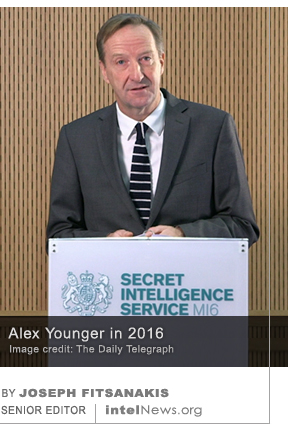
Alex YoungerBritain’s primary external-intelligence agency will revert to old-fashioned ways of recruiting employees, including the co-called “tap on the shoulder” method, according to its director. Known informally as MI6, the Secret Intelligence Service (SIS) was founded in 1908 to protect Britain’s national security by collecting intelligence from foreign sources. However, the agency has had difficulty recruiting a diverse group of people, and many still view it as a professional destination for a small wealthy elite, drawn primarily from Britain’s most prestigious universities such as Oxford and Cambridge.

MI6 is now trying to diversify the makeup of its employees, according to its director, Alex Younger. Younger, who is known at MI6 as ‘C’, gave an interview to British newspaper The Guardian on Thursday. He did so as the agency he leads prepares to increase its personnel numbers by 40 percent in the next four years. Last year, the British government announced that MI6’s personnel strength would grow from its current size of 2,500 employees to approximately 3,500 by 2020. The reason for the increase, said Younger, is that Britain is facing “more threats than ever before […] from terrorist groups and hostile states”. As a result, “the demands on our services [and] capabilities are on the up”, Younger told The Guardian in his first-ever interview with a national newspaper.

But MI6 would function more efficiently and achieve better results it if had a “more diverse workforce”, said Younger. Therefore, he said, the agency must go out of its way to “draw in a new cadre of black and Asian officers”. In doing so, the spy service would need to reach out to minority communities who are “selecting themselves out” of working for the British intelligence community. Useful in this process are what Younger called “old recruitment techniques”, such as the so-called “tap on the shoulder”. The term refers to the deliberate recruitment of individuals who will be approached by MI6 without having applied for employment with the agency. “We have to go to people that would not have thought of being recruited to MI6”, said Younger, adding that the “tap on the shoulder” method can be redeployed in order to increase diversity among MI6’s workforce and “reflect the society we live in”.

The spy agency is preparing to launch an aggressive recruitment campaign next week, aiming at bringing its overall size to 3,500 —a historic high, according to intelligence observers.

Author: Joseph Fitsanakis | Date: 03 March 2017 | Permalink
UK may stop intelligence sharing with the US if Trump brings back torture

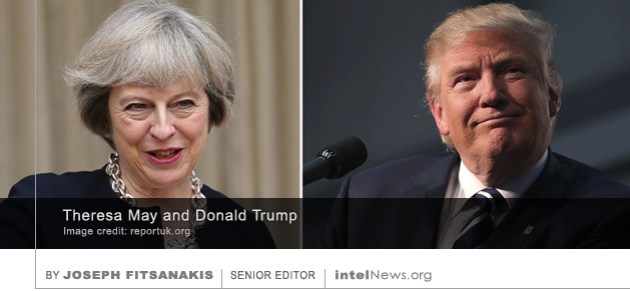
Theresa May Donald TrumpThe British government may limit or end intelligence cooperation with the United States, if Washington revives its post-9/11 torture program, according to reports. On Wednesday, US President Donald Trump said he had asked “people at the highest level of intelligence […], does torture work?” and had received the answer “yes, absolutely”. He added that he was considering reviving some of the torture techniques that were used in the “war on terrorism”, including waterboarding and, in his words, “a hell of a lot worse”.
But on Thursday, the British Prime Minister Theresa May warned that her government might be forced to reexamine its intelligence-sharing relationship with Washington, if the US reinstituted torture as a method of interrogation. Speaking to journalists during a flight to the US to meet President Trump, the British prime minister stressed that the United Kingdom “absolutely condemn[ed] the use of torture” and that she would deliver that message to her American counterpart. According to British law, government officials and intelligence personnel are forbidden from sharing intelligence with countries that are known to employ torture against detainees. They are also not allowed to use intelligence gathered by other countries through the use of torture.

Thursday’s comments by Theresa May point to a potentially serious rift between American and British, as well as European intelligence agencies, whose attitudes toward so-called ‘enhanced interrogation’ differ widely from those of President Trump. British newspaper The Daily Mail quoted Matt Tait, a former information security specialist for Government Communications Headquarters, Britain’s signals intelligence agency, who warned of a potential split between British and American spy agencies. If Trump reinstituted torture as a form of interrogation, it would mean that the United States Intelligence Community would “intentionally engage in war crimes”, said Tait. That would “make it impossible” for the UK to cooperate with the US “across a range of intelligence programs”, he added.

Author: Joseph Fitsanakis | Date: 27 January 2017 | Permalink

British intelligence ‘among the first’ to notify US about Russian hacking

MI6British intelligence agencies gave their United States counterparts an early warning about Russian attempts to influence the outcome of the American presidential election, according to The New York Times. The American newspaper cited “two people familiar with the conclusions” of a US intelligence report, who said that British spies helped “raise the alarm” in Washington about Russian hacking. The Times were referring to a classified US intelligence report that purports to prove that Moscow tried to skew the US election results in favor of Republican Party nominee Donald Trump. The report, parts of which have been released to the public, was shared with Trump in a secret meeting with US intelligence officials last week.
Interestingly, media reports suggest that US intelligence agencies were not aware of the severity of Russian hacking operations until they were notified by allied intelligence agencies. British spy agencies were “among the first” to tell their transatlantic partners that Moscow was engaged in an allegedly large-scale operation against American political parties and institutions. According to The Times, British intelligence reports mentioned Russian hacking operations against the Democratic National Committee in Washington, DC, as well as against senior officials in the Democratic Party. There is no mention in the report about how the British acquired the information. The London-based newspaper The Guardian speculates that British intelligence agencies picked up clues by monitoring Russian government communications (voice intercepts and computer traffic). However, the possibility that the information was acquired through an agent should not be ruled out.

According to the British newspaper, government officials in London were “alarmed” by the close contacts between Moscow and the inner circle of Donald Trump’s campaign. They even contacted the Federal Bureau of Investigation and passed information about what The Guardian describes as “the depth and nature of contacts” between the Russian government and the Trump campaign. There is no information, however, about whether the FBI did anything with that information. Meanwhile, the British government is eager to cultivate good relations with the US president-elect, despite concerns in Whitehall about the close Russian connections of the incoming American administration. London needs Washington’s support as it is disengaging from the European Union, says The Guardian.

Author: Joseph Fitsanakis | Date: 9 January 2017 | Permalink

German and British spy services in ‘biggest rift’ since World War II, claim sources

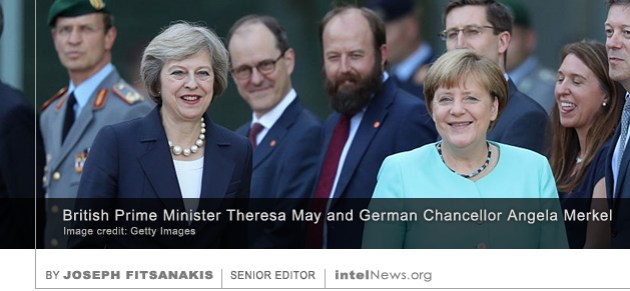
Theresa May Angela MerkelA reported discord between British and German intelligence services, which began in 2014, allegedly persists and now constitutes the “biggest rift between [the] secret services” of the two countries “since World War II”. According to British newspaper The Daily Mail, the Germans accuse Britain of working with the United States to spy on Berlin, while the British government says German intelligence agencies cannot be trusted to safeguard classified information. In an article published on Thursday, The Daily Mail said British and American intelligence agencies have stopped sharing non-critical intelligence with their German counterparts. The lack of cooperation “has now reached the point where there is virtual radio silence” between German and Anglo-American intelligence agencies, said the newspaper, citing “a source familiar” with the ongoing negotiations between the two sides.
In 2014, Germany expelled the most senior American intelligence officer stationed in the country after it confirmed that the United States National Security Agency had spied on German citizens, and had even targeted the personal communications of German Chancellor Angela Merkel. Berlin also caught a German intelligence officer who was spying for the Central Intelligence Agency. It was later alleged that Washington threatened to end all intelligence cooperation with Berlin if the German government offered protection to American defector Edward Snowden. Some German lawmakers had suggested that Berlin should reach out to Snowden, in return for information about US intelligence operations against Germany. In March of last year, the German broadsheet Süddeutsche Zeitung said that officials in Berlin had accused Britain of participating in American spy operations against Germany. The resulting dispute betweem Britain and Germany, said the paper, had turned into a “burgeoning crisis” that threatened intelligence-sharing between London and Berlin.

According to The Daily Mail, British intelligence agencies are now accusing their German counterparts of not properly safeguarding classified information that is shared with them by British security services. Consequently, claim the British, some of that information has found its way to WikiLeaks, the international whistleblower website founded by Australian former computer hacker Julian Assange. The London-based newspaper claims that British and German intelligence officials have met twice since 2014 to discuss ways of resolving the differences between their respective intelligence agencies. But the meetings have failed to mend the division between the parties and the crisis persists, claims The Daily Mail.

Author: Joseph Fitsanakis | Date: 16 December 2016 | Permalink

Spy agencies deploy extra staff to analyze ‘treasure trove’ of ISIS computer data

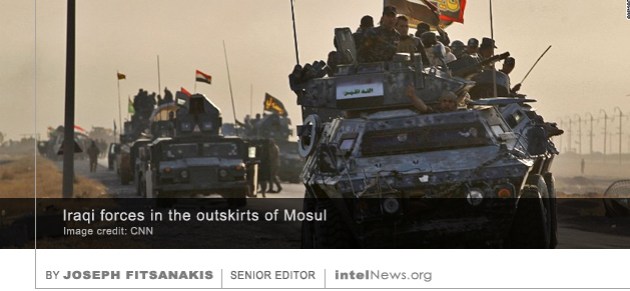
Iraqi forces in MosulWestern military and intelligence agencies are deploying extra analysts to comb through unprecedented amounts of digital data collected from Iraqi regions that have recently been recaptured from the Islamic State. The information is contained in thousands of laptops, hard drives, flash drives and cell phones left behind by retreating Islamic State forces in and around the northern Iraqi city of Mosul.
In an article published this week, the United Kingdom’s Secretary of State for Defense, Sir Michael Fallon, said he had authorized a significant increase in numbers of military intelligence analysts deployed to the Middle East, in response to “a trove of data” captured from the Islamic State. He added that the amount of digital data was expected to increase even further “when Mosul falls”. The British intelligence analysts will join hundreds of American specialists —including analysts, linguists and computer technicians— who are stationed in neighboring Jordan and have for over a year been analyzing digital and printed data captured from the Islamic State. Much of that information is eventually disseminated to allied intelligence agencies.

The largest collection of digital data and documents captured from the Islamic State dates from last summer, when Kurdish Peshmerga forces seized nearly 1,000 electronic devices belonging to the militant group. The material was found in and around the city of Manbij, near Aleppo in northwestern Syria. By late August, the Kurds had collected 20 terabytes of computer data and more than 120,000 documents stored on 1,200 devices that once belonged to ISIS officials or operatives. According to Western officials, the data led to intelligence operations against the Islamic State in 15 countries in North and South America, Europe, the Middle East, Africa and Southeast Asia. In November of this year, Iraqi forces operating south of Mosul captured the digital archives of the Islamic State’s Agricultural and Animal Resources Authority. In addition to an extensive notary archive, the collection included information on the Islamic State’s commercial transactions with entities in neighboring countries, and was described by Iraqi government sources as “a real treasure”.

According to the British government, digital data and printed documents currently being gathered from Islamic State strongholds in and around Mosul are expected to provide critical intelligence on the group’s structure and chain of command. They are also likely to give insights on the existence of Islamic State cells abroad, and will most likely help international prosecutors build legal cases against Islamic State commanders in the near future.

Author: Joseph Fitsanakis | Date: 15 December 2016 | Permalink

Joint British-American operation has decimated Islamic State’s cyber force

Computer hackingCoordinated efforts by Anglo-American military and intelligence agencies have resulted in the killing or capturing of nearly every senior commander of the Islamic State’s online force. The close-knit group of Islamic State hackers and online propagandists, which are informally known as “the Legion”, is responsible for hacking and online recruitment incidents that led to several lone-wolf attacks in the West. In one incident in March of 2015, the Legion claimed responsibility for the unauthorized release of personal details of over 1,300 American government employees, with orders to Islamic State volunteers to kill them. In other instances, Legion operatives reached out to impressionable young men and women in Western Europe and the United States and convinced them to move to Syria or conduct attacks at home.
According to The New York Times, which published an article last week about the current state of the Legion, in the early days of its emergence the group was viewed as a law enforcement problem. However, there were several successful and unsuccessful attacks by lone-wolf actors in the United States during the summer of 2015. According to The Times, the Federal Bureau of Investigation became overwhelmed and “was struggling to keep pace with the threat” posed by the Islamic State on the domestic front. It therefore pressed the US Department of Defense to help tackle the problem at its source. The DoD then teamed up with the British government, which was monitoring the Legion due to many of its members being British-born subjects. The two governments embarked on a “secretive campaign”, which has led to the capture of nearly 100 individuals associated with the Legion in less than two years. Another 12 members of the group, who had senior positions, have been killed in targeted drone strikes since the summer of 2015, says The Times.

The joint Anglo-American operation is allegedly responsible for the recent drop in terrorist activity instigated by the Islamic State in the West. It appears, says the paper, that the Islamic State is failing to replace the captured or killed members of the Legion with equally skilled operatives, which may point to the desperate state of the organization. But the Islamic State continues to operate a relatively sophisticated media arm, according to US government officials, and its media reach should not be underestimated, even as it is losing ground in Syria and Iraq.

Author: Joseph Fitsanakis | Date: 28 November 2016 | Permalink

Russia accuses UK of deliberately delaying visas for its diplomats in London

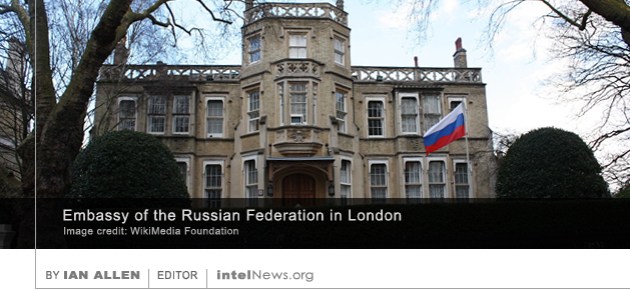
Russian embassy LondonRussia’s ambassador to the United Kingdom has accused the British Foreign Office of deliberately delaying the issuance of visas for its diplomatic officials who have been assigned to join the Russian embassy in London. Alexander Yakovenko, Russia’s former Deputy Minister of Foreign Affairs, who has been heading the Russian embassy in London since 2011, said last week that the size of his staff was “shrinking” to unprecedented numbers. The reason, said Yakovenko, was that the government in London appeared to be following a systematic policy of delaying visa requests for Russian diplomats assigned to serve in London.
“As our people return home or go on to other postings, visas for their replacements are not being issued”, said Yakovenko. Consequently, the Russian embassy’s personnel numbers were shrinking, and would shrink even further unless the issue was resolved by Whitehall, he said. The Russian ambassador added that his embassy did not understand “the strategy of this country on visa issues”, implying that London was following a deliberate plan to prevent Russian diplomats from staffing the embassy. But the British Foreign Office responded on Saturday that it was not following a deliberate policy of delaying the issuance of visas for Russian diplomats. The BBC quoted a Foreign Office spokesman who said that the British government had “made it clear to the Russians that the queues [for visa issuances] need to be cleared on both sides”. The comment implies that London’s stance may be a response to efforts by Moscow to reduce the size of the British diplomatic core stationed in the Russian capital.

Bilateral relations between Britain and Russia have suffered since 2006, when the murder of former Russian intelligence officer Alexander Litvinenko in London prompted Whitehall to expel four Russian diplomats stationed there. The Russian involvement in Ukraine and Syria has further strained relations between Moscow and London in recent years. In August of 2015, the Russian Embassy accused the British government of “effectively expelling” four of its diplomats from London by refusing to grant them visas for more than three months.

Author: Ian Allen | Date: 24 October 2016 | Permalink

Britain’s MI6 to increase its size by 40% in four years

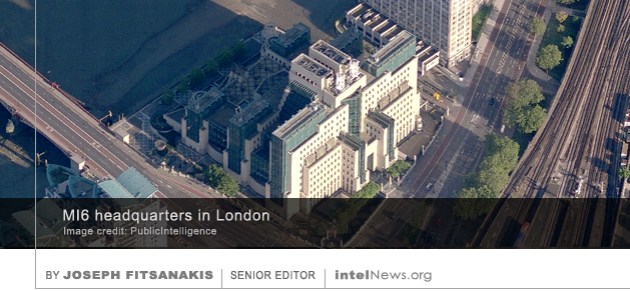
MI6Britain’s primary external intelligence agency, MI6, will see a 40 percent increase in personnel numbers in the next four years, according to a new report. The agency, which is formally known as the Secret Intelligence Service, currently employs about 2,500 people. But the BBC said on Wednesday that the number of MI6 employees will rise to approximately 3,500 by 2020. The broadcaster said that no public announcement had been made about the planned increase, but that it had verified the information “via Whitehall sources”, referring to the official seat of the British government.

If the BBC’s report is accurate, the planned increase will be the biggest personnel boost for MI6 since the Cold War. It reflects a renewed emphasis in foreign intelligence collection using human sources, which is the primary task of the spy agency. The broadcaster said that the increase in personnel has been “made necessary by the development of the Internet and technology” in recent years. Earlier this week, the director of MI6, Alex Younger, said during a panel presentation in Washington, DC, that the operating environment of MI6 had fundamentally changed due to “the information revolution”. The latter, he said, presented the agency with “an existential threat” and a “golden opportunity” at the same time.

The reported increase is consistent with an announcement made by the then British Prime Minister David Cameron in November 2015, that London would boost significantly the size of its intelligence services. Cameron made the announcement shortly after the terrorist attacks in Paris, which killed over 130 people and injured 700. In a subsequent report, called the 2015 Strategic Defence and Security Review, the British government said it would incorporate 1,900 additional staff to its intelligence and security services. It now appears that over half of these new recruits will join MI6, while the Security Service (MI5), the Government Communications Headquarters (GCHQ) and the Metropolitan Police’s Counter Terrorist Command will hire the remaining 900 people.

A similar rise in personnel numbers occurred after the July 7 London bus bombings in 2005. Following those attacks, the MI5, which focuses on domestic security and counterterrorism, saw its personnel size increase by approximately 35 percent.

Author: Joseph Fitsanakis | Date: 23 September 2016 | Permalink

Informer accuses Sinn Féin leader of ordering British spy’s murder

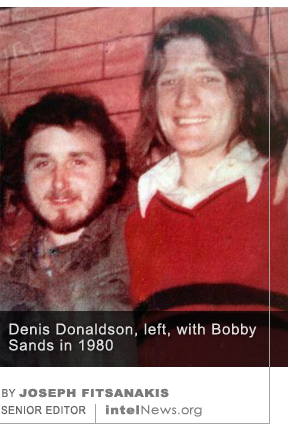
Denis DonaldsonA former member of the Provisional Irish Republican Army, who was an agent for the British security services, has alleged that Gerry Adams, leader of the second-largest political party in Northern Ireland, ordered the killing of a British spy in 2006. The former agent was referring to the killing of Denis Donaldson, a senior member of the Provisional IRA, who was found dead months after it was revealed that he had been secretly spying on the republican organization on behalf of British intelligence.

In December 2005, Adams announced at a press conference in Dublin, Ireland, that Donaldson had been a spy for the British government inside the Provisional IRA and its political wing, Sinn Féin. Soon after Adams’ revelation, Donaldson read a prepared statement on Ireland’s RTÉ television station, admitting that he had been recruited as a spy by the British Security Service (MI5) and the Special Branch of the Royal Ulster Constabulary (known today as the Police Service of Northern Ireland). Following his public admission, Donaldson was nowhere to be found. However, in March 2006, a reporter for a British tabloid newspaper found Donaldson living in a remote farmhouse in Northern Ireland’s County Donegal. Weeks later, Donaldson was shot dead in his cottage by persons unknown. In 2009, the Real IRA, a Provisional IRA splinter group that disagreed with the Good Friday Agreement and subsequent cessation of hostilities, took responsibility for Donaldson’s killing.

On Tuesday, a man who claims he was an informant for British intelligence inside Sinn Féin and the Provisional IRA alleged that Donaldson’s killing was ordered by Adams himself. The man, who spoke on the BBC’s Spotlight program, could not be identified due to concerns about his personal safety. He said during a televised interview that he knew from his “experience in the IRA that murders have to be approved by […] the leadership of the IRA and the military leadership of the IRA”. When asked by the report who he was “specifically referring to”, the former informant answered: “Gerry Adams. He gives the final say”. On Wednesday, Adams denied any involvement in the killing, saying he wished to “specifically and categorically refute these unsubstantiated allegations”. The leader of Sinn Féin went on to claim that the accusations against him were “part of the British security agencies’ ongoing attempts to smear republicans and cover-up their own actions”. Adams’ lawyer said late on Wednesday that his client was considering launching a lawsuit against the BBC for defamation.

Author: Joseph Fitsanakis | Date: 22 September 2016 | Permalink

British judge denies request to name alleged new member of Cambridge spy ring

Corpus Christi College CambridgeA document that allegedly contains the name of a man who could be connected to one of the most sensational spy rings of the Cold War is to remain secret after a judge rejected a request to have it released. The man is believed by some to have been associated with the so-called ‘Cambridge spy ring’, a group of upper-class British graduates of Cambridge University, who spied for the USSR from the 1930s until the 1960s. Among them was Guy Burgess, Donald Maclean and H.A.R. “Kim” Philby, all of whom eventually defected to the Soviet Union. In 1979, it was revealed that Anthony Blunt, an art history professor who in 1945 became Surveyor of the King’s Pictures and was knighted in 1954, was also a member of the group. A fifth member, career civil servant and former intelligence officer John Cairncross, was publicly outed as a Soviet in 1990, shortly before his death.
Over the years, more individuals have been suggested by historians as potential members of the group, including intelligence officers Leo Long and Guy Liddell, academics Ludwig Wittgenstein and Andrew Gow, and physicist Wilfrid Mann. But according to British newspaper The Daily Mail, another individual may be identified in a classified document as a possible member of the Cambridge spy ring. The document was allegedly traced by Andrew Lownie, who authored the recently published Stalin’s Englishman: The Lives of Guy Burgess. Lownie filed a Freedom of Information request to have the document, which is held at the National Archives in London, released. But the request was denied, and a judge has now upheld the decision.

In denying the request, the judge argued that the man named in the document is still alive and that a possible release of the document could “jeopardize […] personal relationships”. He also contended that the case is too old to warrant immediate public interest, and thus there was “no pressing need” to declassify the file. The Mail speculates that the individual named in the document could have cooperated with the British government in the past in return for protection, or that the file in question may contain details that could embarrass the British government.

Author: Joseph Fitsanakis | Date: 20 September 2016 | Permalink

Conflicting details on Iranian nuclear negotiator arrested for espionage

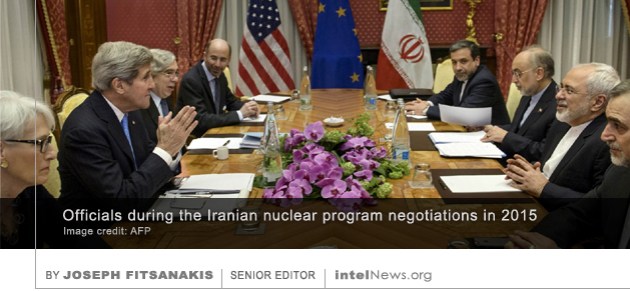
Iran nuclear negotiationsIranian officials have confirmed reports from earlier this month that a member of the country’s team of nuclear negotiators has been arrested for engaging in espionage for a foreign country. But there are conflicting details about the case in Iranian media reports. Rumors about the identity of the individual began to circulate on August 16, after the office of the Iranian prosecutor announced that a dual national with Iranian citizenship had been arrested for spying on Tehran for a foreign intelligence service. The individual was not named, but some reports connected him with Britain’s Secret Intelligence Service, known as MI6.
On Sunday, Iran’s judiciary spokesman, Gholamhossein Mohseni Ejeie, identified the man as Abdolrasoul Dorri Esfahani. Ejeie was specifically asked about the espionage case during his weekly press conference, and responded saying that an “espionage infiltration” had indeed been detected and that “legal action” was being taken against Esfahani. He did add, however, that the arrest and concurrent investigation had not yet resulted in a case that could stand in court, thus Esfahani had been released on bail. When asked whether Esfahani would be charged, Ejeie said that official charges had not been filed, because “the charge against [Esfahani] has not been proven yet”. He implied, however, that charges would eventually be filed.

There are also conflicting reports about Esfahani’s background and involvement with the Iranian government. Early reports suggested that he is a dual citizen of Canada and Iran. But subsequent reports stated that he holds both Iranian and British passports, and that he had been recruited by MI6. Some unconfirmed reports claimed that Esfahani received payments from both British and American intelligence agencies. What appears more certain is that Esfahani is an accountant with some involvement in the financial aspects of the recent nuclear negotiations between Iran and foreign powers. It is also believed that he was not a core member of Iran’s negotiating team, but provided a supporting role on financial aspects of the negotiations.

The recently concluded negotiations, were aimed at bridging the differences between the Islamic Republic and a group of nations that have come to be known as P5+1, representing the five permanent members of the United Nations Security Council plus Germany. In March 2015, Hossein Motaghi, a media advisor to the Iranian president Hassan Rouhani, who was in Switzerland to cover the negotiations, defected and filed an application for political asylum in Switzerland.

Author: Joseph Fitsanakis | Date: 30 August 2016 | Permalink

More on senior North Korean diplomat who defected in London

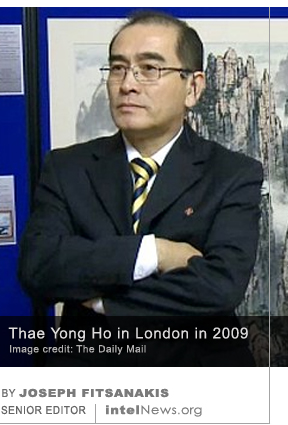
Thae Yong-HoA high-ranking North Korean diplomat, who defected with his wife and children in London, and is now in South Korea, is from a privileged family with a long revolutionary pedigree in North Korean politics. South Korea’s Ministry of Unification confirmed on Wednesday that Thae Yong-Ho, the second-in-command at the North Korean embassy in the United Kingdom, had defected with his wife and children and had been given political asylum in South Korea. As intelNews reported earlier this week, Thae, a senior career diplomat believed to be one of North Korea’s foremost experts on Western Europe, had disappeared with his family and was presumed to have defected “to a third country”.
New information has since emerged on Thae and his family, confirming that both he and his wife are members of North Korea’s privileged elite, with decades-old connections to the ruling Workers’ Party of Korea. According to the Seoul-based JoongAng Daily, Thae’s wife, O Hye-Son, is a niece of the late O Peak-Ryong, a decorated communist guerrilla who fought Korea’s Japanese colonialists in the 1930s. O, who died in the 1980s, joined the Korean anti-Japanese struggle alongside Kim Il-Sung, founder of the Workers’ Party of Korea and first leader of North Korea. This means that O Hye-Son is also the cousin of O Peak-Ryong’s son, General O Kum-Chol, who is currently vice chairman of the General Staff of the Korean People’s Army. Thae himself is the son of Thae Pyong-Ryol, a four-star general who also fought against the Japanese in the 1930s, alongside Kim Il-Sung. In the postwar period, General Thae became a senior member of the Workers’ Party of Korea and was appointed to the Party’s powerful Central Committee. He died in 1997.

JoongAng Daily quoted an unnamed “source familiar with the matter” of Thae’s defection, who said that the diplomat’s loyalty to the North Korean leadership had been unquestioned prior to his surprise defection. Most North Korean diplomats are posted at an embassy abroad for a maximum of three years before being moved elsewhere in the world. The fact that Thae had been allowed to remain in the United Kingdom for 10 years shows his privileged status within the Workers’ Party of Korea, said the source. Additionally, the children or most North Korean diplomats are required to return to their native country after completing high school. But this did not seem to apply to Thae, whose three children were living with him in Britain even after graduating from university. This and many other clues reflect Thae’s “impeccable credentials”, said the source, which made him one of the most trusted government officials in the regime’s bureaucratic arsenal.

It is believed that Thae defected because he had been told that his tenure in London was coming to an end after a decade, and he would have to relocate to a less desirable location, or possibly recalled back to Pyongyang. Defections among North Korea’s privileged elite are rare, but have been happening increasingly frequently in the past few years. This makes some observers believe that disillusionment among Supreme Leader Kim Jong-Un’ inner circle is growing and that the North Korean regime is becoming weaker.

Author: Joseph Fitsanakis | Date: 19 August 2016 | Permalink

Senior North Korean diplomat reportedly defects in London (updated)

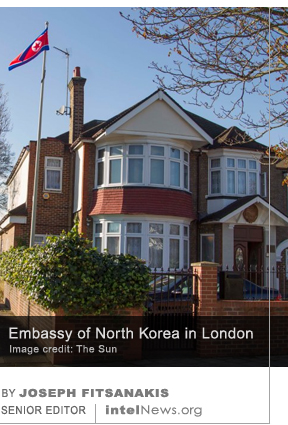
DPRK Embassy in LondonA senior member of North Korea’s diplomatic representation in the United Kingdom, who is considered one of his country’s leading specialists in Western European affairs, has reportedly defected “to a third country” with his family. The alleged defection was first reported on Tuesday by South Korean newspaper JoongAng Ilbo. Citing “a source with in-depth knowledge of North Korea”, the Seoul-based paper said that the diplomat had disappeared several weeks ago, and that staff at the embassy of North Korea in London had failed in attempts to find him. Later on the same day, the British state-owned broadcaster BBC identified the missing diplomat as Thae Yong-Ho.
In a brief report, the BBC said that the diplomat had lived with his wife and children in London for a decade, and that the family —especially its younger members— were very integrated in British culture and way of life. Further updates in South Korean media said Thae was serving as deputy consul at the embassy, essentially as second-in-command after Ambassador Hak Bong Hyon. It is also believed that Thae was tasked with promoting a positive image of North Korea to British audiences, and was also in charge of cultivating the embassy’s relations with the UK Korean Friendship Association, an organized group of North Korean ideological sympathizers in Britain. But some reports indicate that the alleged defector also performed intelligence tasks, such as monitoring the activities of North Korean defectors living in London.

Thae is believed to be a senior member of North Korea’s diplomatic community. He grew up in China and is fluent in Chinese and English, in addition to his native Korean. He joined North Korea’s diplomatic ranks soon after graduating from university and is said to be one of the country’s foremost experts on Western Europe. If confirmed, his defection will deliver a serious blow to North Korea’s prestige and arguably hurt its intelligence capabilities in the West. This development will also have a major impact on the operations of the Asian country’s embassy in London, which is run by only five diplomats, including the ambassador. No comments have been made on this story by the UK Foreign and Commonwealth Office, the embassy of North Korea in London, or the government of South Korea. According to JoongAng Ilbo, Thae is currently “going through procedures to seek asylum in a third country” with his family.

Update 17 Aug. 2016, 5:00 p.m. GMT: The BBC now reports that Thae has defected to South Korea and that he and his family are “under the [South Korean] government’s protection”, according to officials in Seoul. He is believed to be the most senior North Korean official to have ever defected in the history of the communist state.

Author: Joseph Fitsanakis | Date: 17 August 2016 | Permalink

Ukraine gives Britain intel about Russian ‘hybrid war’ tactics in Crimea

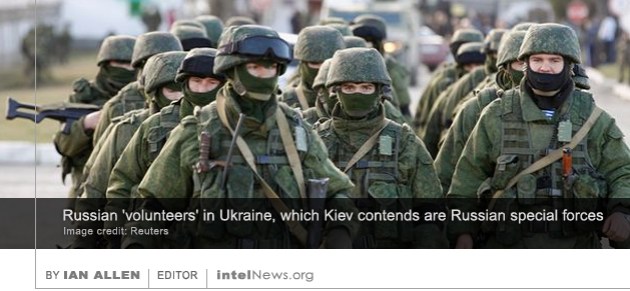
UkraineUkrainian intelligence and defense officials are sharing intelligence with Britain about cutting-edge Russian military tactics in the Crimea and parts of eastern Ukraine. Since the 2014 Russian military intervention in Ukraine, observers have noted the sophisticated tactics used by Moscow. The Russian forces seem to be combining their advanced conventional arsenal with electronic warfare and information operations. The latter include the use of deception, spreading propaganda through social media, and computer hacking. Some experts have described Russia’s tactics in the Crimean Peninsula and the Donbass region of Ukraine as a form of “hybrid warfare”, which has its roots in Soviet times. The difference in the contemporary operational landscape is the prominence of electronic resources, which the Russians are simultaneously employing as disinformation channels and tools of sabotage. Following the Ukrainian crisis of 2014, the former Soviet republic is today seen as being at the forefront of Russia’s experimentation with “hybrid warfare”.

According to British newspaper The Times, a delegation of Ukrainian military officials, with considerable experience in studying Russia’s war tactics in Donbass and Crimea, secretly visited the United Kingdom in July for consultations. The paper quoted an anonymous British military source saying that the visit was part of a series of meetings between Ukrainian and British officials. The goal of the meetings, it said, is to understand Russia’s military tactics in the 21st century. The agenda of the secret meetings includes discussion on topics such as the use of radio-electric weapons that disrupt GPS and drone signals, the deployment of sabotage and covert action, or the use of social media to spread disinformation. Russian tactics that have been discussed include the use of acoustics to locate snipers in an urban battlefield, tactical coordination of drones in fleets, and the widespread use of cellular telephone messages to target civilian populations.

A representative of the UK’s Ministry of Defense, who was contacted by The Times, admitted that “a small delegation from Ukraine was hosted” in Britain “as part of a think-tank sponsored visit”, but refused to provide further details. The paper said the meetings will probably continue and may even widen in scope to include staff from North Atlantic Treaty Organization member states.

Author: Ian Allen | Date: 12 August 2016 | Permalink