Ukraine gives Britain intel about Russian ‘hybrid war’ tactics in Crimea
August 12, 2016 Leave a comment
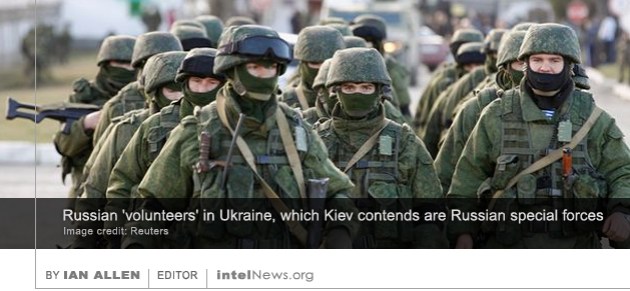 Ukrainian intelligence and defense officials are sharing intelligence with Britain about cutting-edge Russian military tactics in the Crimea and parts of eastern Ukraine. Since the 2014 Russian military intervention in Ukraine, observers have noted the sophisticated tactics used by Moscow. The Russian forces seem to be combining their advanced conventional arsenal with electronic warfare and information operations. The latter include the use of deception, spreading propaganda through social media, and computer hacking. Some experts have described Russia’s tactics in the Crimean Peninsula and the Donbass region of Ukraine as a form of “hybrid warfare”, which has its roots in Soviet times. The difference in the contemporary operational landscape is the prominence of electronic resources, which the Russians are simultaneously employing as disinformation channels and tools of sabotage. Following the Ukrainian crisis of 2014, the former Soviet republic is today seen as being at the forefront of Russia’s experimentation with “hybrid warfare”.
According to British newspaper The Times, a delegation of Ukrainian military officials, with considerable experience in studying Russia’s war tactics in Donbass and Crimea, secretly visited the United Kingdom in July for consultations. The paper quoted an anonymous British military source saying that the visit was part of a series of meetings between Ukrainian and British officials. The goal of the meetings, it said, is to understand Russia’s military tactics in the 21st century. The agenda of the secret meetings includes discussion on topics such as the use of radio-electric weapons that disrupt GPS and drone signals, the deployment of sabotage and covert action, or the use of social media to spread disinformation. Russian tactics that have been discussed include the use of acoustics to locate snipers in an urban battlefield, tactical coordination of drones in fleets, and the widespread use of cellular telephone messages to target civilian populations.
A representative of the UK’s Ministry of Defense, who was contacted by The Times, admitted that “a small delegation from Ukraine was hosted” in Britain “as part of a think-tank sponsored visit”, but refused to provide further details. The paper said the meetings will probably continue and may even widen in scope to include staff from North Atlantic Treaty Organization member states.
► Author: Ian Allen | Date: 12 August 2016 | Permalink
 An internet website that offered free URL shortening services appears to have been a front created by British intelligence in order to spread messages and monitor activists involved in protests in Iran and the Arab world. The website was used heavily during the Iranian presidential election protests of 2009, which became known as the Iranian Green Movement. After a brief hiatus, the website was used again in 2011, as the Arab Spring revolts in North Africa and the Middle East were intensifying. The information pointing to the use of the website comes from documents leaked by Edward Snowden, the American former intelligence employee who has been granted political asylum in Russia.
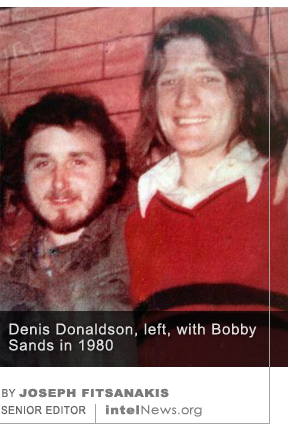 Police in Ireland say they have arrested two individuals in connection with the 2006 killing of a senior member of the Irish Republican Army, who had previously been outed as a spy for the British state. Denis Donaldson joined the Provisional IRA as a volunteer in mid-1960s, before the outbreak of the Troubles, which rocked Northern Ireland from the late 1960s until 1998. He was trained in paramilitary operations in Lebanon and participated in many IRA actions. He served time at the Long Kesh Detention Centre along with IRA volunteer and Member of Parliament Bobby Sands, who died in the famed 1981 Irish hunger strike. After Sands’ death, Donaldson stood as a general election candidate in Belfast East for Sinn Féin, the IRA’s political wing. In the process, he became a close associate of Sinn Féin President Gerry Adams. In 2000, shortly after the end of the IRA’s 30-year military campaign, Sinn Féin appointed Donaldson as the administrator of its parliamentary group in Stormont, the devolved Northern Irish parliament.
 A former senior member of the Official Irish Republican Army in the United Kingdom claims that he was abandoned by British and American spy agencies after he testified in a high-profile counterfeiting case. The case involves members of the Official IRA, including its alleged former chief of staff, who is wanted in the United States in connection with the so-called supernote counterfeit money investigation. The supernote, also known as superdollar or superbill, is a fake 100-dollar bill believed to be one of the highest-quality counterfeit banknotes ever detected. The US government believes that a nation-state is behind the production of the supernote, with North Korea being the primary suspect.
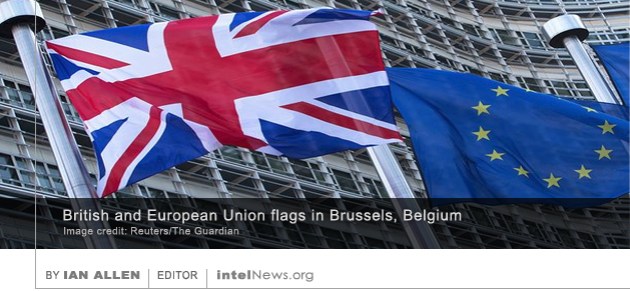 After Thursday’s Brexit vote, European and American security officials have tried to pacify concerns about major disruption of longstanding Western security cooperation arrangements. But experts stress that the international security landscape will be significantly impacted by Britain’s decision to leave the European Union (EU). As early as Thursday night, British defense, military and intelligence officials launched a marathon of phone calls in order to reassure their European and American counterparts that the United Kingdom was not going to retreat from its role in security pacts with Europe and the North Atlantic Treaty Organization (NATO).
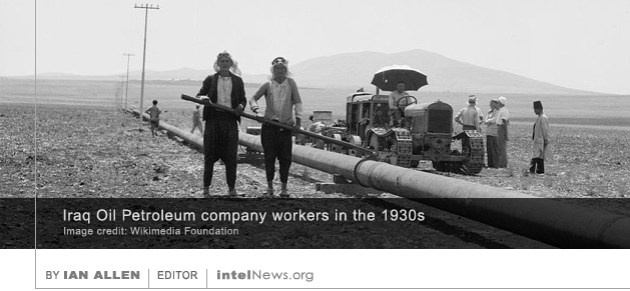 Recently uncovered documents shed further light on an ultra-secret plan, devised by the British and American governments, to destroy oil facilities in the Middle East in the event the region was invaded by Soviet troops. The
 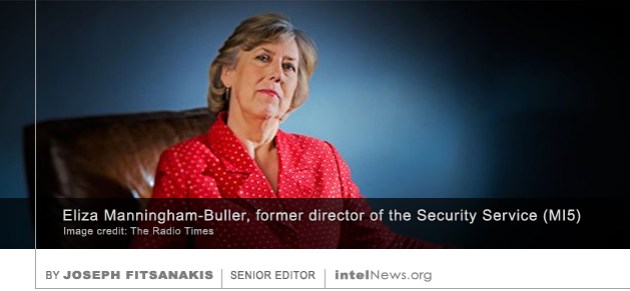 Relations between two of Britain’s most powerful intelligence agencies, MI5 and MI6, suffered a “serious and prolonged breakdown” during the American-led war on terrorism. Citing sources in the British government, the London-based Guardian newspaper said on Tuesday that the two agencies entered an extensive row over Britain’s support for extraordinary rendition. The policy refers to the government-sponsored abduction of individuals and their extrajudicial transfer across national borders. It was widely practiced by the administration of US President George W. Bush, despite its connection to documented cases of torture of terrorism detainees, in countries like Egypt, Libya, and Jordan.
 A videotaped lecture by Kim Philby, one of the Cold War’s most recognizable espionage figures, has been unearthed in the archives of the Stasi, the Ministry of State Security of the former East Germany. During the one-hour lecture, filmed in 1981, Philby addresses a select audience of Stasi operations officers and offers them advice on espionage, drawn from his own career. While working as a senior member of British intelligence, Harold Adrian Russell Philby, known as ‘Kim’ to his friends, spied on behalf of the Soviet NKVD and KGB from the early 1930s until 1963, when he secretly defected to the USSR from his home in Beirut, Lebanon. Philby’s defection sent ripples of shock across Western intelligence and is often seen as one of the most dramatic moments of the Cold War.
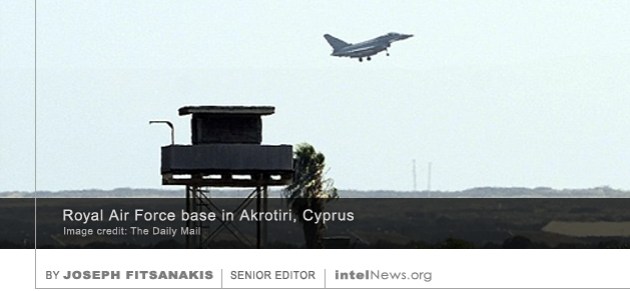 British and American intelligence services worked together to hack Israeli unmanned aerial vehicles in order to acquire information on the Jewish state’s military intentions in the Middle East, according to documents leaked last week. Online publication The Intercept, said the operation was code-named ANARCHIST and was a joint project of Britain’s General Communications Headquarters (GCHQ) and America’s National Security Agency (NSA). The publication said it acquired documents about the operation from former NSA contractor Edward Snowden, who defected to Russia in 2013 and was offered political asylum by Moscow.
 A Russian former intelligence officer, who is accused by the British government of having killed another Russian former spy in London, said the British intelligence services tried to recruit him in 2006. British government prosecutors have charged Andrei Lugovoi with the killing of Alexander Litvinenko, a former employee of the Soviet KGB and one of its successor agencies, the FSB. In 2006, Litvinenko died in London, where he had defected with his family in 2000, following exposure to the highly radioactive substance Polonium-210. In July of 2007, the British government charged Lugovoi and another Russian, Dmitri Kovtun, with the murder of Litvinenko, and expelled four Russian diplomats from London. Last week, following the conclusion of an official inquest into the former KGB spy’s death, the British government took the unusual step of summoning the Russian ambassador to London, to file an official complaint about Moscow’s refusal to extradite Lugovoi and Kovtun to the United Kingdom.
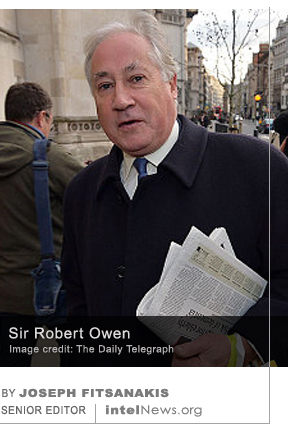 The British government has taken the unusual step of summoning the Russian ambassador to London, following the conclusion of an official inquest into the death of a former KGB officer who is believed to have been killed on the orders of Moscow. Alexander Litvinenko, an employee of the Soviet KGB and one of its successor organizations, the FSB, defected with his family to the United Kingdom in 2000. But in 2006, he died of radioactive poisoning after meeting two former KGB/FSB colleagues, Dmitri Kovtun and Andrey Lugovoy, in London. A public inquiry into the death of Litvinenko, ordered by the British state,
 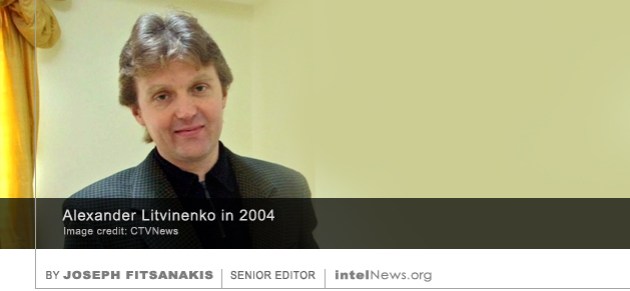 The long-awaited concluding report of a public inquiry into the death of a former Soviet spy in London in 2006, is expected to finger the Russian state as the perpetrator of the murder. Alexander Litvinenko was an employee of the Soviet KGB and one of its successor organizations, the FSB, until 2000, when he defected with his family to the United Kingdom. He soon became known as a vocal critic of the administration of Russian President Vladimir Putin. In 2006, Litvinenko came down with radioactive poisoning after meeting two former KGB/FSB colleagues, Dmitri Kovtun and Andrey Lugovoy, at a London restaurant. In July of 2007, after establishing the cause of Litvinenko’s death, which is attributed to the highly radioactive substance Polonium-210, the British government officially charged the two Russians with murder and issued international warrants for their arrest. Whitehall also announced the expulsion of four Russian diplomats from London. The episode, which was the first public expulsion of Russian envoys from Britain since end of the Cold War, is often cited as marking the beginning of the worsening of relations between the West and post-Soviet Russia.
 Information gathered by British and American intelligence agencies raises the possibility that a bomb may have brought down the Russian civilian airliner that crashed in Egypt last week. The Metrojet Airbus 321 left the Egyptian resort of Sharm el-Sheikh on Saturday, heading for St. Petersburg, Russia. But it crashed in the Sinai Peninsula less than 30 minutes after it took off, killing all 224 passengers and crew onboard, the vast majority of whom were Russian citizens.
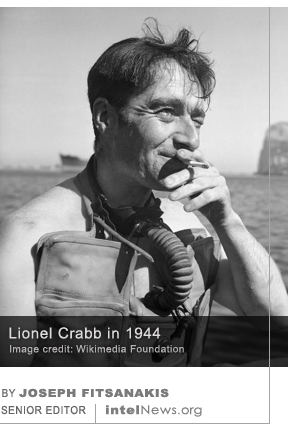 A set of newly released files from the archives of the British Cabinet Office shed light on the mysterious case of a highly decorated combat swimmer, who vanished while carrying out a secret operation against a Soviet ship. The disappearance happened during a historic Soviet high-level visit to Britain in 1956. In April of that year, First Secretary of the Communist Party of the USSR, Nikita Khrushchev, and Nikolai Bulganin, Chairman of the Council of People’s Commissars, arrived in Britain aboard Russian warship Ordzhonikidze, which docked at Portsmouth harbor. Their eight-day tour of Britain marked the first-ever official visit by Soviet leadership to a Western country. But the tour was marred by a botched undersea operation led by Britain’s Secret Intelligence Service, known commonly as MI6. The operation, which aimed to explore the then state-of-the-art Ordzhonikidze, ended in the








Senior North Korean diplomat reportedly defects in London (updated)
August 17, 2016 by Joseph Fitsanakis 2 Comments
In a brief report, the BBC said that the diplomat had lived with his wife and children in London for a decade, and that the family —especially its younger members— were very integrated in British culture and way of life. Further updates in South Korean media said Thae was serving as deputy consul at the embassy, essentially as second-in-command after Ambassador Hak Bong Hyon. It is also believed that Thae was tasked with promoting a positive image of North Korea to British audiences, and was also in charge of cultivating the embassy’s relations with the UK Korean Friendship Association, an organized group of North Korean ideological sympathizers in Britain. But some reports indicate that the alleged defector also performed intelligence tasks, such as monitoring the activities of North Korean defectors living in London.
Thae is believed to be a senior member of North Korea’s diplomatic community. He grew up in China and is fluent in Chinese and English, in addition to his native Korean. He joined North Korea’s diplomatic ranks soon after graduating from university and is said to be one of the country’s foremost experts on Western Europe. If confirmed, his defection will deliver a serious blow to North Korea’s prestige and arguably hurt its intelligence capabilities in the West. This development will also have a major impact on the operations of the Asian country’s embassy in London, which is run by only five diplomats, including the ambassador. No comments have been made on this story by the UK Foreign and Commonwealth Office, the embassy of North Korea in London, or the government of South Korea. According to JoongAng Ilbo, Thae is currently “going through procedures to seek asylum in a third country” with his family.
Update 17 Aug. 2016, 5:00 p.m. GMT: The BBC now reports that Thae has defected to South Korea and that he and his family are “under the [South Korean] government’s protection”, according to officials in Seoul. He is believed to be the most senior North Korean official to have ever defected in the history of the communist state.
► Author: Joseph Fitsanakis | Date: 17 August 2016 | Permalink
Filed under Expert news and commentary on intelligence, espionage, spies and spying Tagged with defectors, diplomacy, London, News, North Korea, North Korean embassy in the UK, Thae Yong Ho, UK