UK police to end 24/7 surveillance of embassy that houses WikiLeaks founder
October 14, 2015 2 Comments
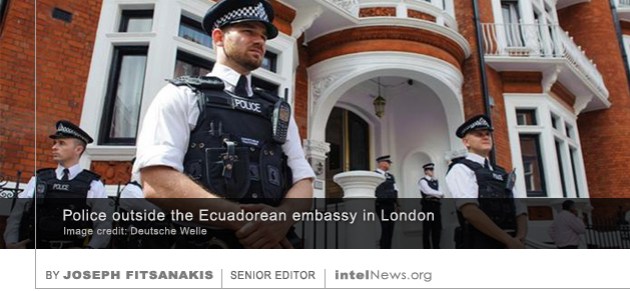 Police in London will no longer physically monitor the embassy of Ecuador in the British capital, where WikiLeaks founder Julian Assange has been living for over two years, fighting against extradition to Sweden. Assange was granted political asylum by the government of Ecuador in June of 2012, after Swedish authorities charged him with rape. But the Australian-born Assange claims that the charges are part of a plot to extradite him to the United States, where he is wanted for having leaked hundreds of thousands of documents belonging to the Department of Defense and the Department of State.
Acting on a request from the Swedish government, London’s Metropolitan Police Service, known informally as Scotland Yard, has been patrolling the streets around the embassy 24 hours a day, in order to prevent Assange from being smuggled out of the building by Ecuadorean officials. Standard diplomatic protocol prevents British authorities from entering the embassy, which is technically considered Ecuadorean territory.
On Monday, however, the Metropolitan Police said they would cease their 24/7 patrols around the Ecuadorean embassy, which is located in London’s fashionable Knightsbridge district. According to a police official, constant physical surveillance of the embassy was “no longer proportional” to Assange’s charges, which meant that Scotland Yard would be unable to continue “to commit officers to a permanent presence”. The official said that the decision had been taken after consultation with the British Home Office, and that the reasons for the change in policy were primarily financial. According to reports by the British government, the intensive monitoring of the Ecuadorean embassy has cost the British taxpayer in excess of £11 million, which amounts to nearly $18 million. The resulting strain on policing resources has prompted some British politicians to dismiss Scotland Yard’s operation as a misuse of taxpayer funds.
However, Scotland Yard said it would substitute overt physical surveillance of the Ecuadorean embassy with “a number of overt and covert tactics to arrest” Assange if he tries to leave the building. It did not elaborate on that statement. Last summer, the Swedish government dropped three of the four charges against the WikiLeaks founder. The remaining charge is expected to expire in August 2020.
► Author: Joseph Fitsanakis | Date: 14 October 2015 | Permalink
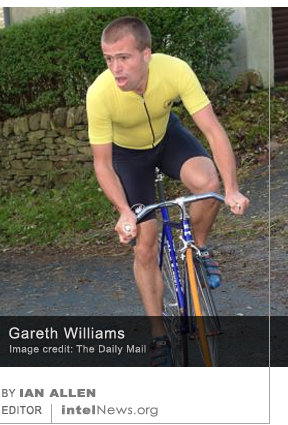 A British intelligence officer, who was found dead in his London apartment in 2010, was not a transvestite, as some media reports have speculated, but probably worked undercover dressed as a woman, according to a leading forensic investigator. Gareth Williams, a mathematician in the employment of Britain’s signals intelligence agency, GCHQ, had been seconded to MI6, Britain’s external intelligence agency, to help automate intelligence collection. He had also worked with several United States agencies, including the Federal Bureau of Investigation and the National Security Agency. But his career came to an abrupt end in August 2010, when he was
 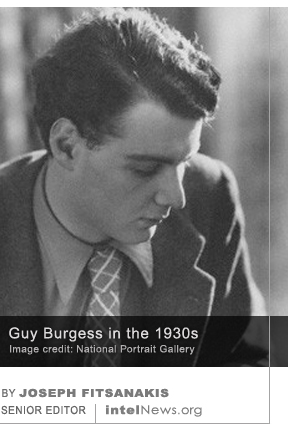 The life of Guy Burgess, one of the so-called ‘Cambridge Five’ double agents, who spied on Britain for the Soviet Union before defecting to Moscow in 1951, is
 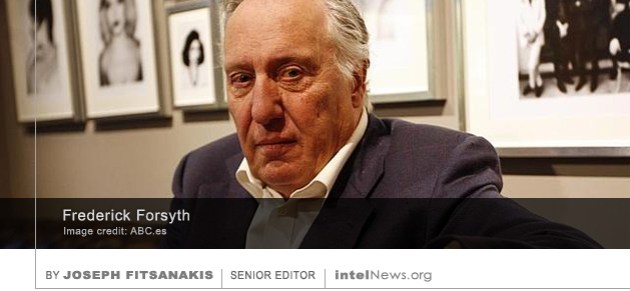 Frederick Forsyth, the esteemed British author of novels such as The Day of the Jackal, has confirmed publicly for the first time that he was an agent of British intelligence for two decades. Forsyth, who is 77, worked for many decades as an international correspondent for the BBC and Reuters news agency, covering some of the world’s most sensitive areas, including postcolonial Nigeria, apartheid South Africa and East Germany during the Cold War. But he became famous for authoring novels that have sold over 70 million copies worldwide, including The Odessa File, Dogs of War and The Day of the Jackal, many of which were adapted into film. Several of his intelligence-related novels are based on his experiences as a news correspondent, which have prompted his loyal fans to suspect that he might have some intelligence background.
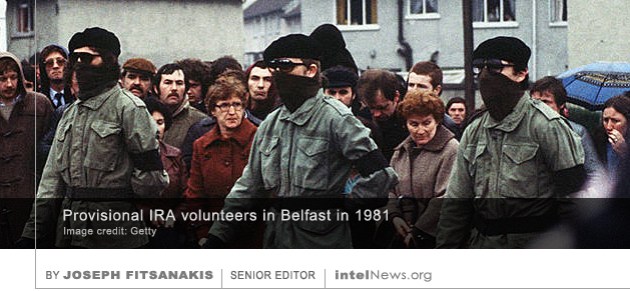 The Provisional Irish Republican Army, which fought British rule in Northern Ireland for decades, but officially disbanded in 2005, is still “broadly in place”, according to the head of the Police Service of Northern Ireland. On July 28, 2005, the Provisional IRA announced that was ceasing all paramilitary operations and disbanding as of 4:00 p.m. that day. The man who made the
 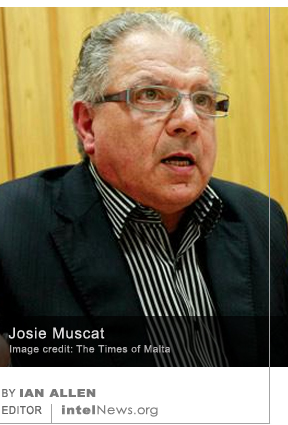 A Maltese ultra-nationalist group believed to be behind a string of bombings in the 1980s was believed by British intelligence to have links to the United States Central Intelligence Agency (CIA), according to recently declassified documents. The Front Freedom Fighters (FFF) was a staunchly anticommunist group whose members violently objected to what they saw as Malta’s overly close contacts with the Communist Bloc. During the 16-year rule of the Maltese Labour Party, which began in 1971, the Mediterranean island maintained close relations with countries during such as Libya and North Korea. The Maltese Nationalist Party, which formed the main opposition to Labour, was highly critical of these contacts, but failed to win three consecutive electoral contests and was thus unable to influence the country’s foreign policy in any significant way.
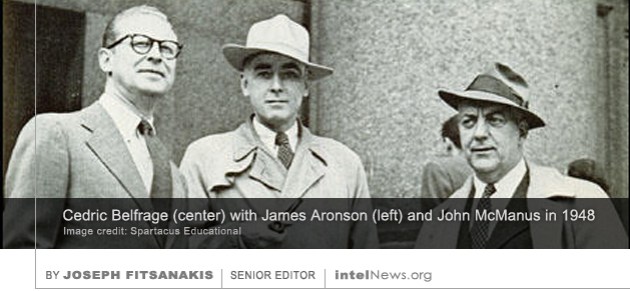 The British government has released a nine-volume file on an influential film critic who
 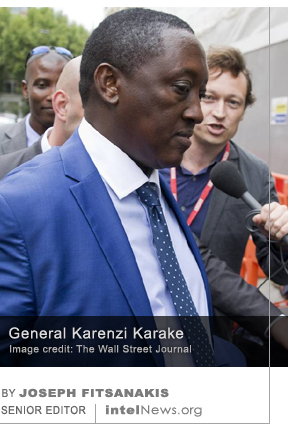 A Rwandan former intelligence chief, whose legal team is led by the wife of British former Prime Minister Tony Blair, has been freed after a court in the United Kingdom refused to extradite him to Spain to face war crimes charges. General Emmanuel Karenzi Karake, 54, was the most senior intelligence official in the administration of Rwandan President Paul Kagame. He rose to fame as a commander in the Rwandan Patriotic Front (RPF), an armed rebel group from Rwanda’s minority Tutsi tribe that fought to end the genocide inflicted upon the Tutsis by their rival Hutus. In 1994, following the death of nearly a million people, the RPF took power in Rwanda and ended the slaughter. That accomplishment caused a rapid upsurge in the popularity of Karake and other senior RPF leaders. Karake’s popularity remains strong among the Tutsis despite his dramatic falling-out with Kagame in 2010, which led to the general’s dismissal from the government.
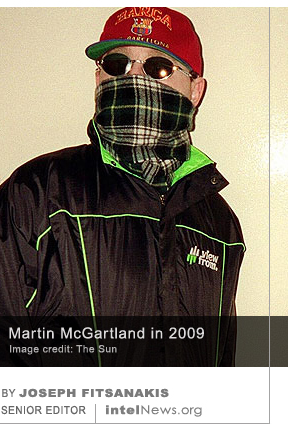 A lawsuit against Britain’s Security Service (MI5) by a former spy, who in the 1980s infiltrated the Provisional Irish Republican Army, commonly known as IRA, is to be judged in secret, a court in London has decided. The spy, Martin McGartland, of Belfast, Northern Ireland, was recruited by the Special Branch of the Royal Ulster Constabulary in the mid-1980s. The information he supplied to the security agencies over several years is widely credited with having saved the lives of at least 50 British police officers and soldiers. His autobiographical experiences formed the basis of the 2008 motion picture 50 Dead Men Walking.
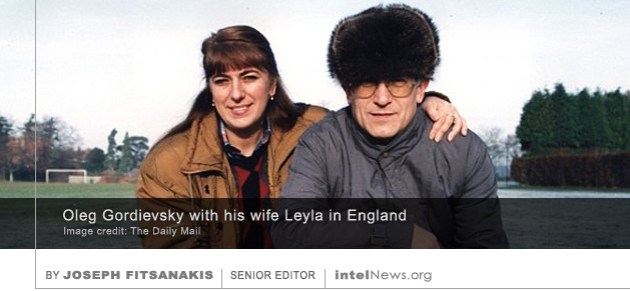 A Soviet double spy, who secretly defected to Britain 30 years ago this month, has revealed for the first time the details of his exfiltration by British intelligence in 1985. Oleg Gordievsky was one of the highest Soviet intelligence defectors to the West in the closing stages of the Cold War. He joined the Soviet KGB in 1963, eventually reaching the rank of colonel. But in the 1960s, while serving in the Soviet embassy in Copenhagen, Denmark, Gordievsky began feeling disillusioned about the Soviet system. His doubts were reinforced by the Soviet invasion of Czechoslovakia in 1968. It was soon afterwards that he made the decision to contact British intelligence.
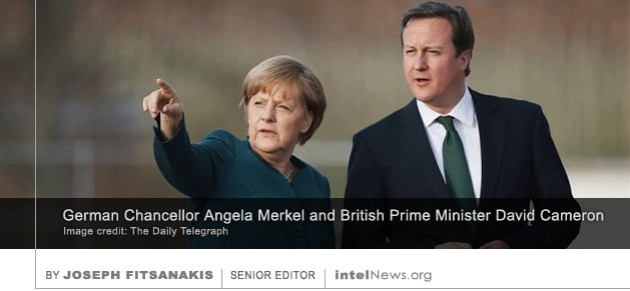 A German parliamentary committee investigating spying operations may take the German government to court in order to force it to give up secret documents on Berlin’s intelligence cooperation with Britain. The Committee of Inquiry into Intelligence Operations was set up in 2014, after files leaked by American defector Edward Snowden
 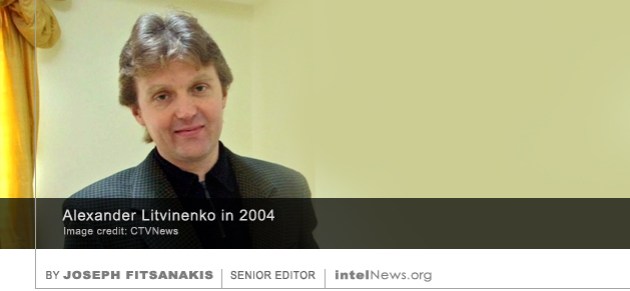 A Russian former intelligence officer, who is accused by the British government of having killed a former KGB spy in London, has agreed to testify at a public inquiry to be held in the British capital next month. British government prosecutors believe Russian businessman Dmitri Kovtun, who worked for the KGB during the Cold War, poisoned his former colleague in the KGB, Alexander Litvinenko, in 2006. Litvinenko was an officer in the Soviet KGB and one of its successor organizations, the FSB, until 2000, when he defected with his family to the United Kingdom. He soon became known as a vocal critic of the administration of Russian President Vladimir Putin. In 2006, Litvinenko came down with radioactive poisoning soon after meeting Kovtun and another former KGB officer, Andrey Lugovoy, at a London restaurant. He was dead less than two weeks later.
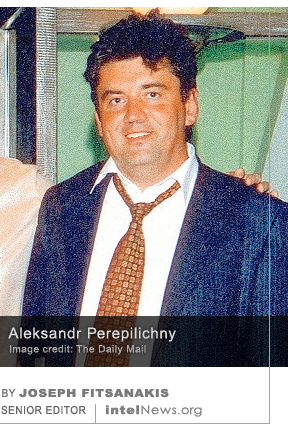 A Russian businessman, who died in London while assisting a Swiss probe into a massive money-laundering scheme, may have been poisoned with a substance derived from a highly toxic plant, an inquest has heard. Aleksandr Perepilichny was an influential Moscow investment banker until he fled Russia in 2009, saying that his life had been threatened after a disagreement with his business partners. A few months later, having moved to an exclusive district in Surrey, south of London, Perepilichny began cooperating with Swiss authorities who were investigating a multi-million dollar money-laundering scheme involving senior Russian government officials. The scheme, uncovered by a hedge fund firm called Hermitage Capital Management (CMP), and described by some as the biggest tax fraud in Russian history, defrauded the Russian Treasury of at least $240 million. The case made international









UK to probe role of high-ranking IRA informant in 24 murder cases
October 22, 2015 by Joseph Fitsanakis 3 Comments
Unbeknownst to the IRA, however, Scappaticci was himself an informant for the Royal Ulster Constabulary’s Special Branch. He is believed to have been paid up to £80,000 a year to provide information to the British government about the IRA’s activities. STAKEKNIFE’s reputed work for the British government was first publicized in 2003 by another British government informant in the IRA, Kevin Fulton. But Scappaticci, who is known in republican circles as ‘Scap’, denies he was STAKEKNIFE, and the claims about him and his activities have been surrounded by an air of mystery.
Last year, however, families of those killed by the IRA’s Internal Security Unit took advantage of Fulton’s claims. They argued that, if STAKEKNIFE was indeed a British government informant, and if he was personally involved in the murder of alleged IRA informants, then the British authorities technically allowed him to get away with murder in order to protect his secret identity. The government, therefore, technically colluded in the murders and should be held responsible.
The Police Ombudsman of Northern Ireland investigated these claims and communicated his findings to the Director of Public Prosecutions (DPP). The latter recently described the STAKEKNIFE investigation as “perhaps the most significant case” in his time as DPP. He has now ordered the Police Service of Northern Ireland to launch a formal inquiry into the matter and to start inviting witness testimonies. It is reputed that Northern Ireland First Minister, Martin McGuinness, who is said to have been close to Scappaticci during his tenure in the IRA, will be among the first witnesses called on to testify as part of the investigation.
► Author: Joseph Fitsanakis | Date: 22 October 2015 | Permalink
Filed under Expert news and commentary on intelligence, espionage, spies and spying Tagged with Freddie Scappaticci, Kevin Fulton, News, Provisional IRA, Provisional IRA Internal Security Unit, Stakeknife, UK