Comment: Spreading Democracy Involves Routine Bribing

Online pundits appear immensely amused by a recent article in The Washington Post, which reveals that Viagra is among numerous “novel incentives” handed out by CIA officers to Afghan warlords in efforts to “win [them] over” to the American side. The article cites an unnamed CIA agent who confirms that pharmaceutical treatments for erectile dysfunction are occasionally dispensed by the Agency to “aging [Afghan] patriarchs with [several young wives and] slumping libidos”. Unlike most, I find the article’s revelations to be neither novel nor amusing. Read more of this post

Rare revelations on Detroit counterintelligence operations

Assistant Attorney Eric Straus, chief of the East Michigan District Criminal and National Security Division of the US Attorney’s Office, has given a rare interview discussing counterintelligence operations in Detroit. Among other things, Straus revealed that his Division has been monitoring alleged support for Hamas and Hezbollah among Detroit’s substantial Middle Eastern population, which is one of the largest in the United States. He also described military and dual use (i.e. civilian with potential military application) technologies as prime targets of international espionage in the Detroit area. Finally, he briefly commented on a number of counterespionage prosecutions against Iraqi spies, employed by the government of the late Iraqi President Saddam Hussein, operating in the Detroit area before 2003. He did not go into details on whether these were trained and accredited intelligence officers working for Directorate 14 of the Iraqi Intelligence Service (Mukhabarat), but hinted that most were not. The interview is available here[JF]

Kissinger forced to reveal transcripts of phone conversations

During his long career as US National Security Advisor and Secretary of State, Henry Kissinger kept many secrets. One of these was that he clandestinely recorded all telephone conversations he had with US government officials, which he subsequently had transcribed by his private secretary. Upon leaving office, in early 1977, Kissinger had the audio recordings destroyed but held on to the transcripts which he described as “private papers” not suitable for public release. George Washington University’s National Security Archive had a different view on the matter, however, and in 2004 managed to force the US government to hand over the transcripts. The Archive has now released a generous portion of 15,000 pages of transcripts, fully catalogued and indexed. William Burr, a senior analyst with the National Security Archive, who edited the released documents, described them as “ranking up there with the Nixon tapes as the most candid, revealing and valuable trove of records on the exercise of executive power in Washington”. Among other things, the transcripts reveal that Richard Nixon and Henry Kissinger “shared a belief in 1972 that the [Vietnam] war could still be won”. [IA]

Waxman sides with CIA on Iraq intelligence dispute

For several years, disgraced former US Attorney-General, Alberto Gonzales, and Secretary of State, Condoleezza Rice, have maintained that the CIA approved the routine use in Presidential speeches of dubious intelligence on Iraq’s alleged weapons of mass destruction (WMD). Recently, George W. Bush upheld to these claims by blaming the US intelligence community for the false information on Iraqi WMD. Now the chair of the US House Committee on Oversight and Government Reform, Rep. Henry Waxman (D-CA), has written a memo [pdf] containing the results of his investigation on the matter. In it, Rep. Waxman explains that “the CIA had warned at least four National Security Council officials not to allow Bush, in three speeches in 2002, to cite questionable intelligence that Iraq had attempted to obtain uranium”. Read more of this post

Analysis: Editor cautions against lionizing Deep Throat

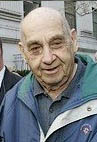
Greg Mitchell, the author and editor of Editor & Publisher, has authored a column cautioning against the uncritical lionization of former FBI official W. Mark Felt, who died yesterday at the age of 95. In 2005, Felt voluntarily revealed he was the mysterious whistleblower nicknamed Deep Throat, who helped uncover the Watergate scandal, which lead to the eventual resignation of US President Richard Nixon. Mitchell urges “[j]ournalists and many others lionizing the former FBI official [to] not overlook the fact that Felt was one of the architects of the bureau’s notorious COINTELPRO domestic spying-and-burglary campaign”. Felt was in fact found guilty of authorizing several illegal black bag operations in the state of New Jersey under COINTELPRO, an illegal domestic surveillance and sabotage project directed by the FBI with the participation of the CIA and NSA. Black bag operations refer to covert, surreptitious entries into structures in the course of human intelligence missions. Mitchell correctly points out that “[o]nly a pardon, courtesy of Ronald Reagan, kept him out of jail for a long term”. [JF]

Analysis: Former NSA analyst talks about secret US role in Congo

Wayne Madsen, former NSA analyst and US Navy intelligence officer, has spoken to The Real News Network about the worsening political violence and instability in Congo. Madsen, who authors the daily Wayne Madsen Report, explains the US role in the regional destabilization of central Africa “via its proxies in Rwanda and Uganda”. He also accuses the US of “supplying arms, stoking ethnic divisions as well providing covert military and intelligence support systems to rebel groups”. The former NSA analyst has testified on the situation in Congo before the US Congress. His Congressional testimony is available here. The first part of Madsen’s interview with The Real News Network is available here. The second part is here. [IA]

Journalist talks about revealing NSA program whistleblower

Michael Isikoff, the Newsweek investigative correspondent who authored the recent article about Thomas Tamm, the whistleblower of NSA’s domestic spying program, has given an interview to Democracy Now. Isikoff, who wrote the article with Tamm’s consent, states in the interview that “Tamm’s lawyers have been told that US Department of Justice officials [are going to leave] the decision on whether to prosecute [Tamm] to the Obama Justice Department”. Read more of this post

Analysis: Speculation rife about NSA’s STELLAR WIND project

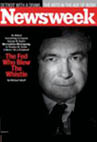
Tamm on the cover of Newsweek

Tamm on the cover of Newsweek

The recent voluntary coming forth of Thomas M. Tamm as the whistleblower behind NSA’s warrantless wiretapping scheme has considerably revived speculation about the Agency’s STELLAR WIND project, which appears to have both oral communications and data surveillance components. A superb analysis published in Ars Technica yesterday reasons that the data surveillance component of project STELLAR WIND, which was first revealed in 2006, is in fact far broader and potentially far more controversial than its wireless wiretapping aspect. The article reminds that, in the past, STELLAR WIND has been referred to in public as the Terrorist Surveillance Program, though “that seems to have been invented after the fact to allow officials to testify before Congress on the aspects of STELLAR WIND that had been exposed without admitting to any of the activities that hadn’t yet come to light”. Read more of this post

Analysis: Who is giving Obama advice on national security?

On Monday, US President-Elect Barack Obama chaired the first official meeting of the national security team he assembled earlier this month. But according to an article published today in The International Herald Tribune, an extended list of national security advisers to the President-Elect includes several conservatives, such as Brent Scowcroft, George Shultz and even Richard Armitage (!), whom he has contacted seeking counsel. Why does Barack Obama continue to court such Reaganite and neoconservative figures? Is he simply contacting them as a standard procedural duty, wishing perhaps to ensure some kind of managerial continuum between the current and incoming administrations? But if this is the case, then why do his senior advisers insist on releasing these names to the press in connection with the very first official meeting of Obama’s national security team? Read Article →

Analysis: Former CIA clandestine officer paints bleak picture of Agency

In a brutally honest exposé, a 25-year veteran of the CIA has publicly described the Agency as an organization mired in failure, mediocrity and incompetence. Art Brown, who headed the Asia division of the CIA’s Clandestine Service from 2003 to 2005, has called the Agency’s seven-year, multi-billion operation to find Osama bin Laden a “failure” that “no amount of ‘rendition’ of bin Laden lieutenants can mask”. Writing in The New York Times, the CIA veteran has revealed that Syria’s alleged construction of a nuclear reactor in the country’s eastern desert came “as a surprise” to the Agency. Read more of this post

Whistleblower who disclosed NSA domestic spying program comes forth

Exactly three years ago, New York Times journalists James Risen and Eric Lichtblau revealed NSA’s domestic warrantless spying program, which was secretly authorized by the Bush Administration in the wake of 9/11. Nearly a dozen undisclosed insiders helped the two journalists unravel the NSA scheme. But the initial tip came from what Lichtblau describes in his book, Bush’s Law, as a “walk-in” source with intimate knowledge of the US intelligence community’s practices. That “walk-in” source has now come forth. His name is Thomas M. Tamm, a former US Justice Department official who held a Sensitive Compartmented Security clearance (“a level above Top Secret”) issued by the US government. Read more of this post

Analysis: Obama urged to get to bottom of NSA warrantless wiretap scheme

Patrick Keefe, Century Foundation fellow and author of Chatter: Uncovering the Echelon Surveillance Network and the Secret World of Global Eavesdropping, has published an editorial in The New York Times urging US Congress and President-Elect Barack Obama to engage in a “thorough course correction on domestic surveillance”. Keefe describes the post-9/11 enhancement of the domestic wiretapping powers of the National Security Agency (NSA) as a direct violation of “one of the signature prohibitions of the post-Watergate era”, which allowed the US government to turn “its formidable eavesdropping apparatus on its own citizens”. Read more of this post

Two US spies killed in Mumbai attack, Indian government sources claim

Yesterday, intelNews discussed the apparent zeal with which the US State Department is monitoring the Indian and Pakistani responses to the recent militant attack on Mumbai. Visiting New Delhi on Friday, US Deputy Secretary of State, John Negroponte, made sure to remind the Indian government that “there were United States casualties as well. So we are also victims of these attacks”. Today The Express adds another possible explanation for the State Department’s “unprecedented” interest in the attacks. The Indian newspaper cites “reliable sources in [the Indian] government” in asserting that “two senior espionage officials from the US were among the eight Americans killed in the […] attacks”. The newspaper alleges that the news of the two officials’ deaths, who were reportedly shot at the Taj Mahal Palace and Tower hotel on the night of November 27, “rankled the White House”. It is not clear from the report whether the two agents were staying at the hotel, were attending a meeting there, or rushed there from elsewhere in Mumbai in response to the attacks. [JF]

British assisted abduction of Iranian police officers, says senior official

Last July, Jundullah, a separatist Sunni Islamic organization operating in Iran’s Sistan-Baluchistan province, abducted and subsequently murdered 16 Iranian police officers stationed in Saravan, Iran. Now Iran’s First Deputy Judiciary Chief, Ebrahim Raisi Ghraib, has said the Islamic Republic has “obtained information” that British forces helped Jundullah fighters abduct the police officers by providing them with “critical intelligence” during the operation. Read more of this post

Senate Committee report blames Bush Administration for detainee torture

In 2004, after the eruption of the Abu Ghraib abuse scandal, the US Department of Defense dismissed the torture practices as the work “of a few bad apples”. Now a report by a bipartisan Senate committee concludes that the abuses conducted by CIA and US military guards and interrogators were direct results of the Bush Administration’s detention policies and “should not be dismissed as the work of bad guards or interrogators”. The report, detailing a two-year study by the US Senate Armed Services Committee, has yet to be made public and much of it will remain classified. This being the case, it is not expected to have any impact on the Bush administration, which “continues to delay and in some cases bar members of Congress from gaining access to key legal documents and memos about the detainee program”. [IA]