US Special Forces carry out 100 missions ‘at any given time’ in Africa

US Special Operations forcesTeams of United States Special Forces are carrying out “nearly 100 missions at any given time” in the continent of Africa, according to American military documents released to the media. Operating under the US Special Operations Command (USSOCOM), US Special Forces are trained to carry out missions using unconventional tactics. Much of their work is classified. However, a Freedom of Information Act request by the New York-based Vice News has revealed extensive deployment of US Special Forces in Africa in recent times.

Information provided to Vice News by the USSOCOM appears to show that operations by US Special Forces in Africa have seen dramatic growth in recent years, possibly more than any other region of the globe. According to documents, US Special Forces in Africa represented just over 1 percent of all US Special Forces personnel stationed abroad in 2006. By 2010, that number had risen to approximately 3 percent —a significant increase but still relatively low in comparison to USSOCOM deployment in other regions of the world. But by 2016, over 17 percent of US Special Forces stationed abroad were based in Africa. Information unearthed by Vice News shows that 1,700 US Special Forces troops were stationed in 20 different African countries in 2016. This number indicates that there are now more US Special Forces troops stationed in Africa than in any other region of the world barring the Middle East.

Vice News said it obtained a report by US Special Operations Command Africa (SOCAFRICA), which states that US Special Forces were deployed in “at least 32 African nations in the 12 months of 2016”. Only the Middle East saw more deployments of US Special Forces than Africa. The report’s author, General Donald Bolduc, the commander of SOCAFRICA, wrote that the increasing presence of US Special Forces in the continent reflects the significance of the region for the US. “Africa’s challenges could create a threat that surpasses [that faced] from conflict in Afghanistan, Iraq and Syria”, wrote General Bolduc. The report does not specify how many missions USSOCOM carries out per year. The US Department of Defense did not respond to questions on the subject.

Author: Joseph Fitsanakis | Date: 23 May 2017 | Permalink
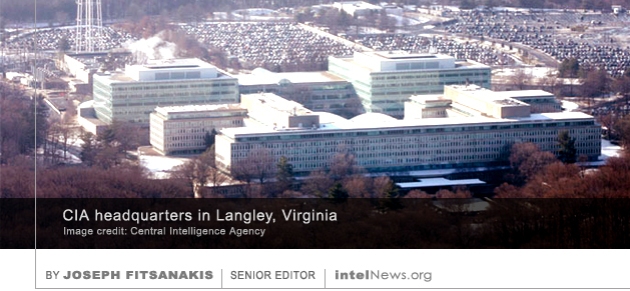
China dismantled large CIA spy network in 2010, say sources

CIAA few years ago, China busted an extensive network of secret operatives run by the United States Central Intelligence Agency. The CIA has yet to recover from the massive blow to its operations, say sources. The CIA has devoted substantial resources to gathering intelligence in China in recent years, and has painstakingly built a network of spies. The latter are Chinese nationals recruited by CIA officers to spy on Beijing on behalf of the United States. But, according to The New York Times, in early 2010 the CIA’s assets began to disappear one by one. By 2012, the Agency’s network of secret operatives in China had been all but wiped out.
According to the Times report, published on Saturday, the CIA lost as many as 20 agents on the ground in China, who were either executed or imprisoned by the authorities in Beijing. The paper cites “ten current and former American officials”, who claim that many of the agents had operated for years deep inside the Chinese state apparatus prior to their capture. At least one of them, say sources, was executed “in front of his colleagues in the courtyard of a government building” in an attempt to dissuade other government employees from spying on the Chinese state. At least 12 of the CIA’s assets in the country were executed between 2010 and 2012, according to The Times.

The damage to the CIA has been incalculable, according to sources, and the Agency is still recovering from the loss of an extensive network of operatives that took years to assemble. Sources described the loss of the network to the Times as “one of the worst in decades” and compared it to the loss of assets caused in the 1980s and 1990s by two notorious American spies for the Soviet Union and Russia, CIA officer Aldrich Ames and Federal Bureau of Investigation agent Robert Hanssen. At that time, dozens of agents and over 100 intelligence projects were compromised.

According to the report, the FBI and the CIA set up Project HONEY BADGER, a joint counterintelligence investigation into the China breach. But the results of the investigation reportedly remain inconclusive. Some argue that such a major dismantling of a network of assets could only have originated from a mole inside the US Intelligence Community. Others believe that the arrests of CIA agents resulted from a sophisticated Chinese computer hacking operation that targeted the CIA. A third theory posits that the breach was caused by the infiltration of the intelligence community of Taiwan, an important American ally in Southeast Asia.

Since 2012, the CIA has been trying to rebuild its network in China, but it will take it years to reach the level of sophistication in had achieved in 2010. The New York Times said it reached out to the CIA and FBI for comment but received no responses.

Author: Joseph Fitsanakis | Date: 22 May 2017 | Permalink

North Korea accuses US of murder plot as CIA opens new DPRK mission center

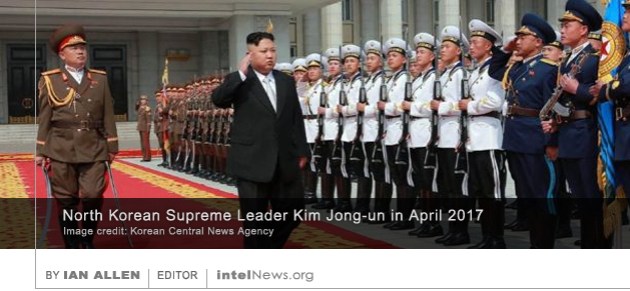
North KoreaThe United States Central Intelligence Agency has announced the establishment of a new center focusing on North Korea, shortly after Pyongyang accused Washington of plotting to assassinate its supreme leader. Last week, the regime’s Vice Minister of Foreign Affairs, Han Song Ryol, said the CIA tried to kill North Korean Supreme Leader Kim Jong-un. He was speaking during a meeting with foreign diplomats in the North Korean capital, where he repeated previously stated claims by government officials that American spies had tried to assassinate their country’s leader. According to Pyongyang, the plot involved an attack by a North Korean CIA agent, who had been trained in the use of a biochemical weapon by his handlers. The North Koreans also accuse South Korea of collaborating with the alleged CIA assassination plot, claiming that Seoul either bribed or blackmailed the would-be assassin.
Meanwhile, the CIA announced last week that it has established a dedicated center focusing on developments in the Korean peninsula. The purpose of the center, said the CIA, is to “address […] the nuclear and ballistic missile threat posed by North Korea”. There are only 11 such centers in the CIA, which the Agency calls “Mission Centers”. They focus on specific issues or locations around the world, in accordance with the geopolitical priorities of the US policymaker community, led by the White House. The establishment of a dedicated Korean Mission Center is designed to reflect the elevation of the North Korean government’s missile program to a critical foreign-policy issue by the administration of US President Donald Trump.

The new Mission Center will be located at the CIA headquarters in Langley, Virginia, and will bring together several intelligence analysts and even operations officers from a variety of directorates and units across the Agency. The goal of the new Center, according to the CIA, is to “integrate [these individuals] in one entity” in order to produce regular situation reports and analytical forecasts from the troubled region. Speaking to reporters late last week, CIA spokeswoman Heather Fritz Horniak said that the new Mission Center would allow Langley to “harness the full resources, capabilities and authorities of the Agency” in dealing with Pyongyang. But she refused to comment on North Korea’s allegations that the CIA tried to assassinate the communist state’s leader.

Author: Ian Allen | Date: 17 May 2017 | Permalink

FBI acting head says he will report attempts to stop Russia probe

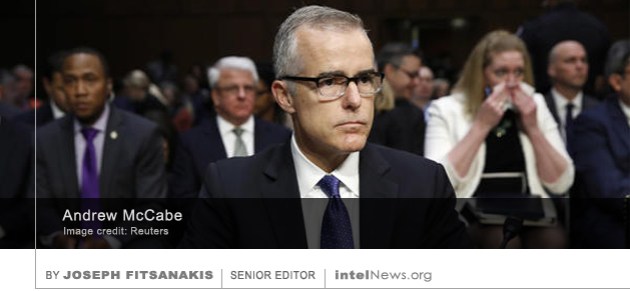
Andrew McCabeThe interim director of the Federal Bureau of Investigation has told an intelligence panel in the United States Senate that he will not hesitate to report any attempts by the White House to interfere with an official investigation into Russia’s role in the 2016 presidential election. Andrew McCabe assumed the leadership of the FBI on Tuesday, after US President Donald Trump abruptly fired the Bureau’s director, James Comey. A trained lawyer who joined the FBI in 1996, McCabe amassed significant experience in countering organized crime and terrorism before being appointed Deputy Director of the Bureau in 2016.
It is worth noting that Republican Party officials have criticized McCabe for being close to former Democratic Party presidential candidate Hillary Clinton. McCabe’s wife, Dr. Jill McCabe, campaigned for a seat in the Virginia State Senate in 2015, on a Democratic Party ticket.

McCabe spoke on Thursday before the US Senate’s Select Committee on Intelligence, along with the directors of five other American intelligence agencies, including the Central Intelligence Agency and the National Security Agency. During their testimony, the six intelligence officials repeated their agencies’ previously stated claims that Moscow engaged in systematic efforts to assist the election of Donald Trump in last November’s presidential elections. McCabe also responded to specific questions by Democratic senators about alleged attempts by the White House to prevent probes in to Russia’s alleged intervention.

When asked by Democratic Senator Mark Warner whether he would inform the Senate’s Select Committee on Intelligence of attempts by the Trump administration to stop the probe, McCabe responded saying: “I absolutely do”. There are currently at least three parallel investigations into Russia’s alleged involvement in the US presidential elections, of which the Senate’s is one. The US House of Representatives and the Department of Justice are also conducting separate investigations.

Author: Joseph Fitsanakis | Date: 12 May 2017 | Permalink

CIA director makes unannounced visit to South Korea to discuss tensions

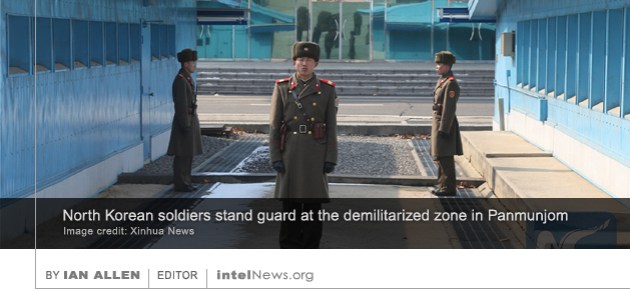
Korean DMZThe director of the United States Central Intelligence Agency made an unannounced visit to South Korea over the weekend, to discuss the rising tensions in the Korean Peninsula with his South Korean counterpart and other senior officials. A spokesperson from the US embassy in Seoul made an official announcement on Monday, in which he revealed the visit by Mike Pompeo, the CIA director who was appointed by US President Donald Trump in January of this year. When asked for details, however, the spokesperson refused to provide them. Consequently, Pompeo’s date of arrival to Seoul remains unknown, as is his date of departure. It is believed that he is now back in the US.
During his visit to the South Korean capital, Pompeo met with South Korean counterpart, Lee Byung-ho, who heads South Korea’s National Intelligence Service. South Korean media reports said Pompeo also met with senior officials in the office of the South Korean president. Additionally, he is said to have held several meetings with American intelligence and military officials stationed in South Korea, including a meeting with General Vincent Brooks, commander of United States Forces Korea. Reports in local media outlets said Pompeo’s visit aimed to coordinate American and South Korean intelligence responses to what Washington claims is increasing provocation by North Korea. The United States objects to North Korea’s repeated missile tests in recent weeks. On Saturday, Pyongyang attempted to launch a missile without success. The attempt, the third one in a month, elicited strong criticism from Washington and Seoul.

Pompeo’s trip to Seoul marked the fourth visit to South Korea by a senior US government official in recent weeks. The CIA director’s unannounced visit was preceded by separate official visits to Seoul by US Vice President Mike pence, Secretary of State Rex Tillerson, and Secretary of Defense James Mattis. Additionally, last Wednesday the White House organized an “extraordinary national security briefing” about North Korea for members of the United States Senate. The briefing featured presentations by senior American diplomats and military officials.

Author: Ian Allen | Date: 02 May 2017 | Permalink

Mystery compound in Nicaragua shows Russia’s resurgence in Americas, say experts

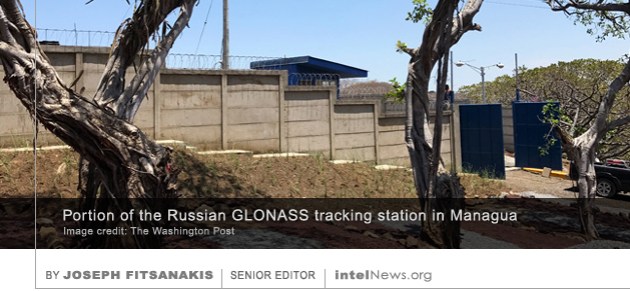
GLONASS ManaguaA Russian facility built on a hillside facing the United States embassy in the Nicaraguan capital Managua is seen by some experts as symptomatic of Russia’s renewed presence in the Americas. The official Russian explanation for the heavily protected facility, which is surrounded by high walls, is that it is meant to operate as a tracking station for GLONASS, Russia’s version of the global positioning system (GPS). The Russians do not use GPS, because it is owned by the US government and operated by the US Air Force. But some believe that only part of the compound is dedicated to GLONASS activities, and that a major portion is a Russian listening base that sweeps US communications from throughout the region.
Nicaragua has a long Cold War legacy that culminated in the 1980s. In 1979, a leftist insurgency toppled the country’s longtime dictator, Anastazio Somoza. The rebels, who called themselves the Sandinista National Liberation Front (known widely as the Sandinistas), alarmed the government of US President Ronald Reagan. Consequently, the White House authorized a series of covert operations against Nicaragua’s leftist government. They centered on the Contras, an anti-communist counter-insurgency that was largely funded by Washington throughout the so-called Contra war that dominated the country’s politics in the 1980s. But the war also affected politics in the US, and almost toppled the Reagan administration when the Iran-Contra affair (illegal arms sales to Iran by the US government, which then used the proceeds to secretly fund the Contras) was revealed in the media.

In an article published last week, The Washington Post reported that, under the Presidency of Vladimir Putin, Russia has reemerged as a force in Latin American politics. Moscow now regularly supplies weapons to several countries in the hemisphere, including Ecuador, Peru, Argentina and Venezuela. It has also expanded its influence through the banking sector and via government loans in countries such as Brazil and Mexico. But Nicaragua, says The Post, has emerged as Russia’s closest ally in the region. For over a decade, the country’s political landscape has been dominated by the Sandinistas, who returned to power in 2006 and continue to govern the country today. The party was supported by the Soviet Union during the Cold War and thus retains strong historical links with Moscow. The Post reports that, according to some analysts, Russia seeks to cement its presence in America’s traditional backyard as a form of response to the eastward expansion of the US-led North Atlantic Treaty Organization.

Author: Joseph Fitsanakis | Date: 10 April 2017 | Permalink

Analysis: US launches strikes against Syrian regime in major policy shift

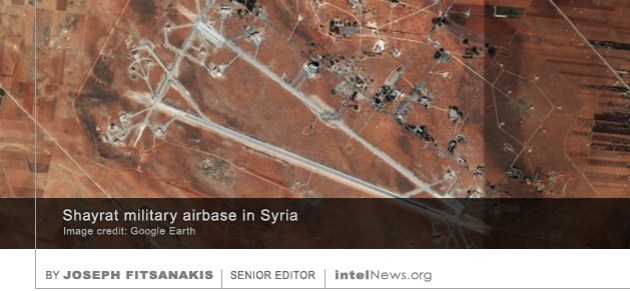
Shayrat SyriaThe nearly 60 Tomahawk missiles that the United States fired at Syria in the early hours of Friday local time were not the first. Nor were they the first that struck a Syrian government installation. In September of 2016, for example, a United States airstrike hit a military base in the eastern Syrian city of Deir el-Zour, killing 62 and wounding over 100 government soldiers. However, the Pentagon claimed that the strike was in error and had been intended to hit Islamic State militants. In fact, the entirety of America’s previous military strikes on Syrian soil has been aimed at the Islamic State. The missiles that last night on the Syrian military airbase of Shayrat marked Washington’s first intentional attack on the government of Syrian President Bashar al-Assad. Consequently, the US is now an official belligerent in one of our time’s most complex and intractable armed conflicts.
Since the missile attacks were confirmed, all eyes have concentrated on Russia, President Al-Assad’s primary supporter, without whom Damascus would now probably be run by a consortium of Sunni militias. There is no question that Shayrat hosts a significant contingent of Russian military personnel and large quantities of Russian-supplied military equipment, ranging from airplanes to radar facilities. Moscow’s response to the American attack will largely depend on whether any of its personnel are among the casualties in Shayrat. There is also concern about China’s response, given that Washington’s attack took place during the official visit to the United States by Xi Jinping, premier of China, another strong Syrian ally. Finally, it is worth considering possible Iranian responses to the US attack, especially if Iranian citizens end up on the casualty list.
The attention paid by observers to Russia, China and Iran is understandable given the clout of these countries on the world stage. But the most important response may come from Syria itself. According to the US Pentagon, the strike on the Shayrat airbase was intended “to deter the [Syrian] regime from using chemical weapons again”. But what if it does not? Last time Washington responded to rumors of a chemical attack in Syria, President Obama warned his counterpart in Damascus not to cross the red line of chemical warfare. Which, of course, was precisely what Mr. Assad did, successfully calling Washington’s bluff. He may do so again. Last night’s American attack may therefore result in an intensification of chemical warfare by the Syrian regime. At that point, US President Donald Trump will have no choice but to deepen America’s involvement in an increasingly chaotic and unpredictable war, where he will find Russia on the opposite side.

Few supporters of President Trump, who campaigned promising to disengage America from foreign wars and focus on domestic concerns, could have imagined even a month ago that the White House would be entering the Syrian Civil War. And yet this is precisely what is happening. The US now has over 500 troops stationed on Syrian soil, and has just attacked the country’s government with dozens of missiles. The reaction to that attack by the government in Damascus may draw Washington even deeper into the Syrian war. Many observers in America have suggested that the only way to truly evaluate the Trump administration will be by observing its performance during a major international crisis. It appears that they may soon get their wish.

Author: Joseph Fitsanakis | Date: 07 March 2017 | Permalink

Trump trying to assert control over intelligence agencies, say sources

Dan CoatsRelentless bureaucratic skirmishes between the White House and the United States Intelligence Community are occurring daily, with administration officials attempting to “seize the reins” of agencies, according to sources. The Associated Press reports that senior officials around US President Donald Trump continue to “deep[ly] distrust” the Intelligence Community”. This tendency is reportedly more prevalent among those of Mr. Trump’s senior political advisers who are “government newcomers” and have never before been privy to classified information or intelligence programs.
According to the Associated Press, the US president has been trying various ways to “seize the reins” of the Intelligence Community. The news agency cites unnamed “US officials” who claim that Mr. Trump and his senior advisers have requested that they be given access to raw intelligence. At the same time, they have expressed little interest in being exposed to the analysis of raw intelligence produced by intelligence professionals. Typically, White House officials will rely primarily on the expert opinions of intelligence analysts and will not seek to access the raw data that these opinions rest on. But it appears that Mr. Trump and his team of advisers do not think highly of the analytical assessments of the Intelligence Community, preferring instead to make up their own mind based on their own reading of raw intelligence reports. According to the Associated Press report, that appears to be one of the ways in which the White House has been trying to assert its power over the Intelligence Community.

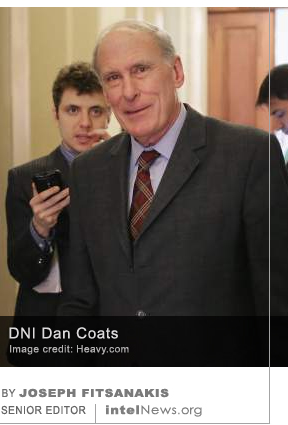
Meanwhile, Mr. Trump’s advisers are pressing on with a comprehensive review of the structure and operations of the Intelligence Community. The review is now being led by Dan Coats, a Congressman from Indiana and former US Ambassador to Germany, who last month was confirmed to serve as the Director of National Intelligence. According to sources, Coats resisted initial plans by the White House to abolish the Office of the Director of National Intelligence, which was set up after the 9/11 attacks to coordinate the work of the Intelligence Community. The Trump team still plans to “trim and optimize” the Intelligence Community, but probably will not outright dismantle agencies like the Office of the Director of National Intelligence, according to the Associated Press.

Author: Joseph Fitsanakis | Date: 03 April 2017 | Permalink | Research credit: SF

FBI accuses US State Department official of contacts with Chinese spies

US Department of StateAn employee of the United States Department of State has been charged with lying to authorities about her contacts with Chinese intelligence operatives, who gave her money and gifts in return for information. Candace Claiborne, 60, joined the Department of State in 1999 as an office management specialist. She lives in Washington, DC, but has served overseas in American diplomatic facilities in Baghdad, Iraq, Khartoum, Sudan, and China, where she was stationed in Beijing and Shanghai. According to information provided by the Federal Bureau of Investigation, Claiborne had a top security clearance, which required her to report contacts with foreign nationals.
However, federal prosecutors said earlier this week that Claiborne interacted on a regular basis with Chinese intelligence personnel without informing her employer. According to court documents, her contacts with the Chinese were extensive and occurred from 2011 until earlier this year. The Chinese gave Claiborne gifts, including computers and smartphones, tuition-free studies in a Chinese technical school, and an all-expenses-paid holiday to Thailand. They also gave her a regular stipend and provided her with a furnished apartment abroad, according to prosecutors. In return, Claiborne allegedly gave the Chinese information relating to American economic policy on China, among other topics.

It appears that the FBI monitored the State Department employee for a while, after securing a Foreign Intelligence Surveillance Act court warrant. When it confronted Claiborne, she apparently denied the accusations and lied to FBI agents. She is now charged with obstruction of justice and providing false statements to the FBI. Claiborne is currently under house arrest and will remain there until April 18, when she will appear at a preliminary hearing in Washington. She is reportedly facing a maximum of 25 years in prison.

Author: Ian Allen | Date: 31 March 2017 | Permalink

US politics in uncharted waters as FBI announces probe into Russian activities

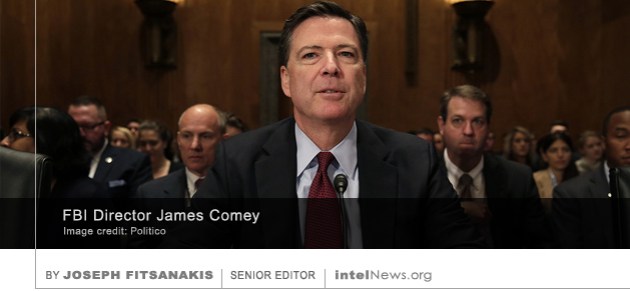
James ComeyMonday’s official announcement that an investigation is underway into alleged Russian involvement in the 2016 United States presidential election was an important moment in American political history. It exposed the chaotic state of American politics and added yet another layer of complexity in an already intricate affair, from which the country’s institutions will find it difficult to recover for years to come. This is regardless of the outcome of the investigation, which is being conducted by the Federal Bureau of Investigation. Even if it fails to produce a ‘smoking gun’, the very fact that the country’s chief counterintelligence agency is examining the possibility that a US president was elected with help from Russia, is an astonishing development without parallel in modern American history.
It is important to recognize that the FBI would never have initiated such a controversial and politically charged investigation without having concrete proof of Russia’s interference in last year’s presidential election. No agency of the US federal government would choose to dedicate enormous resources and personnel, and risk the political fallout that such a probe inevitably entails, without first having amassed indisputable evidence that necessitates it. Moreover, the FBI is not acting alone; its investigation almost certainly encompasses and incorporates similar probes carried out by other American security agencies, and possibly by agencies in allied countries, including the United Kingdom. It follows that the FBI investigation will undoubtedly confirm the existence of a systematic Russian intelligence operation that was aimed at influencing the outcome of last year’s American election.

As the present author has previously stated, it would be “extremely unusual and highly uncharacteristic of Russian spy agencies if they did not launch at least a rudimentary covert campaign to target the 2016 US presidential election […]. Indeed, the opposite would have been strange”. The central question, of course, is: what types of activities were part of the Kremlin’s covert campaign? Did it mostly involve the methodical production and dissemination of so-called ‘fake news’? Did it involve substantial funding of individual candidates or political parties? Or were there perhaps instances of extortion and blackmail of targeted individuals? These questions must be answered in full, and their inherent complexity explains fully why the FBI Director James Comey would not discuss details of the investigation on Monday.

Crucially, the FBI probe will have to answer conclusively the question of whether members of the administration of US President Donald Trump, or indeed the president himself, were implicated in the Kremlin’s actions. Did the president and his senior campaign team know that the Kremlin was —allegedly—assisting their efforts? If so, how did they know? And if not, did they deliberately ignore concrete warnings pointing to the contrary?

Every American, regardless of political persuasion, who genuinely cares about his or her nation’s political stability, hopes that the FBI probe finds no collusion between the Kremlin and the Trump campaign. However, there is an important sense in which, no matter the outcome of the investigation, serious damage has already been done. The reputation of American political institutions as a whole has been severely shaken, and mistrust between American civil society and its political institutions continues to rise exponentially. Meanwhile, it is safe to say that it will take months for the FBI’s probe to conclude. By then, the current chaotic state of American politics could be the a new permanently reality in Washington, a city that has witnessed much tumult in its history, though perhaps never as perplexing as the current crisis.

Author: Joseph Fitsanakis | Date: 21 March 2017 | Permalink

Trump authorizes CIA to bring back regular use of drone strikes

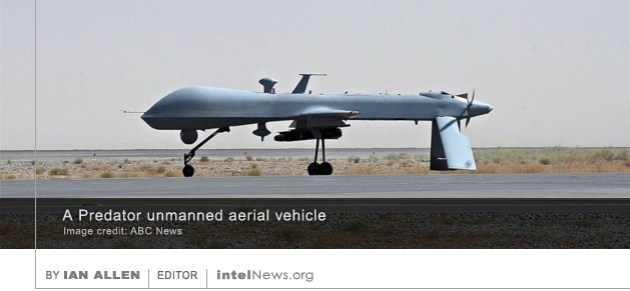
DroneUnited States President Donald Trump has reportedly authorized the Central Intelligence Agency to bring back the routine use of lethal airstrikes by unmanned aerial vehicles (UAVs), which his predecessor, Barack Obama, curtailed in 2013. Washington began employing limited strikes by UAVs, otherwise known as drones, in the early 1990s, during the administration of President Bill Clinton. But it was under the Obama administration that the use of drone strikes reached an all-time high, with hundreds of such attacks documented after 2008. It is believed that Obama used this remote attack method to combat the Taliban and al-Qaeda, while at the same time keeping his promise of bringing back American troops from the Middle East and Central Asia. However, in 2013 the US president severely curtailed the controversial program, which some say damaged America’s image by inflicting civilian casualties.

But on Monday, The Wall Street Journal reported that President Trump had resuscitated the drone program and authorized the CIA to begin using Predator drones on a regular basis against identified targets in the Middle East and Central Asia. According to the newspaper, the president gave senior CIA project mangers the right to authorize drone strikes. Under the Obama administration, the president himself, or especially designated National Security Council officials, had to give the go-ahead before the CIA could carry out drone strikes around the world.

The Wall Street Journal said that President Trump made the decision on January 21, just hours after taking office, following a secret meeting with senior officials from the CIA. According to the report, the CIA requested some time to rebuild the program. But the agency has allegedly conducted at least one drone strike, which targeted Abu al-Khayr al-Masri, a known al-Qaeda senior commander in Syria, who was reputed to be a son-in-law of the late al-Qaeda leader Osama bin Laden.

Author: Ian Allen | Date: 15 March 2017 | Permalink

FBI launches criminal investigation into WikiLeaks’ CIA disclosures

WikiLeaksThe United States federal government has launched a criminal investigation into the public disclosure of thousands of documents that purportedly belong to the Central Intelligence Agency. The documents were released on Tuesday by the anti-secrecy website WikiLeaks. They reveal what appear to be technical collection methods used by the CIA to extract information from digital applications and electronic devices, ranging from flash drives to smart screen televisions. WikiLeaks named the collection “Vault 7”, and said that it consists of nearly 8,000 web pages and 1,000 attachments. It also said that its editors redacted hundreds of pages of computer code, in order to prevent the public release of advanced cyberweapons allegedly used by the CIA to sabotage electronic devices and systems.
On Wednesday, former director of the CIA Michael Hayden told the BBC that the disclosure appeared “incredibly damaging”, because it revealed some of the methods that the CIA uses to acquire information. But some cybersecurity experts said that the techniques contained in the leaked documents did not appear to be uniquely advanced, and most focused on exploiting technical vulnerabilities that were generally known. Still, The New York Times reported on Wednesday that the CIA had begun to assess the damage caused by the release. The agency was also trying to contain the extent of the damage, and had even “halt[ed] work on some projects”, said The Times. Officials from the CIA are reportedly in communication with the Federal Bureau of Investigation, which on Wednesday launched a criminal investigation into the “Vault 7” release.

The main purpose of the FBI investigation is to find out how WikiLeaks acquired the files. The website said that the documents were leaked by a CIA contractor, which would imply that they were accessed from a server outside the CIA’s computer network. However, federal investigators are not excluding the possibility that the leaker of the information may be a full-time CIA employee. Reports suggest that the FBI is preparing to conduct hundreds, and possibly thousands, of interviews with individuals who are believed to have had access to the documents that were released by WikiLeaks. Meanwhile, neither the FBI nor the CIA have commented on the authenticity of the information contained in “Vault 7”. WikiLeaks said that Tuesday’s release, which it codenamed “Year Zero”, was the first part of several installments of documents that will be released under its Vault 7 program.

Author: Joseph Fitsanakis | Date: 09 March 2017 | Permalink

Files released by WikiLeaks show advanced CIA technical collection methods

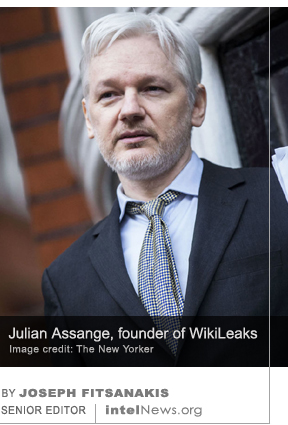
Julian AssangeThousands of documents belonging to the United States Central Intelligence Agency, which were released on Tuesday by the international anti-secrecy website WikiLeaks, are almost certainly genuine. They reveal an entire universe of technical intelligence collection methods used by the CIA to extract information from digital applications and electronic devices, ranging from flash drives to smart screen televisions. WikiLeaks named the collection Vault 7, and said that it consists of nearly 8,000 web pages and 1,000 attachments. It also said that its editors redacted hundreds of pages of computer code, in order to prevent the public release of advanced cyberweapons that are allegedly used by the CIA to sabotage electronic devices and systems.

The information contained in the leaked documents is almost certainly genuine, and most likely belongs to the CIA —though many of the programs listed may be jointly run by the CIA and the National Security Agency (NSA). These programs, with names such as McNUGGET, CRUNCHYLIMESKIES, ELDERPIGGY, ANGERQUAKE and WRECKINGCREW, appear to be designed to compromise computer systems using a series of sophisticated methods that force entry or exploit built-in vulnerabilities or systems. Targets include popular communications systems like Skype and WhatsApp, smartphones produced by Google and Apple, commercial software like PDF and Microsoft Windows, and even so-called smart televisions that connect to the Internet.

The WikiLeaks revelations are most likely related to operations conducted under the auspices of the Special Collection Service (SCS), a joint CIA/NSA program that dates to the earliest days of the Cold War. The program was started by the United States Armed Forces but was eventually transferred to civilian hands and monitored by the CIA. It used advanced communications-interception facilities around the world to collect information. Over the years, the CIA collaborated with the NSA and developed many SCS projects targeting several foreign countries using technical and human means. In recent years the SCS has been primarily operated by the NSA, which oversees the program’s technical platforms.

WikiLeaks did not reveal the source of the documents. But it said that they had been “circulated [by the CIA] among former US government hackers and contractors” and that it was one of the latter that leaked them to the anti-secrecy website. A statement by WikiLeaks said that Tuesday’s release, which it codenamed “Year Zero”, was part one of several installments of documents that will be released under its Vault 7 program. The site also claimed that the information in “Year Zero” has “eclipsed the total number of pages published over the first three years of the Edward Snowden NSA leaks”. The CIA, the NSA and the White House have not commented on this development.

Author: Joseph Fitsanakis | Date: 08 March 2017 | Permalink

Trump administration instructs CIA to halt support for anti-Assad rebels in Syria

Free Syrian ArmyThe White House has instructed the Central Intelligence Agency to halt military support to armed groups that are associated with the Free Syrian Army (FSA), a group opposed to Syrian President Bashar al-Assad. Some believe that the move indicates a change in American policy under United States President Donald Trump. But Syrian rebel commanders say they believe the move is temporary, and that military aid will be restored. For several years, the CIA has provided training and other forms of assistance to rebel groups in Syria, such as the New Syrian Force, which operate under the umbrella of the FSA. Aside from training, the assistance has included light and heavy ammunition, including antitank missiles, mines and grenades.

However, it appears that the CIA was instructed nearly a month ago by the White House to freeze all assistance to these rebel groups. Correspondents from the Reuters news agency said they confirmed the change in policy by speaking to senior rebel commanders from five armed groups operating under the FSA. These commanders told Reuters that they had not been given any official reason for the sudden termination of all CIA assistance. The change coincided with the change of guard at the White House, from Barack Obama to Donald Trump. Some in Washington, as well as some members of rebel factions in Syria, are concerned that the change in the CIA’s stance might denote a broader policy shift in the White House. During his election campaign, Mr. Trump said repeatedly that he would end America’s overt and covert support for the FSA and would focus instead on defeating the Islamic State.

But the rebel commanders themselves told Reuters that the freeze in CIA support was due to a wave of renewed attacks against them by Jabhat Fateh al-Sham, a Sunni militant group that was previously affiliated with al-Qaeda. The rebels said that the CIA was concerned that weaponry provided to the FSA would end up in the hands of jihadist militants, so it temporarily halted its support until Jabhat Fateh al-Sham could be pushed back by FSA forces. Reuters published comments by two anonymous officials who were familiar with the CIA’s operations in Syria. They told the newspaper that the freeze of the CIA’s program had “nothing to do with US President Donald Trump replacing Barack Obama in January”. Additionally, said Reuters, Mr. Trump’s policy in Syria remains unknown. Several newspapers and news agencies contacted the CIA asking for comments, but the agency declined all requests on Wednesday.

Author: Ian Allen | Date: 23 February 2017 | Permalink

Wall Street Journal alleges US spies hide sensitive intelligence from Trump

Donald Trump CIAIn a leading article published on Wednesday, The Wall Street Journal alleged that American intelligence officials are choosing to withhold sensitive intelligence from President Donald Trump, fearing that it might be compromised. The WSJ, America’s leading newspaper by circulation, which is highly influential in conservative circles, cited “current and former officials familiar with the matter”. The paper said it was unclear how much information had been withheld from President Trump. It added that at no point did intelligence officials keep the president in the dark about critical security threats by foreign states or potential terrorist attacks by non-state groups. However, intelligence officials are consciously and systematically withholding information from the White House that concerns “sources and methods”, said the article. The term refers to the precise methods used by the United States Intelligence Community to collect information, as well as the identification of sources —human or otherwise— of the information.

In recent weeks, several media outlets have alleged that American intelligence officials are skeptical about providing the White House with sensitive information. Late last month, Steve Hall, a former member of the Central Intelligence Agency’s Senior Intelligence Service, told National Public Radio that the matter of President Trump’s trustworthiness was “a live question” at the CIA. But this week’s article in The WSJ marks the first time that a conservative media outlet alleges that senior American intelligence officials mistrust the president. According to the New York-based newspaper, the Intelligence Community is uncomfortable with Mr. Trump’s “repeated expressions of admiration” for his Russian counterpart Vladimir Putin. Many intelligence officials are also disturbed by the US president’s public support for the alleged hacking of Democratic Party computer servers by the Kremlin.

Relations between the White House and the Intelligence Community are said to be extremely tense at the moment. On Wednesday, President Trump repeated his previously stated allegation that the US Intelligence Community is systematically leaking information to the media in order to subvert his administration’s work. The WSJ said it spoke to a representative from the Office of the Director of National Intelligence, which heads and oversees the US Intelligence Community. The representative questioned the accuracy of the newspaper’s allegations, saying that “any suggestion that the US intelligence community is withholding information and not providing the best possible intelligence to the president and his national security team is not true”. The report was also denied by an official at the White House, who said that Mr. Trump and his aides had no evidence “that leads us to believe that [The WSJ article] is an accurate account of what is actually happening”.

Author: Joseph Fitsanakis | Date: 17 February 2017 | Permalink



