Opinion: America in deep and profound security crisis as Michael Flynn resigns
February 14, 2017 1 Comment
 The ongoing security crisis in the United States reached new heights last night as Michael Flynn, President Donald Trump’s national security advisor, resigned. In his letter announcing his decision, the former general admitted that he “inadvertently” gave members of the Trump administration “incomplete information” about his conversations with the Russian ambassador to the US in December of last year. This development is only the latest in a series of unprecedented incidents in Washington. The city, and by extension the country, are now in a deep and profound security crisis with unpredictable consequences for the US and its allies.
The sense of normality in America’s capital, the seat of government of the world’s most powerful nation, is becoming increasingly scarce, as the country faces one astonishing situation after another. Today, three weeks after Donald Trump assumed the reins of power in DC, the relationship between the Executive and the Intelligence Community is almost nonexistent. A growing  number of former insiders warn that senior intelligence officials are —in the words of former National Security Agency officer John Schindler— “beginning to withhold intelligence from a White House which our spies do not trust”. Last month, Steve Hall, a former senior member of the Central Intelligence Agency’s National Clandestine Service, cautioned that officers at Langley are suspicious of the White House’s links with Russia. Currently, Michael Flynn, who served as director of the Defense Intelligence Agency, and the man chosen by the president to serve as his national security advisor, is being investigated as part of a counterintelligence probe by the Federal Bureau of Investigation and is facing a separate set of questions from the military. On Tuesday, Senior Republican lawmakers called for a Congressional investigation into Moscow’s alleged proximity with the Trump White House.
Meanwhile, the (now former) acting attorney general and several judges have sought to stop the president from violating Constitutional norms with the imposition of an ill-fated travel ban. In response,  Mr. Trump summarily fired the head of the Department of Justice and openly challenged the legitimacy of a judge who ruled against his executive order. The president did not even address the concerns of the Intelligence Community, which largely views the travel ban as nonsensical, unworkable and counterproductive. Mr. Trump also dismissed the significance of a “Dissent Channel” memorandum, signed by over 1,000 State Department employees —an unprecedented number with no parallel in American diplomatic history— who openly objected to the violation of “core American and constitutional values that we, as federal employees, took an oath to uphold”.
Discord and disharmony are not novel concepts in American political life. But the current situation is anything but conventional. It is not normal for the president to summarily fire the chief legal counsel to the US government —acting or not. Nor is it normal for his national security advisor, a man who is privy to the most sensitive secrets of the US government, to be the subject of a counterintelligence investigation, and for one of his senior aides to be denied a security clearance by the CIA. It is unprecedented for a US president to question the usefulness of the North Atlantic Treaty Organization while seemingly consenting to Russia’s annexation of an important American ally —namely Ukraine. It is equally remarkable to watch conservative governments in Western Europe warn against US policies and even refuse to have Mr. Trump address their parliaments. We are witnessing unparalleled developments of inconceivable magnitude, with implications that may well shape the future of America and its place in the world.
These are not partisan considerations, which this website shies away from as a matter of policy. Rather, they are political observations that go to the very heart of America’s ability to govern itself, provide security to its citizens and lead the Western world in our century. Anyone who rejects the notion that the US is currently at the onset of one of the most serious crises in its modern political history is simply disconnected from empirical reality. Anyone —Republican or Democrat— who tries to exploit the current crisis for narrow political gain is not simply foolish, but dangerous to the wellbeing of this country. Mr. Trump’s many friends and adversaries within and without his political party must reach out to him and attempt to mend the damage he has inflicted on America’s government, while preventing further injury to the machinery of national administration. It is every sane person’s hope that the president will take heed at this crucial time, and introduce the much-needed qualities of caution and prudence to his inexperienced administration. History will be particularly unkind to him and his colleagues if they fail to act responsibly. The world is watching.
► Author: Joseph Fitsanakis | Date: 14 February 2017 | Permalink
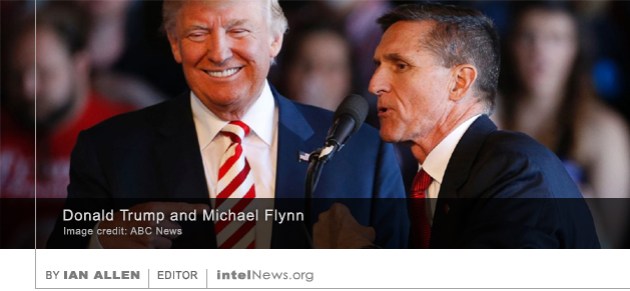 A senior aide to Michael Flynn, National Security Adviser to United States President Donald Trump, will have to step down from his post because his application for a security clearance was rejected, say sources. Flynn had chosen Robin Townley, a former intelligence officer in the US Marine Corps, to serve as Senior Director for Africa on the National Security Council, a forum chaired by the president, which makes key decisions on domestic and foreign issues. Townley, who is described as “one of Flynn’s closest deputies”, held a top-secret security clearance for many years during his government career. But joining the National Security Council requires a so-called “sensitive compartmented information” clearance. This elite-status clearance allows designated individuals to access government programs and operations that are deemed highly sensitive.
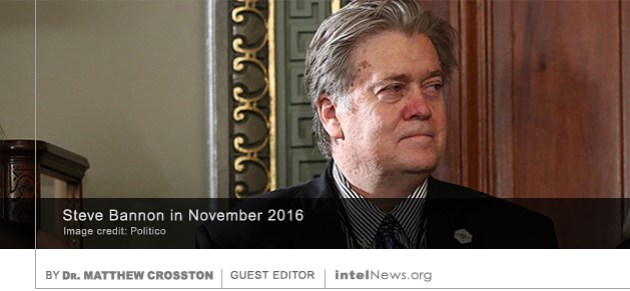 There has been much consternation and confusion over the maneuverings engineered by United States President Donald Trump with the National Security Council (NSC). By now everyone knows the Chairman of the Joint Chiefs of Staff and the head of the Office of the Director of National Intelligence (ODNI) have been essentially demoted down to Principals Committee meetings, with the no-doubt unsatisfying caveat that “when their specific expertise” is needed they will be asked to attend the main Principals meeting with the President. The irony, of course, is that both of these offices have always been oversight and unifying leadership positions: the Chairman of the Joint Chiefs oversees and coordinates discussion and debate between the heads of all the military branches while the ODNI was basically created to go do the thing the Department of Homeland
 Security was initially meant to do after 9/11 —coordinate and improve communication and cooperative transparency across the entire US Intelligence Community. It is therefore somewhat mystifying as to why two deeply experienced actors with comprehensive knowledge of military and intelligence affairs writ large would be inexplicably categorized as ‘knowledge specialists’, not required for the big general meeting. It is not like the ODNI came into the NSC meetings pre-Trump as the ‘Basque subject matter expert’ alone, or the Chairman of the Joint Chiefs laid claim to being the world’s only ‘Gulf of Aden’ maritime security specialist. While it is still too early to know, it seems a logical bet that there is some personality conflict or discomfort between these two men and the incoming member(s) that Trump has designated. Safe money is on General Michael Flynn. But since that right now will remain unsubstantiated rumor and gossip, we are left with nothing but conjecture.
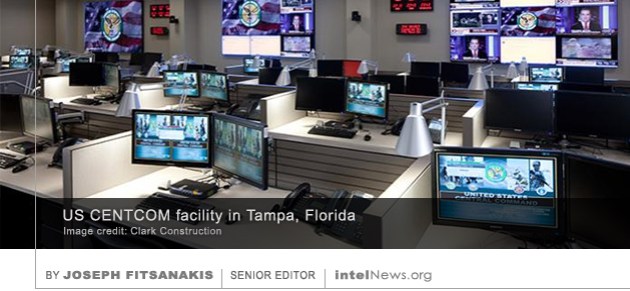 Whistleblowers say mismanagement, amateurism and cronyism are plaguing a multimillion-dollar American psychological operation aimed at countering online propaganda by the Islamic State. The program, known as WebOps, was established by the United States Department of Defense during the administration of US President Barack Obama. Its stated goal is to counter efforts by the Islamic State (also known as the Islamic State of Iraq and Syria —ISIS) to spread propaganda and recruit followers using online social media. Since its creation, it has been administered by the US Central Command’s Information Operations Division. But its implementation has been contracted to Colsa Corporation, a private company based in the US state of Alabama. The company specializes in providing services for US government agencies, some of which include the use of specialized software that utilizes information found on social media.
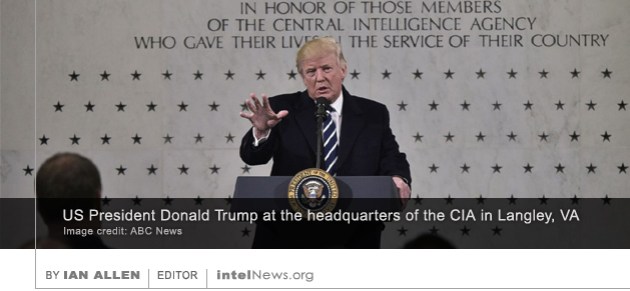 The White House announced on Monday a revised policy that reinstates the Central Intelligence Agency on the National Security Council. Chaired by the president, the NSC was established 70 years ago as a forum to provide the commander-in-chief with advice from senior civilian and military officials before making key decisions on domestic and foreign affairs. Principal attendees of the NSC include the US vice president, the secretaries of state, defense, and energy, the chair of the Joint Chiefs of Staff, and the director of national intelligence. Last week, the White House removed the chair of the Joint Chiefs of Staff and the director of national intelligence from the Principals Committee —the core participants— of the NSC. A
 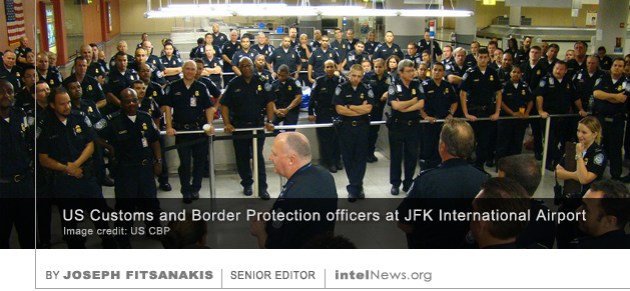 Intelligence veterans have raised concerns that the temporary ban on immigrants and refugees from seven Muslim-majority nations, which has been imposed by the White House, will significantly hinder American efforts to recruit intelligence assets and sources in Muslim countries. United States President Donald Trump signed an executive order on Friday, banning entry into the United States of citizens of Iran, Iraq, Syria, Yemen, Sudan, Somalia and Libya. According to the White House, the goal of the temporary ban is to help increase domestic security in the US. But
 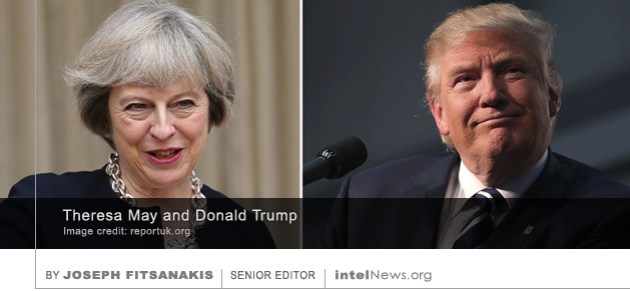 The British government may limit or end intelligence cooperation with the United States, if Washington revives its post-9/11 torture program, according to reports. On Wednesday, US President Donald Trump said he had asked “people at the highest level of intelligence […], does torture work?” and had received the answer “yes, absolutely”. He added that he was considering reviving some of the torture techniques that were used in the “war on terrorism”, including waterboarding and, in his words, “a hell of a lot worse”.
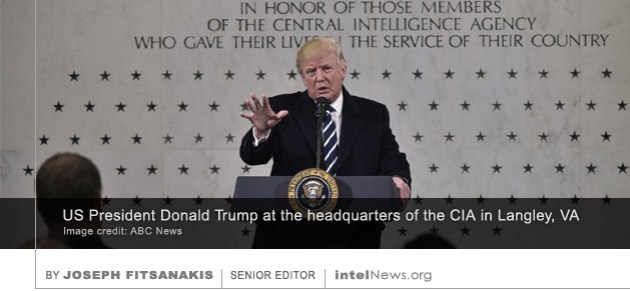 Officials at the United States Central Intelligence Agency have questioned whether it is safe for them to reveal the sources of their information about Russia to America’s new President, Donald Trump, according to a report. The implication is that some at the CIA are concerned that Trump’s allegedly close ties with Russian officials may put CIA operations officers in danger. The information was shared on Monday by Mary Louise Kelly, national security correspondent for National Public Radio (NPR). She
  There is no doubt whatsoever that Russia has compiled ‘information’ on United States President Donald Trump. Russian intelligence considers it a rightful duty to compile information on persons of relevance, especially when they are conducting significant business or maintain political relations with Russia. Trump qualified under that definition long before he even thought about running for president. Even I have been followed, during my numerous times in Russia, both openly and tacitly. I have had my computer hacked and hotel phone bugged. And my affairs in Russia have come nowhere near to the financial or political relevance of Donald Trump.
 intelligence on Trump has nothing to do with American celebrity culture. If it truly exists, this would have been done under the edict of ‘national security’ for Russian geopolitical interests. As such, the proper Russian intelligence behavior would be to deny its existence and hold on to anything it has until a time deemed strategically best. The least efficient usage of that compromising material would be to just embarrass him publicly before he is inaugurated, TMZ ‘gotcha’ style. Russians simply don’t work that way. Rather, keeping it secret and using it in a non-public but strategically effective manner for their national interests is the Russian way.
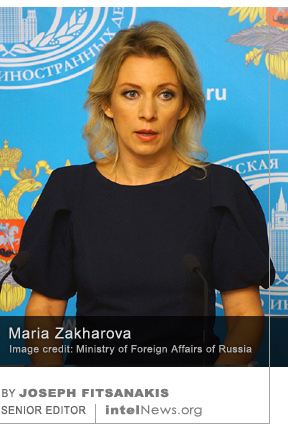 A senior Russian official has accused the United States Federal Bureau of Investigation of trying to blackmail a Russian diplomat who was attempting to purchase anti-cancer drugs in an American pharmacy. The allegation was made Sunday on live Russian television by Maria Zakharova, spokeswoman for Russia’s Ministry of Foreign Affairs. She was being interviewed on Sunday Night with Vladimir Solovey, a popular politics roundtable show on Russia’s state-owned Rossiya 1 television channel. Zakharova told Solovey that, a few years ago, the Russian government authorized one of its diplomats in the United States to purchase several thousand dollars’ worth of anti-cancer drugs. The drugs were to be used by Yevgeny Primakov, Russia’s prime minister in the late 1990s, who was battling liver cancer.
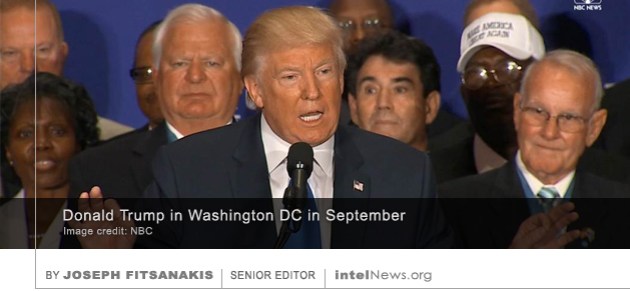 American intelligence officials allegedly warned their Israeli counterparts not to share intelligence with Washington once Donald Trump becomes president of the United States. The reason was that, according to the US officials, there was no guarantee that the intelligence would not be leaked to Russia. There was also the danger, they claimed, that the compromised intelligence would end up in the hands of Russia’s ally Iran, a regional adversary of Israel. The claim was
 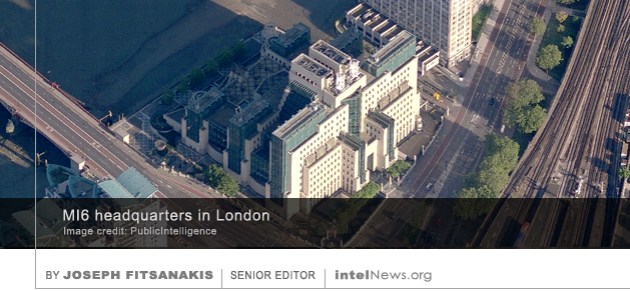 British intelligence agencies gave their United States counterparts an early warning about Russian attempts to influence the outcome of the American presidential election, according to The New York Times. The American newspaper
  There had been rumors for some time about a possible expulsion of Russian diplomats from the United States, in response to alleged Russian interference in the 2016 US Presidential election. The White House confirmed the rumors on Thursday morning, by






 intelNews.org
Wall Street Journal alleges US spies hide sensitive intelligence from Trump
February 17, 2017 by Joseph Fitsanakis 1 Comment
In recent weeks, several media outlets have alleged that American intelligence officials are skeptical about providing the White House with sensitive information. Late last month, Steve Hall, a former member of the Central Intelligence Agency’s Senior Intelligence Service, told National Public Radio that the matter of President Trump’s trustworthiness was “a live question” at the CIA. But this week’s article in The WSJ marks the first time that a conservative media outlet alleges that senior American intelligence officials mistrust the president. According to the New York-based newspaper, the Intelligence Community is uncomfortable with Mr. Trump’s “repeated expressions of admiration” for his Russian counterpart Vladimir Putin. Many intelligence officials are also disturbed by the US president’s public support for the alleged hacking of Democratic Party computer servers by the Kremlin.
Relations between the White House and the Intelligence Community are said to be extremely tense at the moment. On Wednesday, President Trump repeated his previously stated allegation that the US Intelligence Community is systematically leaking information to the media in order to subvert his administration’s work. The WSJ said it spoke to a representative from the Office of the Director of National Intelligence, which heads and oversees the US Intelligence Community. The representative questioned the accuracy of the newspaper’s allegations, saying that “any suggestion that the US intelligence community is withholding information and not providing the best possible intelligence to the president and his national security team is not true”. The report was also denied by an official at the White House, who said that Mr. Trump and his aides had no evidence “that leads us to believe that [The WSJ article] is an accurate account of what is actually happening”.
► Author: Joseph Fitsanakis | Date: 17 February 2017 | Permalink
Filed under Expert news and commentary on intelligence, espionage, spies and spying Tagged with CIA, Donald Trump, News, United States