Analysis: Russia did meddle in US election, but its goal was not to elect Trump
December 11, 2016 6 Comments
 No person familiar with the theory and practice of intelligence will be shocked by allegations that Russia interfered in the recent American presidential election. On the contrary, the claim will strike experienced observers as a textbook case of covert operation —an intelligence activity designed to influence foreign political, military or economic developments. Far from being physically violent, most covert operations involve actions like secretly funding political parties, planting misinformation or propaganda in foreign media outlets and —in more extreme cases— bribing or extorting key political actors. During the Cold War, hardly a national election took place without attracting the covert attention of the Central Intelligence Agency (CIA) and its Soviet equivalent, the KGB. This practice continues today, as nearly every intelligence agency engages in covert operations of some form or other.
It would thus be extremely unusual and highly uncharacteristic of Russian spy agencies if they did not launch at least a rudimentary covert campaign to target the 2016 US presidential election. To not have done so would mean that the Russian intelligence apparatus failed to abide by its mission statement. Such an eventuality would be unthinkable, especially given the size and importance of the target. It should therefore be presumed that Russian spy agencies, in particular the Foreign Intelligence Service and the Main Intelligence Directorate, engaged in systematic efforts to meddle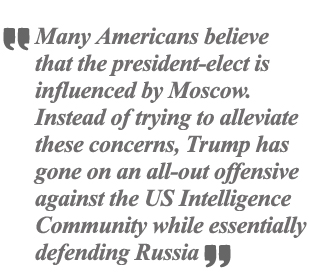 in last month’s US election. Indeed, the opposite would be strange.
The view that Russian spy agencies interfered in the US presidential election does not, for the moment, rely on publicly available evidence. The latter remains absent, though it is worth noting that, according to The Washington Post, US intelligence agencies concluded “with high confidence” that Russia meddled in the campaign over many months. It is always wise to treat claims in the media by unnamed “US officials” with some skepticism. But if The Post’s allegation is factual, then the words “with high confidence” are significant. The business of intelligence analysis is one of accuracy and precision. The term “high confidence” is rarely employed, and when it is, it typically denotes an almost indisputable degree of confidence in an analytical conclusion.
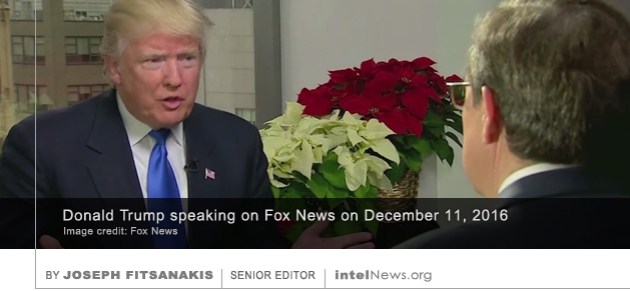
That the president-elect chose to automatically dismiss The Post’s allegations by describing them as “ridiculous” and denouncing the CIA in its entirety as “the same people that said Saddam Hussein had weapons of mass destruction” is worrying. It indicates a fundamental misunderstanding of the intelligence profession and its role in executive decision-making. Ideally, the president-elect should have remained silent until he had an opportunity to confer with the CIA and examine the evidence behind the report. Instead, during a Sunday morning interview on Fox News, Trump said simply: “I don’t believe it”. But this has nothing to do with belief. It has to do with facts and data, which he ought to examine before summarily dismissing an entire agency.
What is more, the evidence behind these allegations must be presented to the American people, who were the ultimate targets of the alleged operation. This was not about the two presidential 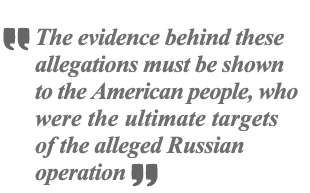 candidates. This was about the reputation of the American electoral process. In fact, the primary goal of Russia’s involvement in the US election —which, again, must be presumed— was not to empower a particular candidate, but to weaken the reputation of American political institutions as a whole. Those who claim that the Kremlin tried to promote Trump because the Republican candidate appears to be more favorably disposed toward Russia are wrong. They misunderstand the complex nature of Russian-American relations and underestimate Russian strategy. Moscow understands that its bilateral relationship with Washington rests on a set of longstanding geopolitical variables and does not depend on ephemeral personal relations between individual leaders. Furthermore, the Kremlin views Trump as an inherently unpredictable actor that is not to be trusted. The Russian plan, therefore, was not to help elect Trump. Rather, it was to sow mistrust between American –and by extension Western– civil society and its political institutions. Given the challenges currently being faced by European and American democracy, that is not a far-fetched goal.
The current state of American politics, which is characterized by ugly sectarianism the likes of which have not been witnessed since the Vietnam War, favors Russia’s strategic goals. Many Americans are currently convinced that the president-elect and some of his most senior aides are influenced by Moscow. Instead of actively trying to alleviate these concerns, Trump has now gone on an all-out offensive against the US Intelligence Community while essentially defending Russia. Americans who care about the current state and future of the Republic must be seriously concerned with this picture, regardless of their political affiliation. It may be that the history textbooks of the future will record the Russian meddling in the 2016 US presidential election as one of the most successful covert operations of modern times.
► Author: Joseph Fitsanakis | Date: 12 December 2016 | Permalink
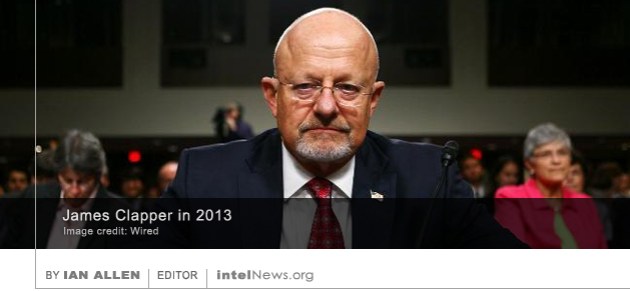 The United States’ senior intelligence officer has told Congress that new legislation requiring spy agencies to act against alleged Russian covert operations constitutes “micromanagement” of the American Intelligence Community. The Intelligence Authorization bill, which includes a number of intelligence-related requirements and provisions, is debated and enacted each year by Congress. This year’s legislation has already been approved by the intelligence committees of the Senate and House of Representatives. Last week it was enacted by the House, while the Senate is preparing to debate it this week.
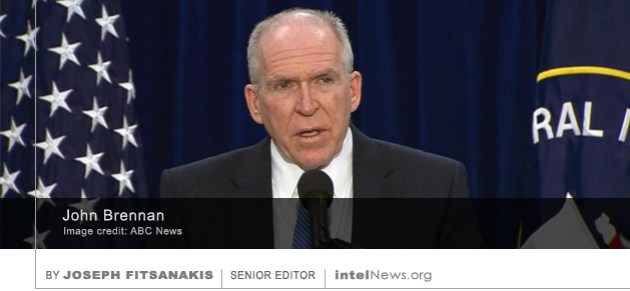 The outgoing director of the United States Central Intelligence Agency has warned in an interview that it would be “disastrous” for Washington to abandon a nuclear treaty with Iran, which was agreed in 2015. John Brennan is a career intelligence officer and fluent Arabic speaker, who has served in the CIA for 25 years. He was appointed director of the agency in March of 2013 by President Barack Obama and is scheduled to leave the position in January of 2017, after nearly four years at the helm of the CIA.
 Coordinated efforts by Anglo-American military and intelligence agencies have resulted in the killing or capturing of nearly every senior commander of the Islamic State’s online force. The close-knit group of Islamic State hackers and online propagandists, which are informally known as “the Legion”, is responsible for hacking and online recruitment incidents that led to several lone-wolf attacks in the West. In one incident in March of 2015, the Legion claimed responsibility for the unauthorized release of personal details of over 1,300 American government employees, with orders to Islamic State volunteers to kill them. In other instances, Legion operatives reached out to impressionable young men and women in Western Europe and the United States and convinced them to move to Syria or conduct attacks at home.
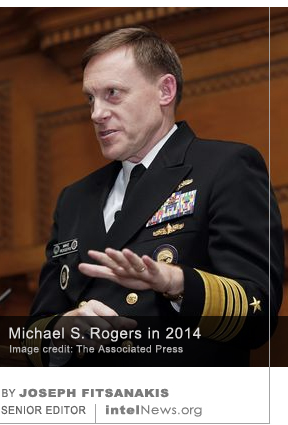 The director of the United States National Security Agency has taken the unprecedented step of entering talks with president-elect Donald Trump, amidst reports that President Barack Obama may fire him. Admiral Michael S. Rogers, 57, a US Navy cryptologist with a military career that spans over three decades, has been at the helm of the NSA since April of 2014. Last weekend, however, The Washington Post
 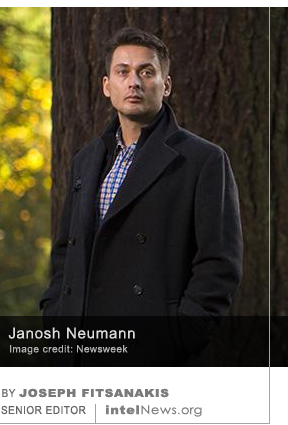 Two Russian intelligence officers, who defected to the United States in 2008, claim that they had to fend for themselves after American spy agencies failed to protect them despite promises to the contrary. Janosh Neumann (born Alexey Yurievich Artamonov) and his wife Victorya were employees of Russia’s Federal Security Service (FSB) specializing in investigations of money laundering and corruption. But in 2008 they traveled from Russia to Germany and from there to the Dominican Republic. Once in the Caribbean island, they entered the US embassy and offered to work for the Central Intelligence Agency (CIA).
 Three United States Special Forces soldiers who were killed outside a Jordanian military base earlier this month were working for the Central Intelligence Agency, according to American government officials. The three soldiers were shot dead on November 4 by a Jordanian soldier, who was subsequently wounded in an exchange of fire, according to
 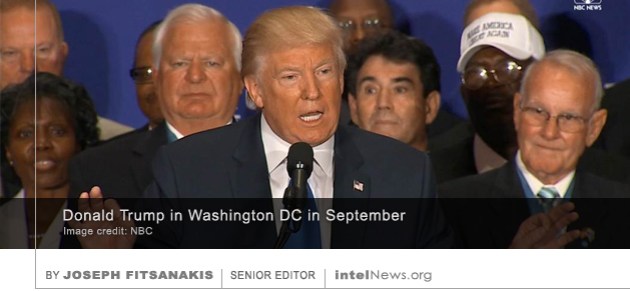 Members of the United States Intelligence Community will soon begin sharing top-secret information with the White House transition team of president-elect Donald Trump. According to a
 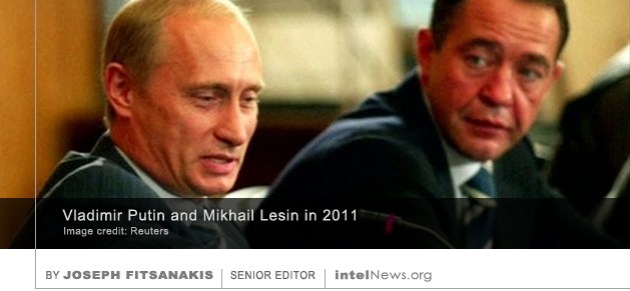 The mysterious death in Washington, DC, of a former senior adviser to Russian President Vladimir Putin, who had fallen out with the Russian president, was the result of an accident, US authorities have concluded after a year-long investigation. The body of Mikhail Yuriyevich Lesin, a well-known Russian media mogul, was
 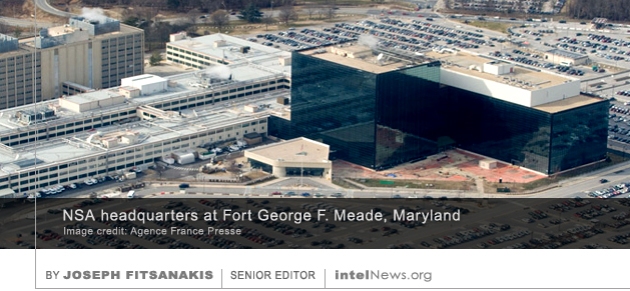 Classified information stolen by a United States federal contractor, who was charged with espionage last month, includes the true identities of American intelligence officers posted in undercover assignments abroad, according to court documents. In August of this year, Harold Thomas Martin III, was arrested by the Federal Bureau of Investigation on charges of stealing government property and illegally removing classified material. Martin, 51, served as a US Navy officer for over a decade, where he acquired a top secret clearance and specialized in cyber security. At the time of his arrest earlier this year, he was working for Booz Allen Hamilton, one of the largest federal contractors in the US. Some media
 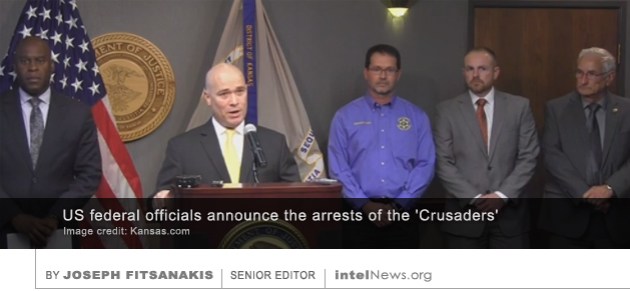 Federal authorities in the United States have charged three men with conspiring to use a weapon of mass destruction with the intention of blowing up an apartment complex in a predominantly Muslim neighborhood in Kansas. The men, Patrick Eugene Stein, Curtis Allen and Gavin Wright, who called themselves ‘the Crusaders’, allegedly wanted to spark a religious war between Christians and Muslims in the United States. They were arrested last week in simultaneous raids conducted by the Federal Bureau of Investigation, after they obtained guns and chemicals for making bombs.
  In a development that is expected to contribute to the downward spiral in Turkish-American relations, the United States government has reportedly filed espionage charges against three Department of Defense contractors with Turkish background. The three are believed to have been charged with transferring US military secrets abroad and are currently in prison.






 intelNews.org
US government to set up ‘anti-propaganda center’ after Obama signs new law
December 28, 2016 by intelNews 1 Comment
The legislation is entitled “Countering Foreign Propaganda and Disinformation Act”, and it was introduced in both chambers of the US Congress last spring by Republican and Democrat legislators. It was initially entitled “Countering Information Warfare Act”, but was subsequently revised and included in the National Defense Authorization Act for fiscal year 2017. It was approved by the House of Representatives on December 2, and by the Senate on December 8. President Obama signed it into law on December 23. Under the new law, the Department of Justice has to take initiative within 180 days, and collaborate with the Department of Defense, before reaching out to “other relevant departments and agencies”. Resulting from this process will be the establishment of a “Center for Information Analysis and Response”. The goal of the Center will be to collect and analyze “foreign government information warfare efforts”, and to “expose and counter foreign information operations” directed against “US national security interests”. The plan will be funded in the amount of $160 million over two years.
Rob Portman, a Republican US Senator from Ohio, who co-sponsored the bill, hailed it as “a critical step towards confronting the extensive, and destabilizing, foreign propaganda and disinformation operations being waged against us by our enemies overseas”. But the Russian government-owned broadcaster RT called the new law “ominous” and “controversial”, and said the US government was “itself pushing propaganda on its own domestic population”. In an article published on Tuesday, the Hong Kong-based newspaper South China Morning Post said the new legislation was aimed at China, as well as at Russia. The newspaper cited Chinese experts who warned that Washington and Beijing “could head down the slippery slope toward ideological confrontation” as a result of the new law.
► Author: Joseph Fitsanakis | Date: 28 December 2016 | Permalink
Filed under Expert news and commentary on intelligence, espionage, spies and spying Tagged with Countering Foreign Propaganda and Disinformation Act, intelligence legislation, News, propaganda, psyops, Rob Portman, United States, US Center for Information Analysis and Response, US Department of State