Senior American, Japanese and S. Korean spy officials to meet behind closed doors
October 18, 2021 Leave a comment
 THE INTELLIGENCE CHIEFS OF the United States, Japan and South Korea are to meet behind closed doors this week. The meeting will take place nearly two years after a major diplomatic spat between Japan and South Korea threatened to significantly harm intelligence cooperation between them. In November of 2019, the South Korean government threatened to terminate the General Security of Military Information Agreement (GSOMIA). The agreement was initiated in 2016 under American tutelage, with the aim of facilitating the sharing of intelligence between South Korea and Japan about North Korea’s missile and nuclear programs.
As intelNews explained at the time, the agreement fell victim to an escalating tit-for-tat row between the two Asian countries, which was rooted in the use of forced Korean labor by Japanese troops during World War II. The South Korean government demanded financial compensation for the use of slave labor, including sex slaves, by Japanese occupation troops during the annexation of Korea by Japan, which lasted from 1910 until 1945.
Tokyo responded to a mass boycott of Japanese goods in South Korea by limiting the export of electronics for use in South Korea’s ship-building industry. It also removed South Korea from the list of countries that can fast-track their exports to Japan. South Korea responded by threatening to not renew GSOMIA prior to it lapsing. With hours to go before GSOMIA’s expiration deadline, Seoul announced it would prolong the treaty. But the dispute continues to stymie intelligence cooperation between the two Asian nations.
On Saturday, the South Korean Yonhap News Agency cited “a government source” in reporting that the intelligence chiefs of the United States and Japan would travel to Seoul next week, in order to hold a series of meetings with their South Korean counterpart. Thus, United States Director of National Intelligence, Avril Haines, and Japan’s Director of Cabinet Intelligence, Hiroaki Takizawa, will meet with Park Jie-won, who heads South Korea’s National Intelligence Service.
The three officials will meet behind closed doors to discuss “strengthening their trilateral intelligence cooperation”, according to the report. There is renewed hope in Seoul and Tokyo that relations between the two nations can be mended, following the election of a new government in Japan earlier this month, under Prime Minister Fumio Kishida. The officials are also expected to discuss efforts to re-initiate negotiations with North Korea on a number of issues. Last month, South Korean President Moon Jae-in offered to begin negotiations with North Korea aimed at drafting a formal declaration to officially end the Korean War of 1950-1953.
► Author: Joseph Fitsanakis | Date: 18 October 2021 | Permalink
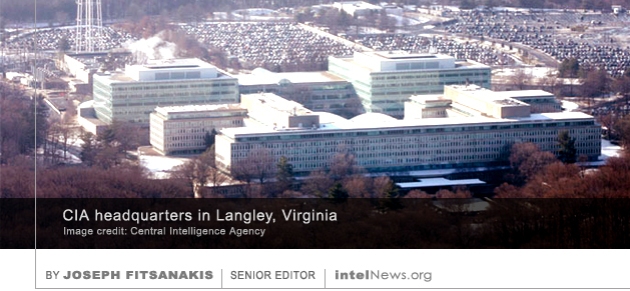
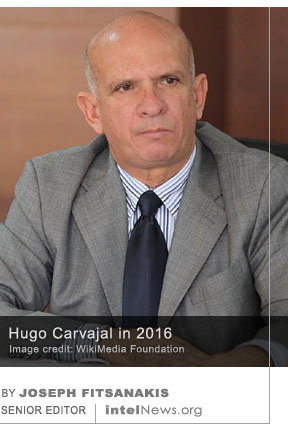 THE FORMER DIRECTOR OF Venezuela’s military spy agency has been captured in Madrid after two years on the run, and is now likely to be extradited to the United States, where he will face drug trafficking charges. Hugo Carvajal is a retired general and former diplomat, who was a member of the late Venezuelan President Hugo Chávez’s inner circle. From 2004 to 2011, under Chávez’s tutelage, Carvajal headed Venezuela’s Directorate General of Military Counterintelligence (DGCIM).
 AMERICAN INTELLIGENCE AGENCIES ARE noticing early signs that al-Qaeda may be regrouping in Taliban-controlled Afghanistan, according to the deputy director of the United States Central Intelligence Agency. The presence of al-Qaeda in Afghanistan was the primary reason behind the invasion of the country by the United States in 2001. In subsequent years, the militant group, which was behind the terrorist attacks of September 11, 2001, suffered heavy losses, and saw its members disperse across the region. Many others were captured or killed.
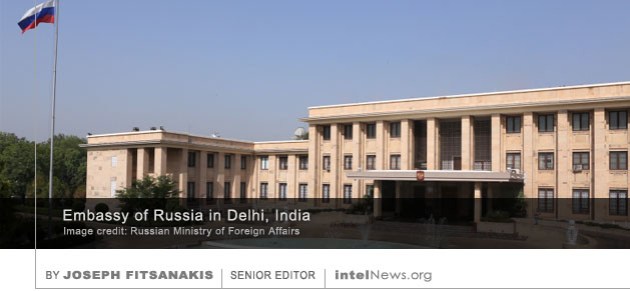
 HIGH LEVEL DELEGATIONS OF intelligence officials from the United States and Russia visited India on the same day this week, for talks with Indian officials about the situation in Afghanistan, according to news reports. This development highlights the frantic pace with which Moscow and Washington are maneuvering around the region, following the dramatic takeover of Afghanistan by the Taliban last month.








 intelNews.org
CIA director concludes surprise two-day visit to Russia for high-level meetings
November 4, 2021 by Joseph Fitsanakis Leave a comment
Little information has emerged about the participants in the meetings. A statement from the American embassy in Moscow said simply that Burns had traveled there at the request of President Joe Biden, and that other United States officials had traveled with him. It is believed that Karen Donfried, the State Department’s assistant secretary for European and Eurasian Affairs, traveled with Burns. According to the American embassy, the meetings were held on Tuesday and Wednesday and concerned “a range of issues in the bilateral relationship between the United States and Russia.
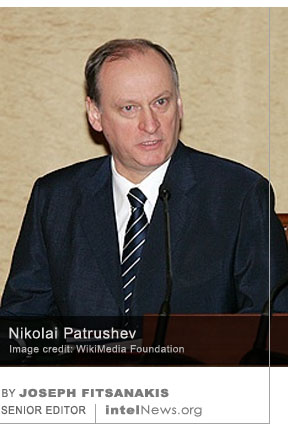
A minute-long video, which was posted on social media by the Russian TASS news agency on Tuesday, showed a group of five American officials meeting with five Russian officials. The latter appeared to include Nikolai Patrushev, a close political ally of Russian President Vladimir Putin, who heads the Security Council of Russia —a body that is roughly equivalent to the United States National Security Council. Prior to his current role, Patrushev served as director of the Russian Federal Security Service (FSB).
It is worth noting that Burns speaks Russian and served twice as a diplomat in Russia, most recently as the American ambassador there. Some observers noted that Burns’ trip to Moscow is part of a broader pattern of increasingly frequent meetings between American and Russian officials in recent months. The last four months have seen at least four visits to Russia by senior officials in the Biden administration.
► Author: Joseph Fitsanakis | Date: 04 November 2021 | Permalink
Filed under Expert news and commentary on intelligence, espionage, spies and spying Tagged with CIA, Karen Donfried, News, Nikolai Patrushev, Russia, secret meetings, Security Council (Russia), United States, William Burns