US spy agencies warned Kabul would fall, but did not give precise timeline, says report
August 18, 2021 4 Comments

ANALYSES BY UNITED STATES INTELLIGENCE agencies about the dynamics of the Taliban insurgency in Afghanistan became progressively grim over the summer, but did not provide precise timelines of the impending disaster, according to a new report. In his television address on Monday, US President Joe Biden admitted that his administration had rested on inaccurate estimates about the ability of the Taliban to overrun Afghan government defenses. Some —including many in the US intelligence community— have interpreted that statement to mean that the assessments given to the White House by the intelligence agencies were faulty or otherwise inaccurate.
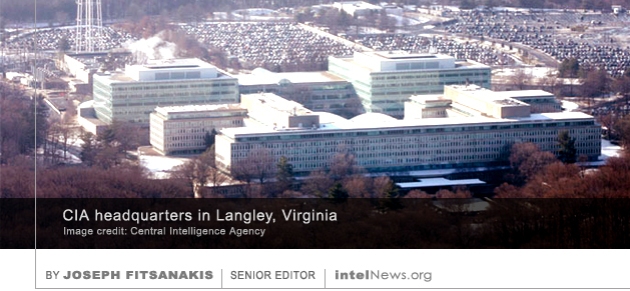
On Tuesday, The New York Times reported that the intelligence community continuously revised its assessments of the Afghan civil war in the past year. Earlier this year, the consensus among intelligence agencies was allegedly that the Afghan government could potentially remain in power for as long as two years after a US military withdrawal. But that consensus had been shattered by mid-summer, according to The Times. By July, intelligence reports, led by those produced by the Central Intelligence Agency (CIA), “had grown more pessimistic” and explicitly “laid out the growing risks to Kabul”, according to the paper. These reports also warned that the Afghan government, including its intelligence and military components, would not be able to withstand an assault on the capital and other major urban centers by the Taliban.
At the same time, however, these assessments were typically “not given a high confidence judgment” or a particularly high level of certainty by the agencies, according to the report. One source told the paper that “it was often hard to get [CIA] analysts to clearly predict how quickly [a Taliban victory] would occur”. Instead, its assessments “could often be interpreted in a number of ways, including concluding that Afghanistan could fall quickly or possibly over time”.
The Times report seems to indicate that the White House rested much of its decision-making on earlier assessments by the intelligence community, which projected a less radical pace of change in Afghanistan. For instance, one report from April of this year suggested that the Taliban were at least 18 months away from being able to conquer Kabul. The article also points out the possibility that different agencies may have had differing views on the speed with which the Taliban would conquer Afghanistan, with the CIA being on the more pessimistic end of the scale.
► Author: Joseph Fitsanakis | Date: 18 August 2021 | Permalink








 THE FIRST CLAIMS OF an alleged secret collaboration between the signals intelligence agencies of the United States and Denmark surfaced in November of 2020. By January of this year, it was clear that the Danish government would, sooner or later, need to deal with the fallout of its controversial spy deal with Washington, under which Denmark enabled the US to spy on some of its closest European allies. Still, the









Israel has drastically curtailed intelligence-sharing with the US, report claims
August 27, 2021 by Joseph Fitsanakis 4 Comments
THE GOVERNMENT OF ISRAEL scaled back significantly intelligence cooperation with the United States in January of this year, following the change of guard in the White House, according to The New York Times. In an article published on Thursday, the paper cited several unnamed Israeli and American sources in claiming that the Israeli administration of then-Prime Minister Benjamin Netanyahu limited its intelligence relationship with Washington almost as soon as Joe Biden assumed the presidency of the United States.
According to the report, the Israelis decided to scale back intelligence-sharing with Washington in order to keep the Biden administration in the dark about the latest developments in the Iranian nuclear program. Following the demise of much of its intelligence network in Iran in 2019, the United States relies heavily on Israeli intelligence when it comes to following developments inside Iran, said The Times. The hope in Israel is that, by denying the Biden administration information about developments inside Iran, Israel can prevent the White House from making drastic changes to former President Donald Trump’s policy on Iran.
To illustrate its claim, the paper referred to the sabotage attack against Iran’s Natanz nuclear plant in April of this year, which has been widely attributed to Israel. According to the report, the Israelis gave the White House two hours’ notice of the plan, which was allegedly a deliberate attempt to prevent Washington from assessing the operation, and potentially pressuring Israel to cancel it.
American sources told The Times that the move by the Netanyahu administration had its roots in the bad blood between it and the administration of US President Barack Obama, who spearheaded the now-defunct nuclear deal with Iran. Additionally, American officials told the paper that the change of policy on intelligence-sharing by the Israeli government represented a violation of “a longstanding, unwritten agreement to at least advise the United States of covert operations” and giving Washington an opportunity to challenge specific courses of action.
But Israeli officials who spoke to the paper said that the reason why Washington was not given earlier notice about the attack on the Natanz nuclear plant was because of fears that it would be leaked. United States officials have leaked information before about pending Israeli covert operations, according to the Israelis. The report also suggested that the American and Israeli governments have tried to reset their intelligence relationship since the Natanz operation, but relations remain tense.
► Author: Joseph Fitsanakis | Date: 27 August 2021 | Permalink
Filed under Expert news and commentary on intelligence, espionage, spies and spying Tagged with intelligence cooperation, Iran, Iranian nuclear program, Israel, News, United States