India blacklists Chinese phone companies over spying concerns

Huawei HQ

By IAN ALLEN | intelNews.org |
The government of India has officially barred a number of Chinese telephone equipment providers from operating in India, citing their strong links with the Chinese military. At the center of the move is Huawei Technologies, one of China’s largest telephone equipment manufacturers. Several intelligence insiders see the company, based in Shenzen, China, as a covert arm of the intelligence wing of the Chinese People’s Liberation Army. The company, which has business concerns in several countries around the world, has attracted the attention of American, British and Australian counterintelligence agencies, among others. In early 2008, the US government prohibited Huawei’s purchase of a significant amount of shares in US network security equipment maker 3Com, which supplies telecommunications hardware to the US Department of Defense. Read more of this post


News you may have missed #347

  • CIA drones now target non-listed targets in Pakistan. It used to be the case that the CIA unmanned drone attacks in Pakistan were directed at confirmed Taliban senior operatives. But an American official has said that the CIA does “not always have their names”. Instead, the Agency targets them based on their “actions over time” that make it “obvious that they are a threat”.
  • Democrat Senator presses Obama for more NSA powers. Senator Barbara Mikulski (D-MD) is pressing the Obama Administration to give the National Security Agency more power to oversee privately owned portions of the Internet. Speaking on Thursday, Mikulski complained that “we don’t know who the hell is in charge” over the security of private networks.
  • Lebanese officer charged as Israel spy may get death. A Lebanese prosecutor has requested the death penalty for Gazwan Shahin, an army colonel charged with having provided Israel’s spy agency with pictures, information and coordinates of Lebanese civil and military posts during and after the 2006 Israeli invasion of Lebanon.

Bookmark and Share

Analysis: An Economic Security Role for European Spy Agencies?

Economic espionage

Economic spying

By JOSEPH FITSANAKIS | intelNews.org |
Last February, Spain’s intelligence service began investigating alleged suspicious efforts by foreign financial speculators to destabilize the Spanish economy. According to newspaper El País, the Spanish government asked the country’s Centro Nacional de Inteligencia (CNI) to probe links between speculative moves in world financial markets and a series of damaging editorials “in the Anglo-Saxon media”. There are indications that the National Intelligence Service of Greece (EYP) is following in the CNI’s footsteps. In February, when Athens and Brussels began to realize the magnitude of the financial crisis threatening the European common currency, several news outlets suggested that the EYP was cooperating with Spanish, Irish and Portuguese intelligence services in investigating a series of coordinated speculative attacks on money markets, most of which allegedly originated from London and Washington. Read more of this post

News you may have missed #345

Bookmark and Share

News you may have missed #344

  • CIA base in Afghanistan hit again. A suicide car bomber killed one civilian and wounded two security guards at the entrance to the CIA’s Forward Operating Base Chapman, in Afghanistan’s Khost province. It is the same base where Jordanian suicide bomber Humam Khalil al-Balawi killed seven CIA officers in December of 2009.
  • Fiji to set up new spy agency. The government of Fiji plans to re-establish its intelligence agency, ten years after it was disbanded by Labour Prime Minister Mahendra Chaudhry. The new organization will be called the National Intelligence Agency of Fiji.
  • MI5 and MI6 must release Guantánamo records, says judge. MI5 and MI6 have been told by a British judge that they cannot use secret evidence to defend themselves from civil damages claims brought by six former detainees in the Guantánamo Bay detention camp, including Binyam Mohamed.

Bookmark and Share

Recording of candid speech by Blackwater CEO leaked

Erik Prince

Erik Prince

By IAN ALLEN | intelNews.org |
A recording of a relatively recent candid speech given by Erik Prince, the media-shy owner of Xe Services (formerly known as Blackwater), has been obtained by The Nation magazine. The extensive recording was made on January 14, during a private talk given by Prince at the University of Michigan before a sympathetic invitation-only audience consisting of military veterans, ROTC commanders and cadets, as well as business entrepreneurs. In his talk, Prince, who last December admitted having worked as a CIA asset, advocated for the employment of private contractors by the US Pentagon to combat insurgents and “Iranian influence” in countries such as Nigeria, Saudi Arabia, Yemen and Somalia. Writing for The Nation, Jeremy Scahill focuses on Princes views, as he conveyed them in his talk. Read more of this post

US asked for Egypt’s spy help on Algerian nuclear reactor

Document cover page

Cover page

By IAN ALLEN | intelNews.org |
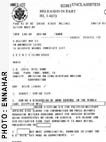
A US consular document, acquired by a leading Algerian newspaper, reveals that Washington asked Egypt’s help in collecting intelligence on the Algerian nuclear energy program. The document, which dates from May 1991, was drafted by officials in the US embassy in Cairo, Egypt; it is not known how it came to the possession of Algerian daily Ennahar, which published it on Tuesday. It contains a summary of a May 1991 meeting in Cairo between Richard Clarke, who was then the US Department of State’s deputy secretary for political and military affairs, and a senior Egyptian official whose name is in redacted in the document, but appears to have been Amr Moussa, Egypt’s minister of foreign affairs at the time. The document, which is classified ‘top secret’, reports that the US delegation asked the Egyptians to help them gather information on Algeria’s Es Salam nuclear reactor, located in the city of Ain Oussera, in the province of Djelfa, in north-central Algeria. Read more of this post

Analysis: Experts question legality of CIA drone strikes

Predator drone

Predator drone

By IAN ALLEN | intelNews.org |
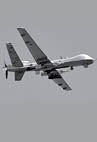
A number of prominent American legal scholars have voiced concerns about the legality of the targeted killings by the CIA of suspected Taliban leaders in Afghanistan and Pakistan. Speaking last week before the National Security and Foreign Affairs subcommittee of the US House Committee on Oversight and Government Reform, some of the experts warned that the killings may constitute war crimes. Among them was Loyola Law School Professor David Glazier, who reminded subcommittee members that the CIA remotely navigated drone pilots are not legally considered combatants, and thus employing them to carry out armed attacks “fall[s] outside the scope of permissible conduct”. He also warned that “under the legal theories adopted by our government in prosecuting Guantánamo detainees, these CIA officers as well as any higher-level government officials who have authorized or directed their attacks are committing war crimes”. Read more of this post

News you may have missed #341

  • Russian court rejects ‘spy’ scientist’s appeal. A Russian court has rejected an appeal for the release of academic Igor Sutyagin, former division head in the Russian Academy of Sciences’ USA and Canada Institute, who is serving a 15-year sentence for allegedly passing state secrets to foreign officials.
  • Ex-CIA agent’s arrest in VA was eventful, say sources. We reported earlier this week that Andrew M. Warren, the CIA’s Algiers station chief, who is accused of having drugged and raped two Algerian women at his official residence, was arrested at a Norfolk, Virginia motel, after he failed to show up for a court hearing. It now appears that Warren “had a gun in his waistband […] and officers used a taser to subdue him”.
  • Documents show CIA thought Gary Powers had defected. Declassified documents show the CIA did not believe that Gary Powers, who piloted the U2 spy plane shot down over Russia in 1960, causing the U2 incident, had been shot down. Instead, the agency spread the rumor that Powers “baled out and spent his first night as a defector in a Sverdlovsk nightclub”!

Bookmark and Share

News you may have missed #340

  • West Bank urged to drop Israeli cell phone companies. The Palestinian Authority (PA) is urging Palestinians to stop using the Israeli cellular companies Pelephone, Orange, Cellcom and Mirs. The official reasons are economic (Israeli companies don’t pay taxes to the PA), but the real reasons are probably related to communications security.
  • US police wiretaps up 26 percent in one year. The number of wiretaps authorized by US state and federal judges in criminal investigations jumped 26 percent from 2008 to 2009, according to a report released Friday by the Administrative Office of the US Courts.
  • Taliban group executes high-profile ex-ISI spy. Khalid Khawaja, one of two Pakistani former Inter-Services Intelligence directorate officers captured by a Taliban splinter group, named Asian Tigers, has been found dead. The other ex-ISI official, Sultan Amir Tarar, a.k.a. Colonel Imam, who was Taliban leader Mullah Mohammad Omar’s former handler, remains in captivity.

Bookmark and Share

Author gets subpoenaed to reveal CIA sources

James Risen

James Risen

By JOSEPH FITSANAKIS | intelNews.org |
The US government has issued a subpoena against a journalist who authored a book on the CIA’s operations during the years of the Bush administration. The move has surprised many, because the book in question, State of War: The Secret History of the CIA and the Bush Administration, by New York Times journalist James Risen, has been out since 2006. The subpoena, which Risen received last Monday, requests him to testify before a grand jury about his confidential sources for chapter 9 of his book (pages 193-218), entitled “A Rogue Operation”, in which he describes in relative detail an attempt by the CIA to sabotage the Iranian nuclear weapons program. In the chapter, Risen writes of a thwarted CIA operation to pass to the Iranians a series of faulty nuclear bomb design documents. To do this, the Agency apparently recruited a Russian former nuclear scientist, who had defected to the United States. The unnamed scientist was told to travel to Vienna, Austria, in early 2000, and offer to sell the documents to the Iranians. Read more of this post

News you may have missed #339 (arrest edition!)

  • US couple arrested for spying for Cuba cooperating, say authorities. Admitted spies Walter and Gwendolyn Myers have met with US federal officials “50 to 60 times” to divulge details of their three decades of spying for Cuba, Justice Department officials said Tuesday. The couple pleaded guilty in November to working for the government of Caribbean island.
  • Indian diplomat arrested for spying for Pakistan. Madhuri Gupta, a second secretary at the Indian high commission in Islamabad, Pakistan, has been arrested and accused of passing on secrets to Pakistan’s ISI spy agency. Indian officials believe she may be part of a wider spy ring.
  • Former CIA station chief arrested in Virginia. Andrew M. Warren, the CIA’s Algiers station chief, who is accused of having drugged and raped two Algerian women at his official residence, has been arrested at a Norfolk, Virginia motel, after he failed to show up for a court hearing last week. It is unclear why he skipped the hearing and why he was staying at the motel in his hometown.

Bookmark and Share

News you may have missed #338

  • US intel on Iran suffering from information overload? The US National Intelligence Estimate was due last fall but has been delayed at least twice amid efforts to “incorporate information from [Iranian] sources who are still being vetted”. Some say that significant new material has come from Iranian informants, who are motivated by antipathy toward the Iranian government and its suppression of the opposition.
  • Canada’s ex-intel boss slams new anti-terrorism measures. Reid Morden, the former director of the Canadian Security Intelligence Service, has urged the country’s Conservative government to re-think its plans to re-introduce controversial anti-terrorism measures initially adopted in the wake of 9/11.
  • Wiretapping scandals continue in Colombia. Caracol TV reports that Colombian security agency DAS has asked opposition Senator Piedad Cordoba to hand over evidence of her claims that President Alvaro Uribe ordered DAS to spy on her.

Bookmark and Share

CIA scores Washington Post charm offensive

CIA HQ

CIA HQ

By IAN ALLEN | intelNews.org |
For an agency whose very future is routinely questioned by former employees, the CIA has been getting plenty of positive press in the pages of The Washington Post lately. On Monday, The Post’s Jeff Stein cited “a former top CIA official” who claimed that the Agency’s unmanned drone assassination program in the Afghan-Pakistan border has the Taliban in disarray, “thinking that we can track them anywhere”. The former official also said that the speed of the CIA and “its Pentagon partners” (presumably NSA) in intercepting targeted communications makes the process of assassinating Taliban leaders “like mowing a lawn”. Does this sound too good to be true? How about an article published on the same day, also in The Washington Post, which claims that the CIA’s Predator drone assassination program has “kept the number of civilian deaths extremely low”? Read more of this post

News you may have missed #337

  • Another Iranian nuclear researcher reportedly defects. An academic linked with Iran’s nuclear program has defected to Israel, according to Ayoub Kara, Israel’s deputy minister for development in the Negev and Galilee. Kara said it “is too soon to provide further details”, adding that the defector is “now in a friendly country”.
  • Dutch spies to become more active abroad. The Dutch secret service, the AIVD, has announced a shift in strategy, deployed increasingly more officers abroad: “in Yemen, Somalia, and the mountains between Afghanistan and Pakistan”.
  • Why did the CIA destroy waterboarding evidence? It has been established that Porter J. Goss, the former director of the CIA, in 2005 approved the destruction of dozens of videotapes documenting the brutal interrogation of two terrorism detainees. But why did he do it? Former CIA officer Robert Baer examines the question.

Bookmark and Share