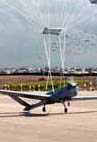
Ukrainian drone strikes may have targeted Moscow homes of Russian spies

Rublyovka, MoscowA SERIES OF COORDINATED drone strikes that struck Moscow last week were not random, but may in fact have targeted the homes of senior Russian intelligence officials, according to a new report by an American television network, which cited knowledgeable sources and data by an open-source research firm.

In the early morning hours of May 30, a fleet of at least six unmanned aerial vehicles (UAVs) struck what appeared to be residential apartment blocks in Moscow’s southeastern suburbs. The targets were all located in Moscow’s Rublyovka area, which contains some of the wealthiest neighborhoods in the Russian capital. Many expressed surprise at the airborne assault, as it was the first known attack against residential targets in Moscow since the latest phase of the Russian invasion of Ukraine, which began in February 2022.

Upon initial inspection, the targets of the early-morning attack appeared to have been chosen at random. Yesterday, however, the American television network NBC claimed that the targets of the attack had been carefully selected as “a part of Ukraine’s strategy of psychological warfare against Russia”. Citing “multiple sources familiar with the strikes”, including a senior United States official and a congressional staffer, NBC said that the targets of the attacks were all residences of Russian government personnel.

The television network also cited data by Strider Technologies, an open-source strategic intelligence company located in the American state of Utah, according to which at least one of the buildings that were struck by the UAVs housed a Russian state-controlled military contractor. According to Strider Technologies, the contractor provides services to a military unit that is known to be a front for Russia’s Foreign Intelligence Service (SVR). NBC further claimed that other targets in the alleged Ukrainian operation targeted the residences of senior Russian intelligence personnel.

Author: Joseph Fitsanakis | Date: 08 June 2023 | Permalink

Analysis: Did Ukraine try to assassinate Vladimir Putin?

KremlinOFFICIALS IN UKRAINE HAVE vehemently denied allegations by the Kremlin that the Ukrainian government tried to assassinate Russian President Vladimir Putin using two unmanned aerial vehicles (UAVs). A statement by the Russian government said that the Kremlin, which serves as the official residence of the Russian president in Moscow, came under attack by two unmanned aerial vehicles (UAVs) in the early hours of Wednesday. According to the statement, the UAVs were shot down 16 minutes apart. The first UAV allegedly exploded mid-air at 2:27 a.m. local time over the old Senate building, which is located on the eastern side of the Kremlin. At 2:43 a.m. a second UAV exploded over the Kremlin, sending debris flying across the courtyard of the heavily fortified complex.

There were no injuries or material damages, according to the Russian Federal Protective Service, which is responsible for the protection of high-ranking state officials and government facilities, including the Kremlin complex. Within hours, Russia openly placed blame on the government of Ukraine for the alleged attack and claimed that it had been intended to kill President Putin. A subsequent statement praised the Russian armed forces for thwarting the alleged attack on Putin’s life with “timely actions”. Meanwhile, government officials in the United States said that the White House “had no foreknowledge of an impending drone attack on the Kremlin” and urged that Moscow’s allegations be treated with skepticism.

UKRAINE IS CAPABLE OF STRIKING INSIDE RUSSIA

The Ukrainian military and paramilitary forces are both interested in, and capable of, carrying out strikes inside Russia. In 2023 alone, there have been dozens of apparent acts of sabotage in European Russia, which have damaged bridges, disrupted railway transportation systems, and rendered weapons depots unusable. This week alone, a fuel depot in Russia’s Krasnodar Krai was extensively damaged by a fire, which local authorities claimed was caused by a kamikaze UAV attack. About 1,500 miles north in Bryansk Oblast, near Russia’s border with Belarus, two trains were derailed by blasts that, according to news reports “appeared to be separate but identical incidents”. Ukraine denies involvement in these incidents, but military observers remain suspicious.
Meanwhile, investigative work by news outlets such as The New York Times suggests that Ukrainian paramilitary units may have been behind acts of sabotage in Western Europe, and even assassinations of pro-Putin figures inside Russia. Some of these attacks —if that is indeed what they were— may have been carried out by teams of cover human operatives. Others may have been carried out by mechanical means, including UAVs. Certainly, the Ukrainian military has never been shy about its effort to develop a strong long-range strike capability using UAVs. There is also some evidence that it may have carried out at least one UAV-enabled attack near Moscow in recent months. It therefore stands to reason that Ukraine is both willing and able to launch strikes inside Russia. Read more of this post

Swedish spy agency investigates drone sightings at three nuclear power plants

Ringhals Nuclear Power PlantSWEDEN’S DOMESTIC SECURITY AGENCY said it had taken over from the police an investigation into sightings of unmanned aerial vehicles, commonly known as drones, at three nuclear power plants. On Monday, the Swedish Security Service, known by its Swedish acronym, SAPO, confirmed earlier reports that a large-size drone had been spotted on Friday by security guards over the Forsmark Nuclear Power Plant. The facility is located just short of 95 miles north of Sweden’s capital, Stockholm. It is known as the country’s largest producer of electricity, generating one sixth of its electricity supply.
Later, however, reports emerged about sightings of what appeared to be surveillance drones over Sweden’s two other nuclear power plants—namely the Oskarshamn Nuclear Power Plant, located on Sweden’s southeastern Baltic Sea coast, and the Ringhals Nuclear Power Plant, which is situated on the Värö Peninsula, on Sweden’s western coast. According to reports, the drones appeared to be large enough to withstand the gale force winds that were blowing over much of Sweden at the time. The drones disappeared without trace, and Swedish authorities say they have no suspects so far.

On Monday, SAPO said that it had assumed control of the probe into the drone sightings, “in order to be able to investigate the incidents in more detail”. In a report last weekend, the Reuters news agency pointed out that the drone sightings occurred a day after the Swedish military began patrolling the city of Visby, on the island of Gotland. According to Reuters, the patrols were sparked by “increased tensions” between Russia and the North Atlantic Treaty Organization (NATO). Like its neighboring Finland, Sweden is not a member of NATO, but there have been frequent calls in recent months for it go join, in light of renewed tensions between Russia and Ukraine.

Author: Joseph Fitsanakis | Date: 18 January 2022 | Permalink

Denmark arrests two for attempting to procure drones for ISIS

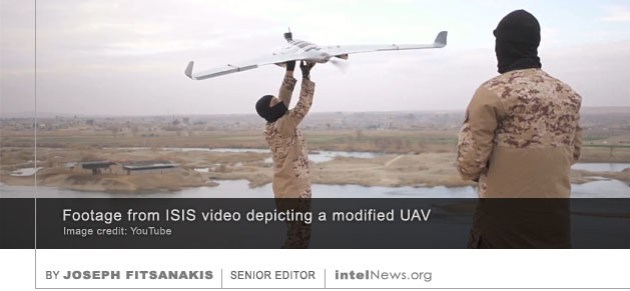
ISIS UAV droneDanish Police have announced the arrest of two men who attempted to procure unmanned aerial vehicles (UAVs) —commonly known as drones— on behalf of the Islamic State in Syria. In a press statement issued on Wednesday, Denmark’s State Police said it worked closely with the Danish Security and Intelligence Service (PET) to arrest the two men, as part of “a long-term investigation” that continues to take place in the Greater Copenhagen area.
According to the press statement, the two men are members of Danish-based Islamist groups and were known to police prior to their arrest this week. They are also believed to be part of a larger network of Islamist activists in the Scandinavian country who support the Islamic State —also known as the Islamic State of Iraq and Syria (ISIS). A police spokesman said on Wednesday that the case involves the “procurement and facilitation” of unmanned aerial vehicle components, “including drones, from Denmark to the Islamic State in Syria and Iraq”. The components were procured with the purpose of being used in reconnaissance and combat operations abroad by the militant group, he added.

This is the second time that Danish authorities have arrested individuals for attempting to procure drones and drone equipment for the Islamic State. A year ago, a 28-year-old man was charged with shipping disassembled drone equipment and infrared cameras to an address in Turkey. The shipped material was collected up by a Turkish couple who were Islamic State members and were arrested following an international police operation. The Islamic State has been using drones [.pdf] since October of 2016, when it deployed a bomb-laden UAV to kill two Kurdish soldiers. In January of last year, the militant group aired propaganda footage showing several cases of dropping bombs on adversary troops and civilians using specially modified drones.

The two men arrested this week are expected to appear in court on Thursday. It is believed that state prosecutors will request a closed-door hearing, since the investigation against the network of ISIS supporters in Denmark is ongoing.

Author: Joseph Fitsanakis | Date: 27 September 2018 | Permalink

Mossad identified Hamas drone expert as principal target ‘years ago’: expert

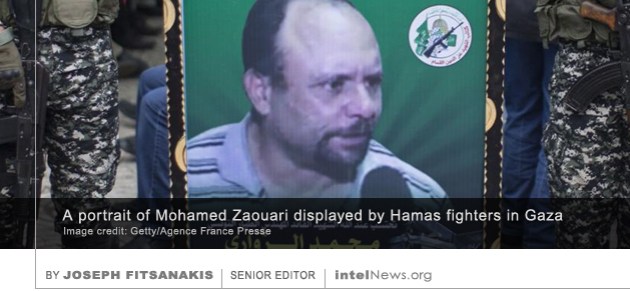
Mohamed ZaouariDespite persistent silence from Tel Aviv, commentators there seem increasingly convinced that Israeli spies were behind last week’s killing of an aviation engineer who worked for the Palestinian militant group Hamas. The man, Mohamed Zaouari, 49, was a Tunisian national who had spent over a decade creating an innovative aerial drone program for the Palestinian group that controls the Gaza Strip. He was reportedly shot dead outside his home in east-central Tunisia by an unidentified group of assailants carrying guns equipped with silencers. A statement issued on Saturday by the Qassam Brigades, the armed wing of Hamas, blamed Zaouari’s killing on the Mossad, Israel’s external intelligence agency.

Writing for the Israeli newspaper Yedioth Ahronoth, the veteran security correspondent Ronen Bergman said on Monday that Israeli spies had identified Zaouari “years ago” as a potential target. Bergman claims that Israeli intelligence agencies monitored Zaouari “as soon as he left Tunisia for [the Syrian capital] Damascus” over a decade ago. Eventually, the Israelis began to see Zaouari as a major contributor to efforts by Hamas and the Lebanese Shiite group Hezbollah to develop unmanned aerial vehicle programs. Through constant surveillance, Israeli intelligence was able to confirm that Zaouari was in regular contact with other Palestinian and Lebanese technical experts. The latter allegedly included Hassan Lakkis, a leading Hezbollah commander, who was one of the Shiite militant group’s primary weapons procurer and developer. Lakkis was killed on the evening of December 3, 2013, outside his home in Beirut, in circumstances that appear to be similar to last week’s killing of Zaouari in Tunisia.

Bergman argues that, if Israeli intelligence was indeed behind Zaouari’s killing, he was targeted because he was seen “as an increasingly dangerous element” and the Israelis believed that his death would cause Hamas “considerable damage”. The decision to target him in a distant location like Tunisia bore considerable risk, says Bergman, given that Zaouari was almost certainly aware that he was under threat from rival intelligence agencies and was taking precautions. Additionally, as the Mossad found out in the aftermath of the killing of Mahmoud al-Mabhouh in Dubai in 2010, the world is now “filled with cameras and biometric systems” that make covert operations dangerous. Consequently, these types of high-risk operations are reserved for principal targets whose removal will subtract strategic abilities from Israel’s adversaries. Bergman notes that, if Zaouari was killed by Israeli operatives, his death will mark one of the first major operations by the Mossad under the new leadership of Yossi Cohen, who was appointed as head of the secretive agency a year ago.

Author: Joseph Fitsanakis | Date: 20 December 2016 | Permalink

Hamas drone expert shot dead in Tunisia by assailants using gun silencers

Mohamed ZouariA senior aviation engineer who headed the unmanned aerial vehicle program of the Palestinian militant group Hamas, has been shot dead outside his home in Tunisia by a group of assailants using gun silencers. Mohamed Zaouari, 49, was a Tunisian national who had spent over a decade creating an innovative aerial drone program for Hamas, the Palestinian group that today controls the Gaza Strip. He had lived outside of Tunisia for much of his life, most recently in Syria, where he is believed to have worked as an engineer in a private firm, while also consulting with the Palestinian group. He had returned to Tunisia in 2011, following the upheaval in the country that sparked the so-called Arab Spring.
Zaouari was reportedly shot on Thursday in his hometown of Sfax, Tunisia’s second-largest city, located 170 miles southeast of the capital Tunis. Local media said he was shot dead at the wheel of his car, which was parked outside his home. His body was riddled with over 20 bullets, according to a police statement. On Friday, Tunisia’s Deputy Prosecutor General, Mourad Turki, said during a radio interview that several people are believed to have participated in Zaouari’s killing. Eight people had been arrested in connection with the crime, while at least two others were still at large, said Turki. All ten are believed to be Tunisian citizens. Among them is a woman, claiming to be a journalist, who has reportedly interviewed Zaouari in the past. She was allegedly arrested as she was boarding a flight from the Tunis-Carthage International Airport to the Hungarian capital Budapest. Additionally, officials from Tunisia’s Interior Ministry said that four rental vehicles had been seized in connection with Zaouari’s killing, and that two weapons equipped with silencers had been found in one of the vehicles.

A statement issued on Saturday by the Qassam Brigades, the armed wing of Hamas, said Zaouari had been a part of Hamas for a decade, and blamed his killing on the Mossad, Israel’s external intelligence agency. Hamas leaders said that Zaouari’s contribution to the organization would be celebrated during a specially designated “day of mourning”, and that his killing would be avenged. “The enemy must know the blood of the leader Zaouari will not go in vain”, said a statement issued by Hamas on Saturday. Israel has not responded to Hamas’ accusations. Tzachi Hanegbi, the Minister in the Prime Minister’s Office in charge of National Security and Foreign Affairs, said late on Saturday that Israel was “not connected” with Zaouari’s killing and added that “none of those people arrested are our allies”.

Author: Joseph Fitsanakis | Date: 19 December 2016 | Permalink

Obama authorizes Special Forces, CIA, to conduct assassinations in Syria

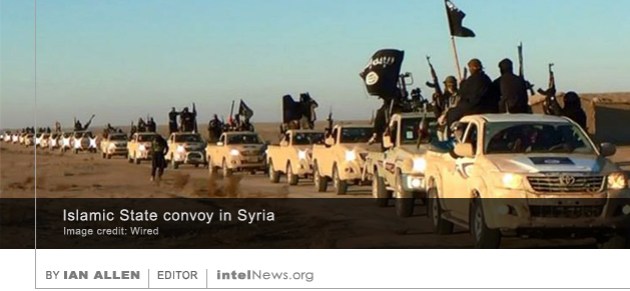
Islamic State convoy in SyriaThe United States Central Intelligence Agency is collaborating with the country’s Special Forces in a targeted killing program aimed against senior members of the Islamic State and other militant groups in Syria. The program, which has been directly authorized by US President Barack Obama, is limited in scope and has so far involved fewer than a dozen strikes against suspected militants. But it is believed to reflect increasing frustration in Washington about the lack of progress shown by the military campaign against the Islamic State. Recent reports by American intelligence agencies confirm that the militant group is “fundamentally no weaker” today than it was a year ago, despite an intense US-led bombing campaign involving thousands of airstrikes in Iraq and Syria.
The Washington Post, which revealed the existence of the program on Tuesday, said it brought together the CIA’s Counterterrorism Center (CTC) and the Joint Special Operations Command (JSOC). The CTC is believed to be primarily responsible for identifying and locating senior Islamic State figures in Syria, while the JSOC is in charge of killing them, mostly through the use of unmanned drones, according the paper. The two agencies continue to operate separate drone centers, said The Post, in Virginia and North Carolina respectively; but they have exchanged several of advisors who have constant access to each other’s drone video feeds.

The goal of the targeted killing program is to assassinate what the CIA refers to as “high-value targets”, which includes Islamic State leaders and those members of the organization whose job is to build a membership base outside the territorial boundaries or the Islamic State’s self-described caliphate. The Post said that the list of Islamic State members killed by the CIA-JSOC program includes Junaid Hussain, a British citizen who was instrumental in building and maintaining the Islamic State’s outreach campaign on social media. The paper noted that the CIA-JSOC targeted killing campaign is not part of the wider American military offensive against the Islamic State.

Author: Ian Allen | Date: 01 September 2015 | Permalink

CIA resumes drone strikes in Pakistan after six-month hiatus

Pakistan's Federally Administered Tribal AreasBy IAN ALLEN | intelNews.org
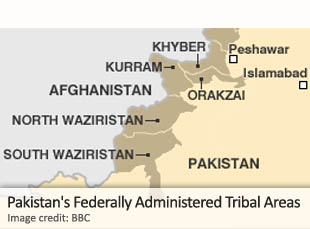
The United States Central Intelligence Agency appears to have resumed its targeted assassinations using unmanned aerial drones in Pakistan, following a nearly six-moth hiatus. The Agency launched its lethal drone program in Afghanistan and Pakistan in 2004, and intensified it in 2008 under the supervision of US President George Bush, who then passed it on to his successor, Barack Obama. Nearly 400 strikes on Pakistani soil have been attributed to the CIA in the past decade, which have killed in excess of 3,000 militants and civilians by some estimates. But, in an unprecedented move, Washington completely seized carrying out airstrikes on Pakistani soil after December 25 of last year. That changed on Wednesday, June 11, when several powerful missiles landed outside a house located a few miles outside of Miramshah, in Pakistan’s North Wazieristan Province. The area is an operational stronghold of Pakistan’s most powerful armed militant group, the Pakistani Talban, and its close affiliate, the Haqqani Network. The air strikes took out a number of vehicles that were allegedly filled with explosives and killed at least 16 people, including alleged Taliban and Haqqani commanders, as well as, reportedly, members of the Islamic Movement of Uzbekistan (IMU). Washington said that those targeted were on their way to conduct cross-border raids in Afghanistan when they were killed. As it always does in these instances, Pakistan’s Ministry of Foreign Affairs condemned the strikes as violations of the country’s sovereignty. But reports in the Pakistani media claimed that Washington had sought and received Islamabad’s approval prior to launching last week’s attacks. What prompted the change in policy? According to one local observer, the CIA had agreed to stop its aerial attacks after it was asked to do so by the government of Pakistan, which has been engaged in peace talks with the Taliban for several months. But these talks collapsed following the June 6 suicide attack on Karachi’s Jinnah International Airport by the Taliban and the IMU, which killed 36 people, including all 10 attackers. Read more of this post

Pakistan secretly helped CIA drone strikes (act surprised)

Predator droneBy JOSEPH FITSANAKIS | intelNews.org |
For many years, Pakistan’s main spy agency secretly helped the United States launch hundreds of unmanned drone strikes on Pakistani soil, while the government in Islamabad publicly denounced them as infringements on its sovereignty. The US-based McClatchy news agency said on Tuesday it had uncovered the behind-the-scenes collaboration while reviewing “copies of top-secret US intelligence reports”. In an article published on its website, the news agency said the copies of the documents in its possession covered most of the unmanned drone strikes conducted on Pakistani soil by the US Central Intelligence Agency in the years 2006 to 2008 and 2010 to 2011. The documents allegedly show that nearly every strike had been approved by the Inter-Services Intelligence Directorate (ISI), Pakistan’s powerful spy agency run by the military. According to the McClatchy report, so close was the cooperation between the CIA and the ISI that the Pakistanis were even able to add some of their own targets to the CIA’s list of suspected militants for killing. This arrangement was arrived at during the early years of the administration of US President George W. Bush, when the bilateral cooperation between the two spy agencies reached its pinnacle. The report notes, however, that it is difficult to discern whether Pakistani civilian officials, who have been routinely denouncing the CIA unmanned drone strikes as illegal, have been aware of the full extent of the operational collusion between the ISI and the CIA. Technically, the ISI is supposed to operate under the control of Pakistan’s civilian leadership. In reality, however, the secretive intelligence agency is firmly under the control of the country’s military establishment. Read more of this post

Al-Qaeda manual on how to deceive unmanned drones found in Mali

AQIM forces in MaliBy JOSEPH FITSANAKIS | intelNews.org |
A detailed manual with instructions on how to defeat the surveillance capabilities of unmanned drones has been found in a former al-Qaeda hideout in northern Mali. International news agency The Associated Press said the photocopied document, which is written in Arabic, had been left behind in a building previously occupied by members of Al-Qaeda in the Islamic Maghreb (AQIM). The militants abandoned the document while fleeing into the Sahara desert, ahead of a French military advance on the town of Timbuktu. The document is believed to have been authored by Abdallah bin Muhammad, the operational name of a Yemeni militant serving as a senior commander in the Al-Qaeda in the Arabian Peninsula (AQAP). Its earliest known date of publication is June 2, 2011, on an online Islamist forum. Since that time, it has reappeared at least three times, all in Arabic, according to The Associated Press. The version of the manual found in Mali contains nearly two dozen detailed tips on how to deceive unmanned drones. One tip advises covering the tops of vehicles with floor mats made of hay or other natural-looking material, in an effort to confuse aerial surveillance systems. Another tip proposes camouflaging the roofs of buildings with the use of reflective glass, so as to render them invisible to aerial surveillance. A third suggestion is to mix sugar with water and dirt and apply the sticky mixture onto the body of vehicles, in order to confuse the imagery sensors of unmanned drones. Read more of this post

News you may have missed #780

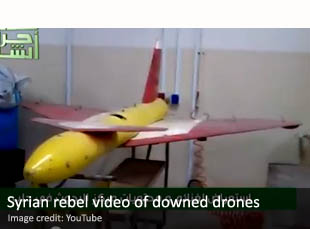
Syrian rebel video of downed dronesBy IAN ALLEN | intelNews.org |
►►Israeli Prime Minister rebukes President’s Iran comments. Aides to Israeli Prime Minister Benjamin Netanyahu launched a stinging rebuke to the country’s president, Shimon Peres, after he said that Israel should not act alone in launching military action against Iran’s nuclear program. In an interview on Israeli television, Peres said: “It is clear to us we cannot do it on our own. We can only delay [Iran’s progress]. Thus it’s clear to us that we need to go together with America”. Officials from Netanyahu’s office were quoted in the Israeli media as saying: “Shimon Peres forgets what the role of the president of Israel is”. The row is a stark example of the sharp differences at the heart of Israel’s political, military and intelligence establishment over the merits and dangers of an early unilateral military strike on Iran.
►►Russian embassy in UK alleges attack by Syrian activists. Russia’s embassy in London accused British police on Friday of taking no action to prevent an attack on its building by a group of activists protesting Moscow’s support for Syrian President Bashar al-Assad. It made the accusation as about 40 protesters clad in balaclavas demonstrated outside the embassy, located in an upscale part of London, against the verdict in a trial of the Russian feminist punk band Pussy Riot in Moscow. An embassy spokesman said a group of protesters chanting anti-Assad slogans attacked the building overnight, throwing stones and smashing windows.
►►Syrian rebels put captured Iranian drones on YouTube. The opposition to Bashar al-Assad says it’s captured spy drones made by Assad’s patron, Iran. And it’s put the evidence on YouTube. In the video, Syrian rebels show off three smallish, unarmed surveillance drones they say they downed. The two larger drones appear to be variants of Iran’s homemade Ababil, or Swallow, surveillance aircraft. All three show signs of damage, with the tiny drone’s nose cone looking to have taken the worst, and alongside the drones are pamphlets displaying the face of the dead Iranian ayatollah Ruhollah Khomeini. It’s yet more evidence that Iran considers Syria’s civil war to be a proxy contest with much at stake for their influence in the region.

Turkish officials see link between Israel and Kurdish rebels

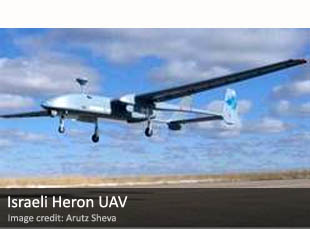
Israeli Heron UAVBy JOSEPH FITSANAKIS | intelNews.org |
Turkish intelligence agencies have authored a report detailing alleged Israeli assistance to Kurdish rebels, whose goal is to secede from Turkey and create an independent Kurdish homeland, according to a leading Turkish newspaper. The Ankara-based Zaman said the intelligence report was commissioned after Turkish forces detected Israeli unmanned aerial vehicles (UAVs) conducting reconnaissance missions over Turkey. The paper, which is tacitly affiliated with Turkey’s ruling Justice and Development Party, said the UAVs were spotted flying over Turkey’s Adana and Hatay provinces, both of which are adjacent to Turkey’s border with Syria. As intelNews reported last August, Turkey’s main intelligence directorate, the MİT, is convinced that the Syrian government of Bashar al-Assad has increased its clandestine support for the largest Kurdish secessionist group, the Kurdistan Workers Party (PKK), in an attempt to court Syria’s 500,000-strong Kurdish minority. According to the Zaman news report, airborne intelligence collected by Israeli Heron UAVs is shared with PKK guerrillas, who then use it to construct training bases in Syrian border regions. This explains, claims the paper, why most PKK training bases in Syria are located “in areas that are known to be weak spots for the Turkish military”. The report also claims that Turkish intelligence has verified that senior PKK military commander Kenan Yıldızbakan has visited Israel “several times” in recent months. Yildizbakan is believed to have commanded a brazen PKK assault on a Turkish naval base in İskenderun in 2010, which killed seven and wounded four members of the Turkish armed forces. Read more of this post

South Korea to buy from France, after US delays sale of spy planes

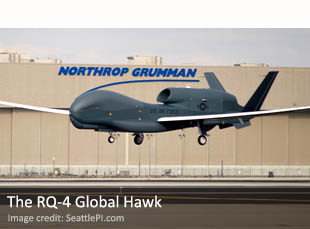
RQ-4 Global HawkBy JOSEPH FITSANAKIS | intelNews.org |
The United States has unexpectedly delayed a previously agreed sale of spy drones to South Korea, prompting the Asian country to announce it will begin purchasing spy planes from France. The South Korean military has been under increasing pressure to improve its intelligence reconnaissance capabilities since last year, when North Korean forces opened fire at South Korea’s Big Yeonpyeong island, killing four and injuring over a dozen people. But an earlier agreement with Washington to supply Seoul with RQ-4 Global Hawk high-altitude surveillance spy planes, appears to have been derailed, after the Pentagon failed to approve the sale. South Korea’s state-run Yonhap news agency quoted an anonymous “government source” who said that Seoul had expected to receive the unmanned drones, built by US defense contractor Northrop Grumman, by 2015. But the sale cannot be completed without official approval by the US Department of Defense, which “has yet to send a letter of agreement” for the planned transaction. The South Korean government source did not explain why the US government appears to be backing out of the deal. But US sources tell intelNews that Washington’s move may be “of a punitive nature”, intended to penalize South Korea for challenging Northrop Grumman’s actions in the Korean Peninsula. IntelNews readers may remember a little-reported incident in November of 2009, when the government in Seoul ordered the arrest of two former South Korean army colonels, identified only as “Hwang” and “Ryu”, for allegedly leaking South Korean defense secrets to Northrop Grumman. The two worked for the Security Management Institute, a Seoul-based intelligence think-tank with strong connections to South Korea’s armed forces. According to the indictment by the prosecutor, Hwang and Ryu gave Northrop Grumman classified information on hardware purchase plans and operations of South Korea’s navy and coast guard. Read more of this post

US use of stealth spy drones in Afghanistan raises questions

RQ-170 Sentinel

RQ-170 Sentinel

By IAN ALLEN | intelNews.org |

On December 6, we posted a link to a photo of what appeared to be a classified US drone aircraft, which was published on a blog belonging to French newspaper Libération. Then, unexpectedly, on December 8, the US Air Force admitted that the mystery aircraft, dubbed ‘the Beast of Kandahar’ by aviation spotters, is the RQ-170 Sentinel, an unmanned, unarmed surveillance and reconnaissance drone with stealth capabilities, that is officially still in production by US defense contractor Lockheed Martin. That’s all well and fine. But the question is: why would the US be using a stealth drone against the Taliban in Afghanistan, who have no known antiaircraft radar systems, and are therefore unable to track enemy surveillance planes? Read more of this post

How many spy drones did Russia purchase from Israel?

MK II UAV

MK II UAV

By IAN ALLEN | intelNews.org |

Back in April, intelNews reported on a $53 million agreement between Russia and Israel to provide Moscow with three Israeli-made intelligence-gathering drones. Much was made at the time of the purchase of those unmanned aerial vehicles (UAVs), which was interpreted as an indirect admission by Moscow that its armed forces severely lacked aerial intelligence. The purchase of the three Israel-made drones was reportedly designed to cover immediate needs, while the Russians were working on a plan to start building their own UAVs. It turns out, however, that neither the Israelis nor the Russians were quite upfront in their public announcement of the deal. Last April the two sides said that Russia would receive “three unmanned aircraft” from Israel Aerospace Industries (IAI). In reality, $53 million is much too high a fee to purchase just three UAVs. This puzzled Washington, which does not want to see Russia improve its aerial reconnaissance capabilities. The US Pentagon thus sought –and subsequently received– assurances from Israel that it was not planning to sell Moscow its state-of-the art, super-expensive Heron UAV model. But the Americans were correct to be suspicious of the high cost of the deal. Russian media now reports that the Russians will be receiving, not three, but twelve UAVs for their $53 million. Read more of this post