Countries using Eastern Europe to flood Syria with weapons, study finds
July 29, 2016 3 Comments
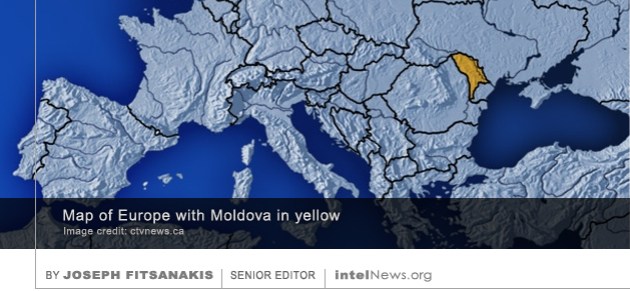
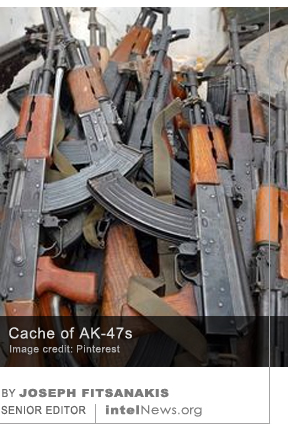 Unprecedented quantities of weapons and ammunition worth in nearly $1.5 billion have been procured from Eastern Europe and sent to Syria to arm nearly every side in the ongoing civil war, a study has found. The weapons are transported through the Balkans and sold legally to countries bordering Syria, including Jordan, Saudi Arabia and Turkey. Once there, they are secretly transported to Syria for use in the bloody five-year civil war, which has so far killed or displaced millions. The revelation resulted from a year-long investigative project by the Serbia-based Balkan Investigative Reporting Network (BIRN) in the Organised Crime and Corruption Reporting Project (OCCRP) in Bosnia.
The probe found that the weapons transferred to the Middle East include heavy machine guns, rocket and mortar launchers and shells, anti-tank weapons, as well as thousands of assault rifles and rounds of ammunition. Many originate from Ukraine, Belarus and the former Yugoslavia and are procured by companies in eight Eastern European countries including Bulgaria, Slovakia, Romania, the Czech Republic, Montenegro, and Bosnia. The governments of these countries give the companies permission to sell weapons to Middle Eastern countries, even though it is informally understood that they will eventually end up in Syria, in contravention of international agreements.
Investigators say the smuggled weapons have been traced to various factions fighting in Syria, primarily the Free Syrian Army, which is fighting against the government of Syrian President Bashar al-Assad. But many have ended up in the hands of Islamist militias, including the Islamic State, Ansar al-Islam, and the group formerly known as Jabhat al-Nusra. Some of the weapons have also surfaced in Yemen, in the hands of Sunni fighters there. According to the probe’s findings, Middle Eastern countries like Turkey, Jordan or Saudi Arabia, whose militaries use Western-made weaponry, were never large purchasers of Eastern European weapons. But that quickly changed in 2012, as the Syrian Civil War picked up pace.
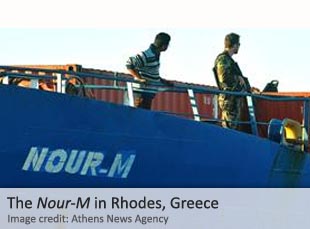
According to British newspaper The Guardian, which published some of the findings of the BIRN-OCCRP report, the United States has used this weapons-smuggling channel as a way to arm Syrian opposition forces. The study found that, since December of last year, the US military’s Joint Special Operations Command has commissioned at least three cargo ships that left ports in the Black Sea for the Middle East carrying weapons for Syria. Regular intelNews readers will remember a report from November 2013, according to which the Greek authorities seized a ship that had left Ukraine heading for Syria or Libya, carrying 20,000 AK-47s, as well as explosives and ammunition. Two years later, in November 2015, we reported on allegations that Ukraine may be secretly arming the Islamic State in an effort to impair its regional foe, Russia.
► Author: Joseph Fitsanakis | Date: 29 July 2016 | Permalink
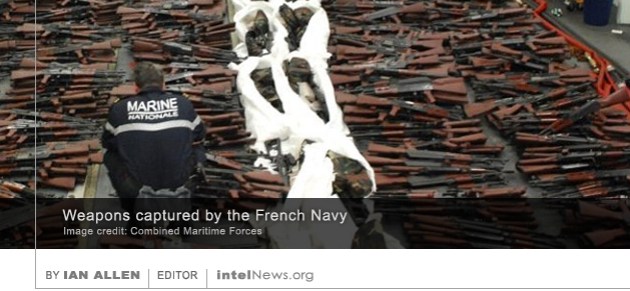 The United States says a ship carrying hundreds of weapons, which was captured by the French Navy in the Indian Ocean, originated from Iran, and that the cargo was destined for Yemeni rebels through Somalia. The ship was seized on March 20 by a French warship patrolling the Indian Ocean as part of the Combined Maritime Forces (CMF). The CMF is a multinational naval fleet that aims to implement United Nations sanctions on Somalia. The sanctions are designed to frustrate the activities of al-Shabaab, an al-Qaeda-linked Somali militant group, and to put an end to maritime piracy in the Horn of Africa.
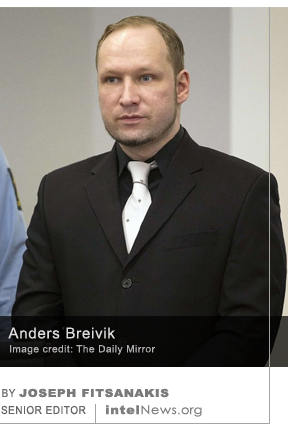 Police in Germany caught Anders Breivik with ammunition and weapon parts in 2009, two years before he killed nearly 80 people in Norway, but did not arrest him and failed to notify Norwegian police, according to a new documentary. Breivik is a jailed far-right terrorist, who in 2011 single-handedly perpetrated two terrorist attacks that killed 8 people in Norwegian capital Oslo and another 69 on the island of Utøya. During his trial, he said he killed his victims, most of whom were participants at a Norwegian Labor Party summer camp, in order to protest against “multi-culturalism” and “Islamization” in Norway. The attack, which included the use of a car bomb and semi-automatic weapons, is considered the deadliest terrorist incident in Norway’s history since World War II.
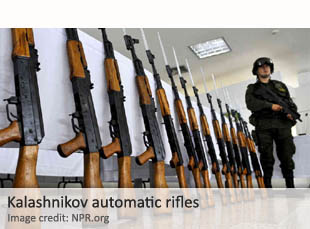
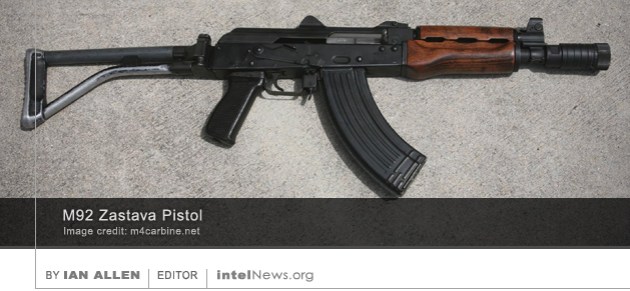 One of the guns used by Islamist militants to attack locations in downtown Paris on November 13 was purchased legally through a dealer in the United States, according to a report by the Associated Press. Investigators have confirmed that several of the weapons used in the attack, which killed 130 and injured hundreds more, were manufactured in Serbia. Most are slightly modified versions of the Soviet-era AK-47, known in the West as “shortened Kalashnikov”. All were produced in a weapons factory called Zastava, which is located in the city of Kragujevac, in central Serbia. They were made in the 1980s and sold within the former Yugoslavia.
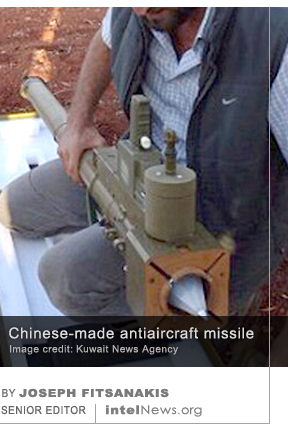 Significant amounts of Ukrainian-manufactured weapons are ending up in the hands of the Islamic State, prompting accusations that Kiev may be arming the militant group in an effort to impair its regional foe Russia. Persisting rumors that Ukraine may be secretly arming the Islamic State —also known as the Islamic State of Iraq and Syria, or ISIS— resurfaced last week, when authorities in Kuwait
  The United States Federal Bureau of Investigation is assisting authorities in some of Europe’s poorest states in their efforts to stop criminals with Russian connections from selling radioactive material to foreign terrorist organizations. The Associated Press










Notorious Russian arms dealer ‘refused US offer for lighter sentence’
August 10, 2016 by Joseph Fitsanakis 1 Comment
In a newspaper interview on Tuesday, Bout’s wife, Alla Bout, said her husband could have gotten away with a considerably lighter sentence had he agreed to testify against a senior Russian government official. Speaking to Moscow-based daily Izvestia, Alla Bout said her husband had been approached by American authorities after being extradited to the United States from Thailand. He was told that US authorities wanted him to testify against Igor Sechin, a powerful Russian government official, whom American prosecutors believed was Bout’s boss. In return for his testimony, US prosecutors allegedly promised a jail sentence that would not exceed two years, as well as political asylum for him and his family following his release from prison. Alla Bout added that her husband’s American lawyers were told by the prosecution that the ‘merchant of death’ “would be able to live in the US comfortably, along with his wife and daughter”, and that his family could stay in America during his trial “under conditions”. Alla Bout claimed she was told this by Bout himself and by members of his American legal team.
From 2008 to 2012, Sechin, who has military background, served as Russia’s Deputy Prime Minister. Today he heads the Board of Directors of Rosneft, a government-owned oil extraction and refinement company, which is considered one of the world’s most powerful business ventures. Many observers see Sechin as the most formidable man in Russia after Russian President Vladimir Putin. He is also believed to be a senior member of the Siloviki, a secretive group of government officials in the Putin government who have prior careers in national security or intelligence. Although Bout and Sechin have never acknowledged having met each other, some investigators of Bout’s weapons-trading activities believe that the two were close allies. It is believed that the two men first met in Angola and Mozambique in the 1980s, where they were stationed while serving in the Soviet military. But the two men deny they knowing each other. According to Alla Bout, Viktor told his American captors that he “never worked for Sechin and did not know him in person”. He therefore turned down the prosecution’s offer and was handed a 25-year sentence. When asked by the Izvestia reporters whether Bout was simply protecting the powerful Russian government official, Alla Bout insisted that the two “have never even met, not once”.
► Author: Joseph Fitsanakis | Date: 10 August 2016 | Permalink
Filed under Expert news and commentary on intelligence, espionage, spies and spying Tagged with Alla Bout, extraditions, Igor Sechin, News, Russia, United States, Viktor Bout, weapons smuggling, weapons trade