Iran secretly sold ‘untold quantities’ of ammo to African warring groups

Two of the 'mystery cartridges'By JOSEPH FITSANAKIS | intelNews.org |
An independent report has concluded that some of Africa’s most brutal conflicts are currently being fuelled by “untold quantities” of Iranian-manufactured small-arms ammunition. The ire of weapons-trafficking researchers is usually directed at the ‘heavyweights’ of the global arms-trade, including Russia, China, the United States, and France, among other countries. It appears, however, that Iran’s state-owned weapons manufacturer has been selling ammunition throughout Africa since at least 2006 via a secret network of distributors. According to The New York Times, a group of arms-trafficking experts from the United Nations, Amnesty International, the Federation of American Scientists, and other bodies, has found that Iran began selling ammunition to African clients in 2006 or earlier. On that year, a new brand of ammunition rounds for Kalashnikov assault rifles started appearing in armed clashes in Kenya, Uganda, and Darfur (now South Sudan). By 2010, the same type of cartridges had been found in Guinea, Ivory Coast and the Democratic Republic of Congo. More recently, says The Times, similar cartridges were discovered in the hands of groups in Niger connected with Al-Qaeda in the Islamic Maghreb. Suspiciously, the cartridges bore no factory code and their packaging had been deliberately constructed to obscure the identity of the manufacturer. However, according to the expert study, it is now considered “beyond dispute” that the Ammunition and Metallurgy Industries Group, a subsidiary of Iran’s state-owned and operated Defense Industries Organization, is the source of the mysterious cartridges. It is worth pointing out that many of the governments or militias that have been found to use Iranian ammunition are officially subject to UN resolutions that bar arms transfers to the countries or territories in which they operate. Read more of this post

News you may have missed #798

Alexander LitvinenkoBy IAN ALLEN | intelNews.org |
►►Britain to hold inquest over death of ex-KGB officer. Britain and Russia appear to be on a collision course over the death of Alexander Litvinenko, a former Russian intelligence officer who died in 2006 after ingesting polonium-210, a rare radioactive isotope. Britain’s Crown Prosecution Service has accused Andrei Lugovoi and Dmitry Kovtun, both former KGB agents, for the death of Litvinenko. Russia has refused British requests to extradite the two, leading to a row with Moscow and the tit-for-tat expulsion of Russian and British diplomats. Until now, the British Foreign Office had attempted to limit the scope of an inquest into the death of Litvinenko, fearing further diplomatic fallout. But coroner Sir Robert Owen said last week that he endorsed a previous ruling by his predecessor in the case, Andrew Reid, that there should be an “open and fearless” investigation into the matter.
►►Ex-CIA operative who illegally sold arms to Libya dies. Edwin P. Wilson, a former CIA officer who was convicted in 1983 for illegally shipping 20 tons of C4 plastc explosives to Libya, has died aged 84. In his trial he claimed he had shipped the weapons to Libya at the request of the CIA, because, as he said, the agency was trying to establish good relations with the Libyan government. But the court did not buy his story, so he spent over 20 years in prison, mostly in solitary confinement, until his release in 2004. He maintained his innocence to the very end.
►►Analysis: Libya an opportunity for CIA if it sticks around. The attack in Benghazi, Libya, that killed four Americans, including a US ambassador and two former Navy SEALs, has led Americans to vacate Benghazi for their safety, even though various militant groups continue their operations. It is a disaster for US intelligence efforts in the region, especially since the attack has made brutally clear how real the jihadi threat in eastern Libya remains. But there may be the smallest of silver linings to this black cloud, if American operatives are able to capitalize on it. The aftermath of the attack shows widespread displeasure with Benghazi’s jihadist groups, with thousands marching in protest. That is an opportunity the CIA could use to rebuild its intelligence gathering.

Blackwater/Academi settles weapons-smuggling charges

Blackwater/Academi headquartersBy JOSEPH FITSANAKIS | intelNews.org |
In the eyes of many, the United States-based security firm formerly known as Blackwater is synonymous with ‘scandal’. Founded in 1997 by self-confessed CIA agent Erik Prince, the company was awarded hundreds of millions of dollars in non-competitive contract bids by the Bush administration, to provide wide-ranging security services in Iraq. But the company’s ‘shoot-first-ask-questions-later’ attitude resulted in numerous bloody incidents in the country, including the 2007 Nisur Square massacre, in which at least 14 Iraqi civilians were killed by trigger-happy Blackwater guards. In 2009, a frustrated US Department of State refused to renew the company’s governmental contracts, after which Blackwater terminated its partnership with the US government (or did it?). What is perhaps less known about the company, now renamed to Academi LLC, is that it has for years been the subject of several investigations by US authorities for a host of criminal offences, ranging from selling secret plans to foreign governments to illicit weapons trafficking. According to court documents unsealed yesterday at the United States District Court in New Bern, North Carolina, Academi has agreed to pay $7.5 million to settle some of these charges. Under the agreement, the company has owned up to 17 different criminal violations with which it was charged after a five-year multi-agency federal investigation led by the Department of Justice. The charges include possessing unregistered fully automatic weapons in the US, illegally exporting encrypted satellite-telephone hardware to Sudan, training foreign nationals without a license, giving classified documents to foreign governments, as well as selling weapons to the Kingdom of Jordan without US government authorization and then lying about it to US federal firearms officials. Read more of this post

News you may have missed #753

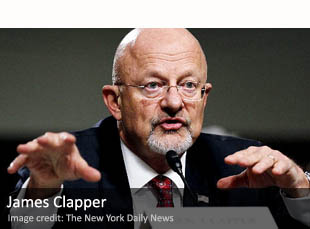
James ClapperBy IAN ALLEN | intelNews.org |

►►US spy agencies consider new polygraph questions. The US Director of National Intelligence, James Clapper, is considering a proposal to force intelligence agency employees to answer a direct question in their polygraph examinations about whether they have disclosed information to reporters. The Los Angeles Times quotes “officials familiar with the matter”, who say that Clapper is preparing “changes to the counterintelligence polygraph policy”, though “no final decisions have been made”.
►►Ex-“New Republic” editor speaks out against Pollard release. Few American journals can claim to have stood more staunchly by Israel than The New Republic. So we should be paying attention when Martin Peretz, who edited the magazine from 1974 until 2011, comes out against the proposed release of Jonathan Jay Pollard. Pollard is a former US Navy analyst, who is serving a life sentence for spying on the US for Israel. Peretz calls Pollard “a scoundrel spy” and reminds his readers that “before he decided to deliver reams of sensitive [US] intelligence and defense documents to Israel’s security apparatus, [Pollard] was negotiating with Pakistan […] to do similar chores for it”.
►►UK leader considered using special forces to seize Russian ship. British Prime Minister David Cameron considered ordering British special forces to board and impound a Russian ship suspected of carrying arms to Russian ally Syria, it has emerged. The ship, MV Alaed, was sailing in British waters when the US placed pressure on Britain to halt it. But the Russian ship suddenly changed course about 50 miles off the north coast of Scotland and it is showing that its next port of call is Murmansk, in Russia.

CIA helping Turkey, Saudi Arabia, smuggle weapons into Syria: sources

Turkish-Syrian borderBy JOSEPH FITSANAKIS | intelNews.org |
A growing team of United States Central Intelligence Agency personnel is currently in Turkey overseeing a multinational effort to secretly deliver weapons to Syrian anti-government rebels, according to The New York Times. Quoting “American officials and Arab intelligence officers”, the paper said last week that the weapons are being smuggled into Syria primarily through the Turkish border. The financial cost of smuggling into Syria such weapons as antitank explosives, rocket-propelled grenades, and automatic rifles, has so far been covered by the governments of Turkey, Qatar and Saudi Arabia, according to the article. The funds are partly required to bribe members of what The Times describes as “a shadowy network of intermediaries”, which reportedly includes forces loyal to the Syrian Muslim Brotherhood. The latter is a Sunni group that is widely viewed as the most dominant of the anti-government factions that make up the rebel side in the ongoing Syrian uprising. The paper quotes an “Arab intelligence official”, who says the CIA contingent in Turkey “is trying to make new sources and recruit people” along the porous Turkish-Syrian border. But its presence in the volatile region, which has been constant for “several weeks”, according to The Times, is also aimed at keeping the smuggled weapons out of the reach of Syrian anti-government forces that are allied with militant Islamist groups, including al-Qaeda. The article notes that American support for the Syrian rebels has been minimal, when compared with that in Libya in 2011, mostly because of staunch Russian support for the government forces of Syrian president Bashar al-Assad. Read more of this post

Car explosion in Port Sudan linked to Israel

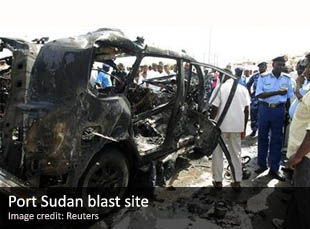
Blast site in Port SudanBy IAN ALLEN | intelNews.org |

A powerful car explosion, which rocked Sudan’s main port on Tuesday, killing one person, has been linked to Israel by Sudanese government officials. The car was blown up by what appears to have been a missile attack, in Port Sudan, a city of over half a million people on the Red Sea. A local reporter told Reuters news agency that the blast site featured “two small but deep holes” and “another hole beneath” what was left of the gutted car. Many observers consider Port Sudan, an ancient city that has traditionally connected Sudan with Egypt in the north and Saudi Arabia across the Red Sea, as a major link in the complex smuggling network that supplies goods and weapons to the Gaza Strip. Israel has long asserted that the smuggled items are secretly carried from Port Sudan into Egypt, before eventually ending up in the Palestinian enclave that is controlled by militant group Hamas. The government of Sudan vehemently denies these charges. But a “local security source” in Port Sudan told Reuters that the car’s driver, Nasser Awadallah Ahmed Said, who was killed in the blast, was an eminent member of the Red Sea’s Ababda Bedouin tribe, whose members have a long history of smuggling weapons and goods to and from Sudan. Speaking on Tuesday, Sudan’s Minister of Foreign Affairs, Ali Ahmed Karti, stopped just short of directly fingering Israel as the culprit of the attack. Karti, who is Sudan’s most senior government official to have so far commented on the blast, told local news media that “the style of the car explosion was similar to Israel’s attack on [Sudan’s] Red Sea State [province] last year”. He was referring to a similar incident that took place in April of last year in the very same province where Port Sudan is located. At that time, Khartoum directly blamed Israel for the strike. Read more of this post

Is US considering transferring convicted arms smuggler to Russia?

Viktor BoutBy JOSEPH FITSANAKIS | intelNews.org |
Former Soviet military intelligence officer Viktor Bout is one of the world’s most notorious weapons dealers. In 2008, Bout, known informally as ‘the merchant of death’, was finally arrested in Bangkok by the United States Drug Enforcement Administration, with the cooperation of the Royal Thai Police. He was eventually extradited to the US and convicted to a 25-year prison term, which he is serving at the Brooklyn Metropolitan Detention Center in New York. Last week, it emerged that the US Bureau of Prisons was about to transfer Bout to the Florence Federal Correctional Facility in Colorado. Widely referred to as ‘Supermax’, the Florence facility houses some of America’s most notorious prison inmates. It seems a proper fit for someone like Bout, who for decades supplied weapons to African warlords, who is accused by the United States of having supplied weapons to the Taliban, and who was arrested while trying to sell arms to the Revolutionary Armed Forces of Colombia (FARC). On Tuesday, however, it was suddenly reported that the Bureau had decided to delay Bout’s transfer to Supermax. Bout’s attorney, Albert Y. Dayan, said he had been notified in a letter that the Bureau was “re-evaluating where to send Bout” and that it was “reconsidering its plan” to send the notorious weapons merchant to the Colorado maximum security facility. As might be expected, Dayan called the news “a credit [to] the Bureau of Prisons and the US Attorney’s office”; but the question, of course, is why did the Bureau decide on the delay, and what does the US Department of Justice know about it? The answer could perhaps be found in an interview given on Wednesday by no other than the US Attorney General, Eric Holder. Read more of this post

News you may have missed #706

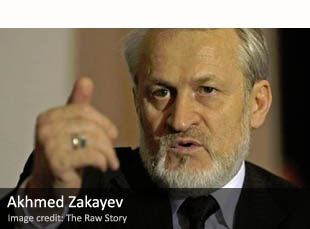
Akhmed ZakayevBy IAN ALLEN | intelNews.org |

►►UK government accuses Chechen of assassination plot. The British government and intelligence services have accused an alleged henchman of Chechen President Ramzan Kadyrov of seeking to assassinate Akhmed Zakayev, a prominent exiled Chechen politician in London, who was granted asylum there in 2003. According to court documents, British government lawyers asking to deport a 45-year-old, Chechen-born, former elite soldier, referred to only as E1. They told judges that E1 was a threat to national security and had been implicated in a 2009 assassination on behalf of Mr Kadyrov in Vienna. Mr Zakayev, a former actor and self-described separatist leader, said in a recent interview that he believed “there are more Russian spies in Britain today than there were during the Cold War”.
►►Israeli ex-soldiers arrested in Colombia on drugs charges. Eight Israelis have been arrested in Colombia on suspicion of drug trafficking, money laundering and exploitation of minors, the country’s chief prosecutor has told local media outlets. The suspects, who were described in the reports as “former military men”, include former Israeli army Lt. Col. Yair Klein, who was convicted by a Colombian court and sentenced in absentia to nearly 11 years in prison for training drug traffickers’ assassins in the late 1980s. US and British investigations determined two decades ago that Klein was also involved in smuggling 400 Galil assault rifles and 100 Uzi sub-machine guns bought from Israeli into Colombia in 1989 when his plans to create a mercenary-ran training camp on the Caribbean island of Antigua unraveled.
►►Lawyer alleges MI6 agent was killed by ‘secret services’. A coroner has been told that Gareth Williams, an MI6 spy found dead inside a locked duffle bag in his London apartment could have been killed by someone who specialized in “the dark arts of the secret services”. The allegation was made by Anthony O’Toole, who represented the Williams family at an interim hearing ahead of the full inquest into Gareth Williams’ death. O’Toole said that there was “a high probability that there was a third party present in the flat” at the time. He added that “the unknown third party was a member of some agency specializing in the dark arts of the secret services, and perhaps evidence was removed from the scene post mortem by an expert in those dark arts”.

US denies arms dealer’s release is part of swap deal with Iran

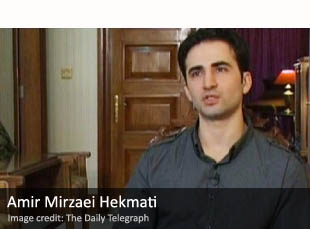
Amir Mirzaei HekmatiBy JOSEPH FITSANAKIS| intelNews.org |
The United States government has denied that the quiet release and deportation of an Iranian arms dealer is part of a secret deal to swap imprisoned agents with Iran. A US State Department spokesman confirmed on Tuesday that Iranian citizen and convicted arms smuggler Amir Hossein Ardebili had been released from US custody and was on his way back to Iran. Ardebili was captured and abducted by US government operatives in the Republic of Georgia in 2007, during a controversial sting operation. His abduction was the culmination of a three-year-long sting operation, during which he allegedly tried to arrange a clandestine shipment of sensitive military technology from the US to Iran. He was eventually extradited to the US in 2008, and sentenced the following year to five years in prison, for operating as an “arms acquisitions agent for the government of Iran”. Last month, however, he was discretely released from prison in Minnesota and handed over to US Immigration and Customs Enforcement for deportation. US State Department spokesman Noel Clay said that Ardebili was on his way to Tehran via Europe, because he had “completed serving his criminal sentence and has no legal immigration status in this country”. The spokesman also pointed out that Ardebili’s five-year prison sentence was meant to include the nearly two years he spent in Georgian and US detention, prior to his 2009 trial. But some observers, including Laura Rozen at Yahoo News, speculate that there might be a connection between Ardebili’s deportation and the reversal earlier this month of a death sentence imposed by a Tehran court on a former US marine captured in Iran on spy charges. Tehran recently announced that Amir Mirzaei Hekmati (pictured), from Arizona, who was captured in Iran while allegedly on a CIA mission, is to have his death sentence voided, and will face a retrial. Read more of this post

Afghanistan arrests British citizens with 30 unregistered AK-47s

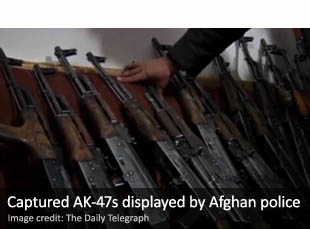
AK-47sBy JOSEPH FITSANAKIS | intelNews.org |
Afghan authorities have announced the arrest of two British citizens who were found carrying 30 unregistered weapons without proper documentation. The two Britons, who have been identified as Julian Steele and James Davis, were stopped by Afghan police on Tuesday, January 3, at a checkpoint in the eastern suburbs of Afghan capital Kabul. The city’s police chief, Ayub Salangi, told the BBC that the two were arrested along with their Afghan interpreter and a local driver, after authorities discovered two metal boxes containing 30 AK-47s hidden under a blanket in their car. Moreover, most of the weapons had their serial numbers erased, and Steele and Davis were unable to produce registration documentation for the guns when asked to do so. When pressured, they told Afghan police that they worked for GardaWorld, an international security-consulting firm based in Montreal, Canada, with offices in the United States, Britain and the United Arab Emirates. GardaWorld, which is known to be currently active in Iraq, Pakistan, Haiti and Yemen, is thought to employ approximately 330 ‘bodyguards’ in Afghanistan, including around 30 foreign citizens. Strangely, however, GardaWorld, like every other private security firm operating in Afghanistan, is required by law to acquire all of its weapons from Afghanistan’s Ministry of the Interior. Furthermore, private security companies active in Afghanistan are not allowed to handle weapons without serial numbers, which is usually considered evidence of a black market connection. Read more of this post

US gave N. Ireland police weapons, spy equipment, despite Congress ban

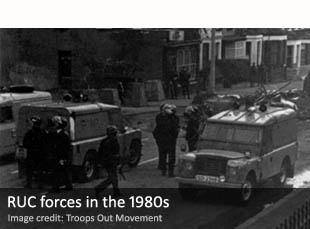
Royal Ulster Constabulary forces in the 1980sBy JOSEPH FITSANAKIS | intelNews.org |
Declassified documents show that thousands of American-made weapons, as well as spy equipment, ended up in the hands of Northern Ireland’s police force in the 1980s, despite a strict ban enacted by Congress. The ban was passed in 1979, following strong pressure by organized groups in the Irish-American community. The latter accused Northern Ireland’s police, known as the Royal Ulster Constabulary (RUC), of severe human rights violations and systematically excluding Catholic recruits. But internal government documents released in Northern Ireland this week, reveal that thousands of pieces of American-made weaponry, as well as surveillance equipment, continued to get into the hands of the RUC, despite the official ban. According to the documents, which were released under the UK’s 30-year declassification rule, the RUC eventually managed to collect all 6,000 Ruger revolvers it had ordered from American manufacturers before 1979, when the Congressional ban was enacted. The weapons continued to be shipped to Northern Ireland by way of “third-party suppliers”, who sent them secretly and in small quantities, so as not to arouse suspicion. The documents also state that the RUC was able to “receive [from the United States] some US equipment for surveillance work which is arguably more sensitive than guns”. The documents do not specify if the White House was aware that the Congressional ban against selling weapons to the RUC was being broken, or if the weapons were being surreptitiously smuggled by the British government, which hid the shipments from Washington. But The Belfast News Letter, which accessed the declassified documents, said it spoke to “one former senior RUC officer” who said that “the Reagan Administration was aware of the shipments” and had “turned a blind eye to the issue”. Read more of this post

News you may have missed #632 (Israel edition)

Ari Ben-Menashe

Ari Ben-Menashe

►►What are Mossad ex-chief’s business ties to Uganda? Former director of operations in the Israeli spy agency Mossad, Rafi Eitan, is now a private businessman. Yet he helped organize Ugandan President Yoweri Museveni’s recent visit to Israel. He is said to have been trying to establish business operations in Uganda and to set up a cattle ranch in the country.
►►Israel FM meets Mossad chief in bid to end row. Israel’s Foreign Minister Avigdor Lieberman met on Sunday with Mossad chief Tamir Pardo, in a bid to end the crisis between the two men, which culminated last week, when Lieberman ordered the foreign ministry to boycott the Mossad, to stop sharing information and to refrain from inviting Mossad officials to discussions and meetings.
►►Canada’s spy watchdog’s in shady deal with Israeli businessman. Arthur Porter, the federally appointed chairman of Canada’s Security and Intelligence Review Committee (SIRC), wired $200,000 in personal funds to Ari Ben-Menashe. A former Israeli government employee, Ben-Menashe was charged in the United States with illegally attempting to sell military planes to Iran. He said that he acted on orders from Israel. He then wrote a memoir called Profits of War, filled with accounts of international espionage and conspiracies he says he either participated in or was privy to.

News you may have missed #624

Viktor Bout

Viktor Bout

►►Russia angry at Viktor Bout’s US guilty verdict. Moscow has reacted angrily to the guilty verdict handed down to Russian arms dealer Viktor Bout by a court in the United States. Bout, a former Soviet military intelligence (GRU) officer, was arrested in a sting operation in Bangkok, Thailand, in March of 2008. At the time of his arrest, he and his two collaborators were negotiating a complex weapons deal with two informants posing as representatives of the Revolutionary Armed Forces of Colombia (FARC), Latin America’s largest leftist paramilitary group.
►►Symposium examined Reagan’s use of intelligence. The CIA released more than 200 declassified documents it prepared for US President Ronald Reagan during a symposium last week at the Ronald Reagan Presidential Library in Simi Valley, California. The CIA conference, entitled “Ronald Reagan, Intelligence, and the End of the Cold War“, included a discussion by American and Soviet former spies.
►►Suspected Chinese spy loses bid to rejoin Canada civil service. Haiyan Zhang, worked as a senior communications analyst with the Privy Council Office in Ottawa. She was fired when Canada’s spy agency questioned her “loyalty to Canada” over suspicion she was spying for China. Now she has lost her fight to return to the civil service.

Trial of ‘Lord of War’ weapons smuggler underway in New York

Viktor Bout

Viktor Bout

By JOSEPH FITSANAKIS | intelNews.org |
He is considered the world’s most notorious weapons smuggler; dubbed ‘the merchant of death’, his life’s story inspired the Hollywood blockbuster Lord of War. But his trial, which is currently underway in New York, has so far gone largely unnoticed by the world’s media. Viktor Bout, a former Soviet military intelligence (GRU) officer, was arrested in a sting operation in Bangkok, Thailand, in March of 2008. At the time of his arrest, he and his two collaborators were negotiating a complex weapons deal with two individuals who said they were representatives of the Revolutionary Armed Forces of Colombia (FARC), Latin America’s largest leftist paramilitary group. However, the interested buyers turned out to be informants of the United States Drug Enforcement Administration (DEA), which was employing them as part of a sophisticated sting operation. Bout was arrested by the Thai Royal Police and was imprisoned in Bangkok, before being extradited to the United States last year. He is now being tried in Manhattan for attempting to supply arms to the FARC, including machine guns, rocket-propelled grenade launchers, and even two airplanes. Earlier this week, the jury heard excerpts from recorded conversations between Bout, his accomplices, and the DEA informants, in which the Russian weapons merchant is heard saying that he and the FARC “have the same enemy” —namely the Americans. Bout voiced this comment in response to a DEA informant’s exclamation that the FARC wanted to use the weapons supplied by Bout “to knock down those American sons of bitches”. The deal was never completed, as it was interrupted by Thai police officers, who stormed into the hotel room and captured a stunned Bout. In another sequence in the recordings, Bout is heard saying that he plans to convince the defense minister of an unidentified country to facilitate the transfer of weapons to the FARC by providing him with official documentation. Read more of this post

News you may have missed #587 (Libya edition)

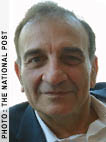
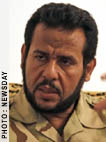
Abdel Hakim Belhaj

Abdel Belhaj

►►Inside Libyan spy overlord’s low-tech HQ. “Handwritten notes prepared for officials over the past months show that Libya’s spooks had a good grasp of who was sending weapons to the rebels. However, its contacts with MI6 and the CIA had clearly disintegrated, as a series of despairing pleadings reveal”.
►►UK government to investigate Libyan rendition claims. British Prime Minister David Cameron said yesterday that an independent inquiry should investigate evidence that British intelligence agencies were complicit in the rendition of terrorist suspects to Libya, where they were tortured by the Gaddafi regime.
►►Libyan rebel says female MI6 spy ignored his pleas for help. Abdel Hakim Belhaj, who is commander of Libya’s rebel military, says a female MI6 spy was among the Britons who flew to Tripoli to interrogate him, after the CIA abducted him in Malaysia, and delivered him to the hands of the Libyan regime.