News you may have missed #445

  • WikiLeaks files show Iranian involvement in Iraq. The latest WiliLeaks release of nearly 392,000 US military reports from Iraq shows, among other things, that Iran was a major combatant in the Iraq War. According to the documents, Tehran’s elite Quds Force trained Iraqi Shiite insurgents and imported weapons like Explosively Formed Projectile bombs into Iraq for use against civilians, Sunni militants and US troops.
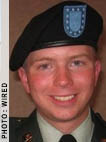
  • WikiLeaks founder on the run. Julian Assange’s fate seems as imperiled as that of Private Bradley Manning, the 22-year-old former Army intelligence operative under detention in the US for leaking Iraq and Afghan war documents to WikiLeaks. Last Monday, Mr. Assange’s bid for a residence permit in Sweden was rejected. His British visa will expire early next year.
  • Money problems of US spies may threaten US security. Elizabeth Bancroft The executive director of the US Association of Former Intelligence Officers, has suggested that government agencies should monitor intelligence service employees with security clearances, who may have fallen into bankruptcy during the ongoing economic crisis. Spy agencies are worried that financial problems might leave these employees open to bribery or blackmail.

News you may have missed #442

  • Israeli lobby intensifies Pollard release effort. As convicted spy Jonathan Pollard approaches 25 years behind bars, Israelis and others are renewing efforts to secure freedom for the former US Navy intelligence analyst, who is serving a life sentence in the United States for relaying military documents to Israel.
  • No compromise in WikiLeaks expose, concludes Pentagon. Much ado about nothing. The US Pentagon has concluded that no US intelligence sources or practices were compromised by the posting of secret Afghan war logs by the WikiLeaks website. Meanwhile, WikiLeaks is preparing to publish more revelations.
  • Niger ex-spy chief arrested. Seini Chekaraou, head of counterintelligence at the uranium-rich nation of Niger, has been arrested along with four senior members of the West African country’s ruling junta, allegedly on suspicion that they were “attempt[ing] to destabilize the [military] regime” that took power in the country last February.

News you may have missed #437

  • Huge demand for spy balloons in Afghan war. The hottest US weapon in Afghanistan lacks a lethal capability, floats thousands of feet in the air and doesn’t carry troops. It’s a spy balloon. Similar contraptions have been making appearances at the Lebanese-Israeli border.
  • One, two, many WikiLeaks. Daniel Domscheit-Berg, a defector from the WikiLeaks website has said he has decided to jump ship and is thinking of creating a competitor site to Julian Assange’s whistleblower platform.
  • Is publication of classified info a criminal act? When WikiLeaks published tens of thousands of classified US military records concerning the war in Afghanistan last July, did it commit a criminal act under US law? A US Congressional Research Service report argues that it did not.

News you may have missed #431

Comment: What Can the US Do To Stop WikiLeaks?

Julian Assange

Julian Assange

By JOSEPH FITSANAKIS | intelNews.org |
Ever since whistleblower site WikiLeaks published 77,000 classified US military documents on the war in Afghanistan, several pundits have urged US government agencies, including the Pentagon, to take action. Late last week, former George W. Bush speechwriter Marc Thiessen urged the Pentagon to unleash its “cyber capabilities to prevent WikiLeaks from disseminating those materials”. Some columnists have even suggested that US intelligence services should “come up with an up-to-date photo of [WikiLeaks founder Julian] Assange and distribute it to […] SEAL sharpshooters”. Pentagon representatives have also stepped up their rhetoric, warning that “[i]f doing the right thing isn’t good enough for [WikiLeaks], we will figure out what alternatives we have to compel them to do the right thing”.

Read more of this post

News you may have missed #414

Bookmark and Share

News you may have missed #413

  • Complex politics behind Ugandan spy chief’s removal. The recent sacking of Dr Amos Mukumbi from heading Uganda‘s Internal Security Organisation (ISO) was the handiwork of politics, intrigue and suspicion within the country’s intelligence community and between politicians. It was also related to ongoing turf wars between the ISO and its sister agency, the External Security Organisation.
  • Experts still evaluating WikiLeaks impact. Some analysts believe that the US intelligence establishment will call for an increased clampdown on secrecy in the wake of the WikiLeaks Afghan War Diary files release. But the data dump has also spurred those arguing that the US government needs to reduce the amount of information it classifies as secret, much of which may be unnecessary.
  • Radio program investigates the Mossad. BBC Radio has aired a relatively well-produced primer on Israeli intelligence agency Mossad. The BBC’s Security Correspondent Gordon Corera interviews former Mossad Director Efraim Halevy and former Mossad operative Rafi Eitan, among others.

Bookmark and Share

News you may have missed #409

  • Probe unearths secrets of Bulgaria’s assassination bureau. Previously unknown details on Service 7, Bulgaria’s Cold War-era assassination bureau, have been unearthed by one of Bulgaria’s leading newspapers, following a probe into 5,000 pages of declassified archives from the country’s former communist intelligence service, the First Directorate of the Committee on State Security.
  • US Pentagon bars troops from reading WikiLeaks. Any citizen, any foreign spy, any member of the Taliban, and any terrorist can go to the WikiLeaks web site, and download detailed information. Members of that same military, however, are now banned from looking at those internal military documents, because “doing so would introduce potentially classified information on unclassified networks”.
  • Analysis: Chasing Wikileaks. “[W]hatever the imperfections of WikiLeaks as a startup, its emergence points to a real shortcoming within our intelligence community. Secrets can be kept by deterrence –that is, by hunting down the people who leak them […]. But there are other methods: keep far fewer secrets, manage them better –and, perhaps, along the way, become a bit more like WikiLeaks. An official government Web site that would make the implementation of FOIA quicker and more uniform, comprehensive, and accessible”.

Bookmark and Share

News you may have missed #404 (Wikileaks Afghan War Diary edition II)

  • Wikileaks posts mysterious ‘insurance’ file. WikiLeaks, the whistleblower website that recently published hundreds of thousands of classified Afghan War documents, has posted a mysterious encrypted file labeled “insurance”, whose size dwarfs the size of all the other files on the page combined. Cryptome, a separate anti-secrecy site, speculates that the file may be insurance in case something happens to the WikiLeaks website or to its founder, Julian Assange. In either scenario, WikiLeaks volunteers, under a prearranged agreement with Assange, could send out a password to allow anyone who has downloaded the file to open it.
  • Ex-CIA officer Baer comments on Wikileaks files. Robert Baer, the retired CIA field officer whose bestselling memoir, See No Evil, formed the basis of the 2005 motion picture Syriana, has called the quality of intelligence revealed in the Wikileaks Afghan War files “just awful. Basically, we don’t know who the enemy is”, says Baer, adding that “much of the information looks to be the result of walk-in informers –intelligence peddlers looking for a cash payment or some other reward for passing on gossip”.
  • Wikileaks informant suspect had help, says informer. Hacker-turned government informant Adrian Lamo, who is assisting the US government investigate thousands of leaked secret war records to Wikileaks, says Army intelligence analyst Bradley Manning, who is the suspected culprit of the leak, had civilian help.

Bookmark and Share

Pakistanis question validity, timing, of Wikileaks files

Hamid Gul

Hamid Gul

By JOSEPH FITSANAKIS | intelNews.org |
Senior Pakistani government and intelligence officials have reacted angrily to leaked reports, which suggest that Pakistani spy agencies are secretly working with the Taliban to oppose US-led coalition forces in Afghanistan. The accusations have emerged as part of the largest document leak in US military history, which was made public on Sunday by anti-secrecy activist website Wikileaks. Among the nearly 92,000 intelligence and military files disclosed by Wikileaks are several reports suggesting that General Hamid Gul, who headed Pakistan’s Inter-Services Intelligence (ISI) directorate in the late 1980s, is among a number of high-profile Pakistanis who regularly help the Taliban organize strikes against US-led coalition troops and their supporters in Afghanistan. But on Monday General Gul, who is a well-known critic of the 2001 US-led invasion of Afghanistan, vehemently rejected the leaked reports, calling them “a pack of lies” and “utterly wrong”. Read more of this post

News you may have missed #400 (Wikileaks Afghan War Diary edition)

  • Roundtable discussion on Wikileaks Afghan war files. Democracy Now hosts a freely-available hour-long discussion on the recent Wikileaks exposure of nearly 92,000 classified military reports on the Afghan war, with independent British journalist Stephen Grey; Pentagon Papers whistleblower Daniel Ellsberg; former State Department official in Afghanistan Matthew Hoh; independent journalist Rick Rowley; and investigative historian Gareth Porter.
  • Are the Wikileaks war docs overhyped old news? This appears to be the view of Danger Room‘s Spencer Ackerman, who suggests that “so far, there’s no My Lai, no No Gun Ri, no smoking gun linking al-Qaeda to the Boston Red Sox. And some of the heavy-breathing accounts surrounding the documents don’t really match what the logs say”.
  • Pentagon investigating source of leak. The investigation into the biggest leak in US military history centers on Bradley Manning, a US Army intelligence analyst, who allegedly boasted online that he was going to reveal “the truth” about the war in Afghanistan.

Bookmark and Share

Largest leak in US military history reveals Afghan war details

WikiLeaks

WikiLeaks

By JOSEPH FITSANAKIS | intelNews.org |
American, British and German military planners are scrambling to contain the political impact of a massive cache of classified reports from Afghanistan, which has been leaked by an anti-secrecy activist group. It has now become known that, several weeks ago, the group Wikileaks.org handed over a total of 91,731 classified incident and intelligence reports from the US-led occupation force in Afghanistan to American newspaper The New York Times, British broadsheet The Guardian, and German newsmagazine Der Spiegel. All three outlets agreed to examine the material, abiding by Wikileaks’ condition that they would wait until Sunday, July 25, to release it. All three news media published news of the leak almost simultaneously on Sunday night, (see here, here and here), and posted several of the files, which provide an unprecedented six-year archive (from 2004 to 2009) of day-to-day US-led military operations in Afghanistan. This unprecedented disclosure is believed to represent the largest public leak of classified material in US military history. Read more of this post

US Army intel analyst arrested over Wikileaks probe

Bradley Manning

Bradley Manning

By IAN ALLEN | intelNews.org |
Speaking last Thursday at the annual Personal Democracy Conference in New York, Daniel Ellsberg said he was amazed that the US National Security Agency “can’t crack” Wikileaks. The former Pentagon employee, who in 1971 leaked the Pentagon Papers, was referring to the activist website that anonymously publishes secret governmental and corporate documents from around the world. But Ellsberg may have been talking too soon. On Sunday, Wired magazine’s Threat Level blog revealed that a US Army intelligence analyst had been detained for allegedly giving Wikileaks secret video footage and “hundreds of thousands of classified State Department records”. Specialist Bradley Manning, 22, was reportedly detained two weeks ago by the US Army’s Criminal Investigation Division while stationed in Forward Operating Base Hammer, near Baghdad, Iraq. Read more of this post

News you may have missed #357

  • IDF colonel with intelligence duties ‘commits suicide’. An unnamed colonel with the Israel Defense Forces was found dead in a forest in northern Israel Saturday, after allegedly taking his own life. The officer reportedly served in high-ranking positions in the Intelligence Corps.
  • Australian Wikileak founder’s passport confiscated. Julian Assange, the Australian founder of the whistleblower website Wikileaks, says he had his passport taken away from him at Melbourne Airport and was later told by customs officials that it was about to be cancelled. Wikileaksleaked footage of US forces laughing at the dead bodies of people they had just killed in Iraq in 2007. rose to prominence last month, after posting

Bookmark and Share

Essential links on WikiLeaks video of Iraq shooting

WikiLeaks

WikiLeaks

By JOSEPH FITSANAKIS | intelNews.org |
Whistleblower site WikiLeaks has released a leaked video taken from a US military helicopter in July 2007, showing US forces indiscriminately firing on Iraqi civilians, killing 12 people and wounding two children. The dead included two employees of the Reuters news agency. There are several edited versions of the video, which can be found in its entirety here. Cryptome offers a series of selected stills from the leaked WikiLeaks video, with some visual analysis of the footage. It is worth keeping in mind that the leaked video is of substantially lower quality than what the US helicopter pilots saw, because it was converted through several stages before it was released by WikiLeaks. Read more of this post