Russia charges engineer with spying for foreign agency
May 15, 2012 Leave a comment
 By JOSEPH FITSANAKIS | intelNews.org |
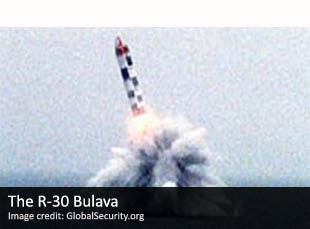
Russian authorities have charged an engineer working at a top-secret military facility in the Urals with espionage, accusing him of passing classified information about Russian ballistic missiles to agents of a foreign government. According to the InterFax news agency, which has strong links with the Russian government, the engineer had disclosed “secret data [and] state secrets concerning the area of strategic defense systems “. The Moscow-based news agency quoted an unnamed “Russian law enforcement official” who said that the accused spy worked at a critical research and development position inside a “restricted government facility that develops missile technology”. The source told InterFax that the alleged spy was working on the Russian R-30 Bulava ballistic missile, which is said to be in its final development stage. The R-30 Bulava (the Russian word for “mace”) is the name for Moscow’s latest-generation submarine-based ballistic missile technology. It is widely considered to be one of the future cornerstones of Russia’s nuclear weapons capability, and is thought to be the most expensive weapons project currently being developed in the country. The missile was approved for production last year, and is expected to come to service this coming October, when it will begin to replace Russia’s Soviet-era stock of submarine-launched nuclear missiles. The program is strongly linked to the country’s Borei-class ballistic-missile-capable nuclear submarines, which are expected to be able to launch the R-30 Bulava while underwater and in motion. Read more of this post








 intelNews.org
Russian journalist who wrote about mercenaries’ deaths in Syria is found dead
April 17, 2018 by Ian Allen Leave a comment
According to the United States government, the Russians were part of a 500-strong Syrian government force that crossed the Euphrates River and entered Kurdish-controlled territory in Syria’s northeastern Deir al-Zour region. American-supported Kurdish forces in the area, which include embedded US troops, responded with artillery fire, while US military aircraft also launched strikes against the Syrian government forces. The latter withdrew across the Euphrates after suffering heavy losses, including at least 200 Russian troops. The incident was subsequently confirmed by the Kremlin, which said that the Russians were contractors and were not members of the Russian armed forces. Borodin wrote that the Russian mercenaries were employed by the Wagner Group, an arms-for-hire company owned by Yevgeny Prigozhin, a billionaire with close ties to the Russian President Vladimir Putin. Prigozhin’s name is included in the most recent list of Russian oligarchs that are subject to economic sanctions imposed by the US government.
Last Thursday, just weeks after writing his exposé about the Wagner Group, Borodin was found by neighbors at the foot of the building that houses his apartment in Yekaterinburg, Russia’s fourth largest city. The journalist was taken to a local hospital, where he later died from his injuries. The American news network CNN said it spoke to Valery Gorelykh, a local Russian Interior Ministry official, who said that no foul play was suspected in Borodin’s death. The door of his apartment had been locked from the inside and there were no signs of struggle, said Gorelykh. He went on to say that the most likely explanation for Borodin’s death was that he slipped and fell off the balcony while smoking a cigarette.
But some of Borodin’s colleagues and friends question the verdict of accidental death. Vyacheslav Bashkov, a close friend of the deceased, said Borodin had called him in a frantic state in the early morning hours of April 11. He said his apartment had been surrounded by armed security personnel wearing ski masks, one of whom had climbed on his balcony and appeared to be waiting for a court order so that he could search Borodin’s apartment. But an hour later, Borodin called Bashkov again, this time to let him know that the armed men had been conducting a training exercise and that they never entered his apartment after all. Another colleague of Borodin, Novy Den editor-in-chief Polina Rumyantseva, said she did not believe Borodin had committed suicide.
► Author: Ian Allen | Date: 17 April 2018 | Permalink
Filed under Expert news and commentary on intelligence, espionage, spies and spying Tagged with Maxim Borodin, mercenaries, News, suspicious deaths, Yekaterinburg