Emirates authorities deny Oman spy ring allegations

Oman

Oman

By IAN ALLEN | intelNews.org |
The government of the United Arab Emirates has denied operating an espionage network in the neighboring Sultanate of Oman, saying that spying goes against the country’s values. The official denial was issued in response to a news report by Oman’s state news agency, which said that Omani authorities had uncovered a spy ring targeting the country’s intelligence and military apparatus. According to the report, issued yesterday by the Oman News Agency, the country’s security services “discovered a spy network affiliated to the State Security Service in the United Arab Emirates”, leading to several arrests across the Sultanate. No further information was issued by the news agency, but Reuters quoted an anonymous Omani government source, who said that the alleged spy network was first uncovered two months ago, and that the arrestees include “Omani nationals”. The news of the espionage allegations have perplexed observers, who consider the UAE and Oman to be generally on good terms. Both countries belong to the Cooperation Council for the Arab States of the Gulf, an increasingly unified political and economic union that involves the region’s pro-Western oil states, including Saudi Arabia. One notable difference between the UAE and Oman is the latter’s traditionally close relations with Iran, with which it maintains common energy concerns. Read more of this post

Analysis: What is the CIA doing in Egypt?

Egypt

Egypt

By JOSEPH FITSANAKIS | intelNews.org |
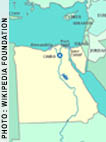
Every time there is a popular uprising anywhere in the Muslim world, the minds of American intelligence planners go immediately to 1979, when the Iranian Revolution tore down almost overnight one of Washington closest allies in the Middle East. By ignoring the immense unpopularity of the Shah’s brutal regime, and by limiting its Iranian contacts among the pro-Shah elites in the country, the CIA was caught completely in the dark as the Islamic revolution unfolded. Could the same be happening now in Egypt? Hopefully not, says The Washington Post’s veteran intelligence correspondent Jeff Stein. As in the case of Iran under the Shah, the US has stood by the 33-year dictatorship of Hosni Mubarak, choosing to abide by the simplistic dogma of ‘either secular repression or anti-American Islamism’. But, unlike 1970s Iran, one would hope that US intelligence agencies have been able to develop useful contacts across the fragmented but dynamic and energized Egyptian opposition community, says Stein, quoting former US Defense Intelligence Agency official Jeffrey White. It is unlikely that the CIA and other agencies have fully embraced persistent calls, such as those by Emile Nakhleh, former head of the CIA’s program on political Islam, to develop trustworthy contacts inside the Egyptian Islamic Brotherhood, as well as groups close to it, such as Hamas and Hezbollah. Read more of this post
News you may have missed #472

  • French spies become embroiled in Renault’s espionage saga (corrected). The Renault spying saga has taken a new turn with the carmaker accusing France’s domestic intelligence agency DGSE DCRI of sabotaging its reputation. Jean Reinhart, Renault’s lawyer, said that the DGSE DCRI had leaked details of the inquiry into accusations of industrial espionage.
  • Palestinian Authority documents leaked by ex-MI6 agent. Chief Palestinian negotiator Saeb Erekat said Wednesday in an interview that a US citizen, who worked in the US State Department, and a British former MI6 official, are responsible for leaking the so-called ‘Palestine papers‘.
  • NY Times editor calls Assange ‘spy-like’. WikiLeaks founder Julian Assange resembles a character from a detective novel and is “elusive, manipulative and volatile”, the executive editor of The New York Times says in an upcoming book. Open Secrets: WikiLeaks, War and American Diplomacy, a digital book featuring an introduction by Times executive editor Bill Keller and contributions from other Times reporters, goes on sale Monday.

Revelations continue in ex-CIA agent’s trial in Texas

Luis Posada Carriles

Carriles

By IAN ALLEN | intelNews.org |
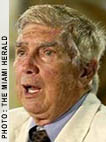
A United States government informant testifying at the immigration trial of a former CIA agent has described how he was smuggled into the US from Mexico onboard a luxury boat. It was believed that the former agent, Cuban-born Luis Posada Carriles, had arrived in the US from Honduras in 2005 using a forged Guatemalan passport. But Gilberto Abascal, an anti-Castro Cuban exile who has been an informant for the FBI since 1999, has told a court in Texas that Carriles was smuggled into Miami on a 90-foot luxury yacht, which carried him from Mexico’s Isla Mujeres to a waterfront Cuban restaurant. Abascal told the court that Carriles disembarked the yacht using a small speedboat, before the yacht’s owner, Santiago Alvarez, reported to US Customs in Miami. Remarkably, Carriles’ smuggling went according to plan, despite the fact that the Miami Chief of Police was among the restaurant’s patrons at the time of the speedboat’s arrival. Carriles is a militant anticommunist who is idolized by America’s anti-Castro Cubans, but is considered a terrorist in parts of Latin America due to his self-confessed participation in a string of bombings of hotels in Havana, Cuba, in 1997. Read more of this post

News you may have missed #471 (ex-spy edition)

  • Interview with ex-CIA analyst David Kanin. Interesting extended discussion with Dr. Kanin, who was a CIA analyst for 31 years, who suggests the US is currently on the retreat, both politically and economically.
  • New book by ex-CIA agent Everett. Watergate uncovered many high-level secrets, including the identity of CIA agent James A. Everett, whose cover was blown in Congressional hearings during the White House scandal and its fallout. Now Everett shares his story of recruitment and training by the CIA in his book The Making and Breaking of an American Spy.
  • Ex-MI5 officer questions UK spying priorities. The cascade of revelations in the UK about undercover police officers spying on environmental groups, suggest Britain needs a sense of perspective on threats to the nation, argues former MI5 intelligence officer Annie Machon.

South African spy chief had secret US talks, embassy cable reveals

Moe Shaik

Moe Shaik

By JOSEPH FITSANAKIS | intelNews.org |
South Africa’s spy chief regularly gave the American embassy in Pretoria detailed information on internal African National Congress (ANC) politics, according to a diplomatic cable leaked by WikiLeaks. The cable, entitled “Zuma Advisor Threatens to Expose Political Skeletons”, was authored on September 10 2008 by the embassy and communicated to several recipients, including the State Department, CIA, and the National Security Council. It reveals that Moe Shaik, who heads the South African Secret Service (SASS), the country’s external intelligence agency, met regularly with an unnamed political officer of the US embassy and “always share[d] insights into the motivations and strategies of the Zuma camp”. The reference is to Jacob Zuma, President of the governing ANC, who assumed the organization’s leadership in May of 2009, after a bitter internal party struggle. Several months prior to Zuma’s election as ANC’s President, the organization’s rival faction, which was loyal to Thabo Mbeki, attempted to challenge Zuma’s eligibility by leveling corruption charges against him. Read more of this post

US paying ‘price in blood’ for Israel-Palestine conflict, say ex-CIA officers

Bruce Riedel

Bruce Riedel

By IAN ALLEN | intelNews.org |
Two former CIA officers have warned that America will continue “paying an increasing price in blood” for the Israeli-Palestinian conflict, and urged the White House to directly meddle in domestic Israeli politics in order to help end the dispute. Speaking on Thursday at a conference on achieving Israeli-Palestinian peace, Bruce Riedel and Frank Anderson, whose combined CIA careers span 55 years, agreed that a new all-out war between Israel and the Palestinians would be inevitable unless the United States aggressively “puts down its own map of a two-state solution”. Anderson, who is currently President at the Middle East Policy Council, opined that America is “paying an increasing price in blood for [the Israelis’ and the Palestinians’] failure and refusal to reach an agreement”. Riedel, who is Senior Fellow at the Brookings Institution, argued that “American lives are being lost today” due to the conflict’s impact on American national security. Read more of this post

News you may have missed #470

  • Blackwater still working for US despite denials. Reports that Blackwater is out of the US government’s private-security game appear to have been greatly exaggerated. A consigliore to the company’s new owners has said the firm still holds security contracts with the US State Department, and intends to seek more.
  • CIA gets spooky with new radio commercials. The CIA’s National Clandestine Service is continuing its recruitment drive with new radio commercials, complete with a spooky soundtrack of sawing violins and rising timpani –and something about “no one will ever know what you do”.
  • Iranian shah’s son found dead in Boston. Alireza Pahlavi, the youngest son of the late shah of Iran, has been found dead from a self-inflicted gunshot wound in Boston’s South End. In June 2001, Alireza’s sister Leila was found dead in a London hotel room from an overdose of barbiturates. The late siblings’ father was overthrown in the 1979 Islamic revolution. He died in Egypt in 1980.

Ex-CIA agent and anti-Castro militant on trial in Texas

Carriles in 1962

Carriles in 1962

By IAN ALLEN | intelNews.org |
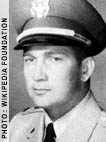
A former CIA agent and militant anticommunist, who is idolized by America’s anti-Castro Cubans, but is considered a terrorist in parts of Latin America, has gone on trial in Texas. Luís Posada Carriles, 82, known as “the bin Laden of the Americas” by his detractors, gained notoriety for his self-confessed participation in a string of bombings of hotels in Havana, Cuba, in 1997. He is wanted by the governments of Cuba and Venezuela for his alleged role in the dramatic 1976 midair bombing of Cubana flight 455, which killed all 73 crew and passengers onboard. The United States government has placed Carriles on trial for lying about his militant activities to US immigration officials, after arriving here in 2005. Specifically, Carriles faces 11 charges of perjury, obstruction and naturalization fraud, which he is said to have committed at a 2007 immigration hearing in El Paso. At that hearing, he allegedly denied under oath his participation in the 1997 Havana bombings, and failed to report being in possession of a fake Guatemalan passport, which he had used to enter the United States two years earlier. Read more of this post

Tunisian security officials arrested, killed, amid counter-coup fears

Ali Seriati

Ali Seriati

By JOSEPH FITSANAKIS | intelNews.org |
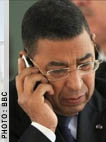
Several key figures in Tunisia’s crumbling security apparatus have being either apprehended or killed, amid fears that they were planning a countercoup against the country’s new unity government. Most notable among the arrestees is General Ali Seriati, longtime director of deposed Tunisian dictator Zine al-Abidine Ben Ali’s Presidential Security Force. Seriati was arrested on Sunday, reportedly “by citizens as he tried to cross into Libya”. Reports from Tunis suggest that Ben Ali’s Interior Minister, Rafik Belham Kacem, who commanded the country’s’ domestic intelligence apparatus, has also been detained. Meanwhile, the BBC reports that Imed Trabelsi, a politically powerful nephew of the former dictator’s wife, was lynched to death late on Saturday. Seriati and Kacem’s arrests are seen as attempts by the new government to prevent a widely feared coup plot, organized by the remnants of Ben Ali’s security apparatus, aimed at returning him to power. Initial stages of the coup materialized on Saturday, when several gunmen riding in unmarked cars launched a wave of armed attacks against opposition targets in capital Tunis and elsewhere. Political observers in the country appeared to immediately connect the attacks with General Seriati’s Presidential Security Force, said to include some of the former president’s staunchest supporters. Read more of this post

News you may have missed #469

  • Vulture not a Zionist spy after all, declare Saudis. After more than a week of febrile rumor and speculation, the King of Saudi Arabia has declared that a vulture found on the country’s territory, carrying a GPS tracker labeled “Tel Aviv University”, is not part of an Israeli reconnaissance plot.
  • Germany jails two Libyans for spying. Two Libyans have been sentenced in a Berlin court for spying on members of the Libyan opposition living in Europe. ‘Adel Ab.’, an officer for the Libyan intelligence service, was sentenced to two and a half years in prison while his accomplice, ‘Adel Al.’ was sentenced to one year and 10 months.
  • Russian aide accused of spying to remain in UK until October. Britain’s MI5 accuses Katia Zatuliveter, former assistant to Liberal Democrat MP Mike Hancock, of spying for Russia. But she will remain in the UK until next October, when she will be able to challenge her pending deportation at an immigration hearing.

News you may have missed #468

Why is Germany protecting Iraqi informant who lied about WMDs?

Rafid Ahmed Alwan

Alwan al-Janabi

By JOSEPH FITSANAKIS | intelNews.org |
German politicians in the state of Baden-Württemberg are questioning the protection given by German intelligence services to a notorious Iraqi informant, who lied about Iraq’s weapons program. Rafid Ahmed Alwan al-Janabi, known in intelligence circles as “Curveball”, arrived in Germany in 1999, where he applied for political asylum, saying he had been employed as a senior scientist in Iraq’s biological weapons program. Despite serious doubts expressed at the time by officials in Germany’s Federal Intelligence Service, the BND, and by some of their CIA colleagues, al-Janabi was given asylum in Germany. Moreover, information gathered from his testimony became a major source of the Bush Administration’s argument in favor of going to war in Iraq in 2003. Less than a year later, both the BND and the CIA concluded that al-Janabi had been lying about his alleged biological weapons role, and that he was in reality a taxi driver from Baghdad, who had used his undergraduate knowledge of engineering to fool Western intelligence. Read more of this post

News you may have missed #467

  • Ex-Mossad chief says Iran nuke program behind schedule. Meir Dagan, Israel’s recently retired spy chief, thinks Iran will not be able to build a nuclear bomb before 2015, further pushing back Israeli intelligence estimates on the subject. Time for critics of the 2007 US National Intelligence Estimate to reconsider their views?
  • NSA breaks ground on Utah cybersecurity center. Ground was broken last Thursday on the Utah Data Center, a $1.2 billion, 1 million-square-foot cybersecurity center being built for the US National Security Agency at Camp Williams, near Salt Lake City. Secrecy is expected to shroud the center, with the groundbreaking being one of the public’s last chances to take an open look at the project.
  • Colombian judge orders arrest of ex-spy chief. Colombia’s Prosecutor General has ordered the arrest of Jorge Noguera, a former director of the country’s DAS intelligence agency, for his alleged involvement in the spying on government opponents. This is not the first time Noguera, who was director of the DAS between 2002 and 2006, has been sent to jail. He was imprisoned and released twice for his alleged involvement in allowing members of paramilitary organization United Self-Defense Forces of Colombia to infiltrate the intelligence agency.

New clues in extensive recount of al-Mabhouh assassination

Ronen Bergman

Ronen Bergman

By JOSEPH FITSANAKIS | intelNews.org |
The current issue of US-based magazine GQ contains what must be the most extensive account in English of the 2010 assassination of Mahmoud al-Mabhouh by Israeli intelligence agency Mossad. Written by Israeli investigative journalist Ronen Bergman (author of The Secret War with Iran), the piece contains several new clues about the targeted killing of al-Mabhouh, a senior Hamas official, in a luxury hotel in Dubai last January. One new element that stands out in Bergman’s account is that, two months prior to his assassination, al-Mabhouh survived a poisoning attempt by the same team of Israeli operatives, again in Dubai. The Hamas official fell ill, but recovered fully. Bergman also claims that the operation to target al-Mabhouh, which must have lasted several months or even years, involved the use of an elaborate Trojan horse virus that was implanted on al-Mabhouh’s computer, and allowed Mossad operatives to monitor his email correspondence. It was through this method that the Israelis became aware of al-Mabhouh’s itinerary during his fatal trip to Dubai. Read more of this post