US money transfer firms linked to Dubai killing of Hamas official

Mahmoud al-Mabhouh

Al-Mabhouh

By IAN ALLEN | intelNews.org |
Preliminary results of an ongoing international investigation into the January 2010 murder of a senior Hamas official show that US-based money transfer companies were used to finance the killing. The body of Mahmoud al-Mabhouh, co-founder of the Palestinian Izz ad-Din al-Qassam Brigades, Hamas’ military wing, was discovered by staff at Dubai’s luxury Al-Bustan Rotana Hotel, where al-Mabhouh was a guest, on January 20, 2010. His murder is widely believed to have been the work of a multi-member hit squad operating under the command of Israeli external intelligence agency Mossad. But, according to American newspaper The Wall Street Journal, the funds used by the Israeli hit squad members during the assassination operation came from fund transfers in the United States. Read more of this post

News you may have missed #404 (Wikileaks Afghan War Diary edition II)

  • Wikileaks posts mysterious ‘insurance’ file. WikiLeaks, the whistleblower website that recently published hundreds of thousands of classified Afghan War documents, has posted a mysterious encrypted file labeled “insurance”, whose size dwarfs the size of all the other files on the page combined. Cryptome, a separate anti-secrecy site, speculates that the file may be insurance in case something happens to the WikiLeaks website or to its founder, Julian Assange. In either scenario, WikiLeaks volunteers, under a prearranged agreement with Assange, could send out a password to allow anyone who has downloaded the file to open it.
  • Ex-CIA officer Baer comments on Wikileaks files. Robert Baer, the retired CIA field officer whose bestselling memoir, See No Evil, formed the basis of the 2005 motion picture Syriana, has called the quality of intelligence revealed in the Wikileaks Afghan War files “just awful. Basically, we don’t know who the enemy is”, says Baer, adding that “much of the information looks to be the result of walk-in informers –intelligence peddlers looking for a cash payment or some other reward for passing on gossip”.
  • Wikileaks informant suspect had help, says informer. Hacker-turned government informant Adrian Lamo, who is assisting the US government investigate thousands of leaked secret war records to Wikileaks, says Army intelligence analyst Bradley Manning, who is the suspected culprit of the leak, had civilian help.

Bookmark and Share

Documents detail history of previously unknown US spy agency

John V. Grombach

J.V. Grombach

By IAN ALLEN | intelNews.org |
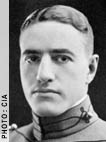
A collection of tens of thousands of documents discovered in a barn in a small Virginia town, have brought to light the history and operations of a previously unknown US spy agency that competed for prominence with the CIA during the early stages of the Cold War. The secrecy-obsessed agency was known at various times as the Secret Intelligence Branch, the Special Service Branch, the Special Service Section, or the Coverage and Indoctrination Branch; but insiders referred to it simply as “the Lake” or “the Pond”. It was created in late 1942 by the then newly established US Department of Defense, whose officials did not approve of the civilian character of the Office of Strategic Services (OSS), forerunner of the CIA. In its 13-year existence, the Pond operated on a semi-autonomous base under the Departments of Defense and State, but maintained a poor relationship with the CIA, which it considered too “integrated with British and French Intelligence and infiltrated by Communists and Russians”. This information is contained in the files, which were stored in several safes and filing cabinets by the organization’s secretive leader, US Army Colonel John V. Grombach, who died in 1982. Read more of this post

Israel government extends document secrecy rule to 70 years

Mossad seal

Mossad seal

By JOSEPH FITSANAKIS | intelNews.org |
Researchers, academics and transparency advocates have criticized new Israeli government regulations that extend the classification period of state archives from 50 to 70 years. The measure was approved on July 11 by Prime Minister Benjamin Netanyahu, following strong pressure by the Israeli intelligence community, led by the country’s General Security Service, also known as Shin Bet. Speaking to leading Israeli newspaper Ha’aretz, Israel National Archives Director Yehoshua Freundlich admitted that the move was designed to shield Israel “over [issues relating to its] adherence to international law”. He added that the new legislation was also a response to the rising freedom-of-information movement in Israel, led by such organizations as the Association for Civil Rights in Israel and the Movement for Freedom of Information. Read more of this post

Lebanon releases German suspected of spying for Israel

Bekaa Valley, Lebanon

Bekaa Valley

By JOSEPH FITSANAKIS | intelNews.org |
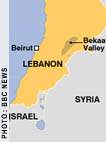
German officials have confirmed reports from Lebanon that a German citizen has been released after being questioned in connection with Israeli espionage activity in eastern Lebanon. Manfred Peter Mog, 58, who has lived in Lebanon since 1999, was detained on Monday by Lebanese counterintelligence officers, who suspected him of sharing “sensitive information” with Israeli intelligence operatives. It is believed that Mr. Mog, an engineer who has worked since 2009 at the Liban Lait dairy factory in Lebanon’s Bekaa Valley, was questioned in connection to “sophisticated transmitters” found in his possession. But the German Foreign Ministry on Wednesday firmly denied that the German citizen had had any charges brought against him by the Lebanese government. Soon afterwards, unnamed Lebanese officials confirmed that Mr. Mog had indeed been released without charges, following intense questioning by counterintelligence officers. It is worth noting that there have recently been several intelligence stories linking Israel and Germany. Read more of this post

News you may have missed #403

Bookmark and Share

South Korean spy reportedly expelled from Libya

Seal of the National Intelligence Service of the Republic of Korea

NIS seal

By IAN ALLEN | intelNews.org |
Libya has expelled a South Korean intelligence officer and has shut down its mission in Seoul, according to South Korean diplomatic sources. The unnamed officer, who was expelled by the Libyans on June 18, is reportedly a member of South Korea’s National Intelligence Service who was stationed in the Libyan capital Tripoli. He was arrested in early June, after having been kept under surveillance for three months by Libyan counterintelligence officers. During that period, he was reportedly photographed in the act of bribing a Libyan intelligence officer. Some reports suggest that the expelled spy attempted to collect intelligence on Libyan leader Muammar al-Gaddafi, his family and senior Libyan government members. Other sources allege that he was gathering information on defense industry contacts between Libya and North Korea. Read more of this post

News you may have missed #402

Bookmark and Share

Did fugitive spy Metsos lead to Russian spy arrests?

Christopher Metsos

C.R. Metsos

By JOSEPH FITSANAKIS | intelNews.org |
Soon after the June 27 arrests of 10 Russian non-official-cover (NOC) spies in several US cities, one name came to the attention of intelligence observers: Sergei Tretyakov. Tretyakov was a senior Russian Foreign Intelligence Service (SVR) officer who defected to the US in 2000, while second-in-command at the SVR station in Russia’s United Nations mission in New York –the same outfit that run the deep-cover operatives arrested in June by the FBI. The Bureau’s own admission that it began monitoring the operatives around 2001, has caused many to believe that Tretyakov, who died suddenly on June 13, at age 53, may have tipped off the FBI about the NOCs. But Russian investigative journalist Yulia Latynina has raised a second possibility, no less intriguing than the first. Namely that it was not Tretyakov who betrayed the deep-cover operatives to the FBI, but rather the mysterious so-called 11th spy, Christopher R. Metsos, a seasoned SVR operative who is said to have acted as a go-between and financier for all 10 Russian spies. Read more of this post

News you may have missed #401

Bookmark and Share

Pakistanis question validity, timing, of Wikileaks files

Hamid Gul

Hamid Gul

By JOSEPH FITSANAKIS | intelNews.org |
Senior Pakistani government and intelligence officials have reacted angrily to leaked reports, which suggest that Pakistani spy agencies are secretly working with the Taliban to oppose US-led coalition forces in Afghanistan. The accusations have emerged as part of the largest document leak in US military history, which was made public on Sunday by anti-secrecy activist website Wikileaks. Among the nearly 92,000 intelligence and military files disclosed by Wikileaks are several reports suggesting that General Hamid Gul, who headed Pakistan’s Inter-Services Intelligence (ISI) directorate in the late 1980s, is among a number of high-profile Pakistanis who regularly help the Taliban organize strikes against US-led coalition troops and their supporters in Afghanistan. But on Monday General Gul, who is a well-known critic of the 2001 US-led invasion of Afghanistan, vehemently rejected the leaked reports, calling them “a pack of lies” and “utterly wrong”. Read more of this post

News you may have missed #400 (Wikileaks Afghan War Diary edition)

  • Roundtable discussion on Wikileaks Afghan war files. Democracy Now hosts a freely-available hour-long discussion on the recent Wikileaks exposure of nearly 92,000 classified military reports on the Afghan war, with independent British journalist Stephen Grey; Pentagon Papers whistleblower Daniel Ellsberg; former State Department official in Afghanistan Matthew Hoh; independent journalist Rick Rowley; and investigative historian Gareth Porter.
  • Are the Wikileaks war docs overhyped old news? This appears to be the view of Danger Room‘s Spencer Ackerman, who suggests that “so far, there’s no My Lai, no No Gun Ri, no smoking gun linking al-Qaeda to the Boston Red Sox. And some of the heavy-breathing accounts surrounding the documents don’t really match what the logs say”.
  • Pentagon investigating source of leak. The investigation into the biggest leak in US military history centers on Bradley Manning, a US Army intelligence analyst, who allegedly boasted online that he was going to reveal “the truth” about the war in Afghanistan.

Bookmark and Share

Largest leak in US military history reveals Afghan war details

WikiLeaks

WikiLeaks

By JOSEPH FITSANAKIS | intelNews.org |
American, British and German military planners are scrambling to contain the political impact of a massive cache of classified reports from Afghanistan, which has been leaked by an anti-secrecy activist group. It has now become known that, several weeks ago, the group Wikileaks.org handed over a total of 91,731 classified incident and intelligence reports from the US-led occupation force in Afghanistan to American newspaper The New York Times, British broadsheet The Guardian, and German newsmagazine Der Spiegel. All three outlets agreed to examine the material, abiding by Wikileaks’ condition that they would wait until Sunday, July 25, to release it. All three news media published news of the leak almost simultaneously on Sunday night, (see here, here and here), and posted several of the files, which provide an unprecedented six-year archive (from 2004 to 2009) of day-to-day US-led military operations in Afghanistan. This unprecedented disclosure is believed to represent the largest public leak of classified material in US military history. Read more of this post

News you may have missed #399

  • Alleged Lebanese spy for Israel flees to Germany, says Lebanon. Lebanese media claim that Rasan al-Jud, who Lebanese authorities accuse of having aided Israel with the help of employees at Alfa, Lebanon’s state-owned cellular telecommunications provider, has fled Lebanon and is currently in Frankfurt, Germany. But a German Foreign Ministry spokesman has said that “the Foreign Ministry does not have any particular knowledge about the news item”.
  • Japan defends costly visit by Korean spy. Japan’s government has defended a costly four-day visit by Kim Hyun-Hee,  a former North Korean spy, who blew up a South Korean jet in 1987, killing 115 people. Despite the high expectations, the former spy produced little news about Japanese nationals kidnapped decades ago by Pyongyang.
  • Analysis: Slaying the US intelligence behemoth. Commenting on the recent Washington Post investigative series on the US intelligence complex, author Philip Smucker comments that there is an essential disconnect at work. Namely, Islamic perceptions are not understood to be ‘hard intelligence’. The US is still trying to fit a square peg into a round hole, or to apply conventional intelligence to an asymmetrical world.

Bookmark and Share

Russian ‘spy’ breaks silence, wants to leave UK for Russia

Igor Sutyagin

Igor Sutyagin

By IAN ALLEN | intelNews.org |
One of the four Russian alleged spies that were handed over to the West in return for 11 Russian intelligence officers arrested in the US last month, has issued a public statement for the first time since his July 9 release from prison. At the time of his release, Dr. Igor Sutyagin, a nuclear expert who headed the Russian Academy of Sciences’ USA and Canada Institute, had served 11 years of a 15-year sentence, for allegedly passing state secrets to Alternative Futures, a British company alleged to be a CIA front by the Russian government. Once Washington included his name on the top-secret exchange list, Sutyagin was transferred from his prison cell in Kholmogory prison, near Arkhangelsk in northern Russia, to the Lefortovo high-security jail in Moscow. It was there that, following a meeting with this family, he was told that he would receive a Presidential pardon in exchange for his unconditional admission of guilt. Minutes after he agreed to the deal, the Russian scientist was flown to London, still in his prison uniform. Read more of this post