Westerners arrested for “spying” in Congo had Kenyan links

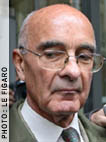
Joshua French

Joshua French

By JOSEPH FITSANAKIS | intelNews.org |
The bizarre case of two Norwegian citizens arrested in the Democratic Republic of the Congo (DRC) last May on spying charges is getting ever more complex. Tjostolv Moland, 28, and Joshua French, 27 (photo), were arrested in Kisangani, DRC, after their Congolese driver was found murdered with a bullet wound in his head. Prosecutors also accuse the two Norwegians of trying to kill a murder witness on orders of the Norwegian government, which has denied any connection with the two prisoners. Now, according to an investigation by Norway’s TV2 channel, Moland and French are said to have had a formal contract with the government of Kenya to train a 120-member elite security unit responsible for protecting VIPs in the country. Read more of this post

Documents show Japan government aide was CIA mole

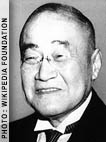
Shigeru Yoshida

Shigeru Yoshida

By JOSEPH FITSANAKIS | intelNews.org |
A senior military aide to Japanese Prime Minister Shigeru Yoshida in the 1950s was an informant for the CIA, according to documents unearthed at the US National Archives. A CIA memorandum dated November 26, 1956, describes Lt. Gen. Eiichi Tatsumi (ret.), who advised the Japanese Prime Minister on defense matters, as “one of the best, safest, most qualified persons in Japan today for CIA use”. Waseda University professor Tetsuo Arima, who unearthed the documents, said the CIA codenamed Tatsumi POLESTAR-5. Bearing fresh memories from Japan’s destructive participation in World War II, the government of Prime Minister Yoshida refused calls to remilitarize Japan. But a hardcore group of senior military officials, including Tatsumi, who had fought in the war, wished to see Japan rearm. Washington, which interpreted Yoshida’s refusal to rearm as a friendly gesture to Russia, also wanted to see Japan remilitarize. Read more of this post

News you may have missed #0129

  • Romanian communist spy boss dead at 80. General Nicolae Plesita, who directed Romania’s Securitate during the country’s communist period, has died. While heading the Securitate’s foreign intelligence service, from 1980 to 1984, Plesita hired the Venezuelan-born operative Ilich Ramirez Sanchez, known as Carlos the Jackal, to assassinate Romanian dissidents in France and bomb the US-owned Radio Free Europe offices in Munich, in 1981. In 1998, Plesita revealed that he had orders from the Romanian government to find temporary shelter for Carlos in Romania after the RFE bombing.
  • Settlement reached in DEA-CIA spying dispute. A tentative settlement has been reached in a lawsuit brought 15 years ago by a former US Drug Enforcement Administration agent who accused a CIA operative of illegally bugging his home. In a court filing, lawyers for the government and the DEA agent said they “had reached an agreement in principle to settle the underlying litigation”. See here for previous intelNews coverage of this case.
  • Federal judge denies request for CIA secret documents. Hundreds of documents detailing the CIA’s defunct overseas secret detention program of suspected terrorists, including extreme interrogation methods have remained secret after U.S. District Judge Alvin K. Hellerstein on Wednesday refused to release them “in order to protect intelligence methods and sources”. The ACLU argues that the CIA secret program was illegal under international and US law, that it involved the torture and deaths of some inmates, and therefore should not be shielded from public view.

Bookmark and Share

Analysis: Spy agencies disagree on status of Iran’s nuclear program

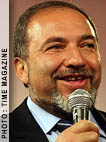
M. Ahmadinejad

M. Ahmadinejad

By JOSEPH FITSANAKIS | intelNews.org |
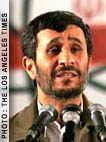
Western intelligence agencies agree that Iran’s ultimate aim is to fortify its military posture with nuclear weapons. Putting aside, however, the broad concurrence of opinion about Iran’s long-term goal, very little is clear about the immediate status of the country’s nuclear program. Iran maintains that its goal is peaceful; namely to invest in nuclear energy so as to free up large quantities of oil for exports. It is important to stress that the consensus among America’s intelligence agencies is that this is in fact Iran’s immediate goal. This was pronounced in the 2007 National Intelligence Estimate (NIE), a publicly available annual report cooperatively authored by the heads of all 16 US intelligence agencies. The 2007 report stated “with high confidence that in fall 2003, Tehran halted its nuclear weapons program”.  The reality is that the existence of Iran’s second uranium enrichment plant –of which, incidentally, Western and Israeli intelligence agencies have been aware for years– does not necessarily contest the findings of the 2007 NIE. IntelNews editor Dr. Joseph Fitsanakis explains why this is so on the website of the Research Institute for European and American Studies. Read article →

Bookmark and Share

News you may have missed #0128

  • US government appeals judge’s order in Cuban Five spy case. US government officials are contending a judge’s order because they say it would be detrimental to US national security. The order requires the US government to turn over any national security damage assessments in the Cuban Five case. Washington accuses the Five of spying on the US for Cuba. Three of the five are to be given new sentences on October 13 after an appeals court ruled that the initial sentences they received (ranging from 19 years to life) were too long.
  • Indian spies want access to missed calls. Indian security agencies have told the country’s Department of Telecommunications that they need access to missed calls because “anti-social elements” may be using the system to communicate without actually making a call. Last month, India’s Intelligence Bureau asked for all VOIP (internet-based) calls in the country to be blocked until it figures out a mechanism to track them. It also said it wants access to the content of all mobile phone calls in the country.
  • New book investigates Stasi’s scientific espionage. Documents from the vaults of HVA (Hauptverwaltung Aufklärung), the foreign department of the Stasi, the East German Ministry for State Security, which were purchased by the CIA from a German informant in 1992, were made available in 2005 to Kristie Macrakis professor of history at the Georgia Institute of Technology in Atlanta. Her book, Seduced by Secrets: Inside the Stasi’s Spy-Tech World, offers a rare look into the Stasi’s secret technical methods and sources. Macrakis’s analysis of the CIA material reportedly reveals that about 40% of all HVA sources planted in West German companies, research institutions and universities were stealing scientific and technical secrets.

Bookmark and Share

News you may have missed #0127

  • Is China using Nepal as a base to spy on India? India’s Research and Analysis Wing (RAW) has accused Beijing of using the so-called Nepal-China study centers in Nepal to spy on India. The centers, which are located all along the Indo-Nepal border, are being used to clandestinely gather information on Indian activities, says RAW. It also rumored that RAW is monitoring around 30 Chinese firms which have set up base in Nepal and may be involved in spying on India.
  • Italian lawyers seek jail for CIA agents. Public prosecutors in Italy have urged a court in Milan to jail 26 Americans for the kidnapping of a terrorism suspect in a 2003 CIA operation on Italian soil. They also want a 13 year prison sentence for the former head of Italy’s secret service, Nicolo Pollari. Last week the US government moved for the first time to officially prevent Italian authorities from prosecuting American citizens involved in the CIA operation.
  • CIA director meets Pakistani spy chief. The director of Pakistan’s Inter-Services Intelligence (ISI) Ahmed Shuja Pasha, has met with CIA director Leon Panetta in Washington. Last week, Lieutenant General Pasha yelled at a US journalist for daring to utter the CIA’s allegations that the ISI is withholding crucial intelligence information on al-Qaeda and the Taliban.

Bookmark and Share

News you may have missed #0126

  • Cyber spying increasing in the US, says new report. The Office of the US National Counterintelligence Executive’s annual report says that cyber attacks against US government and business targets “proliferated in fiscal year 2008”. The report also states that Blackberries and iPhones belonging to government and business personnel are becoming major targets by foreign cyber spies.
  • Analysis: The case for a US National Declassification Center. There is no argument about the fact that the US government’s declassification system simply doesn’t work. The way around the problem is to establish a centralized National Declassification Center, according to a National Archives and Records Administration white paper.
  • New Colombian spy agency forbidden from conducting wiretaps. Technically, the scandal-prone Administrative Department of Security (DAS) is no more in Colombia. The new agency, which is expected to replace DAS, will not be allowed to tap telephones, a function that will be solely entrusted to the police force. We’ll have to wait and see about that.

Bookmark and Share

Emirates authorities expel Lebanese who refuse to spy on Hezbollah

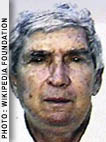
Hassan Alayan

Hassan Alayan

By JOSEPH FITSANAKIS | intelNews.org |
A story by Agence France Presse appears to corroborate allegations, reported on by intelNews on September 4, that United Arab Emirates authorities are systematically expelling from the country Lebanese Shiites who refuse to spy on Hezbollah. A spokesman for the expelled Lebanese said hundreds of them were “summoned by the security services in the UAE before being expelled, and were asked to spy on fellow Lebanese in the Emirates as well as Hezbollah members or face deportation”. Speaking at a conference in Beirut, Hassan Alayan said the expulsions began last June, and so far have specifically targeted the 100,000-strong Lebanese community in the Emirates. Read more of this post

News you may have missed #0125

  • US officials deny deal with Russia on missile shield. Officials from the US Department of Defense have denied persistent rumors that Washington’s decision to scrap the controversial missile defense shield was part of a secret deal with Moscow. They also continue to insist that “[t]his is not about Russia. It never has been about Russia”, according to US defense undersecretary Michele Flournoy.
  • US DHS is hiring cyber experts. The Obama Administration has approved a request by the US Department of Homeland Security to hire of up to 1,000 cyber experts over the next three years. The recruits will include “cyber analysts, developers and engineers”. One hopes the move will also patch the countless holes in the Department’s cyber defense posture, which were revealed last month in an internal report, to little media attention.
  • MI6 is also hiring. Britain’s Secret Intelligence Service –also known as MI6– is hiring and has uploaded a snap test (called “selection tool”) on its website to test whether those interested have what it takes to be a spy. The test, which evaluates how well potential candidates can lie, is located here.

Bookmark and Share

Conflicting information on expulsion of Israeli diplomat from Russia

Nativ logo

Nativ logo

By JOSEPH FITSANAKIS | intelNews.org |
There is conflicting information about the reasons that led to the expulsion of an Israeli diplomat from Russia. The Russian government said on Thursday that Israeli diplomat Shmuel Polishuk was apprehended by Russian security forces and was asked to leave the country on charges of espionage. But Israeli diplomats claim that Polishuk was not expelled due to espionage activities, but because of “personal behavior inappropriate for a diplomat”, which does not relate to his official work. Other sources said that the Russians agreed not to expel Polishuk on espionage charges after Israel threatened “a counter move”. Interestingly, until his expulsion, Polishuk headed Israel’s Nativ delegation in Russia. Read more of this post

FBI ordered to release Cheney records in Valerie Plame probe

Valerie Plame

Valerie Plame

By IAN ALLEN | intelNews.org |
A US federal judge has ordered the FBI to release the transcript of an interview with former US vice-president Dick Cheney, conducted during an investigation into who leaked the identity of CIA operative Valerie Plame. Plame sought compensation after she was publicly named as a secret CIA operative. Along with her husband, former ambassador Joseph Wilson, she has fought a legal campaign, arguing that several Bush administration officials, including former Vice President Dick Cheney, and even President George W. Bush himself, were behind the leak of her CIA role. Cheney had a lengthy interview with prosecutors pursuing the leak case, but the transcripts of the exchange have so far remained secret on national security grounds. But US district Judge Emmet G. Sullivan said yesterday that there is no justification to withhold the entire interview since the FBI investigation has now concluded. Read more of this post

News you may have missed #0124

  • Top Russian spy indicted in sex trafficking case. One of thirteen people indicted on Tuesday in an international sex trafficking case is Dmitry Strykanov, a senior intelligence officer with the Russian Military Intelligence Directorate. Immense corruption still plagues Russian intelligence.
  • Colombian intelligence officer detained in Venezuela. An agent of Colombia’s scandal-prone DAS security agency was detained at a hotel in Maracaibo, Venezuela. The agent, Julio Enrique Tocora Parra, says he was invited to Venezuela by the country’s SAIME immigration agency. A classic case of luring?
  • Spain uncovers double agent’s Russian handler. Spain’s National IntelligenceCenter (CNI) says Petr Melnikov, political attaché at the Russian Embassy in Madrid, facilitated the transfer of Spanish classified documents to Russian intelligence. The documents were allegedly supplied between 2001 and 2004 by Roberto Flórez García former CNI agent, who was arrested by Spanish counterintelligence agents in Tenerife in July of 2007.

Bookmark and Share

US Looks Away from Worsening Philippines Rights Record

Lumbera

Lumbera

By JOSEPH FITSANAKIS and IAN ALLEN | intelNews.org |
Just days after Filipino prizewinning poet and dramatist Bienvenido Lumbera caught a Naval Intelligence Security Force agent spying on him outside his home, another Filipino intellectual has come forward with allegations of government spying. Pedro “Jun” Cruz Reyes, professor of creative writing at the University of the Philippines in Diliman, Quezon City, said he has been the subject of surveillance investigations by government agents since 2006. Such incidents are not a new phenomenon in the Philippines. In 2005, the US State Department noted in its annual human rights report that the Philippines National Police was the country’s “worst abuser of human rights” and that government security elements often “sanction extrajudicial killings and vigilantism”. However, the report adds that these practices are utilized “as expedient means of fighting crime and terrorism”, which may explain why no discernable action has been taken by US authorities to prevent them. In an article published today in The Foreign Policy Journal we examine the recent record of US-Philippine relations. Continue reading at The Foreign Policy Journal

Bookmark and Share

News you may have missed #0123

  • Get ready for body cavity airport searches! Security officials are concerned over a tactic newly employed by al Qaeda, whereby suicide bombers store explosives inside their bodies to avoid detection.
  • Did the US do a deal with Russia on Iran? Two weeks ago, Russian President Dmitry Medvedev hinted that Russia could back tougher sanctions against Iran’s nuclear energy program. Does this signify a deal with Washington, namely US scrapping its missile shield program if Moscow would back efforts to impose tougher sanctions against Iran?
  • Lebanese mayor accused of spying for Israel. Lebanese authorities say Ziad Homsi, mayor of the city of Saadnayel, was recruited by Israeli intelligence in Beijing, China. Lebanon’s immense counterintelligence operation is widening by the hour.

Bookmark and Share

Pakistani spies “visibly angry” at US charge of Taliban links

A.S. Pasha

A.S. Pasha

By IAN ALLEN | intelNews.org |
Recently, Inter-Services Intelligence (ISI), Pakistan’s secretive spy service, gave Washington Post’s associate editor, David Ignatius, a rare look inside its Islamabad headquarters. However, the first known visit to the ISI by a Western journalist in recent years failed to impress the Pakistanis. The latter became “visibly angry” when Ignatius asked them whether they are withholding information about al-Qaeda and the Taliban, as the CIA and other US intelligence agencies claim. The charges, which are disputed by Pakistani officials, led to “a long and animated conversation” with ISI Director, Lieutenant General Ahmed Shuja Pasha, who forbade the US journalist from quoting him directly. Read more of this post