Year in Review: The 10 Biggest Spy-Related Stories of 2014, part I
December 29, 2014 Leave a comment
 By J. FITSANAKIS and I. ALLEN | intelNews.org
Since 2008, when we launched this website, we have monitored daily developments in the highly secretive world of intelligence and espionage, striving to provide an expert viewpoint removed from sensationalism and conspiratorial undertones. As 2014 is about to conclude, we take a look back at what we think are the ten most important intelligence-related developments of the past 12 months. Those of you who are regular readers of this blog will surely agree that we witnessed our fair share of significant intelligence-related stories this year. Some of them made mainstream headlines, while others failed inexplicably to attract the attention of the news media. In anticipation of what 2015 may bring, we present you with our selection of stories below, which are listed in reverse order of importance. The stories are presented in two parts; part two will be published tomorrow. This is part one in the series. Part two is here.
10. South Korean ex-spy chief jailed for bribery and political interference. Much of the world’s media has focused on the seemingly endless stream of lunatic antics by the corrupt government of North Korea. But corruption is also prevalent south of the 38th parallel. The year 2014 saw the disgraceful imprisonment of Won Sei-hoon, who headed South Korea’s National Intelligence Service (NIS) from 2008 to 2013. Last September, a court in Seoul heard that Won ordered a group of NIS officers to “flood the Internet” with messages accusing South Korean liberal election candidates of being “North Korean sympathizers”. Prosecutors alleged that Won initiated the Internet-based psychological operation because he was convinced that “leftist adherents of North Korea” were on their way to “regaining power” in the South. A few months earlier, Won had been sentenced to prison for accepting bribes in return for helping a private company acquire government contracts.
9. Australia spied on US law firm representing Indonesia in trade talks. Spying for direct commercial gain is viewed as a taboo by Western intelligence agencies, who claim to focus their efforts solely on matters directly relating to national security. But according to documents leaked in February, the Australian Signals Directorate (ASD) targeted Mayer Brown, one of the world’s largest law firms, because it represented the commercial interests of the Indonesian state in commercial negotiations with Canberra. To make things worse, the documents also show that that the Australian agency offered to share the intelligence collected from the operation with its American counterpart, the National Security Agency (NSA). After Indonesia withdrew its ambassador from Australia, the two countries signed a joint agreement aimed at curbing their intelligence activities against each other.
8. Hezbollah leader’s senior bodyguard was a Mossad agent. It turns out that the man who directed the personal security detail of the secretary-general of Lebanese militant group Hezbollah was an agent of Israeli intelligence. According to multiple sources in Lebanon and Israel, Mohammed Shawraba, 42, who was arrested earlier this year by Hezbollah’s counter-intelligence force, and is now undergoing trial, was able to penetrate the highest levels of the Shiite militant group and leaked sensitive information to Israel for several years prior to his capture. In 2008, Shawraba was promoted to director of the group’s Unit for Foreign Operations, also known as Unit 910, which collects information on Israeli activities abroad.
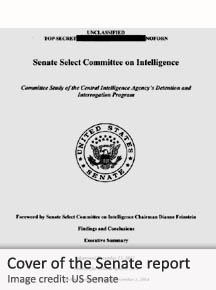
7. Public fight breaks out between Congress and the CIA. The intensity of the media’s focus on the recently published summary of the Congressional report on CIA interrogation practices is understandable. Having said that, we have known about the CIA’s use of waterboarding for years, and the CIA’s use of ‘enhanced interrogation’ goes back to the 1960s, so nobody can claim to have been shocked. What is perhaps more revelatory is the incredibly public spat between the Agency and the Senate Select Committee on Intelligence. The CIA’s own inspector general found that Agency officers spied on Congressional staff investigating the CIA’s use of torture in interrogations. CIA Director John Brennan apologized for the incident, but many are wondering how this will affect intelligence oversight in years to come.
6. Turkey in turmoil as dozens arrested for spying on PM, spy chief. Turkey’s political system appeared to be sinking deeper into crisis this year, as over 100 police officers, some of them senior, were arrested for illegally wiretapping the telephones of high-level government figures, including the Prime Minster and the intelligence chief. They included two former heads of Istanbul police’s counterterrorism unit. Another 13 were later indicted for systematic “political and military spying” against senior government figures. However, critics of Prime Minister Recep Tayyip Erdoğan’s government noted that one of the police officers arrested is the former deputy chief of the Istanbul police department’s financial crimes unit, which earlier this year led an investigation into alleged corrupt practices by senior members of the Erdoğan cabinet.
[First of two parts. Part two is here]









 intelNews.org
Year in Review: The 10 Biggest Spy-Related Stories of 2014, part II
December 30, 2014 1 Comment
Since 2008, when we launched this website, we have monitored daily developments in the highly secretive world of intelligence and espionage, striving to provide an expert viewpoint removed from sensationalism and conspiratorial undertones. As 2014 is about to conclude, we take a look back at what we think are the ten most important intelligence-related developments of the past 12 months. Those of you who are regular readers of this blog will surely agree that we witnessed our fair share of significant intelligence-related stories this year. Some of them made mainstream headlines, while others failed inexplicably to attract the attention of the news media. In anticipation of what 2015 may bring, we present you with our selection of stories below, which are listed in reverse order of importance. This is part two in the series. Part one is here.
5. China stops using US-made communications hardware, fearing espionage. Authorities in China removed for the first time this year Apple products from a government procurement list, because of fears that they are susceptible to electronic espionage by the United States. The products that have been removed from the list include the iPad and iPad Mini, as well as MacBook Air and MacBook Pro products –though interestingly the inventory of removed items does not include Apple smartphone products. There are unconfirmed reports that Russia is about to act likewise, as some Russian lawmakers in the State Duma want deputies with access to classified government information to be banned from using iPhones and iPads, among other Apple products. Do they know something we don’t?
4. Western spy agencies secretly collaborating with Assad regime. Back in 2013, the United States and other NATO allies were preparing to go to war with Syria, in order to help topple the government of President Bashar al-Assad. But the rise of the Islamic State of Iraq and al-Sham, also known as ISIS, has prompted a remarkable U-turn in Western policy on Syria. Last January, the BBC confirmed that secret meetings were being held between Western intelligence officials and senior members of the Syrian government, aimed at “combating radical Islamist groups” in Syria. There are even compelling rumors that American spy agencies are sharing intelligence, and even weapons, with Lebanese militant group Hezbollah, which is now seen by Washington as a force that can help neutralize ISIS. What a difference a year can make!
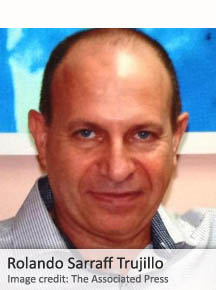
3. US, Cuba, exchange alleged spies as part of rapprochement. Public spy-swaps between adversary governments are extremely rare occurrences. What makes the recent exchange of spies and alleged spies between Washington and Havana even more remarkable is that it appears to be part of a wider warm-up in relations between the two neighboring nations, which have remained virtually frozen since 1960, when the Eisenhower administration broke off all official diplomatic contacts with the Caribbean island. Still, there is one aspect of this very public exchange that remains a mystery: Washington is refusing to provide information about Rolando Sarraff Trujillo, a Cuban intelligence officer who spied for the United States until his arrest by the Cubans in 1995. He was part of the exchange and is now believed to be on American soil.
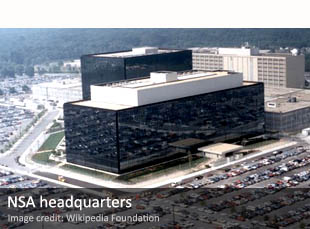
2. NSA spy leaks continue to cause diplomatic headaches for Washington. The NSA has seen itself feature in news headlines more times than ever before this year. For an Agency that relies on secrecy and a low public profile, this is clearly a regrettable state of affairs. We now know about the existence of the NSA’s Office of Tailored Access Operations, described as “something like a squad of plumbers that can be called in when normal access to a target is blocked”. And we know that the NSA targets allies of the US with the same intensity that it targets its traditional adversaries. This, along with leaks about an alleged CIA operation against Germany, caused Berlin to break all intelligence collaboration with Washington and even expel the CIA station chief in the German capital. Turkey came close to doing the same, according to some sources.
1. Western spy agencies refocus on Russia. It is too early to proclaim a Cold War 2.0, but there is no question that Western intelligence agencies have actively began to refocus on Russia more intensely than at any time since the collapse of communism in 1991. This is especially noticeable in the United Kingdom, where military intelligence agencies are reportedly scrambling to rehire retired Russian-language analysts, due to the crisis in Crimea. Meanwhile, this past November Britain’s civilian spy agencies launched a new drive to recruit Russian-language speakers. According to some, the Cold War never ended. IntelNews regulars will recall that, in March of 2013, Oleg Gordievsky, the Soviet KGB’s former station chief in London, who defected to the UK in the 1980s, alleged in an interview that Russia operates as many spies in Britain today as it did during the Cold War.
[Second of two parts. Part one is here]
Filed under Expert news and commentary on intelligence, espionage, spies and spying Tagged with Analysis, espionage, inteligence, year in review