News you may have missed #861 (Syria edition)

Regional map of SyriaBy IAN ALLEN | intelNews.org
►►Report from Syrian city controlled by al-Qaeda. Raqqa, a city in northeastern Syria with approximately one million inhabitants, is now under control of the Islamic State of Iraq and al-Sham (ISIS), the most powerful al-Qaeda affiliate currently operating in Syria. Since ISIS came to power in May, its abuse of Raqqa’s citizens has been well documented. On the surface, this violence appears to be indiscriminate and irrational. Yet, it is also organized and tactical.
►►US weighing closer ties with hardline Islamists in Syria. As the moderate faction of the Syrian rebellion implodes under the strain of vicious infighting and diminished resources, the United States is increasingly looking to hardline Islamists in its efforts to gain leverage in Syria’s civil war. On Monday, the State Department confirmed its openness to engaging with the Islamic Front following the group’s seizure of a Free Syrian Army headquarters last week.
►►Turkey shipped tons of arms to Syria rebels. Turkey has shipped 47 tons of weapons to Syrian rebels since June despite repeated government denials, a local newspaper reported on Monday. The Hurriyet Daily News, citing UN and Turkish Statistics Institute records, said 29 tons of military equipment were sent to opposition fighters in September alone. The government of Prime Minister Recep Tayyip Erdogan, a vociferous opponent of Syrian President Bashar al-Assad, has openly supported the rebels but has always denied arming them.

New generation of FBI counterintelligence agents enters the field

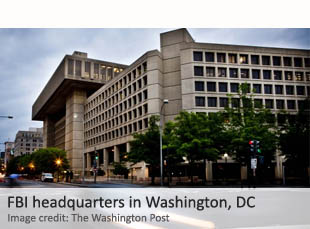
FBIBy IAN ALLEN | intelNews.org
The Federal Bureau of Investigation, America’s foremost counterintelligence agency, is preparing to field its first generation of operatives who acquired the bulk of their professional experiences after 9/11. In an enlightening analysis published in Newsweek, veteran intelligence corresponded Jeff Stein says the FBI’s is now being staffed by a new breed of field agents. This new cohort, which is gradually replacing the older generation of counterterrorism and counterintelligence agents, is far more skilled in the geopolitics of Islam, something that distinguishes them from their older colleagues. Tim Murphy, who recently retired as Deputy Director at the Bureau, told Stein that now “everyone in [FBI] counterterrorism knows the difference [between Sunnis and Shiites]”, which was not the case for many years after 9/11. The new FBI agents, said Murphy, also know “know the difference between factions in al Qaeda [and] the political and religious differences” that feed political Islam. The retired official added that over half of the agents on duty now at the FBI entered the Bureau after 9/11. Their interest in counterterrorism and counterintelligence has been furthered by the FBI’s decision to open up a host of new career branches for agents with specializations in intelligence. The latter have now started to enter the Bureau with degrees in international relations, intelligence studies, or computer science, whereas some years ago backgrounds in law and accounting topped the lists of new recruits. But new counterintelligence and counterterrorism agents are far more into “the world of al-Qaeda and Hezbollah, Chinese hackers and Russian spies”, says Stein. Read more of this post
News you may have missed #860

Edward SnowdenBy IAN ALLEN | intelNews.org

►►Top US-backed rebel commander flees Syria. General Salim Idris of the Free Syrian Army, who was the most senior Western-backed rebel commander in Syria, has fled the country amid growing infighting with Islamist rebels, American officials have said. The rebel military leader fled into Turkey and flew to Doha, Qatar on Sunday, after Islamist rebel groups took over his headquarters and warehouses of US-supplied military gear along the border between Turkey and Syria.
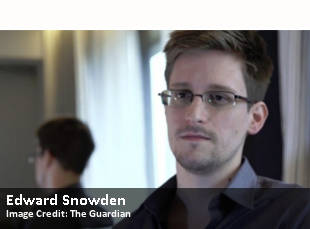
►►NSA co-worker calls Snowden ‘genius among geniuses’. Forbes magazine’s Andy Greenberg says he was contacted by a former co-worker of NSA technical expert Edward Snowden, who described the defector as “a principled and ultra-competent, if somewhat eccentric employee, and one who earned the access used to pull off his leak by impressing superiors [at NSA] with sheer talent”. The unnamed source continued: “that kid was a genius among geniuses […], I’ve never seen anything like it”.
►►Iran claims to have captured MI6 spy. Iran says it has captured a spy working for British intelligence agency MI6 in the south-eastern city of Kerman. The head of Kerman’s revolutionary court said the alleged spy had admitted being in contact with four British intelligence officers 11 times, both inside and outside the country. He said the accused was now on trial and had confessed. The nationality of the alleged spy is not yet known. The UK Foreign Office said it did not comment on intelligence matters.

American who disappeared in Iran in 2007 was working for the CIA

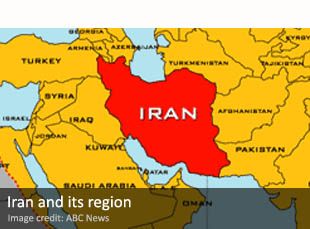
Iran and its regionBy IAN ALLEN | intelNews.org
An American private investigator, who was last seen in Iran in 2007, was under contract with the United States Central Intelligence Agency when he disappeared, according to information published last week. Bob Levinson was last seen alive in a hotel in Iran’s Kish Island, on March 8, 2007. He was reportedly there as a private investigator, to explore alleged links to a worldwide cigarette smuggling network. Both his family and the CIA have vehemently denied rumors that he was secretly working for the US government when he disappeared. Last week, however, the Associated Press and The Washington Post published lead articles in which they alleged that Levinson had been on a CIA mission at the time of his disappearance. The Associated Press, which described the news as “one of the biggest scandals in recent CIA history”, said it decided to run the story after agreeing to delay its publication three times in the past. The news agency said it first confirmed Levinson’s ties to the CIA in 2010, but was told by the US government that airing a story on the subject would compromise Levinson’s safety. Government officials reportedly told Associated Press editors that they were “pursuing promising leads” to get Levinson home, and that news of his CIA connection would fatally hamper their efforts. However the news agency decided to publish the story because, as its editors said, Levinson’s captors now “almost certainly know about his CIA association”. In a story aired on Friday, CNN said it spoke to an unnamed source “involved in the matter”, who confirmed that Levinson was in Iran on private business, but was also under contract with the CIA as an undercover agent. Read more of this post

China ‘hacked European government computers’ prior to G20 summit

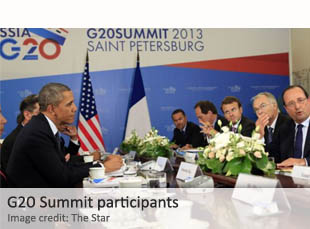
G20 Summit participantsBy IAN ALLEN | intelNews.org

A group of hackers from China managed to compromise computer networks belonging to the foreign ministries of several European governments prior to last September’s G20 Summit, according to a private computer security firm. The Summit, which took place in St. Petersburg, Russia, on September 5 and 6 of this year, brought together the heads of state of 20 major economies, including the United States and many European Union countries. The meeting agenda was dominated by discussions concerning the response of the international community to the chemical attacks in Ghouta, Syria. According to the Reuters news agency, the hackers managed to infiltrate carefully targeted computer networks by sending emails containing infected attachments to employees of foreign ministries. The attached files bore titles such as “US_military_options_in_Syria”, which appeared designed to bear reference to the upcoming G20 Summit. The hacking revelations were made by FireEye, Inc., a California-based security firm, which says it has proof the hackers came from China. The firm says its confidence on the matters stems from “a variety of technical evidence”, such as the language used on the control server used by the hackers, as well as the types of machines that were used to test the virus before it was deployed. FireEye said its experts were able to keep tabs on the “inner workings” of the primary computer server that the hackers used to monitor the compromised computer networks. However, shortly before the Summit begun, the hackers migrated to another server, at which point the FireEye team lost contact with them. Read more of this post

News you may have missed #859

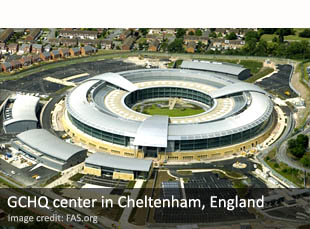
GCHQ center in Cheltenham, EnglandBy IAN ALLEN | intelNews.org
►►Some fear terrorists are exploiting online computer games. American and British spies have infiltrated the fantasy worlds of World of Warcraft and Second Life, conducting surveillance and scooping up data in the online games played by millions of people across the globe, according to documents disclosed by the former National Security Agency contractor Edward J. Snowden. The documents show that intelligence operatives fear that terrorist or criminal networks could use the games to communicate secretly, move money or plot attacks.
►►Niger’s president says Libya risks becoming like Somalia. Libya risks becoming a failed state like Somalia, Niger President Mahamadou Issoufou said last week, a day after gunmen shot dead an American teacher in the eastern city of Benghazi. “Our fear is that Libya falls into the hands of Salafist terrorists and that the state becomes like Somalia”, Issoufou told reporters ahead of a Franco-African summit in Paris. His country adjoins Libya to the south and has fought Islamists at home.
►►Secret memos show British spies’ efforts to keep Cyprus base. Heavily redacted documents show how determined British security and intelligence agencies –including GCHQ, Britain’s signals intelligence agency– were to maintain an effective presence in Cyprus after the strategically important island became independent in 1960. The files also reveal that Archbishop Makarios, the Greek Cypriot leader who became the first president of Cyprus when the island gained independence in August 1960, agreed not only to the UK bases but to British help in setting up his country’s own security and intelligence agencies.

Communist-era spy allegations surface in Czech political wrangling

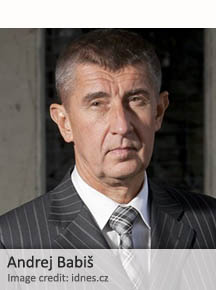
Andrej BabišBy IAN ALLEN | intelNews.org

Allegations that a senior Czech political figure was a government informant during the country’s communist period may disrupt the emergence of a national governing coalition. The Social Democratic Party won 20.5 percent in last October’s parliamentary election, emerging as the leading party in the Czech Republic’s fragmented political scene. The center-left party has said it is planning to form a governing coalition by reaching out to the centrist Christian Democratic Union, as well as a new center-right party calling itself ANO 2011 (Ano stands for ‘yes’ in Czech). The new party says it aims to end corruption in the country, abolish immunity from prosecution for elected parliamentarians, tackle unemployment, and improve the Czech Republic’s crumbling infrastructure. The party has also said it is willing on principle to join a wider government coalition, providing it is offered control of the country’s finance ministry. A leading contender for the ministerial position is ANO’s founder and main financial backer, Andrej Babiš. A business tycoon, who made his fortune importing and exporting fertilizers, Babiš is the Czech Republic’s second richest man, with an estimated fortune of $2 billion. His spectacular entrance into Czech politics was confirmed when ANO, which he founded in 2011, came in second in last October’s elections, receiving 18 percent of the national vote and gaining 47 seats in parliament. However, plans for a three-party coalition have been halted by allegations that Babiš may have been an informant for Czechoslovakia’s StB secret police during the 1980s. The claims first emerged in a Slovak newspaper shortly before last October’s elections, but failed to prevent ANO and Babiš from making a spectacular entry into Czech national politics. Later, however, the media allegations were substantiated by Slovakia’s Institute of National Memory, which provides public access to previously classified records of the StB and other Czechoslovak intelligence agencies during the country’s communist period. The Institute says that Babiš, who was a card-carrying member of the Communist Party of Czechoslovakia, had regular contact with the StB in the 1980s. At that time he was living in North Africa working for Petrimex, a Czechoslovakian government-owned international trade company. Read more of this post

News you may have missed #858

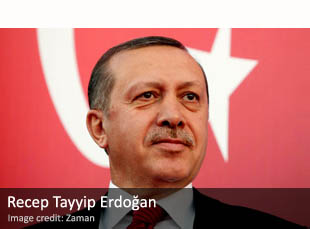
Recep Tayyip ErdoğanBy IAN ALLEN | intelNews.org

►►The FBI facilitates NSA’s domestic surveillance. Shane Harris writes in Foreign Policy: “When the media and members of Congress say the NSA spies on Americans, what they really mean is that the FBI helps the NSA do it, providing a technical and legal infrastructure that permits the NSA, which by law collects foreign intelligence, to operate on US soil. It’s the FBI, a domestic US law enforcement agency, that collects digital information from at least nine American technology companies as part of the NSA’s PRISM system. It was the FBI that petitioned the Foreign Intelligence Surveillance Court to order Verizon Business Network Services, one of the United States’ biggest telecom carriers for corporations, to hand over the call records of millions of its customers to the NSA”.
►►Egypt expels Turkish ambassador. Egypt says it has ordered the Turkish ambassador to be expelled, following comments by Turkey’s prime minister. Saturday’s decision comes after Turkish Prime Minister Recep Tayyip Erdoğan renewed his criticism of Egypt’s new leaders earlier in the week. Turkey and Egypt recalled their ambassadors in August following Turkey’s sharp criticism of Egypt’s leaders and Mohamed Morsi’s ouster. Turkey’s ambassador returned to Egypt a few weeks later, but Egypt has declined to return its ambassador to Turkey. Turkey’s government had forged a close alliance with Morsi since he won Egypt’s first free presidential election in June of 2012.
►►The internet mystery that has the world baffled. For the past two years, a mysterious online organization has been setting the world’s finest code-breakers a series of seemingly unsolvable problems. It is a scavenger hunt that has led thousands of competitors across the web, down telephone lines, out to several physical locations around the globe, and into unchartered areas of the “darknet”. Only one thing is certain: as it stands, no one is entirely sure what the challenge —known as Cicada 3301— is all about or who is behind it. Depending on who you listen to, it’s either a mysterious secret society, a statement by a new political think tank, or an arcane recruitment drive by some quasi-military body. Which means, of course, everyone thinks it’s the CIA.

Announcement: Intelligence educators invite papers for conference

IAFIE conferenceBy IAN ALLEN | intelNews.org

Intelligence educators from around the world are invited to participate in the 10th anniversary conference of the International Association for Intelligence Education (IAFIE) this coming July. The Association was formed in June 2004, as a result of a gathering of more than 60 intelligence studies trainers and educators at the Sixth Annual International Colloquium on Intelligence at Mercyhurst College in Erie, Pennsylvania. This group, from various intelligence disciplines including national security, law enforcement, competitive intelligence, and others, recognized the need for a professional association on intelligence, a new and diverse field of academic study that forms the basis of what has since become known as ‘intelligence studies’. Today, IAFIE is internationally recognized as one of the foremost groups working to advance research, knowledge and professional development in intelligence education. Mercyhurst University will be the hosting institution of IAFIE’s conference, which will take place from July 14 to 16. The theme for the conference is “Theory and Practice in Intelligence Education and Training”. The organizers invite ideas for papers with a focus on traditional intelligence studies or for panel discussions on various subjects including the history of intelligence analysis, the role of intelligence education in developing the profession, as well as international perspectives on the discipline and the profession. Other subjects of interest to the conference center on theoretical or practical pedagogical approaches to intelligence education, relevant research initiatives, future trends in the field of intelligence analysis, and explorations of the intersection between intelligence education and intelligence training. IAFIE’s Board of Directors specifies that papers and copies of any audiovisual materials in support of conference submissions are due no later than April 15, 2014. For more information, please refer to the IAFIE website.

News you may have missed #857 (hacking edition)

Mossad sealBy IAN ALLEN | intelNews.org
►►UK spies hacked Belgian phone company using fake LinkedIn page. British spies hacked into the routers and networks of a Belgian telecommunications company Belgacom by tricking its telecom engineers into clicking on malicious LinkedIn and Slashdot pages, according to documents released by NSA whistleblower Edward Snowden. The primary aim, reports the German newsmagazine Der Spiegel, which obtained the documents, was to compromise the GRX router system that BICS controlled, in order to intercept mobile phone traffic that got transmitted by the router.
►►Indonesian hackers behind attack on Australian spy service website. Indonesian hackers are believed to have brought down the website of the Australian Secret Intelligence Service, Australia’s leading spy agency. The page was not working on Monday afternoon after hackers launched a “denial of service” attack. A “404 not found” message typically appears when a website crashes under a “denial of service” attack. The cyber attack is reportedly a response to revelations that Australia had been spying on its closest neighbor through its Jakarta embassy.
►►Hamas blasts alleged Mossad website. Hamas officials released a warning about a website called Holol (“solutions”), claiming it is a ruse set up by Israel’s Mossad intelligence agency to recruit Gazans as informants. The website’s “Employment” page states, “due to our connections with the Israeli Civil Administration, we can help you bypass the bureaucratic tape and procedural processes which prevent you from leaving Gaza”. The site also offers Israeli medical assistance, “due to connections with the Ministry of Health and the Israeli Civil Administration”. Palestinians interested in contacting the website’s officials are asked to provide their full name, telephone number, email, topic of inquiry, and an explanation of why they are asking for help. Last month, Lebanese group Hezbollah accused the Mossad of being behind a website seeking information on Hezbollah’s intelligence wing.

News you may have missed #856

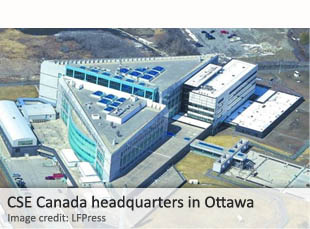
Communications Security Establishment CanadaBy IAN ALLEN | intelNews.org
►►Expert says Australia spies for the United States. Intelligence expert Professor Des Ball claims Australia is playing a role in America’s intelligence networks by monitoring vast swathes of the Asia Pacific region and feeding information to the US. Dr. Ball says the Australian Signals Directorate –formerly known as the Defence Signals Directorate– is sharing information with the National Security Agency (NSA). He adds that Australia has four key facilities that are part of the XKeyscore program, the NSA’s controversial computer system that searches and analyses vast amounts of internet data.
►►Canada silent on allegations of spying. A spokeswoman for Communications Security Establishment Canada has refused to comment on allegations that the agency mounts foreign operations through Canada’s embassies abroad. German magazine Der Spiegel says Canada is using diplomatic facilities to support surveillance operations in league with key allies the United States, Britain and Australia. The German newsmagazine indicates the Canadian spy agency hosts “Stateroom” sites —a term for covert signals-intelligence gathering bases hidden in consulates and embassies.
►►Russia denies spying on G20 leaders during summit. Russia has denied reports it attempted to spy on foreign powers meeting at the G20 summit in St Petersburg earlier this year, denouncing the allegations as a “clear attempt to divert attention” from revelations concerning the United States’ National Security Agency. Two Italian newspapers claimed on Tuesday that USB flash drives and cables to charge mobile phones that were given to delegates —including heads of state— at the September meeting were equipped with technology to retrieve data from computers and telephones.

News you may have missed #855

Jean-Claude JunckerBy IAN ALLEN | intelNews.org
►►Russian spy agency seeks to expand internet surveillance. Under an order drafted by Russia’s Communications Ministry, communications service providers would have to install equipment that would record and save all internet traffic for at least 12 hours and grant the security services exclusive access to the data. The draft order, made public on Monday, has been drafted with the help of the Federal Security Service (FSB), the successor to the Soviet-era KGB spy agency. It would take effect in July if it receives final government approval.
►►World War I spy Mata Hari’s birthplace gutted by fire. A fire in the Netherlands has gutted the birthplace of exotic dancer and World War I spy Mata Hari, Dutch media said on Sunday. Mata Hari was born as Margaretha Geertruida Zelle on August 7, 1876, the daughter of a local shopkeeper. She was arrested and executed by firing squad in October 1917, aged 41, after being accused of being a German spy during the First World War. The fire consumed the hair salon that now occupies the place of Mata Hari’s birth, the only remainder untouched by the flames was a small statuette of her dancing, erected outside the shop.
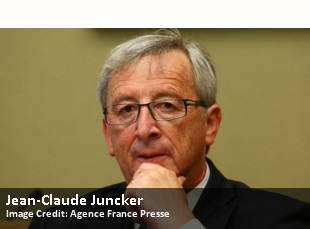
►►Luxembourg PM survives spy scandal in elections. Luxembourg’s Christian Democrat party of long-serving Prime Minister Jean-Claude Juncker easily remained the biggest party and the first choice to form a new coalition government following yesterday’s elections. Luxembourg was shocked into snap elections this summer after Juncker failed to contain a spying scandal centering on allegations of eavesdropping and wiretapping on politicians, and the keeping of files on ordinary citizens and leading figures dating back to the Cold War.

News you may have missed #854 (SIGINT edition)

NSA/GCHQ listening station in Menwith HillBy IAN ALLEN | intelNews.org
►►British ex-minister accuses GCHQ of ignoring surveillance fears. Nick Brown, a former Labour Party cabinet minister, has warned that GCHQ and Britain’s other intelligence agencies appear to be undertaking mass surveillance without parliament’s consent because the country’s coalition failed to get the communications data bill –-dubbed the “snoopers’ charter” by critics– passed into law after Liberal Democrat opposition. Brown said there was an “uncanny” similarity between the GCHQ surveillance programs exposed by the US whistleblower Edward Snowden and proposals in the first part of the bill.
►►Analysis: The NSA’s new codebreakers. Matthew Aid writes: “There was a time when the codebreakers of the National Security Agency actually took the lead in solving enemy encryption systems. These days, not so much. In today’s NSA, it’s hackers, break-in artists, corporate liaisons, and shadow salesman using front companies who are at the forefront of this effort. Even so-called “hacktivists” play an unwitting role in helping the NSA gain access to computer networks –both hostile and friendly. Just about the only place that’s somewhat immune to the NSA’s new style of codebreaking attacks? North Korea, because it’s so disconnected from the rest of the world’s networks”.
►►UKUSA treaty countries collecting data for NSA. The latest leaks from former US intelligence contractor Edward Snowden reveal a new dimension to the US-led electronic eavesdropping, with address books and ”buddy lists” from Yahoo!, Hotmail, Facebook and Gmail accounts being harvested across the globe. The documents, published by The Washington Post on Tuesday, show the clear involvement of Australia along with the US, Britain, Canada and New Zealand —the so-called “five eyes” intelligence-sharing nations.

Medical review article considers Arafat poisoning theory

Yasser Arafat in Tunis in 1993By IAN ALLEN | intelNews.org
The publication of a peer reviewed article in one of the world’s leading medical journals has reinforced the possibility that the late Palestinian leader Yasser Arafat may have died of poisoning. A nine-month study into the possible poisoning of the founder of Palestinian nationalist group Fatah, was commissioned in 2012 by Qatari news channel Al Jazeera. It was undertaken by a team of researchers at the Institut de Radiophysique (IRA) in Lausanne, Switzerland. According to the results, announced in July of that year, significant traces of the radioactive substance polonium 210 were discovered on the personal artifacts that Arafat used during his final days while in hospital in Paris, France, in 2004. According to the IRA, some of the Fatah leader’s personal belongings, including his underwear and his toothbrush, contained levels of polonium that were as many as ten times higher than those in random samples used as control subjects in the study. Shortly after the IRA study, Arafat’s wife and daughter filed an official complaint with French judicial authorities, who in turn decided to open an official murder investigation into the death of the late Palestinian national leader. Now British medical journal The Lancet has published a peer reviewed analysis of the IRA research, which outlines and endorses its conclusions. The article, entitled “Improving forensic investigation for polonium poisoning”, was authored by a group of researchers at the IRA in Lausanne and at the University Centre of Legal Medicine, which is also in Switzerland. It explains the procedures followed during the forensic investigation of  Arafat’s belongings, and examines the theory that Arafat may have been poisoned. The researchers state that the “findings [of the investigation] support the possibility of Arafat’s poisoning with 210Po”. Read more of this post

News you may have missed #852

North and South KoreaBy IAN ALLEN | intelNews.org
►►Did US deny entry to German author because he criticized the NSA? Questions have arisen after the German author Ilija Trojanow was denied entry to the United States, apparently without reason. Trojanow had been invited to a German language convention in the US city of Denver. However, he was left stranded at Salvador da Bahia airport, in Brazil. A colleague of the writer claims his call for clarity about US spying activity is the answer. A spokeswoman for Trojanow’s publisher said he was on his way back to Germany on Tuesday.
►►Analysts stress ‘sophisticated tradecraft’ after Iranian spy arrested in Israel. Israeli officials over the weekend released details regarding the arrest of an Iranian-Belgian citizen accused of conducting extensive espionage against Israeli and American targets inside the Jewish state, deepening concerns regarding the scope and sophistication of Iranian intelligence tradecraft. Ali Mansouri, in his mid-50s, was arrested on September 11 at Tel Aviv’s Ben-Gurion Airport by the Shin Bet intelligence service. One Israeli military correspondent observed that, in the case of Mansouri, “Iran followed the playbooks of the most advanced intelligence agencies in the world”.
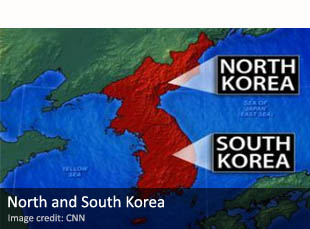
►►Northern spy lifts cloak on Koreas’ deadly rivalry. Kim Dong-sik is a North Korean agent captured in the South in 1995. He underwent four years of interrogations before joining the South Korean military counterintelligence command. He is now an analyst at the Institute for National Security Strategy, a research organization affiliated with the National Intelligence Service. His tale, detailed in a new memoir, provides a rare, firsthand look at the often lethal spy war that the rival Koreas waged for decades and that many fear may persist today.