News you may have missed #674

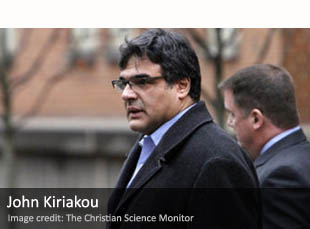
John KiriakouBy IAN ALLEN | intelNews.org |
►►Ex-CIA officers blast Kiriakou. Two former CIA intelligence officials, who spoke to The Washington Times, have rejected the image of John Kiriakou as a high-minded whistleblower who sought to expose official wrongdoing or a botched intelligence operation. Bruce Klingner, who worked as an analyst at the Defense Intelligence Agency and the CIA, called Mr. Kiriakou’s alleged actions “a betrayal of the trust the US government placed in him”. Bart Bechtel, a former CIA clandestine officer, said he considered Kiriakou’s actions “egregious”.
►►US air strikes in Yemen go largely unreported. Last Tuesday’s attacks in southern Yemen were among the biggest carried out by the United States in Yemen since airstrikes began there in November 2002. These strikes underline how the Americans are escalating covert operations against two Islamist groups in the region –al-Qaida in the Arabian Peninsula and Somalia’s al-Shabaab.
►►West explores prospects for Assad’s exile. The United States, European governments and Arab states have begun discussing the possibility of exile for Bashar al-Assad despite skepticism the defiant Syrian president is ready to consider such an offer, Western officials said on Wednesday. While talks have not progressed far and there is no real sense that Assad’s fall is imminent, one official said as many as three countries were willing to take him as a way to bring an end to Syria’s bloody 10-month-old crisis.

News you may have missed #673

Jeffrey Paul DelisleBy IAN ALLEN | intelNews.org |
►►Israel outsources intelligence-gathering to rightwing groups. The government and military of Israel have unofficially outsourced some of their intelligence work to private organizations that monitor anti-Israel incitement in the Palestinian media and are associated with right-wing politics, according to several high-ranking government and military sources.
►►NATO report finds Pakistan spies help Taliban. The BBC says it has seen a NATO report stating that the Taliban in Afghanistan are being directly assisted by Pakistani security services. The leaked report, derived from material from 27,000 interrogations with more than 4,000 captured Taliban, al-Qaeda and other foreign fighters and civilians, also claims Pakistan knows the locations of senior Taliban leaders. The US said exactly the same thing last September.
►►Another Russian diplomat ‘leaves’ Canada. Another Russian diplomat has left Canada. Dmitry Gerasimov, a consular officer with the Russian government’s office in Toronto, left in January. He is the second diplomat that the Russian embassy in Canada acknowledges has quit this country in January. The other was Colonel Sergey Zhukov, the defense attaché for the Russian government in Ottawa. All totaled, six Russian diplomats that have been dropped from Ottawa’s list of recognized foreign representatives in the last 11 days. It’s not clear which, if any, of recent these exits can be tied to the Jeffrey Paul Delisle spy controversy.
News you may have missed #672

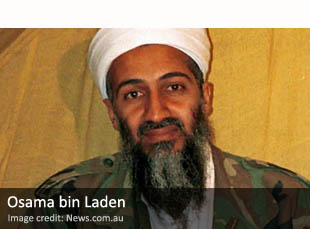
Osama bin LadenBy IAN ALLEN | intelNews.org |
►►CIA claims bin Laden death photos would trigger violence. The Central Intelligence Agency says releasing images of a dead Osama bin Laden “could trigger violence, attacks, or acts of revenge against the United States”. Disclosing such images, including one showing the bullet wound to bin Laden’s head, the government said, “plausibly and logically pose a particularly grave threat of inflaming anti-American sentiment and resulting in retaliatory harm”. The agency made that argument Wednesday in a Freedom of Information Act lawsuit brought by Judicial Watch, which claims the CIA should release the photos taken by US forces. The American public, Judicial Watch said, has a “right to these historical artifacts”.
►►Kuwait accused of tapping phones of prominent citizens. According to the report published in Kuwaiti media, the country’s State Security Department purchased an integrated intelligence system from a former Soviet country last year, and placed it in a restricted zone inside the headquarters’ building. But last July, everything in the isolated room, including staff members hired specifically to operate the devices, vanished without an explanation, said sources. An investigation is currently ongoing to unearth the mystery behind the devices’ disappearance, and also examine information which hint that the devices could have been used by a certain unnamed individual to spy on prominent Kuwaitis.
►►Did US FDA spy on whistleblowers? The US Food and Drug Administration electronically spied on whistleblowers who alerted the Obama administration and Congress of alleged misconduct in the agency, according to a complaint filed in a US federal court. Named as defendants in the lawsuit are the FDA and several of its employees, the Surgeon General, the Health and Human Services Secretary, among others.

News you may have missed #676

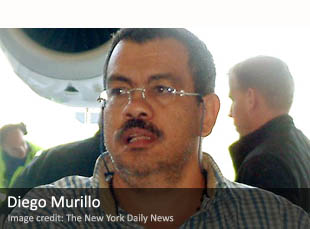
Diego MurilloBy IAN ALLEN| intelNews.org |
►►US admits Pakistani doctor was CIA agent. The United States has confirmed publicly for the first time that a Pakistani doctor long suspected of collecting vital evidence before the assassination of Osama bin Laden was indeed working for the CIA. Defense Secretary Leon Panetta has told 60 Minutes on CBS that Shakil Afridi helped provide proof that the compound in Abbottabad, to which they had tracked a Bin Laden courier, was indeed sheltering the al-Qaeda leader. Panetta also told 60 Minutes that he remains convinced that someone in the Pakistani government “must have had some sense” that a person of interest was in the compound. He added that he has no proof that Pakistan knew it was bin Laden.
►►Czech secret services accused of political spying. The Czech government “spies on” the Communist Party of Bohemia and Moravia (KSCM), Miroslav Grebenicek, its former leader, said in a parliamentary question to Prime Minister Petr Necas. Grebenicek said he had recently received information that the Interior Ministry and some intelligence bodies were “tasked to spying on the KSCM or to incite for, organize and execute the shadowing of the KSCM”. Necas dismissed the allegation, saying that the government does not shadow any party.
►►Colombian paramilitaries protected by spy agency. Colombia’s rightwing paramilitary organization AUC received the support of the country’s now-defunct intelligence agency DAS. The group also helped the government of former President Alvaro Uribe in a conspiracy to discredit the country’s Supreme Court that was investigating ties between the paramilitaries and politicians, according to official testimony by senior AUC commander Diego Murillo, alias “Don Berna”.

News you may have missed #675

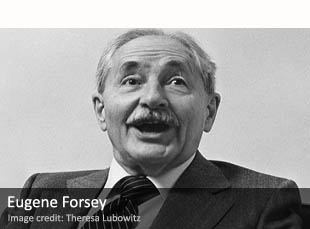
Eugene ForseyBy IAN ALLEN | intelNews.org |
►►US ‘has engaged in cyberwarfare’. Former National Security Agency Director Mike McConnell said in an interview with Reuters that the United States has already used cyber attacks against an adversary. Most believe he was referring to Stuxnet, the computer virus unleashed against Iran in 2010.
►►Philippines studying US offer to deploy spy planes. The Philippines is considering a US proposal to deploy surveillance aircraft on a temporary, rotating basis to enhance its ability to guard disputed areas in the South China Sea, the Philippine defense minister said last week. The effort to expand military ties between the United States and the Philippines, which voted to remove huge American naval and air bases 20 years ago, occurs as both countries grapple with the growing assertiveness of China.
►►Canadian intelligence spied on constitutional expert. Canadian security forces kept close tabs on renowned constitutional scholar Eugene Forsey from his early days as a left-wing academic to his stint as a senator, according to newly declassified documents. The collection of more than 400 pages, which has been obtained by Canadian newspaper The Toronto Star, reveals the RCMP Security Service (the predecessor to the Canadian Security Intelligence Service), followed Forsey for four decades throughout his career as an economics professor, research director for the Canadian Congress of Labour (now called the Canadian Labour Congress), a two-time Ottawa-area candidate for the Cooperative Commonwealth Federation and then his 1970 appointment as a Liberal senator. No surprises here.

News you may have missed #674

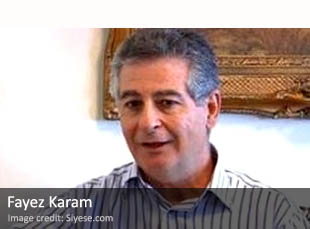
Fayez KaramBy IAN ALLEN | intelNews.org |
►►Lebanese ex-general gets prison sentence for spying for Israel. Last Tuesday’s sentence of former Brigadeer General Fayez Karam (pictured) means he will spend six more months in jail. He has been in prison since mid-2009, said the officials on condition of anonymity in line with regulations. Karam, who in the late 1980s led Lebanon’s counterespionage unit, ran for a parliament seat in 2009 as a senior member of the Free Patriotic Movement of Christian leader and Hezbollah ally Michel Aoun.
►►US may share intelligence with Nigeria. Nigeria and the United States plan to “explore the development of intelligence fusion capability”. This statement was contained in a joint communiqué issued at the end of a two day inauguration of a regional security cooperation working group held at the Ministry of Foreign Affairs in Abuja, Nigeria. The two countries will be collaborating “on training, logistics intelligence sharing, modernization of the security services and other requirements”.
►►Afghan jailed for 16 years for spying for Iran. An Afghan man, named only as Mahmmood, has been jailed for 16 years for spying for neighboring Iran. He was allegedly found in possession of photographs of foreign and Afghan military installations in western Herat province, and had Iranian intelligence officials’ phone numbers in his notebook.

News you may have missed #673

John KiriakouBy IAN ALLEN | intelNews.org |
►►Canada arrest shows spy times have changed in Russia. There are aspects of the spy case of Canadian Sub-Lt. Jeffery Delisle that differ substantially from spy cases dating back to Cold War espionage waged by the now-defunct Soviet system. As a sign of changing times, the Russian media has acknowledged Delisle was allegedly spying for them —something that would never be admitted in Soviet times when the KGB and GRU were in ascendency.
►►US court upholds S. Korean ex-spy’s asylum ruling. Kim Ki-sam, who left South Korea’s state spy agency in 2000, applied for asylum in the US in 2003, saying he would face persecution and prosecution if he was forced to return to South Korea because he had revealed information about secret operations to help then-President Kim Dae-jung win the Nobel Peace Prize. A US court has now upheld a 2008 ruling to grant him political asylum.
►►Kiriakou’s wife resigns from CIA. Heather Kiriakou, who has served as a top analyst at the Agency, resigned Tuesday amid accounts that she had been pressured to step down after her husband —John Kiriakou, a former agency employee— was charged with leaking classified information to the press. Two sources in direct contact with the Kiriakous told The Washington Post that Heather had submitted her resignation under pressure from superiors at the CIA.

News you may have missed #672

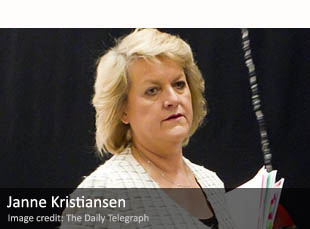
Janne KristiansenBy IAN ALLEN | intelNews.org |
►►Russian military intelligence to ‘change tactics’. Russian military intelligence is adjusting its work methods in response to the “worsening international situation”, Igor Sergun, the head of GRU —the country’s largest espionage agency— has told President Dmitry Medvedev. Currently, the GRU’s main focus is on “hot spots where terrorist and extremist groups are acting, regions with crisis situations, and also the sources and possible routes of illegal proliferation of nuclear materials and the components of weapons of mass destruction”, Sergun told Medvedev.
►►Norway spy chief quits in secrecy gaffe. Norway’s head of intelligence Janne Kristiansen has handed in her resignation because she said too much during a parliamentary hearing. According to a transcript, Ms Kristiansen, who until now headed the country’s Police Security Service (PST), told the hearing that Norway had agents working in Pakistan. According to reports Pakistan has asked the government of Norway to explain Kristiansen’s remarks.
►►Review of Australia’s spy community released. Public findings of the first independent review of Australia’s intelligence community in eight years were released on January 25. The 2011 Independent Review of the Intelligence Community acknowledges and justifies the Australian spy agencies’ unprecedented growth since September 11, which saw some agencies increasing their funding almost 500 per cent in a decade. Meanwhile, David Irvine, Director of the Australian Security Intelligence Organization, said in a rare public talk that future Australian spies would be recruited “from within our newly arrived migrant communities”.

News you may have missed #671

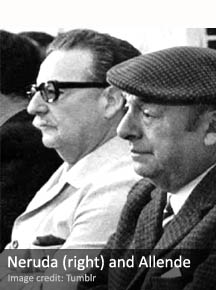
Pablo Neruda (right) and Salvador AllendeBy IAN ALLEN | intelNews.org |
►►German ‘spies’ detained in Pakistan. Three alleged German spies have been detained in Pakistan by police and released to German diplomats, according to reports. The men were detained last Saturday in the northeastern city of Peshawar by officers who accused them of belonging to “an unauthorized liaison office of the German embassy”. A Pakistani official said counterintelligence authorities had been observing the three Germans “for months”.
►►Was poet Pablo Neruda murdered? Pablo Neruda, Chile’s Nobel Prize-winning poet, died exactly 12 days after the brutal coup that ended the life of his close friend, socialist President Salvador Allende. The official version was that he died of natural causes brought on by the trauma of witnessing the coup and the lethal persecution of many of his friends. But now Neruda’s body might be exhumed for testing to address long-simmering suspicions that the poet was poisoned.
►►Britain’s secret mission to beat Gaddafi. British efforts to help Libyan rebels topple Colonel Gaddafi were not limited to air strikes. On the ground –and on the quiet– British special forces soldiers were blending in with rebel fighters. The BBC’s Newsnight program has produced a report on the subject. The report includes information on E Squadron, which has not hitherto been discussed publicly. It was formed in 2007 to work closely with MI6, and is mainly involved in missions “where maximum discretion is required”.

News you may have missed #670: Analysis edition

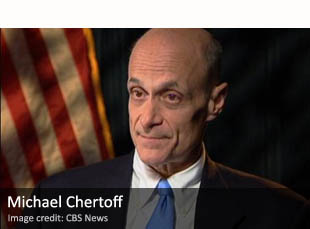
Michael ChertoffBy IAN ALLEN | intelNews.org |
►►Some argue US DHS should change intelligence mission. A decade after Congress created the Department of Homeland Security, the Aspen Homeland Security Group, which is co-chaired by former Homeland Security Secretary Michael Chertoff (pictured), says it is time for the agency to shift its focus from foreign threats to working with local governments and the private sector. Aspen pushes for even more intelligence outsourcing —no surprises there.
►►Not-so-covert Iran war buys West time but raises tension. “Ten out of 10. They hit the target and nobody got caught”, former US intelligence officer Robert Ayers told Reuters of the January 11 killing of Iranian nuclear scientist Mostafa Ahmadi-Roshan. “What makes these things so impressive is they gather a lot of information and do their ‘on the ground’ homework, which can take months”. Sidney Alford, a British explosives expert, says the hit was technically “professional. It worked and it worked very well”.
►►Inside Mossad’s war on Tehran. “In the five attacks on nuclear scientists, the hit squad has used a motorbike every time. The motorcyclist is ubiquitous in the capital’s traffic jams, often wearing a surgical mask for protection against the heavy pollution and able to move close to the target between the lines of stationary cars without attracting attention”.

News you may have missed #669

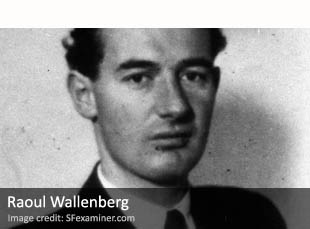
Raoul WallenbergBy IAN ALLEN | intelNews.org |
►►UK admits using fake rock to spy on Russians. Britain has admitted for the first time that it was caught spying when Russia exposed its use of a fake rock in Moscow to conceal electronic equipment. Russia made the allegations in January 2006, but Britain has not publicly accepted the claims until now. Jonathan Powell, then Prime Minister Tony Blair’s chief of staff, told a BBC documentary it was “embarrassing”, but “they had us bang to rights”. He added: “clearly they had known about it for some time”.
►►New book examines forgotten CIA officer Jim Thompson. The CIA’s longtime man in Southeast Asia, Jim Thompson, fought to stop the agency’s progression from a small spy ring to a large paramilitary agency. Now a new book, The Ideal Man: The Tragedy of Jim Thompson and the American Way of War, by Joshua Kurlantzick, examines the life and exploits of the man known as “Silk King” Jim.
►►Sweden to probe fate of WWII hero Wallenberg. Raoul Wallenberg (pictured) was a shrewd businessman who, in the summer of 1944, was posted as Sweden’s ambassador in Budapest, Hungary. He was also an American intelligence asset, having been recruited by a US spy operating out of the War Refugee Board, an American government outfit with offices throughout Eastern Europe. He was abducted by Soviet intelligence officers in the closing stages of World War II, and his fate is one of the unsolved mysteries of 20th century espionage. Now Sweden says it will open a new probe into his disappearance.

News you may have missed #668

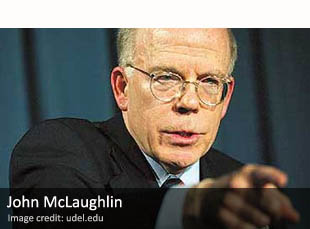
John McLaughlinBy IAN ALLEN | intelNews.org |
►►Ex-CIA chief says war against Iran would be ‘very bad option’. Former CIA acting director John McLaughlin (pictured) said the United States can engage Iran through diplomacy, sanctions or military action, but warned the latter choice “would be a very bad option”. Speaking during a panel discussion in Washington Tuesday, McLaughlin said direct military action with Iran could grow to involve Hezbollah, the militant group based in Lebanon.
►►US warns Israel on Iran strike. US defense leaders are increasingly concerned that Israel is preparing to take military action against Iran, over US objections, and have stepped up contingency planning to safeguard US facilities in the region in case of a conflict. The US wants Israel to give more time for the effects of sanctions and other measures intended to force Iran to abandon its perceived efforts to build nuclear weapons.
►►Iran tightens security for scientists after killing. The nature of the extra security was not disclosed, but it was reported a day after Iran’s Parliament speaker, Ali Larijani, an outspoken promoter of Iran’s nuclear independence, said that investigators had identified and detained an unspecified number of suspects in the assassination of Mostafa Ahmadi Roshan, the deputy director at the Natanz enrichment site.

News you may have missed #667

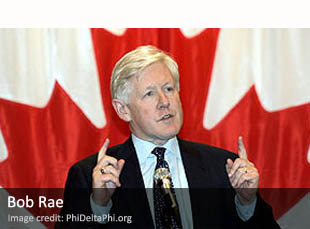
Bob RaeBy IAN ALLEN | intelNews.org |
►►Canadian authorities spied on political leader. The Royal Canadian Mounted Police spied on Bob Rae, current leader of Canada’s Liberal Party, when he was a student, and likely amassed a personal dossier on him, newly declassified documents reveal. Really, is there anyone in Canada who has not been spied on by the RCMP?
►►US intel community says Taliban want Afghanistan back. The Associated Press cites “two current and one former US official” who said anonymously that the classified Afghan National Intelligence Estimate declares the Afghanistan War “at a stalemate“, and says NATO security gains are “far outweighed by corruption at all levels of Afghan government”.
►►Canadian naval officer charged with espionage. A member of the Royal Canadian Navy has become the first person charged under the country’s post-9/11 secrets law for allegedly passing protected government information to an unknown foreign body. Sub-Lt. Jeffrey Paul Delisle, 40, was charged Monday under the Security of Information Act, which came into effect in 2001.

News you may have missed #666 (superstition edition)

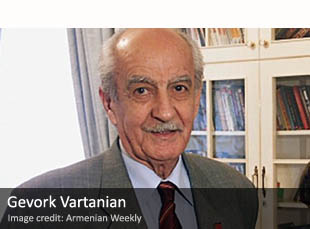
Gevork VartanianBy IAN ALLEN | intelNews.org |
►►Soviet spying legend Gevork Vartanian dies. Legendary Soviet spy Gevork Vartanian, who helped foil Operation LONG JUMP, a Nazi plot to kill the three main Allied leaders in Tehran during World War II, has died in Moscow, aged 87. Operating in Tehran during World War II, he tracked German commandos, including the infamous Nazi operative Otto Skorzeny, who had arrived to attack a summit attended by Stalin, Roosevelt and Churchill.
►►Turkey arrests ex-armed forces chief over coup charges. Turkish government prosecutors allege that Ilker Basbug, who retired as Turkey’s chief of staff in 2010, led a terrorist organization and plotted to overthrow the government. Remarkably, most English-language sources, including the Financial Times, managed to report Basbug’s arrest without mentioning Ergenekon, the ultra-nationalist network uncovered by Turkish police in 2007, which has resulted in hundreds of arrests, including that of Basbug.
►►Lebanon claims arrest of ‘longtime’ Israeli spy. The Lebanese army has detained a man on suspicion of collaborating for years with Israel’s Mossad spy agency. The man, identified as Elias Younes, is a retired employee of the state telecommunications company Ogero. Hezbollah-affiliated sources said Younes had been dealing with Israel for “over 35 years”. See here if you are wondering where you have heard before about Lebanese telecommunications employees allegedly spying for Israel.

News you may have missed #665

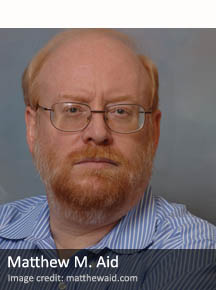
Matthew M. AidBy IAN ALLEN | intelNews.org |
►►Joseph Fitsanakis interviewed on ABC Radio National. IntelNews‘ own Dr Joseph Fitsanakis was interviewed on Friday by reporter Suzanne Hill, for ABC Radio National’s flagship evening news program ‘PM‘. In the interview, which was about the assassination of Iranian nuclear scientist Mostafa Ahmadi-Roshan, Fitsanakis points the finger at the Mossad, and explains why he doesn’t believe the United States had anything to do with the killing. You can listen to the interview here. The transcript is here.
►►India releases diplomat jailed for spying. Last April, Madhuri Gupta, second secretary at the Indian high commission in Islamabad, Pakistan, was arrested for working for Pakistan’s ISI spy agency. She apparently had a “relationship of personal affection” with an aide of her Pakistani handler. On Tuesday, she was granted bail by an Indian court, after 21 months in prison.
►►Matthew Aid interviewed about his new book. Matthew M. Aid, author of The Secret Sentry, has written a new book, Intel Wars: The Secret History of the Fight Against Terror. You can listen to an extensive interview he gave on January 11 on NPR’s Fresh Air, in which Aid outlined his view that “overlapping jurisdictions, bureaucratic policies and a glut of data have crippled the intelligence community in its war against would-be terrorists”.
►►British spies to be cleared on torture allegations. The British government, including Scotland Yard and the Crown Prosecution Service, has just finished a four-year inquiry into the country’s security and intelligence services, sparked by allegations by terrorist suspects released from Guantanamo Bay, that they were severely tortured. The results have not yet been announced. But British media report that, according to information from trusted sources, the inquiry has concluded that (…drumroll…) there is no evidence that officers from either MI5 or MI6 were aware of the mistreatment of prisoners.