Controversial French former spy chief found dead in Paris

Yves BertrandBy JOSEPH FITSANAKIS | intelNews.org |
The retired director of a now-defunct French intelligence agency, who was involved in several politically charged court cases in recent years, has been found dead in his Paris apartment. From 1992 to 2004, Yves Bertrand, headed the Direction Centrale des Renseignements Généraux (known widely as RG), the domestic intelligence service of the French police. Bertrand, who once described himself as “a minesweeper for the republic”, was a reclusive figure that zealously guarded his privacy and avoided any contact with the French media. In 2007, however, he was thrust into the public spotlight after he was involved in the so-called Clearstream Affair. The controversy centered on a list of names of European government officials who had allegedly received bribes in return for authorizing weapons deals with Taiwan. French investigators searched Bertrand’s Paris apartment and confiscated nearly two dozen volumes of his personal notebooks, in hopes of uncovering inside information linking the Clearstream affair with leading French politicians, including conservative frontrunner Nicolas Sarkozy. In 2008, numerous excerpts from Bertrand’s confiscated diaries found their way into the French press. They included embarrassing revelations about the lives of many French public figures, including politicians. Read more of this post

Chile launches search for suspect in alleged Neruda poisoning

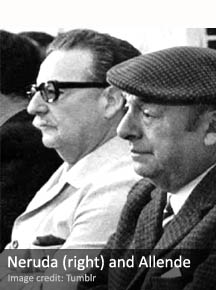
Pablo Neruda (right) and Salvador AllendeBy JOSEPH FITSANAKIS | intelNews.org |
The government of Chile has launched an official search for a United States suspect in connection with the alleged poisoning of celebrated poet Pablo Neruda. The Chilean literary icon, who was awarded the Nobel Prize in Literature in 1971, died on September 23, 1973. His death occurred less than two weeks after a coup d’état, led by General Augusto Pinochet, toppled the democratically elected Marxist government of Salvador Allende, a close friend of Neruda. The death of the internationally acclaimed poet, who was 69 at the time, was officially attributed to prostate cancer and the effects of acute mental stress over the military coup. Earlier this year, however, an official investigation was launched into Neruda’s death following allegations that he had been murdered. The investigation was sparked by a comment made by Neruda’s personal driver, Manuel Araya, who said that the poet had been deliberately injected with poison while receiving treatment for cancer at the Clinica Santa Maria in Chilean capital Santiago. Investigators are still awaiting the completion of a complex autopsy performed on Neruda’s remains, which were exhumed in April. But the Chilean government has already issued a search order for a medical doctor —or someone pretending to be a doctor— who was allegedly on Neruda’s bedside on the night of his death. The search was issued based on comments made recently by another medical doctor, Sergio Draper, who supervised Neruda’s hospital treatment in September of 1973. Dr. Draper told government investigators that he turned over his shift that night to a “Dr. Price”, a young doctor in his late 20s, who was with Neruda in the hours leading to the poet’s death. According to Rodolfo Reyes, a lawyer representing the Neruda estate, Dr.Price’s identity remains a mystery. Read more of this post

Hezbollah cell ‘connected with Boko Haram’ arrested in Nigeria

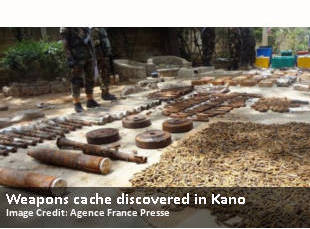
Weapons cache discovered in KanoBy JOSEPH FITSANAKIS | intelNews.org |
Nigerian authorities have announced the arrest of three alleged members of Lebanese group Hezbollah, following the discovery of a large weapons and explosives cache in northern Nigeria. Representatives of the West African country’s military and the State Security Service said on Thursday that three Lebanese nationals had been arrested between May 16 and 28. They were identified as Mustapha Fawaz, Abdullah Tahini and Talal Roda, with the latter being a dual Nigerian-Lebanese citizen. They are accused of being members of Hezbollah, the militant Shiite group that controls large swathes of Lebanese territory. All were reportedly arrested in Kano city, northern Nigeria’s most notable commercial center, which is home to a substantial Lebanese community of merchants. Nigerian security forces raided a warehouse adjacent to a residence belonging to a Lebanese national, where they discovered a hidden underground bunker below the master bedroom. In there they found and confiscated large quantities of assorted weapons, including a dozen anti-tank rockets, a rocket-propelled grenade launcher with 21 missiles, 19 AK-47 and submachine guns, as well as 76 grenades. Nigerian government representatives told local journalists on Thursday that the cache was “a Hezbollah armory” belonging to “a cell of Hezbollah”. A few hours later, officials of Israel’s Counter Terrorism Bureau (CTB) said Tel Aviv was aware of the Nigerian government’s operation. Read more of this post

MI6 archives reveal plans for WWII and Cold War black operations

Sir Stewart MenziesBy JOSEPH FITSANAKIS | intelNews.org |
Recently declassified British archives reveal a host of audacious plans for covert operations aimed at Nazi-occupied Europe during wartime and, after 1948, inside the Soviet Union. The plans, proposed by British intelligence officials, ranged from relatively innocuous psychological operations to assassinations of key political figures. The wartime plans were proposed in 1944 by Charles Peake, a British intelligence officer detailed to the headquarters of General Dwight Eisenhower. The iconic American military commander was in charge of plans for Operation OVERLORD, the allied troop landings on the beaches of Normandy in northern France. According to documents released last week by the United Kingdom National Archives, Peake’s proposal was entitled “Assassination Priorities for OVERLORD”. It contained an extensive list of senior German and French Axis officials that should be targeted for assassination in preparation for the D-Day landings. The hit list included “certain Germans in key positions in France”, notably Field Marshals Gerd von Rundstedt and Erwin Rommel. It also incorporated several senior members of France’s Nazi-controlled Vichy administration under Marshal Philippe Pétain. The proposal, however, was quickly shot down by no other than General Stewart Menzies, Director of the Secret Intelligence Service (known as MI6), who feared that intrusive covert actions by allied operatives would cause brutal reprisals against allied prisoners of war. Ironically, Menzies, known in government simply as “C”, drafted an ever more ambitious plan for black operations after the end of World War II, this time targeted at the Soviet Union. Read more of this post

Canada spy agency refused to notify Mounties about Russian agent

Jeffrey Paul DelisleBy JOSEPH FITSANAKIS | intelNews.org |
Canada’s main counterintelligence agency opted to keep secret from the Royal Canadian Mounted Police (RCMP) vital information about a Canadian naval officer who spied for Russia. Regular readers of this blog will be familiar with the case of Jeffrey Paul Delisle, a Sub-Lieutenant in the Royal Canadian Navy, who until 2011 was employed at Canada’s ultra-secure TRINITY communications center in Halifax. Delisle was arrested in January 2012 for passing information gathered from radio and radar signal interceptions to a foreign power, most likely Russia. In May of last year, it emerged that it was in fact the United States that alerted the Canadian Security Intelligence Service (CSIS) about Delisle’s espionage activities. What was supposed to happen next was that the CSIS —which is not a law enforcement agency— should have notified the RCMP of Delisle’s activities and requested his prompt arrest. Remarkably, however, the CSIS chose to keep the Delisle file concealed from the RCMP, ostensibly to prevent the possible exposure of intelligence sources and methods in open-court proceedings. The Canadian Press, which broke the story on Sunday, cited “numerous sources familiar with the Delisle case” in claiming that the CSIS’ refusal to request Delisle’s arrest “frustrated Washington”, which feared that the spy was routinely compromising United States secrets shared by America with its Canadian allies. So frustrated were the Americans, that the Federal Bureau of Investigation (FBI) sketched out a plan to lure Delisle onto US soil and arrest him there. Read more of this post

Russia expelled ex-US embassy official who rebuffed spy advances

US embassy in MoscowBy JOSEPH FITSANAKIS | intelNews.org |
Russian authorities expelled a former American diplomat living in Moscow earlier in May, less than two months after he allegedly rebuffed an offer to spy on the United States for Russia. The former official, Thomas Firestone, served two tours of duty as a Resident Legal Adviser at the American embassy in Moscow. He later joined the Moscow office of Baker & McKenzie, a US-based law firm with offices worldwide. Firestone had frequent and direct dealings with the Russian government in his capacity as a specialist in the Foreign Corrupt Practices Act. This US law permits the prosecution of bribery cases in American courts. According to The New York Times, Firestone was approached in March of this year by operatives of the Russian Federal Security Service, the FSB, one of the main successor agencies of the Soviet KGB. Citing “people familiar with the case”, The Times claims that the American lawyer turned down an offer to spy for Moscow on behalf of the FSB. On May 5, however, while returning to Moscow from a trip abroad, Firestone was detained at Sheremetyevo International Airport, 18 miles outside of the Russian capital. After a 16-hour detention, the former Justice Department official was told that he had been declared persona non grata (undesirable) and was to be denied entrance into Russia; he was promptly placed on a flight to the US, which departed shortly afterwards. The Times says that it remains unclear at this point whether Firestone’s expulsion was directly connected to his alleged refusal to give in to the FSB’s espionage advances. However, the paper claims that the matter has been raised with the Russian government by the administration of US President Barack Obama. Read more of this post

Russian news agency reveals name of CIA station chief in Moscow

US embassy in MoscowBy JOSEPH FITSANAKIS | intelNews.org |
A Russian news agency revealed the name of the alleged station chief of the United States Central Intelligence Agency (CIA) in Moscow, but then deleted the information from its website. Russia Today, a multilingual Moscow-based television network funded by the Russian government, hosted an interview on May 17 with an anonymous representative of the FSB, the Russian Federal Security Service. The FSB official was commenting on the case of Ryan Fogle, an alleged CIA case officer who was detained in downtown Moscow by the FSB on the evening of Monday, April 13. The Russians claim that Fogle, who held the post of Third Secretary of the Political Department of the United States embassy in Moscow, was trying to recruit a Russian intelligence officer. Russia Today quoted the FSB official as saying that Fogle’s operations “crossed the red line and [the FSB] had no choice but to react [by] observing official procedures”. He added that Fogle had been detected trying to recruit Russian government employees in as early as 2011. At that time, the anonymous source told Russia Today the FSB had “decided to warn [its] American colleagues and ask them to stop these activities”. The warning, he said, had been delivered by the FSB directly to the CIA station chief in Moscow; the article then proceeded to name the American official. International media are not bound by the 1982 US Intelligence Identities Protection Act, which makes it a federal crime to intentionally reveal the identity of individuals engaged in covert roles with US intelligence agencies. However, publicly revealing the identity of senior intelligence officials during peacetime is highly irregular and frowned upon, even among adversaries. The BBC, which reported on the revelation, described the move as a “breach of diplomatic protocol”. Read more of this post

Iranian diplomats expelled from Bosnia over spying allegations

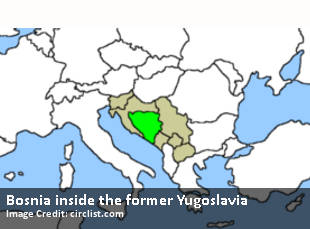
Bosnia inside the former YugoslaviaBy JOSEPH FITSANAKIS | intelNews.org |
In a move described as extremely rare, authorities in Bosnia have expelled two diplomats from Bosnian ally Iran over allegations that they are intelligence officers. However, the expulsion process took a while, which arguably reveals the complicated relationship between the two predominantly Muslim nations. The two diplomats were initially declared personae non grata in late April, when the Bosnian government ordered that they leave the country by April 30. According to Bosnia and Herzegovina’s Ministry of Security, the two envoys, Jadidi Sohrab and Hamzeh Dolab Ahmad, third and second secretaries respectively at the embassy of the Islamic Republic of Iran in Sarajevo, had engaged in activities that were “in violation of their diplomatic protocol”. Word has it that the Bosnian order was issued shortly after Israeli intelligence informed the Bosnians that the two Iranian diplomats were in fact employees of the Ministry of Intelligence and National Security of the Islamic Republic of Iran (MISIRI). The Israelis also said that one of the two men had been spotted in India, Georgia and Thailand, all of which were sites of a simultaneous bombing campaign in February of 2012 against Israeli interests —though there is no public evidence that he had an active role in the attacks. On May 9, however, Bosnian media reported that the two Iranian diplomats were still in Sarajevo, more than a week since the expiration of the deadline they had been given to leave the country. Why the delay? According to Dr. John Schindler, Iran watcher and professor of national security affairs at the United States Naval War College, the move to expel the two Iranians had been “stymied by the establishment” in Bosnia, which remains decidedly pro-Iranian. Read more of this post

Analysis: Is US diplomat arrested in Russia a CIA case officer?

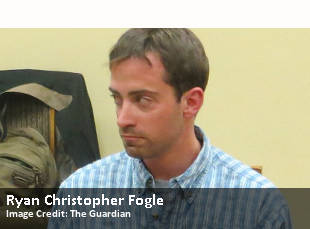
Ryan Christopher FogleBy JOSEPH FITSANAKIS | intelNews.org |
The Russian Ministry of Foreign Affairs lodged an official complaint yesterday with the United States Ambassador to Russia over the alleged espionage activities of Ryan Christopher Fogle. The Third Secretary in the Political Section of the US embassy was arrested with great media fanfare on Monday night, allegedly as he was trying to recruit a Russian intelligence officer. As can be expected, the Russian media had a field day with Fogle’s arrest; after all, it has been nearly a decade since the last time an American intelligence operative was publicly uncovered on Russian soil. Many Western observers, however, have questioned if Fogle could really be an officer of the Central Intelligence Agency, and whether the Russian Federal Security Service (FSB) simply framed an unsuspecting junior American diplomat. Much of the skepticism expressed by Western commentators focuses on the articles that were allegedly found by the FSB in Fogle’s backpack. They included several pairs of sunglasses, recording devices, as well as two wigs. Would a CIA officer be foolish enough to be carrying with him surreptitious recording devices in downtown Moscow? And do modern case officers still employ wigs when walking the streets of foreign capitals recruiting spies? The answer is, of course, yes. Read more of this post

Alleged CIA officer arrested in Moscow in Russian sting operation

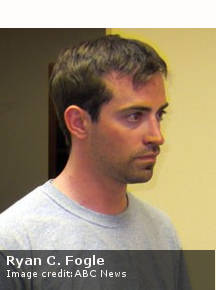
Ryan Christopher FogleBy JOSEPH FITSANAKIS | intelNews.org |
Russia has accused an American diplomat of secretly working for the Central Intelligence Agency (CIA) following his arrest during a sting operation in Moscow. The diplomat, who was expelled from Russia on Tuesday, is Ryan Christopher Fogle; he held the post of Third Secretary of the Political Department of the United States embassy in the Russian capital. He was detained on Monday evening by counterintelligence officers of Russia’s Federal Security Service (FSB). Fogle’s arrest marked the first time in nearly a decade that espionage charges were leveled against an American government employee in Russia. Fogle, a 29-year-old native of St. Lous, Missouri, who graduated from Colgate University in New York in 2006, was arrested by the FSB in Moscow’s Akademika Pilyugina Street, allegedly right in front of an apartment complex reserved for foreign diplomatic personnel. He is accused by the FSB of conspiring to recruit a member of the Russian intelligence services, who is allegedly an antiterrorist expert working in Russia’s North Caucasus region. The FSB told Russian media that Fogle had communicated with his would-be recruit on the phone at least twice in the days prior to the sting operation. The FSB even took the extremely unusual step of airing footage of Fogle’s arrest on Russian state-run television. The American diplomat was shown pinned on the ground, wearing a blonde wig and baseball cap, while FSB officers handcuffed him. A second video released by the FSB, shows Fogle sitting quietly in a government office, in the presence of three other American government officials, including Michael Klecheski, Chief Political Officer at the US embassy in Moscow. All four of them are shown staring in silence, while an FSB official is expressing his strong displeasure over Fogle’s alleged espionage activities. According to the FSB, when Fogle was arrested, he was found to be carrying a backpack containing —among other things— his diplomatic identification card, two wigs, three pairs of sunglasses, recording devices, an RFID shield, a compass and a knife. He was also carrying three Ziploc bags filled with $100,000 in €500 notes, as well as a letter, written in Russian, addressed to his would-be recruit. Read more of this post

US government secretly obtained phone records of journalists

Associated PressBy JOSEPH FITSANAKIS | intelNews.org |
The Associated Press (AP) accused the United States government on Monday of secretly obtaining telephone records of its reporters, as part of a leak inquiry related to an intelligence operation. The news agency, which is owned cooperatively by news outlets worldwide, said the Department of Justice had secretly obtained pen-register information on 20 AP telephone lines in the US. Pen-register data includes lists of all numbers contacted from a particular telephone line and the duration of each call over a defined period. The agency said the government investigation included “the work and personal phone numbers of individual reporters”, as well as AP office telephone lines in New York and Washington, and even the main telephone line used by AP correspondents at the US Capitol Building. It is believed that government prosecutors were probing the source(s) of a May 7, 2012, AP report, which disclosed that the Central Intelligence Agency (CIA) had prevented a terrorist plot by al-Qaeda in the Islamic Arabian Peninsula. AP correspondents Matt Apuzzo and Adam Goldman had cited anonymous sources in claiming that the plot, allegedly hatched in Yemen, involved placing a bomb on a US-bound civilian airplane on the one-year anniversary of the death of al-Qaeda founder Osama bin Laden. Less than a fortnight later, sources told the Reuters news agency that the White House and CIA were furious with AP’s revelation, because it allegedly forced the termination of an “operation which they hoped could have continued for weeks longer”. Read more of this post

Ex-Mossad official denies Zygier compromised intelligence operation

Ben ZygierBy JOSEPH FITSANAKIS | intelNews.org |
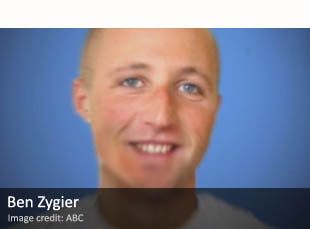
A former Mossad official has dismissed as “nonsense” suggestions that an Australian-born Israeli spy, who killed himself in 2010, had been jailed for inadvertently compromising an Israeli secret mission. Ben Zygier was an officer in Israel’s covert-action agency Mossad for several years before he was placed in solitary confinement following his arrest in Israel, in February of 2010. Known to the outside world only as ‘Prisoner X’, he allegedly killed himself in his cell a few months later. In March, German newsmagazine Der Spiegel alleged that Zygier was arrested by Israeli intelligence after contacting a Lebanese Hezbollah operative without Tel Aviv’s authorization. The Australian-born spy was allegedly trying to recruit the operative on his own initiative and without permission from his superiors. In order to prove his Mossad credentials, Zygier is said to have given the man several names of Israel’s double agents operating inside Hezbollah. But the Lebanese recruit surrendered Zygier’s information to Hezbollah, which promptly arrested many of Israel’s informants inside the organization. Those arrested included Ziad al-Homsi, who at the time was believed to be one of the Mossad’s most lucrative assets inside the Lebanese militant group. On Tuesday, the Australian Broadcasting Corporation said that, at the time of his arrest in Lebanon, al-Homsi was preparing to assist the Mossad in recovering the bodies of three Israeli soldiers that had been killed in Syria during the 1982 Lebanon War. Read more of this post

MI5 wants secret court session over IRA informant’s lawsuit

Martin McGartlandBy JOSEPH FITSANAKIS | intelNews.org |
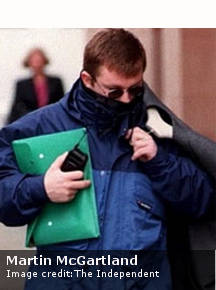
Britain’s domestic intelligence agency, MI5, has requested a secret court hearing to deliberate a lawsuit from a high-profile spy who infiltrated the Provisional Irish Republican Army, commonly known as IRA. The mole, Martin McGartland, of Belfast, Northern Ireland, was recruited by the Special Branch of the Royal Ulster Constabulary in the 1980s. The information he supplied to the security agencies over several years is widely credited with having saved the lives of at least 50 British police officers and soldiers. His autobiographical experiences formed the basis of the 2008 motion picture 50 Dead Men Walking, written and directed by Kari Skogland and starring Jim Sturgess as Martin and Ben Kingsley. McGartland’s cover was dramatically blown in 1991, when the IRA began suspecting that he might be an MI5 mole. After several hours of interrogation by the IRA’s Internal Security Unit, McGartland managed to escape his captors and throw himself out of a third-floor window. He survived serious injuries and was taken into hiding by MI5, living in a series of safe houses across Britain for nearly a decade. However, in 1999 the IRA caught up with him at an MI5 safe house in North Tyneside, in the northeast of England, where he was shot by an IRA hit team while walking to his car one morning and left for dead. McGartland is now suing MI5 and its institutional patron, the British Home Office, claiming that they failed to support him after he was shot by the IRA. In his lawsuit, McGartland claims that government funding he was receiving for treatment for post-traumatic stress disorder was withdrawn after he publicly criticized the British government’s counterterrorism policies. Read more of this post

Alongside CIA, British spies also bankrolling Afghan government

AfghanistanBy JOSEPH FITSANAKIS | intelNews.org |
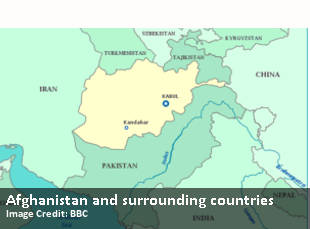
British officials have publicly admitted that senior members of the Afghan government receive “direct cash payments” from London on a regular basis. British newspaper The Daily Telegraph reported over the weekend that the funds have been delivered to Afghan cabinet members “periodically” ever since 2001, when British troops entered Afghanistan alongside their American colleagues. The revelation comes only a week after the publication of a New York Times exposé, which disclosed that the United States Central Intelligence Agency (CIA) had delivered “tens of millions of dollars [in] off-the-books cash” to Afghanistan’s governing elite. The newspaper added that there was little evidence that such bribes had helped promote Washington’s interests in the country in any substantial way. According to British officials, London has channeled “a smaller fraction” of the amount paid by the CIA. The British funds are delivered to senior members of the government of Hamid Karzai by MI6, Britain’s foremost external intelligence agency. The funds are then allegedly spent on what Afghan government officials call “special projects”, implying that they are used as bribes to pacify local warlords, many of which are ethnic Pasthuns and belong to the Taliban. Last week, following The New York Times revelations, Mr. Karzai told the loya jirga —Afghanistan’s grand assembly— that there was “nothing unusual” about the CIA funneling money to his government. He added that he had implored the CIA’s Station Chief in Afghan capital Kabul to continue making regular payments despite popular concern in the US, as the funds were vital to the stability of the government: “we really need it”, he said. Read more of this post

Revealed: South Korean intel officers caught spying on Australia

Embassy of South Korea in AustraliaBy JOSEPH FITSANAKIS | intelNews.org |
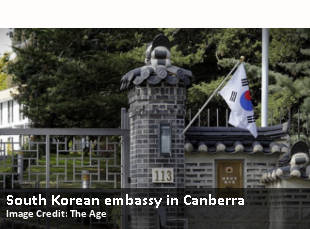
A court in Australia has released information about “inappropriate activities” allegedly conducted by South Korean intelligence officers targeting trade negotiations between Seoul and Canberra. The 2011 case involved operatives of South Korea’s National Intelligence Service (NIS), who purportedly tried “to obtain sensitive information” from Australian civil servants. The documents, released Tuesday by Australia’s Federal Court, reveal that an Australian government official, Dr. Yeon Kim, was sacked and had his security clearance revoked, for allegedly holding clandestine meetings with South Korean NIS officers. The Australian government accused Kim, who worked for the Bureau of Agricultural and Resource Economics and Sciences, of meeting repeatedly with Hoo-Young Park, an employee of the South Korean embassy in Canberra, who had been declared to the Australian government as an NIS liaison officer. According to the court documents, three other NIS officers serving under diplomatic cover in Australia, Bum-Yeon Lee, Sa-Yong Hong, and a man named Kim, were involved in collecting intelligence on Australian trade secrets. According to the Australian Security Intelligence Organisation (ASIO), which detained Kim, he willingly participated in the “foreign interference” operation by the NIS. It is worth noting, however, that there were no expulsions of South Korean intelligence officers or diplomats following Kim’s detention. On the contrary, ASIO appears to have gone to great lengths to prevent disclosure of the spy affair and even protect the identities of the NIS officers involved. In a move interpreted by some as an attempt by Canberra to safeguard its good relations with Seoul, the Australian government warned in a memo that any disclosure of the South Korean intelligence operation would have “a detrimental impact” on bilateral relations between the two nations. Read more of this post