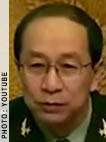
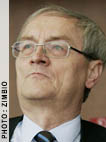
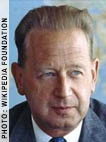
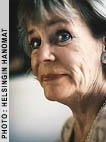
Was plane carrying UN Secretary General shot down in 1961?

Dag Hammarskjöld

Hammarskjöld

By JOSEPH FITSANAKIS | intelNews.org |
On September 17, 1961, a Douglas DC-6 transport aircraft carrying United Nations Secretary General Dag Hammarskjöld crashed in the British-administered territory of Northern Rhodesia (now Zambia). The crash killed everyone onboard, except one passenger, who died hours later. Three successive investigations into the crash, conducted by the Rhodesian Board of Investigation, the Rhodesian Commission of Inquiry, and the United Nations Commission of Investigation, viewed “pilot error” as the most likely cause of the tragedy. Göran Björkdahl, a Swedish aid worker with Sweden’s International Development Cooperation Agency, who is stationed in Burkina Faso, has spent three years researching Hammarskjöld’s death. He has produced a report with his findings, in which he cites interviews with several witnesses of the crash, who are still living. He says that, according to the evidence he has amassed, he has “no doubt” Dag Hammarskjöld’s plane was “shot down by an unidentified second plane”. In an article published in British quality broadsheet The Guardian, Björkdahl also claims that the only survivor of the downed DC-6, American sergeant Harold Julian, who was a member of the UN Secretary General’s security detail, was abandoned to die of his injuries at a makeshift hospital in Ndola, Northern Rhodesia. Björkdahl’s claim is based on his interview with colonial medical practitioner Mark Lowenthal, who tried to treat Julian in the hours following the airplane’s crash. Moreover, Björkdahl alleges that British colonial authorities in Northern Rhodesia were eager to cover up the details of the incident, and went out of their way to intimidate local villagers who witnessed the crash, and to downplay witness testimony suggesting that the Douglas DC-6 may have been shot down. Read more of this post

Former Finnish diplomat reveals she worked for the CIA

Marja-Liisa Linkoaho

Linkoaho

By JOSEPH FITSANAKIS | intelNews.org |
A Finnish diplomat in Cold-War East Germany has revealed how she was recruited by the US Central Intelligence Agency in the 1960s, shortly after the construction of the Berlin Wall. Marja-Liisa Linkoaho spoke to the Sunday edition of Finland’s Helsingin Sanomat newspaper, and admitted that she worked for American intelligence. She did so despite representing Finland, which was notably pro-Soviet during the presidency of ‘neutralist’ Finnish statesman Urho Kekkonen. She told the paper that, in 1961, at age 27, she became an assistant at the Finnish trade mission in East Germany, which at the time served as Finland’s de facto embassy in the communist country. The trade mission was headed by Consul General Olavi Wanne, and was centrally located on Mauerstrasse, within walking distance from the border between East and West Berlin. In August of 1961, less than three months after Linkoaho moved to East Germany, the country’s government, under Walter Ulbricht, took the decision to begin the construction of the Berlin Wall. However, as a foreign diplomat, Linkoaho was able to travel freely between East and West Germany despite the construction in Berlin of the heavily policed partition barrier. Several months later, Linkoaho borrowed a sum of money by one of her Finnish co-workers at the trade commission, which she used to purchase a German-made Volkswagen Beetle, from an American car dealership in West Berlin. However, shortly after she returned to East Berlin with her new car, it was stolen. Interestingly, Linkoaho said that, soon after the theft of her car, she was contacted by the CIA and asked to work for them as an agent, in return for money and a new car. The Finnish former diplomat told the Helsingin Sanomat that she had been contacted by the CIA “a few times before”, but had politely declined the Agency’s offers for work. This time, however, she needed the money, and the car, so she took up the offer. Read more of this post

Exclusive: Interview with ex-CIA officer Charles S. Faddis

Charles S. Faddis

Charles S. Faddis

By JOSEPH FITSANAKIS | intelNews.org |
Yesterday I reviewed Charles S. Faddis’ new book, Codename Aphrodite (Orion, 2011), a gripping novel about a former CIA case officer’s freelance operation in Athens, Greece, in pursuit of November 17, one of Europe’s most notorious urban guerrilla groups. Today intelNews hosts an exclusive interview with Faddis, a straight-talking ex-CIA clandestine operations officer, who admits that his novel “is based on some very personal experiences” and that many of the book’s characters “are drawn much more from memory than they are from imagination”. Most regular readers of this blog probably know Charles “Sam” Faddis as the former head of the US National Terrorism Center‘s WMD Unit. His 20-year career as a CIA operations officer, with posts in South Asia, Near East and Europe, arguably culminated in 2002, when he led a CIA team into Iraq to help prepare the ground for the US invasion. He documented this in his 2010 book (co-authored with Mike Tucker) Operation Hotel California: The Clandestine War Inside Iraq. Following his 2008 retirement, Faddis, who was CIA Chief of Station in his last overseas tour, frequently comments on intelligence matters, most notably in his 2009 exposé Beyond Repair: The Decline and Fall of the CIA. Faddis’ answers to intelNews‘ questions are below. Read more of this post

IntelNews book review: Codename Aphrodite, by Charles S. Faddis

Codename Aphrodite

Codename Aphrodite

By JOSEPH FITSANAKIS | intelNews.org |
Most intelNews regulars know Charles S. Faddis as the former head of the US National Terrorism Center‘s WMD Unit. His 20-year career as a CIA operations officer, with posts in South Asia, Near East and Europe, arguably culminated in 2002, when he led a CIA team into Iraq to help prepare the ground for the US invasion. He documented this in his 2010 book (co-authored with Mike Tucker) Operation Hotel California: The Clandestine War Inside Iraq. Following his 2008 retirement, Faddis, who was CIA Chief of Station in his last overseas tour, frequently comments on intelligence matters. He took a stance against the CIA’s “enhanced interrogation” program (but objected to a government investigation), and has penned hard-hitting critiques of American intelligence culture and practices, most notably in his 2009 exposé Beyond Repair: The Decline and Fall of the CIA. His latest creation, Codename Aphrodite (Orion, 2011), is a gritty novel set in the backstreets of Athens, Greece, where a former CIA clandestine operations officer goes after November 17, one of the world’s most active Marxist terrorist groups. Bill Boyle and his wife, Sarah, are both clandestine officers in the CIA’s European Division. Sarah, who is pregnant with their child, is brutally killed by November 17, after a CIA operation in pursuit of the group goes horribly wrong. Haunted by his wife’s murder, which he witnessed, Boyle quits the Agency and soon ends up as a permanent fixture in a depressing Mexican beach bar. Things take an unexpected turn, however, when political winds change in Greece. Petros Salamis, an ascending Athenian politician and aspiring Prime Minister, contacts Boyle with an irresistible offer: a hefty monetary reward and the satisfaction of revenge for his wife’s death in exchange for returning to Greece and eradicating November 17. Read more of this book review

CIA shot own planes, used napalm in Bay of Pigs, documents show

CIA documents

CIA documents

By JOSEPH FITSANAKIS | intelNews.org |
Newly declassified documents show that the CIA mistakenly fired at its own assault planes and resorted to using napalm to stave off successive Cuban counterattacks during the Bay of Pigs invasion. The revelations are included in a multi-volume Official History of the covert operation, which the CIA was forced to declassify after a lawsuit by George Washington University’s National Security Archive. On April 17, 1961, a brigade of 1,300 CIA-funded and -trained anticommunist Cubans mounted a surprise assault on the Caribbean island. But prior intelligence collected by spies working for Havana, and stiff resistance by pro-Castro troops, resulted in the CIA’s biggest known covert action failure. Approximately 1,200 surviving members of the CIA’s army were captured by pro-Castro forces, many of whom were severely interrogated or executed in subsequent years. According to the declassified documents, CIA forces eventually resorted to bombing Cuban government troops with napalm. Initially, operation planners were hesitant about using napalm, because of fears that doing so “would cause concern and public outcry”. But all hesitation had dissolved by the early hours of April 18, as American military commanders faced the possibility of seeing invading troops completely annihilated by successive waves of counterattacks. The documents also reveal that at least one CIA paramilitary officer opened fire on the Agency’s B-26 planes, which had been disguised to resemble those used by the Cuban Revolutionary Air Defense Force. Read more of this post

British spies considered giving Hitler female hormones

Adolf Hitler

Adolf Hitler

By JOSEPH FITSANAKIS | intelNews.org |
Thanks to the tireless effort of intelligence historians, we now have a brand new revelation from spy archives that can proudly stand alongside the CIA’s acoustic kitty, and the plan to poison Cuban leader Fidel Castro with a chemical that would make his beard fall out. This latest disclosure, however, surely tops the list of lunatic covert-operation schemes. According to newly discovered documents, British intelligence planners seriously considered secretly administering small doses of estrogen into the food of Adolf Hitler, in order “to make his character less aggressive”. According to the documents, British intelligence had managed to recruit a number of agents who were close enough to the German Chancellor to have physical access to his daily meals. It would have been possible, therefore, to tamper with the Nazi leader’s food intake on a routine basis, in an effort to alter his brain chemistry, which, it was hoped, would “soften his character”. The obvious question to ask, of course, is: if British intelligence had access to the Führer’s food, and if his military policies were considered a clear and present strategic threat to Britain’s security, then why not lethally poison him altogether? According to Cardiff University Professor Brian Ford, who discovered the cunning estrogen plan, British intelligence planners knew that Hitler systematically employed food tasters; it would therefore have been close to impossible to employ food poisoning as a method of assassination. Estrogen, on the other hand, is tasteless, odorless, and —if properly dispensed— could have a subtle and gradual effect on Hitler’s brain chemistry and personality. Read more of this post

Saudis paid Pakistan to shelter bin Laden, claims security expert

R.J. Hillhouse

R.J. Hillhouse

By JOSEPH FITSANAKIS | intelNews.org |
An American academic and security expert with deep links in the intelligence community claims that, at the time of his killing by US Special Forces, Osama bin Laden was living under house arrest, following a secret arrangement between Pakistan and Saudi Arabia. Former professor and Fulbright Fellow R.J. Hillhouse has cited “sources in the intelligence community” in alleging that the CIA discovered bin Laden’s whereabouts through a Pakistani intelligence officer. The officer, who was privy to the alleged deal between the Saudis and the Pakistanis, appeared as ‘a walk-in’, a term meaning someone who voluntarily contacts an intelligence outpost, usually by simply walking into an embassy or consulate and asking to speak to the intelligence officer on duty. According to Hillhouse, the ‘walk-in’ provided CIA officers with detailed information as to the al-Qaeda leader’s whereabouts, in exchange for US citizenship for him and his family and the $25 million reward offered by the US Department of State for bin Laden’s head. According to Hillhouse’s story, which was picked up yesterday by The Daily Telegraph and The Sydney Morning Herald, the Pakistani informant also told the Americans that elements in the government of Saudi Arabia had entered into a complex monetary agreement with senior members of Pakistan’s main spy agency, the Inter-Services Intelligence directorate (ISI). Under the arrangement, the ISI was paid to keep bin Laden under house arrest in Abbottabad —a military community in Pakistan, selected precisely in order to keep bin Laden under constant and close supervision. Read more of this post

US government wants to use secret witnesses in CIA leak trial

James Risen

James Risen

By JOSEPH FITSANAKIS | intelNews.org |
Prosecutors in the case of an ex-CIA officer accused of disclosing classified information to a journalist have asked the court for permission to introduce evidence in secret and to use privacy screens to shield the identities of witnesses. Jeffrey Sterling, who worked for the CIA’s Iran Task Force,  faces 10 felony counts and up to 120 years in prison for sharing information about the CIA’s operations in Iran. Court documents do not name the recipient of Sterling’s information, but it is common knowledge that Sterling spoke to James Risen, a Pulitzer Prize-winning journalist for The New York Times. In chapter 9 of his 2006 book State of War: The Secret History of the CIA and the Bush Administration, Risen details a botched operation by the Iran Task Force, which tried to pass to the Iranians a series of faulty nuclear bomb design documents. To do this, the CIA apparently recruited a Russian former nuclear scientist, who had defected to the United States. The unnamed scientist was told to travel to Vienna, Austria, in early 2000, and offer to sell the documents to the Iranians. But the documents contained a deliberate technical flaw, which, Risen alleges, the Russian CIA operative thought was so obvious that it could make him look untrustworthy in the eyes of the Iranians, thus endangering the entire mission. The Russian scientist ended up letting the Iranians know about the flaw, reveals Risen. He further alleges that the CIA operation may have actually helped the Iranian nuclear weapons program, as Iranian scientists would have been able to “extract valuable information from the blueprints while ignoring the flaws”. Read more of this post

Turkish intel report raises fears of Syrian, Iranian support for PKK

PKK banner

PKK banner

By JOSEPH FITSANAKIS | intelNews.org |
By all accounts, in 1998 Syria discontinued its clandestine support for the Kurdistan Workers’ Party (PKK), a leftist secessionist movement that aspires to create a Kurdish homeland comprising mostly of territories in Turkey’s Anatolia region. But a leading Turkish newspaper claims that, according to a classified intelligence report, Damascus has resumed its support for the PKK. The paper, Zaman, said that according to the report, Turkey’s main intelligence directorate, the MİT, has concluded that Syria has “started to support the PKK” again, thus reverting to its pre-1998 stance. It was on that year that Damascus expelled the PKK’s founder and leader, Abdullah Öcalan, who had previously been given shelter and protection in the country. A few months later, Öcalan was snatched by Turkish commandos from the hands of Greek diplomats in Nairobi, Kenya, and flown to Turkey, where he is now serving a life sentence. Following Öcalan’s expulsion, Syria, which is home to an estimated 400,000 Kurds, quietly began cooperating with Ankara against the PKK and its sister organizations operating on Syrian soil. But the MİT report cited by Zaman says that, under the fear of anti-government militancy and continuous popular and ethnic uprisings, Damascus has tried to mend relations with its Kurdish minority, and is now “providing shelter to some of the PKK’s most important leaders”. The classified report, which Zaman says gives “a highly detailed overview” of the PKK’s regional activities, also alleges that Syria has increased its security collaboration with Iran, which is also home to several thousand ethnic Kurds. Read more of this post

Did Russian secret services avert military coup in Sverdlovsk?

Vladimir Kvachkov

V.V. Kvachkov

By JOSEPH FITSANAKIS | intelNews.org |
The Russian intelligence services arrested members of an illegal paramilitary unit that planned an armed insurrection in one of central Russia’s biggest cities. According to reports from Yekaterinburg, the administrative capital Russia’s Sverdlovsk province, leaders of the alleged paramilitary unit hoped that their action would lead to a nationwide rebellion, eventually resulting in a military coup in Moscow. Several people were arrested by security forces of the FSB, Russia’s Federal Security Service a few days before August 2, the day when the alleged insurrection was to have taken place. Sources from the FSB say that the plotters were working on a four-step plan of action. First, they planned to attack the FSB’s Sverdlovsk district command center, the Russian Ministry of the Interior’s regional headquarters, as well as the offices of Russia’s Ministry of Emergency Situations, and capture or kill all senior staff. They would then blow up key power stations around Yekaterinburg, effectively shutting down the city’s electricity network. Taking advantage of the widespread confusion among the regional security apparatus and the population, they would move to seize local weapons depots. The alleged insurrection plan called for distributing the seized weapons among members of Yekaterinburg’s urban poor, in an attempt to widen the base of the rebellion. The plan’s final step viewed a widening insurrection in Yekaterinburg as a spark that would trigger similar Libya-style uprisings across Russia, resulting in a coup that would depose the current government in Moscow and replace it with a transitional military regime. According to news reports, the FSB arrested several leaders of the alleged insurrection, including former members of the Russian military, who are said to be linked with the People’s Militia, an insurrectionist group composed by former military and intelligence officials, led by Colonel Vladimir Kvachkov. Kvachkov, a retired Colonel in the Russian Military Intelligence Directorate (GRU), was arrested in December of 2010 on charges of planning “an armed rebellion for the forceful seizure of power in Russia”. Read more of this post

Soviet KGB may have killed Albert Camus, claims paper

Albert Camus

Albert Camus

By JOSEPH FITSANAKIS | intelNews.org |
Albert Camus, one of France’s most revered intellectuals, who died in a mysterious accident in 1960, may have been killed by Soviet intelligence, according to an article in one of Italy’s most reputable newspapers. Camus, a philosopher, novelist and journalist, who won the 1957 Nobel Prize for Literature, died on January 4, 1960, during a road trip from Provence to Paris. Camus had initially planned to accompany his wife and children on a train ride to Paris, but changed his mind at the last minute, after his trusted friend and publisher, Michel Gallimard, offered him a ride in his car to the French capital. That evening, as Gallimard and Camus were driving through the small town of Villeblevin, Gallimard’s Facel Vega FV3B rammed into a tree at high speed. Camus was killed instantly, while Gallimard died in hospital several days later. But an article published last week in one of Italy’s oldest newspapers, Corriere della Sera, claims that the two men may have been killed after Soviet intelligence agents sabotaged Gallimard’s car. The allegation is based on Italian literary scholar Giovanni Catelli, who reportedly unearthed a written testimony by Czechoslovakian author and translator Jan Zábrana. The testimony is included in the Czech-language edition of Zábrana’s personal diary, in which he claims that “a man who knew lots of things and had very informed sources” had told him that Camus’ assassination was “ordered personally” by Dmitri Shepilov, who was the Soviet Union’s Minister of Foreign Affairs from 1956 to 1957. Read more of this post

Ex-CIA counterterrorist chief says al-Qaeda to turn to computer hacking

Cofer Black

Cofer Black

By JOSEPH FITSANAKIS | intelNews.org |
The strategic retreat currently being experienced by al-Qaeda will force the group to concentrate on inflicting damage on its enemies through the Internet. This is the opinion of Cofer Black, the straight-talking CIA veteran who retired in 2002 as Director of the Agency’s Counterterrorism Center. Black, who is known for his hawkish views on Washington’s ‘war on terrorism’, gave the keynote speech on Wednesday at the Black Hat Technical Security Conference in Las Vegas, Nevada. He told an audience of nearly 7,000 conference participants that “the natural thing” would be for al-Qaeda in the post-bin-Laden age to continue to engage in terrorism by “fall[ing] back to things that are small and agile”, with computer hacking being an ideal candidate. Black, who since 2002 has worked for private contractors, including Blackwater/Xe, illustrated his point by referring to Stuxnet, the elaborately programmed computer virus that targeted electronic hardware in Iran’s nuclear energy program in July of 2010. “The Stuxnet attack is the Rubicon of our future”, said the former CIA official, adding that it was the computer virus designed to cause “physical destruction of a national resource”. Black is rightly revered by intelligence observers for having warned US government officials of a large-scale terrorist attack in August of 2001, one month prior to the September 11 hijackings. Having said this, it is not exactly prophetic to state, as he did, that “cyber will be a key component of any future conflict”. Read more of this post

High-level spy-ring arrests send shockwaves in S. Korea

Lim Chae-jung

Lim Chae-jung

By JOSEPH FITSANAKIS | intelNews.org |
South Korean prosecutors have indicted or are questioning dozens of alleged members of a North Korean spy ring, in what is said to be the country’s largest espionage case in over a decade. Seoul’s political establishment has been rocked by the espionage scandal, which allegedly involves several trade unionists, academics, and at least ten members of the country’s opposition Democratic Party. According to security officials, the suspects were members of an underground organization called Wangjaesan, after Mount Wangjae which is a revered national monument in North Korea. The official indictment claims that Wangjaesan was handled by operatives of Office 225 of the North Korean Workers’ Party Korea, which is tasked with overseeing the activities of sleeper agents operating in South Korea. The organization was allegedly headed by a man identified only as ‘Kim’, who owned a South Korean electronics import-export company, and routinely traveled to China and Japan, where he purportedly met his North Korean handlers. Aside from ‘Kim’, South Korean counterintelligence investigators are reportedly questioning close to ten senior members of the Federation of Korean Trade Unions, several academics, as well as at least a dozen opposition political figures. Among the latter are members of South Korea’s leftwing Democratic Labor Party, widely considered as the political wing for the Korean Confederation of Trade Unions. Read more of this post

‘We killed Iranian scientist’ claims Israel intel source

Daryoush Rezaei

Daryoush Rezaei

By JOSEPH FITSANAKIS | intelNews.org |
A source in Israeli intelligence has told a quality German newsmagazine that Israel was behind the recent killing of an Iranian physicist in Tehran. The 35-year-old physicist, Darioush Rezaei, was shot twice in the throat on July 23, by two men on a motorcycle, as he and his wife were picking up their four-year-old daughter from kindergarten. Iranian authorities dismissed early reports that Rezaei was a nuclear academic, saying that there had been “some confusion” about the dead man’s identity, and that Rezaei was simply studying for a masters’ degree in electronics. It later became clear, however, that Rezaei’s electronics expertise was in the use of high-voltage switching systems for triggering nuclear warheads explosions. Rezaei was the fourth Iranian physicist or nuclear expert to be assassinated since 2007, after Ardeshire Hassanpour,  Masoud Ali Mohammadi and Majid Shahriari. Another nuclear scientist, Fereydoon Abbasi, who was injured in a separate bomb attack on the same day Dr Shahriari was killed, now heads Iran’s Atomic Energy Organization. There is little doubt in intelligence circles that the attacks on the Iranian researchers are part of a wider Western and Israeli covert action program that includes —apart from assassinations— sabotage and cyberwarfare. Now an article in German quality newsmagazine Der Spiegel quotes an unnamed “Israeli intelligence source” as saying that Rezaei’s July 23 assassination “was the first serious action taken by the new Mossad chief Tamir Pardo”. Read more of this post

Former US spy chief questions ‘war on terrorism’ logic, tactics

Dennis Blair

Dennis Blair

By JOSEPH FITSANAKIS | intelNews.org |
America’s former top intelligence official has publicly questioned the logic and methods informing Washington’s “war on terrorism”, and called for the CIA unmanned drone assassination program in Afghanistan and Pakistan to be grounded. Dennis C. Blair, who was Director of National Intelligence (DNI) until May of 2010, was speaking last week at the Aspen Security Forum in Colorado.  In an hour-long forum conversation with television journalist Leslie Stahl, Blair —a retired Admiral— explained that, in his view, America’s “war on terrorism” is misconceived, strategically counterproductive and ludicrously expensive. Speaking on the CIA’s unmanned drone war in Afghanistan and Pakistan, Admiral Blair agreed that the drone attacks have killed some “mid-level” Taliban or al-Qaeda operatives, but said that the strikes have had a negligible overall impact on American security. As a terrorist outfit, al-Qaeda has shown that it is able to easily “sustain its level of resistance to an air-only campaign”, said Blair. Additionally, the former DNI said that unilateral air strikes are legally questionable and have proven strategically damaging, by “alienating the countries concerned” and dominating Washington’s relations with key nations such as Pakistan, Yemen and Somalia (click here to read intelNews’ criticism of American raids in Somalia). In doing so, the drone attacks tend to “threaten the prospects of long-term reform” in those countries, said the retired Admiral. Earlier in the conversation, Blair had questioned the economic basis of America’s “war on terrorism”, telling his audience that the US intelligence and security establishment currently spends around $20 million a year for each member of al-Qaeda scattered around the world. Read more of this post