South African spy chiefs fired as political turmoil deepens

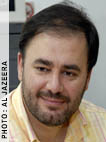
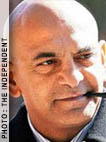
Moe Shaik

Moe Shaik

By JOSEPH FITSANAKIS | intelNews.org |
The heads of South Africa’s three major intelligence departments have become the latest casualties in a major political battle waging within the ruling African National Congress (ANC), which threatens to engulf the entire country. Several South African news outlets report that Siyabonga Cwele, the country’s Minister for State Security, summarily fired the three senior intelligence officials late last week, after a major row over providing government protection for his wife, who has been convicted of drugs smuggling. The three officials, who have stepped down, are Jeff Maqetuka, Director of the State Security Agency (SSA), and Gibson Njenje and Moe Shaik, respective heads of the SSA’s domestic and external intelligence services. According to press reports, the three officials unanimously objected to Cwele’s order to provide his wife Sheryl with secret service protection during her May 2011 trial for drugs smuggling, in which she was sentenced to 12 years in prison. But there are signs that Sheryl Cwele’s case was simply the last drop, which came on top a series of turf wars and bureaucratic conflicts between various factions of the ANC. Specifically, there is speculation in South African intelligence circles that Gibson Njenje resigned partly in protest against so-called “unauthorized operations”, namely telecommunications and physical surveillance of ANC cabinet ministers. The surveillance operations are reportedly being conducted in preparation for a showdown between rival ANC factions in December of 2013. At that time, ANC President Jacob Zuma is expected to face off the party’s Youth League leader, Julius Malema. The latter, favored by an increasingly disaffected segment of the ANC’s working class supporters, is seen as representing the radical populist wing of the party. Read more of this post

Analysis: CIA retains special operations role in post-9/11 era

CIA HQ

CIA HQ

By JOSEPH FITSANAKIS | intelNews.org |
Despite its ‘shoot ’em-up’ image in popular culture, the Central Intelligence Agency is predominantly responsible for collecting and analyzing intelligence for the benefit of US policymakers. The Agency’s paramilitary tasks —also known as ‘special operations’— form a somewhat smaller part of its overall mission. The CIA is America’s only government agency that can legally authorized by the President to perform special operations. The question is, should it? One of the 9/11 Commission Report’s chief recommendations was that the CIA should be stripped of its special operations function, and that the latter should be surrendered to the Department of Defense, in the form of the Joint Special Operations Command (JSOC). Clearly, JSOC has played an important role in post-9/11 counterterrorist operations. Yet it is equally clear that, not only has the CIA not been stripped of its paramilitary tasks, but the latter have actually been drastically augmented by the Obama administration —not least through the continuing unmanned drone program in Afghanistan and Pakistan. A well-written analysis by Politico’s Josh Gerstein correctly notes that recommendations to eliminate the CIA’s paramilitary role and transfer it to the Pentagon “remain unpopular in the highest echelons”. The article quotes Philip Zelikow, a University of Virginia professor and former executive director of the 9/11 Commission, who is one of the few intelligence planners that favor transferring special operations from the CIA to the Department of Defense. He says that military functions “ought to be performed by trained military organizations […]. Do you want the CIA operating a combatant command responsible for fighting our twilight wars, especially in a world when twilight wars are the wars we mainly fight?”. The argument seems to be that, as special operations become increasingly central in America’s ‘war on terrorism’, they should be commanded by a military, rather than a civilian, agency. An unnamed former CIA official puts forward the Agency’s view in the article: what do you do “if you have a [host] country that wants to deny a program”? In other words, how do you exercise plausible deniability through the Department of Defense? “[T]he CIA is going to [have to] move to the front of the queue”, he answers. Read more of this post

White House reinstalls visas for 2009 Honduran coup plotters

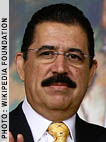
Manuel Zelaya

Manuel Zelaya

By JOSEPH FITSANAKIS | intelNews.org |
On June 26, 2009, a clandestine meeting of the Honduran Supreme Court issued a secret warrant for the arrest of the country’s democratically elected President, Manuel Zelaya. Less than 48 hours later, in the early hours of June 28, uniformed officers of the Honduran Army stormed the Presidential Palace in Tegucigalpa and arrested Zelaya. Shortly afterwards, the deposed President was placed on a plane and sent into enforced exile. It was the first coup d’état in the Central American country since 1978, and the first in Latin America in several years. The US administration of President Barack Obama almost immediately condemned the coup and halted American military aid to Honduras; but it failed to officially designate Zelaya’s ouster as a ‘military coup’, which would have required Washington to outlaw and terminate nearly all forms of government —and some private— aid to Honduras. In August, after several weeks of heavy criticism from Latin American governments, the Obama White House proceeded to “temporarily suspend” non-immigrant visas for over 1,000 Honduran military and civilian leaders, who had endorsed President Zelaya’s unconstitutional ouster. Many of whom had participated in the first post-coup government of former Speaker of the Honduran Congress, Roberto Micheletti. But a news report by the Associated Press suggests that Washington may now be quietly reinstating visas to Micheletti government officials, and that some of them are already travelling to and from the United States. The article quotes a “US embassy spokesperson”, who “spoke on condition of anonymity”, as saying that “the Department of State has determined that some of the Hondurans whose eligibility for visas was restricted following the June 2009 coup d’etat are again eligible to be considered for visas”. Read more of this post

US spies on Israel (shock, horror)

Shamai Leibowitz

Shamai Leibowitz

By JOSEPH FITSANAKIS | intelNews.org |
Ever since Monday, when The New York Times exposed the reason behind the May 2010 incarceration of FBI linguist Shamai Leibowitz, US and international media have been buzzing with prominent headlines like: “US government spied on Israel’s Washington embassy”. Although these headlines are accurate, they —like the articles themselves— miss the actual story behind the revelations: namely the extent of Israeli covert propaganda operations inside the United States. As intelNews reported in May 2010, Leibowitz, a lawyer with dual American-Israeli citizenship, who worked as a translator for the FBI, was sentenced to right under two years in prison, for leaking classified information. The government disclosed no further information at the time of Leibowitz’s conviction, saying only that he had been jailed for “having unlawfully disclosed classified documents to an unidentified blogger”. Now the “unidentified blogger” has come forward to reveal the details of Leibowitz’s court case, and to defend the former FBI linguist “as an American patriot and a whistle-blower”. Richard Silverstein, a Jewish American scholar, who writes a blog called Tikun Olam, said that Leibowitz gave him about 200 pages containing transcripts of conversations intercepted by the FBI in its monitoring of the Israeli Embassy in Washington, DC. Most of the transcripts contain what appear to be telephone exchanges between staff at the Israeli embassy and outside contacts, though some appear to be the products of eavesdropping of face-to-face conversations conducted inside the Israeli embassy premises. This may be seen as evidence that the FBI’s Operational Technology Division, which is responsible for maintaining interception systems targeting foreign embassies on US soil, conducts extensive monitoring of the goings on at the Israeli embassy. Read more of this post

White House considering covert operations against Iran

Iran

Iran

By JOSEPH FITSANAKIS | intelNews.org |
One of the major strategic objections to the US invasion of Iraq in 2003 was the near-certain prospect that removing the Sunni-dominated Ba’ath Party from power would increase Iranian-Shiite influence in the country. As the US military exit strategy gradually unfolds in Iraq, the administration of US President Barack Obama is faced with precisely this prospect. While US troops are leaving Iraq, Iran is doing what any logical regional power would do: namely strengthening its clandestine footprint inside Iraq and preparing Tehran-allied Iraqi groups for the impending showdown with Sunni power centers. An article that appeared in today’s Wall Street Journal notes that “growing concern [about regional] influence from Iran” has prompted the Obama administration to explore covert ways of countering it. According to the article, US intelligence agencies have detected “increased arms smuggling [by Iran] to its allies” in Iraq, Bahrain and Syria (and, one would suppose, Lebanon, though this is not mentioned in the piece). The administration has therefore “pushed the military and intelligence communities to develop proposals to counter Tehran”, says the Journal. The push has prompted American intelligence and military planners to request “greater authority to conduct covert operations to thwart Iranian influence in neighboring Iraq”. This essentially implies an appeal for a Presidential “finding”, a secret executive authorization that —under the National Security Act— would provide the required legal basis for covert operations conducted abroad. Read more of this post

CIA Helped Gaddafi Torture Libyan Dissidents, Documents Show

Abdel Hakim Belhaj

Abdel Belhaj

By JOSEPH FITSANAKIS | intelNews.org |
Back in February, when Libyan leader Muammar al-Gaddafi blamed the popular revolt against him on al-Qaeda, he was ridiculed in the international media. But documents discovered at an abandoned Libyan government office complex show that the Libyan rebels’ supreme military commander was abducted in 2004 by the CIA, which suspected him of links to al-Qaeda. Abdel Hakim Belhaj, also known as Abdullah al-Sadiq, was snatched by a CIA team in Malaysia, and secretly transported to Thailand, where he says he was “directly tortured by CIA agents”. The CIA then renditioned him to Libya, where he says he was tortured routinely until his release from prison, in 2010. In the 1980s, Belhaj was a member of the foreign Mujahedeen summoned by Osama bin Laden’s al-Qaeda to fight the Russians in Afghanistan. Upon returning to Libya in the early 1990s, he led the Libyan Islamic Fighting Group, an al-Qaeda-inspired armed organization that unsuccessfully sought to assassinate Colonel Gaddafi. Ironically, Belhaj is now the Tripoli-based military commander of the Libyan National Transitional Council, and says that he wants a full apology from the United States and Britain “for the way he was transported to prison in Libya in 2004”. But the former Mujahedeen is one of several terrorism suspects delivered to Libya by Western intelligence agencies in the years after 9/11, according to Libyan government documents discovered by Human Rights Watch (HRW) workers at the office of Libyan former intelligence chief and foreign minister Moussa Koussa. The documents show that Libya’s External Security Organization maintained extremely close relations with German, Canadian, British, and American intelligence services. Read more of this post

Ex-Bush official advised Gaddafi until early August, documents show

Libya

Libya

By JOSEPH FITSANAKIS | intelNews.org |
Intelligence documents found at the headquarters of Libya’s abandoned spy agency appear to show that the regime of Muammar al-Gaddafi enjoyed the support of an American diplomat who served in the Bush administration. Al Jazeera reports that David Welch, who was Assistant Secretary of State for Near Eastern Affairs in the US Department of State between 2005 and 2008, met on August 2 with Gaddafi officials in the Four Seasons Hotel in Cairo, Egypt. According to a Libyan intelligence memo from the meeting, Welch, who now works for Bechtel Corporation, gave the Gaddafi officials tips on how “to win the propaganda war” against the rebel National Transitional Council (NTC). He also instructed them to undermine Libya’s rebel movement by relying on several “confidence-building measures”, including controlled intelligence leaks aimed at manipulating the news output of Arab and Western media. The documents also reveal that Gaddafi maintained spies at the highest echelons of the rebel council, and that at least one of these spies offered to assassinate rebel leaders by “poisoning their food and water”. However, despite maintaining an ample amount of informants inside the NTC, the Gaddafi regime found it difficult to collect reliable and actionable intelligence during the civil war. Characteristically, many of the names of NTC’s central figures are misspelled in intelligence field reports, and one intelligence analyst complained recently that “the majority of those currently working for the intelligence administration are ill-prepared to carry out intelligence duties”. Despite these shortcomings, however, Gaddafi’s spies inside the NTC appear to have managed to intercept a large number of telephone messages and confidential emails between the NTC and foreign diplomats. Read more of this post

New Zealand base in Afghanistan was secret CIA station, book claims

Nicky Hager

Nicky Hager

By JOSEPH FITSANAKIS | intelNews.org |
A Kiwi “peacekeeping” and “civil reconstruction” base in Afghanistan was a secret station for the US Central Intelligence Agency, according to a new book by New Zealand’s preeminent investigative writer. Nicky Hager first made international headlines in 1996, with his groundbreaking book Secret Power: New Zealand’s Role in the International Spy Network. In it, he revealed the existence of the UK-USA Security Agreement and of ECHELON, a US-managed signals intelligence (SIGINT) collection and analysis platform that serves as an intelligence-sharing mechanism between UK-USA signatories. The publication of his latest book, entitled Other People’s Wars: New Zealand in Afghanistan, Iraq and the War on Terror, is scheduled to coincide with the ten-year anniversary of 9/11. The book focuses on —among other things— the Bamyan Province base in central Afghanistan, which serves as the center of operations for the New Zealand Provincial Reconstruction Team in the Central Asian country. It serves as a symbol of New Zealand’s cautious contribution to the NATO-led war in Afghanistan, by allowing Kiwi forces to participate with boots on the ground, while performing strictly noncombatant functions, officially described as “peacekeeping” and “civil rebuilding”. But Hager’s book alleges that the “noncombatant” mission of the Bamyan base was simply a cover, devised by the New Zealand Defence Forces’ public relations apparatus, and aimed at pacifying the country’s population. The real mission of the Bamyan base, says Hager, was to “help the Americans” by essentially concealing a covert CIA station. The author further alleges that the Kiwi forces at Bamyan were instructed to keep the presence of the CIA team secret. This they did, even as they shared daily meals with American spies in civilian clothes, who refused to disclose even basic details of their mission to their New Zealand guardians. Hager alleges that New Zealand’s defense establishment took the decision to help the CIA as part of a broader strategy of rapprochement between Wellington and Washington. Why rapprochement? It was in 1984, when, under mounting popular pressure, New Zealand’s Labour government of David Lange voted to bar nuclear-powered or nuclear-armed ships from entering New Zealand territorial waters. At the time, the nuclear ban imposed by New Zealand was heralded by the global nuclear disarmament movement as a major victory. But Washington did not see it this way. Read more of this post

Was French mercenary a ‘spy for Gaddafi’?

Pierre Marziali

Pierre Marziali

By JOSEPH FITSANAKIS | intelNews.org |
Back in May of 2011, The New York Times reported that the co-founder of one of France’s largest private security firms had been shot dead in rebel-held Benghazi. His name was Pierre Marziali, a former paratrooper, who in 2003 co-founded Secopex, described as France’s leading private security company. At first, the rebels blamed his death on “gangs that the old regime used”. But a few days later, a press release by the rebel National Transitional Council alleged that the dead Frenchman had been shot because he was among several French “spies hired by the Gaddafi regime”. The story gets murkier when one considers that, according to the Times, Marziali had gone to Libya “on a mission which, I believe, had been ordered by France”. This should not surprise anyone. As intelNews reported on August 23, Western governments have instructed Libya’s rebel authority to use Western-supplied funds to hire Western-based mercenary companies; this ensures plausible deniability on the part of the rebels’ Western allies, while allowing them to engage with boots on the ground outside the NATO command structure. But why would members of a private security firm based in France —a country that supports the Libyan opposition— be spying for Muammar al-Gaddafi? The case of Marziali’s death shows that not everything is what it seems in Libya. Nobody seems to have information about Secopex’s precise operational mission in the North African nation. But, according to Wired magazine’s Danger Room blog, it appears that the Libyan rebels tried to apprehend Marziali and four other Frenchmen employees of Secopex, after noticing that their passports had Libyan entry stamps from Tripoli —an indication that they had entered the country with the blessings of the Gaddafi regime. Read more of this post

Video of Chinese general’s espionage lecture leaked onto YouTube

Jin Yinan

Jin Yinan

By JOSEPH FITSANAKIS | intelNews.org |
Video footage of a lecture on recent espionage incidents against China, delivered before a vetted audience by a senior Chinese military official, has been leaked to online video sites, including YouTube. The lecturer has been identified as Major General Jin Yinan, and the location appears to be one of the main lecture halls at China’s National Defense University (NDU) in Beijing. Administered by the Central Committee of the Chinese People’s Liberation Army (PLA), NDU is China’s equivalent of the United States’ West Point Military Academy. The precise date of the venue cannot be verified, though it appears to have been intended as a cautionary lesson for NDU students, on the fate that awaits Chinese officials spying against their country. In the video, General Jin laments the fact that too many Chinese Communist Party members have “become decadent” and have succumbed to selling classified national secrets to foreign adversaries. He also discusses several recent cases of espionage against China, including that of Xu Junping, a senior colonel in the PLA, who defected to the United States in December of 2000. The speaker also mentions the case of Tong Daning, a Social Security Department economist who was executed in 2006 for sharing classified Chinese economic data with Taiwanese intelligence operatives. But the primary revelations of the speech concern the cases of Li Bin and Kang Rixin, which General Jin addresses in detail. Li Bin was arrested during his tenure as China’s Ambassador to South Korea, and was eventually sentenced to a seven-year prison term for corruption. But General Jin discloses in his speech that the Ambassador was arrested for selling classified information to South Korean intelligence, and that the Chinese prosecutors decided to bring him up on corruption charges, to “avoid embarrassing [our] country”. Read more of this post

US misused our intel to justify Iraq War, says German ex-spy chief

August Hanning

August Hanning

By JOSEPH FITSANAKIS | intelNews.org |
The former Director of Germany’s foreign intelligence service has accused the Bush administration of consciously falsifying intelligence supplied by Germany in order to justify going to war in Iraq. August Hanning, who served as Director of Germany’s Bundesnachrichtendienst (known as BND) from 1998 to 2005, said that the BND had no part in the deception, and that “the responsibility for the war lies solely with the Americans”. In an interview to the Sunday edition of German national newspaper Die Welt, Hanning explained that the administration of US President George W. Bush was especially interested in intelligence collected by the BND from an Iraqi defector codenamed ‘Curveball’. The defector, whose real name is Rafid Ahmed Alwan al-Janabi, arrived in Germany in 1999 and applied for political asylum, saying he had been employed as a senior scientist in Iraq’s biological weapons program. Among other things, he told his BND debriefing team that Saddam Hussein had built a fleet of biological weapons labs on wheels, in order to avoid detection from America and other countries. After consulting with biological weapons experts, the BND expressed serious doubts about Curveball’s reliability, but kept him in Germany nonetheless. Several years later, al-Janabi confirmed the BND’s suspicions, by admitting that he had invented his allegations in order to help bring down the regime of Saddam Hussein. He also admitted that he was in reality a taxi driver from Baghdad, who had used his undergraduate knowledge of engineering to get asylum in Germany. At the time, said Hanning, the BND strongly and repeatedly communicated to the CIA its doubts about Curveball’s claims, something which is known. What is not known, however, is that Hanning personally wrote to then CIA Director George Tenet and urged him to adopt a skeptical approach to the defector’s allegations. The former BND chief told Die Welt that he was “assured by the Americans that our intelligence would not be used in Powell’s speech”. Read more of this post

Documents reveal MI5 role in Guyana coup

Cheddi and Janet Jagan

The Jagans

By JOSEPH FITSANAKIS | intelNews.org |
Secret intelligence documents declassified last week reveal that Britain’s Security Service, known as MI5, played a significant role in the lead-up to the 1953 coup that toppled the democratically elected government of British Guiana. The Latin American territory, which borders Suriname, Venezuela and Brazil, was once one of the British Empire’s most lucrative sugar-producing colonies. In 1963, after gaining its independence from Britain, it was officially renamed the Co-Operative Republic of Guyana. Instrumental in the fight for independence was Cheddi Jagan —an ethnic Indian former dentist who is today considered the father of the nation— and his American-born wife Janet (née Rosenberg). In 1950, the couple founded the People’s Progressive Party (PPP), which became the primary pro-independence political vehicle in the British colony. But dozens of folders of classified documents that were released last Friday by Britain’s National Archives show that MI5 was suspicious of the Jagans, and believed that Janet had been a member of the Communist Party of the United States in the 1940s. Several MI5 reports from the 1950s express concern that the PPP intended to establish close proximity between a newly independent Guyana and the Soviet Union. The declassified MI5 archives contain countless transcribed telephone conversations between the Jagans and their political allies, as well as copies of intercepted correspondence and reports of physical surveillance by MI5 informants. They reveal that British intelligence closely monitored the Jagans for at least a decade. Even though MI5 concluded that the PPP had no close contacts with Soviet agents or agencies, and that the party was “not receiving any financial support from any Communist organization outside the country”, it continued to describe Janet Jagan as “a committed communist” and remained apprehensive of the couple’s “disruptive antics”. The British government of Winston Churchill decided to take aggressive action in 1953, after a landslide election victory for the PPP in British Guiana elections. Read more of this post

Why Are Armed Groups Storming Foreign Embassies in Tripoli?

The new Libyan flag

New Libyan flag

By JOSEPH FITSANAKIS | intelNews.org |
It is perhaps understandable that fighters of the National Transitional Council, Libya’s rebel umbrella group, have stormed locations in Tripoli that are associated with the regime of deposed Libyan leader Muammar al-Gaddafi. Strategic sites such as  Bab al-Aziziya, Gaddafi’s compound, government ministries, or even houses belonging to Gaddafi’s large and powerful family, may be deemed legitimate targets. But why are the rebels also selectively attacking foreign embassies in the Libyan capital? According to Yonhap, South Korea’s state-run news agency, the South Korean embassy in Tripoli was “attacked […] by an armed gang” of about 30 people late on Tuesday. The report, which could not be immediately confirmed by the Republic’s Ministry of Foreign Affairs, cited anonymous sources, who said that embassy staff were “threatened at gunpoint”. At roughly the same period, another group of “armed persons” stormed the building of the Bulgarian embassy, according to the Bulgarian Ministry of Foreign Affairs, which said that it had yet to clarify “the circumstances around the incident”. On Wednesday, Venezuelan President Hugo Chavez said that armed groups had “assaulted and totally looted” the Venezuelan embassy. A few hours later, the Venezuelan Ambassador to Libya, Afif Tajeldine, clarified that the attack took place at his official residence, which is located about 9 miles from the Venezuelan embassy. He told El Universal that armed groups broke into the ambassadorial residence and “searched the house asking for me”. They then “ransacked the house completely” and “left nothing in the house”. Read more of this post

Western companies help Bahrain spy on democracy activists

NSN Logo

By JOSEPH FITSANAKIS | intelNews.org |
While Western governments preach to the world about the benefits of democracy, Western companies supply some of the most detestable dictatorial regimes with surveillance technologies for use against pro-democracy activists. One example in point is the repressive government of Bahrain, which, according to Amnesty International, is responsible for some of the most extensive human rights violations anywhere in the Middle East. Bahrain is the kind of place where even medical professionals who treat people wounded by police or soldiers in demonstrations are charged with “incitement”. Despite the fervor of the pro-democracy movement that has risen as part of the Arab Spring, the oil-rich royal clique that rules the nation has managed a series of debilitating hits against the reformists. The success of the crackdown is largely due the use of sophisticated telecommunications surveillance systems that allow Bahraini authorities to spy on cell phones and social networking platforms used by members of the pro-democracy opposition. Who supplied the Bahraini dictators with this equipment? Step forward German engineering conglomerate Siemens AG, and Finnish multinational Nokia. An article published this week in Bloomberg’s Markets magazine, fingers the German company as the primary supplier of telecommunications surveillance systems to the Bahraini royals. The latter rely on contracts with Nokia’s Trovicor GmbH subsidiary to maintain the sophisticated software and hardware. Bloomberg says it was notified of the Nokia Siemens Networks (NSN) partnership by two unnamed insiders, “whose positions at the companies gave them direct knowledge of the installations and the sale and maintenance contracts”. Read more of this post

Western spies, security contractors, won Libyan war for rebels

Libya

Libya

By JOSEPH FITSANAKIS | intelNews.org |
As I write these lines, celebratory gunfire is being heard all across Tripoli and the rebel National Transitional Council is appointing civilians to replace the crumbling administration of longtime Libyan leader Muammar al-Gaddafi. But a handful of news outlets discreetly remind us that the rebels’ claim to victory rests on vital covert assistance provided by several Western intelligence services. British daily The Independent notes that the victorious rebels were assisted on all levels by “an army of [British] diplomats, spooks, military advisers and former members of the special forces”, all of whom allowed “London to influence events in Libya beyond the activities of warplanes and naval vessels”. Early indications of Britain’s substantial covert involvement in the Libyan civil war emerged in March, when a secret operation involving a team of 20 Special Air Service (SAS) personnel was disrupted by a group of Libyan rebels, who thought the foreigners were employed by the Libyan government. Eight captured SAS members were soon released by the red-faced rebels, but not before the botched operation had made headlines all over the world. That experience prompted British intelligence planners to rethink their methodology. Eventually, notes The Independent, the British government decided to prompt the rebel National Transitional Council to use British funds to hire teams of former special forces operatives working for private security firms. This, according to the paper, accounts for the “small groups of […] Caucasian males, many with British accents [and] equipped with sunglasses, 4×4 vehicles and locally acquired weaponry, who [were] seen regularly by reporters in the vanguard of the rebels’ haphazard journey […] towards Tripoli”. Read more of this post