Ukraine war is being crowdfunded through cryptocurrencies, experts say

CryptocurrenciesTHE WAR BETWEEN RUSSIA and Ukraine is being crowdfunded with the use of cryptocurrencies, making it history’s first major conflict to occur in the era of cryptocurrencies, according to observers. Crowdfunded conflicts are not new phenomena. In the years following its establishment, Israel is believed to have raised $50 million from individual donors around the world for its army. In the 1970s, militant groups like the Irish Republican Army solicited steady streams of donations from expatriate communities. The difference in this war is the pervasive nature of the Internet and cryptocurrencies, which have become “another front” in the quickly escalating conflict in Ukraine.

The Australian Broadcasting Corporation’s science correspondent, James Purtill, points out that some aspects of this war are being increasingly impacted by decentralized autonomous organizations (DAOs). DAOs are member-owned online communities that engage in crowdfunding activities outside of any government-mandated regulatory framework. They are not governed by boards of directors, but instead maintain their financial transaction records on a blockchain. They therefore operate in a legal grey zone, which is facilitated with the use of cryptocurrencies in financial transactions.

Purtill notes that, in recent years, the administration of Ukrainian President Volodymyr Zelensky had aspirations to become the world’s most cryptocurrency-friendly country. It was therefore not a surprise when, just minutes after the Russian invasion of Ukraine began, the government in Kiev launched an official cryptocurrency fund, named Crypto Fund of Ukraine. As of Monday, the fund had amassed over $22 million and was continuing to grow exponentially. Communities of pro-Ukrainian DAOs, such as Come Back Alive, have mushroomed around these cryptocurrencies, and have raised substantial donations, which are now being used to equip the Ukrainian army and volunteer militias.

There is also concern among experts that the Russian government, as well as individual pro-Kremlin oligarchs, may resort to using cryptocurrencies in order to evade international sanctions. Notably, the use of cryptocurrencies may allow Moscow to overcome the barriers posed by its exclusion from the Society for Worldwide Interbank Financial Telecommunications (SWIFT), which is the global standard for secure financial transactions. Last weekend, Kiev issued calls to the world’s largest cryptocurrency exchanges to block Russian clients, including the Russian government, from conducting transactions. However, experts point out that it is extremely difficult to prevent specific users—including governments— from trading on the blockchain, given its decentralized nature.

Author: Joseph Fitsanakis | Date: 02 March 2022 | Permalink

Ukrainian cities could soon face ‘profound pressure’ by Russian forces, US warns

Kiev KyivLARGE URBAN CENTERS IN Ukraine, such as Kiev, are likely to come “under profound pressure” by Russian forces in the coming days, as an “increasingly frustrated” Vladimir Putin demands results from his generals, according to reports by United States intelligence agencies. At least three American news outlets have cited unnamed “American officials” briefed on the intelligence about Ukraine, in claiming that the Russian president is growing impatient with the progress of the military campaign. Putin may therefore “see his only option as doubling down on violence” and could “imminently increase the intensity of the attack” on Ukrainian cities, according to CNN.
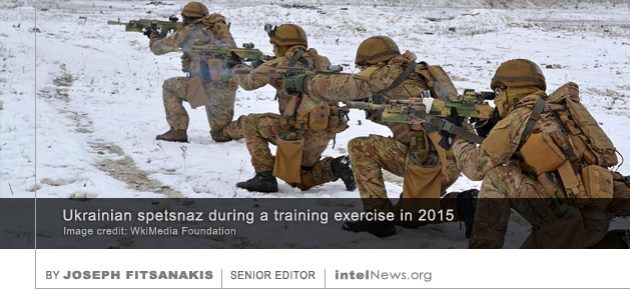
Quoting “an American source familiar with the intelligence”, the news network warned that, from a purely military and tactical standpoint “Russia has the manpower and firepower to take [Kiev]. No question. And no matter how much resistance the Ukrainians put up”. Unnamed American lawmakers and administration officials, who are familiar with intelligence briefings on the matter, told CNN that Ukraine is “massively outgunned and outmanned” and could “by sheer numbers be able to overcome the Ukrainian resistance”. According to two sources “familiar with the intelligence”, some analysts are speculating that Russia may be planning to attack Ukraine “in waves”. The idea would be to exhaust the Ukrainian defenses with the first wave, before “demolish[ing] them with a second wave of fresh troops”.

The question is, how brutal are Putin’s intentions? The American news network NBC cites “current and former US officials briefed on the matter” in claiming that the Russian president may be close to ordering an all-out attack on Ukrainian cities. The officials tell NBC that Putin has been displaying “a different pattern of behavior than in the past” and has been “lashing out in anger at underlings” during “unusual bursts of anger”, while remaining “largely isolated from the Kremlin” due partly to concerns about COVID-19. Due to his isolation from the majority of his advisors, Putin may not have been able to form “a realistic understanding” of the situation on the ground in Ukraine, according to the report.

Some suggest that the Russian dictator may be feeling like he is “backed into a corner”. Consequently, he may resort to using “brute force to seize [Kiev] and other cities, by employing indiscriminate bombing and shelling of civilian areas”. This would not be a first for Putin. He instructed his generals to make use of “scorched earth” tactics in Syria during the civil war there, and he authorized the Russian military to flatten Grozny, the capital of the Russian province of Chechnya, during the Second Chechen War of 1999-2000.

Author: Joseph Fitsanakis | Date: 01 March 2022 | Permalink

Ukrainian government issues call for volunteers to join ‘International Legion’

Ukraine militarySENIOR UKRAINIAN GOVERNMENT OFFICIALS, including the president, vice president and foreign minister, have begun issuing open calls for foreign volunteers to go to Ukraine and form an international armed brigade. A number of Ukrainian ambassadors around the world are reporting that groups of foreign volunteers are already en route to Ukraine. Others are said to be answering calls to form a pro-Ukrainian ‘cyber army’.
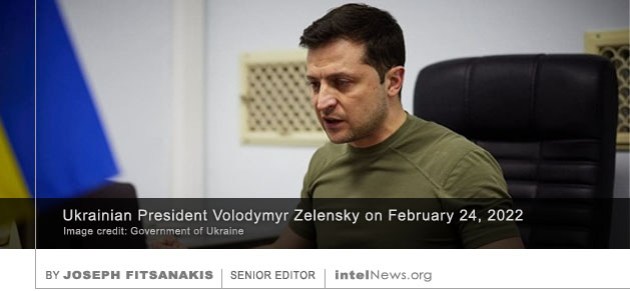
Early on Sunday, Ukrainian President Volodymyr Zelensky said in a video statement posted on social media that “all citizens of the world, friends of Ukraine, peace and democracy” should “come and fight side by side with the Ukrainians against the Russian war criminals”. He added that such an act would be “key evidence” of foreigners’ support for Ukraine, and that his government would arm all international volunteers. President Zelensky concluded his message by urging those interested in going to Ukraine to fight should contact the defense attachés at the Ukrainian embassies in their respective countries.

Later that evening, Ukrainian Minster of Foreign Affairs Dmytro Kuleba tweeted that Ukraine had officially formed the International Legion of [the] Territorial Defense of Ukraine. The new body would be open to “foreigners willing to defend Ukraine and [the] world order” from Russian attacks, said Kuleba. The BBC later quoted Ukraine’s Ambassador to London, Vadym Prystaiko, as saying that “overwhelming” numbers of foreign nationals were “demanding to be allowed to fight” in Ukraine. In a message posted on Facebook (later deleted), the embassy of Ukraine in Israel said on Sunday that it had “begun forming lists of [Israeli] volunteers who wish to participate in combat actions against the Russian aggressor”.

That same afternoon, Britain’s Secretary of State for Foreign Affairs, Liz Truss, said in an interview with the BBC that it was up to individual British citizens to make their own decisions about whether to go to Ukraine and fight, “not just for Ukraine, but for the whole of Europe”. Also on Sunday, BuzzFeed reported that a multinational group of one German, six American and three British citizens were already heading to Ukraine, in hopes of being “among the first to officially join the new International Legion of the Territorial Defense of Ukraine”. They told BuzzFeed that two other Americans with military experience were on their way to Ukraine to provide “leadership” for the international group of fighters. Read more of this post

Ukrainian leader Zelensky says Russian assassins are in Kiev with orders to kill him

Volodymyr ZelenskyTHE PRESIDENT OF UKRAINE, Volodymyr Zelensky, warned on Thursday that teams or Russian assassins have already entered the nation’s capital, Kiev, with orders to kill him and his family. Zelensky made this statement during a late-night address to the nation from an undisclosed location, presumably in Kiev. Referring to “enemy sabotage groups”, he said they had already “entered Kiev” and were seeking to “destroy Ukraine politically by destroying [its] head of state”.

Zelensky referred to “information we have”, according to which he had been “marked by the enemy as the number one target” and his family as “the number two target”. The statement was an apparent reference to an alleged “kill/capture list” that Moscow plans to put to use in Ukraine. As intelNews explained last week, United States officials have said that the purpose of the alleged list is two-fold: first, to minimize popular resistance by Ukrainians to an invading Russian army; and, second, to destabilize the government in Kiev, so that a pro-Russian government can eventually replace it.

According to the United States government, the list contains the names of senior Ukrainian politicians, Ukraine-based critics of the Russian and Belarusian governments, as well as journalists and other activists. According to Washington, the alleged list is maintained by the foreign intelligence arm of the Russia’s Federal Security Service—known as the Service for Operational Information and International Communications—or the Fifth Service, in short. The Fifth Service is political action of a covert nature, which is aimed at electoral subversion, political influence campaigns, psychological operations, and the undermining of groups or movements that Russia perceives as adversarial.

On Thursday, Foreign Policy’s national security and intelligence reporter Amy MacKinnon told SpyTalk’s Jeff Stein and Jeanne Meserve that the existence “kill/capture” list seemed credible, when one considers the Kremlin’s long history of assassination operations. MacKinnon was the first reporter to write about the alleged list. She told SpyTalk that it was part of a “campaign of arrests and assassinations”, which Moscow aimed to carry out on Ukrainian soil. She added that, although the names of potential victims have not been revealed, the list is “quite detailed and relatively extensive”.

Author: Joseph Fitsanakis | Date: 25 February 2022 | Permalink

Analysis: A Western-supported anti-Russian insurgency in Ukraine is unlikely

Ukraine RussiaAS THE FULL-SCALE invasion of Ukraine by the Russian Armed Forces continues to unfold, some Western commentators have begun to speculate about the possible launch of an anti-Russian insurgency by the Ukrainian population. This kind of speculation is not unreasonable. Indeed, given their enormous disparity in size and might, a symmetric confrontation between the two belligerents seems unthinkable. One simply cannot imagine that a direct military confrontation between Russian and Ukrainian military forces could result in anything other than a resounding victory for Moscow. However, although the rise of an armed anti-Russian insurgency in Ukraine is possible, it is unlikely to be large in scale, and even more unlikely to succeed.
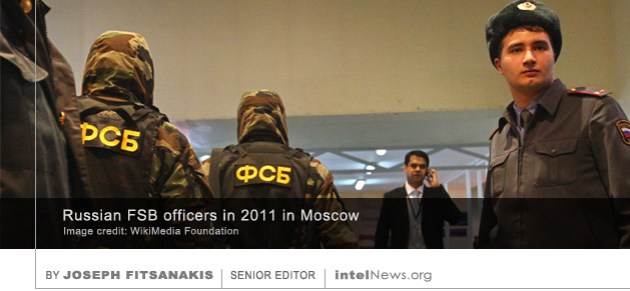
On first glance, Ukraine seems like a textbook case for a possible insurgency. Russia aside, it is Europe’s largest country by landmass, with a population of nearly 50 million. Even under the most favorable conditions, the Russians would find it difficult to occupy and control it without the consent of the local populace. Moreover, Ukraine shares borders with seven countries, including Russia, four of which—Hungary, Romania, Slovakia and Poland—are members of the North Atlantic Treaty Organization (NATO). The geographic proximity of a host of NATO bases would easily allow Western intelligence agencies to provide the local population with war materiel, including advanced military hardware and other supplies. Lastly, due to the protracted war in Donetsk and Luhansk, the Ukrainian military has amassed significant experience in insurgency over the past decade.

However, as Brown University visiting professor Lyle Goldstein cautions in a recent article, things are never simple in war. Although no fewer than four NATO states border Ukraine, the military alliance and its leading patron, the United States, will need to exercise immense caution. In using these states to arm Ukrainian insurgents, Western powers will need to ensure a maximum degree of plausible deniability. Should Russia determine that Western countries are using these NATO powers as front-line states in a new Cold War, it could be tempted to launch military operations against them—an act that could spiral into an out-of-control multi-state war. It is also likely that these front-line NATO member-states will resist calls to be involved in this conflict, in order to avoid being dragged into a wider regional war.

Moreover, although numerous regions of Ukraine appear to be under fire at the moment, it is doubtful that the Russian military will seek to occupy the entire country. Moscow is thus unlikely to try to extend its control past the largely pro-Russian regions of eastern and east-central Ukraine. Such a strategy would ensure that Russian troops would be able to operate in a largely friendly environment. It would also make it difficult for Ukrainian insurgents to operate effectively anywhere east of Kiev. Lastly, the Russian Armed Forces have amassed substantial counter-insurgency experience in the post-Cold War era, having fought in large numbers in Chechnya and Syria, as well as in various regions of Africa through the Wagner Group.

In short, unless the Russians over-play their hand and try to take over the entire country, Western powers are likely to find it difficult to organize, support and sustain a concerted armed insurgency on Ukrainian soil. This does not mean that the ongoing Russian military campaign in Ukraine will inevitably be successful. War is inherently unpredictable, so anything can happen in the coming weeks and months. However, defeating the Russians in any military context will require many years of extremely brutal, bloody and fierce war.

Author: Joseph Fitsanakis | Date: 24 February 2022 | Permalink

Little-known Russian spy unit is behind alleged Ukraine ‘kill/capture list’

FSB - JFA LITTLE KNOWN SPY unit, which experts have described as a mysterious “third espionage agency” inside the Russian intelligence apparatus, is said to be behind a “kill/capture list” that Moscow allegedly plans to put to use in Ukraine. United States government officials insisted on Monday that such a list exists, despite strong denials from Russia. American officials claimed that the purpose of the list is to minimize popular resistance by Ukrainians to an invading Russian army, and to destabilize the government in Kiev, so that a pro-Russian government can eventually replace it.
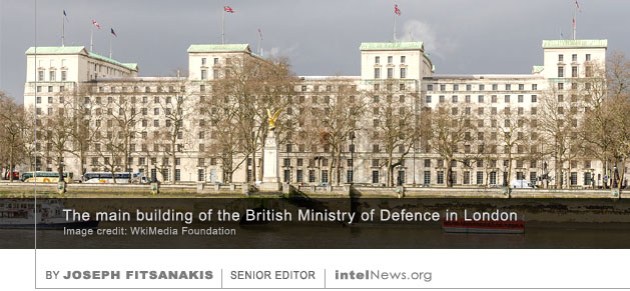
The alleged list reportedly contains the names of senior Ukrainian politicians, Ukraine-based critics of the Russian and Belarusian governments, journalists and other activists. These individuals are to be captured or killed in the event of an invasion of Ukraine by Russian forces, according to Washington. Speaking on Monday on behalf of the Kremlin, Russian spokesperson Dmitry Peskov called the list “a fake” and insisted that it does not exist. Moscow also stressed that the United States did not provide details about the alleged list, nor did it cite the sources of its information.

According to the United States government, the alleged kill/capture list is maintained by the foreign intelligence arm of the Russia’s Federal Security Service. Known as FSB, the agency’s primary mission is to carry out counterintelligence and counterterrorism tasks inside the borders of the Russian Federation. But the FSB includes a little-known intelligence unit, known as the Service for Operational Information and International Communications—or the Fifth Service, in short.

The Fifth Service was created in 1992 to fill the vacuum left by a host of no-spy agreements, which were signed between Moscow and the governments of former Soviet Republics. These agreements prevent Russia’s Foreign Intelligence Service (SVR) to spy inside the territories of former Soviet states. By 1995, the Fifth Service had become known as the foreign spy wing of the FSB. It grew in size drastically after 1999, and some claim that it “graduated into [Russian President Vladimir] Putin’s imperial gendarme”. Today it is led by close Putin ally Sergei Beseda, who is a colonel general in the FSB. Its Ukraine wing is believed to have grown to over 200 officers in recent years.

The main task of the Fifth Service is political action of a covert nature, aimed at electoral subversion, political influence campaigns, psychological operations, and the undermining of groups or movements that oppose Russia’s continuing influence in the territories of the former Soviet Union. Some Western news sources have recently alleged that the Fifth Service has been tasked with coordinating activities between the Russian government and pro-Russian groups inside Ukraine, as well as “engineering [mini] coups in Ukraine’s major cities”.

Author: Joseph Fitsanakis | Date: 22 February 2022 | Permalink

British military warns 50% of Russia’s entire ground force has now encircled Ukraine

UK Ministry of DefenceIN A VIDEO MESSAGE described by observers as “extraordinary”, the British Ministry of Defence has warned that at least half of the Russian military’s ground combat units have now encircled much of Ukraine. The report describes this as “the largest gathering of Russian troops” anywhere in the world since 1991—the year when the Soviet Union collapsed.
The video, titled “intelligence update”, was posted on Thursday on the social media application Twitter by the United Kingdom’s Ministry of Defence. It appears to be an example of what some observers are viewing as a “new front of information war” between Western and Russian intelligence agencies. As intelNews reported last week, American intelligence agencies have been instructed by the White House to release raw intelligence directly to the public about Russia’s intentions on Ukraine. This new method of public intelligence reporting has been described as “highly unusual” and even “unprecedented”.

British newspaper The Guardian called the two-minute video by the Ministry of Defence “extraordinary” in its candor and its attempt to communicate directly with the public. It includes visuals, such as satellite imagery, as well as graphics that show possible routes that Russian forces could take to invade Ukraine. The video warns that the scale of the Russian military presence along the Ukrainian border with Russia and Belarus is “far beyond that needed for a large-scale training exercise”. It concludes that a Russian invasion of Ukraine could take place “within days”.

The paper observes that Western spy agencies appear to be trying to use their intelligence information to “shape the narrative” about the crisis in Ukraine, before Moscow is able to use its formidable disinformation capabilities to set the agenda.

Author: Joseph Fitsanakis | Date: 21 February 2022 | Permalink

Venezuelan diplomat accused of corruption was US ‘law enforcement source’

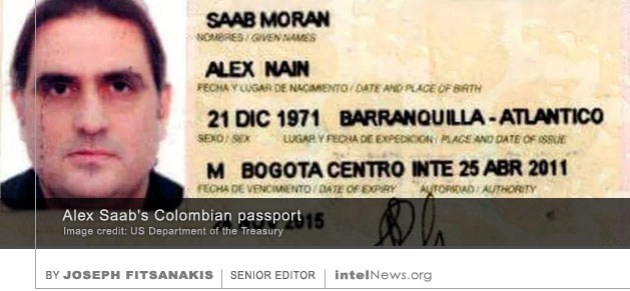
Alex SaabA WEALTHY BUSINESSMAN AND close ally of Venezuelan President Nicolás Maduro, who is being tried in the United States on money-laundering charges, was a “law enforcement source” for the Drug Enforcement Administration, according to documents unsealed this week in a Florida court. The businessman, Alex Nain Saab Moran, 51, comes from a Colombian family of Lebanese descent. For the past decade, he has been one of a number of international investors who have done extensive business with the government of Venezuela.
Saab’s loyalty to the Venezuelan government was rewarded with numerous state contracts by the government of President Maduro. Maduro eventually appointed Saab deputy ambassador of Venezuela to the African Union. Critics claimed that Saab’s diplomatic appointment was meant to shield him from warrants for his arrest for money-laundering, which had been issued by numerous countries. The United States, in particular, accused Saab of helping to organize a sophisticated network of shell companies, in order to launder money on behalf of the Venezuelan government.

In June of 2020, as his private airplane was refueling at the island nation of Cape Verde, Saab was arrested by the local police, pursuant to an Interpol “red notice”, which identified him as an individual wanted by the United States government. Saab was on his way back to Venezuela from Iran, where he had traveled as a Venezuelan diplomat. For several months following Saab’s arrest, a team of Venezuelan government lawyers attempted to prevent his extradition to the United States. They failed, however, and the businessman was extradited on October 16, 2021. Read more of this post

US strategy of revealing raw intelligence on Russia seen as ‘unusual’, ‘unprecedented’

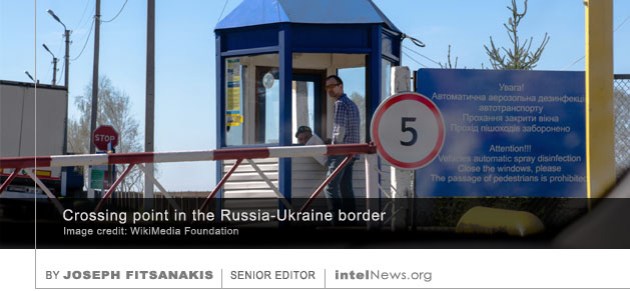
Ukraine Russia borderTHE DECISION BY UNITED States officials to release what appears to be raw intelligence about Russia’s intentions on Ukraine is being described by observers as “highly unusual” and even “unprecedented”. Two weeks ago, American officials said they were in possession of intelligence about an alleged Russian false-flag operation targeting Ukraine. The operation revolved around a fake video, allegedly using paid actors, which would be used by Moscow as evidence of a campaign of ethnic cleansing by Kiev against eastern Ukraine’s Russian population.

More recently, the United States government claimed that Russia was potentially preparing to attack Ukraine on Wednesday, February 16. Such specific intelligence about an adversary’s intentions is rarely released to the public, especially during periods of international tension like the present. The decision by the US government to release this intelligence on an almost daily basis is being described by observers as “unprecedented”. It is broadly seen as one of the most aggressive “transparency-as-strategy” campaigns by American intelligence agencies since at least the Cuban Missile Crisis of 1962.

One such observer, Thomas Rid, Professor of Strategic Studies at Johns Hopkins University’s School of Advanced International Studies, calls this novel approach by the US Intelligence Community “ambitious”. It is too early to say, however, whether this approach has actually helped prevent a conflict that the Russians were otherwise determined to see erupt in Ukraine. It is even more difficult to say whether this strategy will prove successful for the US government and the US Intelligence Community in the long run.

This is especially pertinent in relation to “sources and methods”—namely the precise source or sources that are presumably providing Washington with actionable intelligence from Russian President Vladimir Putin’s inner circle. Douglas London, a recently retired Central Intelligence Agency case officer, points out that, the more Washington reveals precise details about the Kremlin’s intentions, the more it risks helping the Russians narrow in on the potential mole that is supplying America with intelligence. This tactic might provide the US with “a short-term gain right now in the Ukraine”, says London; however, it runs the risk of blinding American intelligence agencies “in the future to what the Russians are planning there and elsewhere”, he warns.

Author: Joseph Fitsanakis | Date: 17 February 2022 | Permalink

Mossad targeted cell phones ‘unofficially’ with Pegasus software, report alleges

NSO GroupISRAEL’S EXTERNAL INTELLIGENCE AGENCY, the Mossad, made unofficial use of the Pegasus spyware, whose developer has been sanctioned by the United States government, according to a report from Israel. NSO Group Technologies was one of two Israeli firms that were placed on a US Department of Commerce sanctions list last November. According to a statement issued by the US Department of Commerce, the two firms engaged “in activities that are contrary to the national security or foreign policy interests of the United States”.

The move followed revelations about a spy software known as Pegasus, which is marketed by NSO Group. Pegasus is able to install itself on targeted telephones without requiring their users to click a link or download an application. Upon installation, the software provides the spying party with near-complete control of a targeted telephone. This includes the ability to browse through the device’s contents, such as photographs and videos, record conversations, as well as activate the telephone’s built-in microphone and camera at any time, without its user’s consent or knowledge.

Now a report by Haaretz, one of Israel’s leading newspapers, alleges that, under its previous director, Yossi Cohen, the Mossad worked closely with NSO Group Technologies. Citing NSO Group “employees, who asked to remain anonymous”, Haaretz alleges that Mossad officials “frequently visited the company headquarters in Herzliya”, in the northern outskirts of Tel Aviv. Initially, the Mossad officials sought to learn about the uses and capabilities of the spy software, according to Haaretz. Later, however, they began to bring with them foreign officials from countries like Saudi Arabia and Angola, whose governments were interested in acquiring the software.

On “several occasions”, the Mossad officials asked NSO Group to make use Pegasus in order to “hack certain phones” on behalf of the Mossad. It is not known whether this was because NSO Group’s spyware was more advanced than the Mossad’s spyware, or whether the spy agency was engaged in “unofficial intelligence gathering”, says Haaretz. The paper adds that, under its current director, David Barnea, the Mossad has distanced itself from NSO Technologies.

Author: Joseph Fitsanakis | Date: 14 February 2022 | Permalink

Foreign spies target Australians on dating websites, messaging apps, report warns

ASIO AustraliaAUSTRALIAN CITIZENS WITH ACCESS to sensitive information are being targeted for recruitment by foreign spies, who are increasingly using social media platforms, including dating applications, according to a new government report. The report, known as the Annual Threat Assessment, was issued on Wednesday by the Australian Security Intelligence Organisation (ASIO), which operates as the nation’s counter-terrorism and counterintelligence agency.

Speaking in conjunction with the release of the Annual Threat Assessment, ASIO Director Mike Burgess said on Wednesday that foreign intelligence operatives are carefully cultivating online relationships with Australian citizens, who are believed to have access to sensitive information. These individuals are then targeted with “innocuous approaches” on social media, which can lead to actual recruitment pitches. These techniques have become more elaborate and wider in scope during the COVID-19 pandemic, Burgess said.

According to the Annual Threat Assessment, the ASIO has been detecting systematic “suspicious approaches” on a variety of messaging platforms, such as WhatsApp, which Burgess described as an “easy way for foreign intelligence services to target employees of interest”. However, relationships with carefully targeted Australians are also cultivated through dating platforms, such as Tinder, Hinge and Bumble, according to ASIO.

Other social media platforms, such as LinkedIn, are used to target “current and former high-ranking government officials, academics, members of think-tanks, business executives and members of diaspora communities”, Burgess said. Pitches begin with “seemingly innocuous approaches”, such as offers for well-paid consultancies or even full-time employment. The job offers then progress to “direct messaging” on various encrypted platforms, such as WhatsApp. In some cases, these approaches lead to in-person meetings, “where a recruitment pitch is made”, said Burgess.

Author: Joseph Fitsanakis | Date: 10 February 2022 | Permalink

Even Russian military commanders don’t know what Putin’s plans are on Ukraine

Vladimir PutinEVEN RUSSIAN MILITARY COMMANDERS and intelligence officials on the ground near the Ukrainian border are in the dark about whether the Kremlin intends to invade Ukraine in the coming weeks, according to a report. The American news network CNN reported on Monday that Russian “intelligence and military operatives” stationed near the Ukrainian border are “not really understanding what the game plan is”.
Citing “four people familiar with the intelligence” on the matter, the news network said United States spy agencies had intercepted communications between Russian military and intelligence officials on the ground near Ukraine. The intercepts suggest that at least some Russian government personnel are concerned that the Kremlin may have miscalculated the tactical, financial and logistical challenges of a possible full-scale invasion of Ukraine.

The CNN report noted that Russian military commanders on the ground are unlikely to oppose, or even hesitate to carry out, a direct order to invade Ukraine by the government in Moscow. However, there is reportedly concern among the Russian military and intelligence forces at the border that logistical support remains inadequate. It is currently believed that the size of the Russian military force along the Ukrainian border remains about 30 percent below what is needed to mount a full-scale military invasion of Ukraine.

Nevertheless, there are now indications that crucial supply lines needed to provide frontline Russian troops with war materiel, fuel, medicine, food, and other supplies, are being assembled. These supply lines could potentially allow the Kremlin’s forces to persist during a protracted conventional war through the upcoming spring and summer months. However, the intentions of Russian President Vladimir Putin remain a mystery, even to most Russian government officials. American intelligence agencies have “insights into the Russian military and foreign ministry”, according to CNN. However, they still lack adequate access to Putin’s inner circle, whose members remain firmly in control of plans for a possible invasion of Ukraine.

Author: Joseph Fitsanakis | Date: 08 February 2022 | Permalink

North Korea uses stolen cryptocurrency to fund its missile program, UN report claims

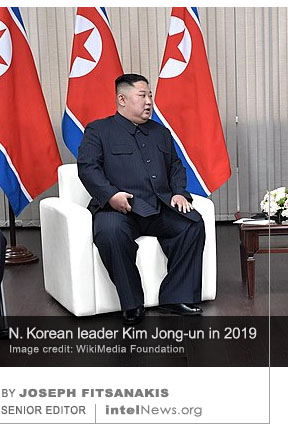
Kim Jong-un North Korea DPRKTHE NORTH KOREAN MISSILE program has developed rapidly in the past year, partly due to an influx of stolen cryptocurrency, which has now become “an important revenue source” for Pyongyang, according to a United Nations report. The confidential report was produced for the United Nations’ Security Council, by a committee tasked with monitoring the impact of the supranational body’s sanctions on the North Korean economy.


The United Nations imposed sanctions on North Korea in 2006, in response to its announcement that it possessed nuclear weapons. These sanctions have increased over the years, as Pyongyang has continued to advance its nuclear and ballistic missile programs. The sanctions have targeted the communist country’s export industry sectors, including fisheries, textiles, raw materials such as iron, lead and coal, as well as refined energy products.

Now a new report, produced for the United Nations Security Council, suggests that, not only have the sanctions failed to degrade Pyongyang’s nuclear and missile weapons programs, but that the latter actually saw a “marked acceleration” in 2021. The report was delivered last week to the United Nations Security Council by a committee tasked with monitoring the effects of international sanctions on North Korea. According to the Reuters news agency, which accessed the confidential report, it states that North Korea has been able to demonstrate “increased capabilities for rapid deployment, wide mobility (including at sea), and improved resilience of its missile forces”.

Much of this ability comes from funding derived through “cyberattacks, particularly on cryptocurrency assets”, which have now become “an important revenue source” for the North Korean government. These cyberattacks are conducted by North Korean hackers, who regularly target “financial institutions, cryptocurrency firms and exchanges”. According to the report, North Korean hackers were recently able to steal cryptocurrency valued at over $50 million, by attacking just three cryptocurrency exchanges in a period of just 18 months.

The United Nations report comes in the heels of another report, published last month by cybersecurity firm Chainalysis, which alleged that Pyongyang was able to acquire digital assets worth nearly $400 million in 2021 alone. That made 2021 one of the most successful years for North Korean government-sponsored hackers, according to the report. To this one must add cyberattacks that do not target cryptocurrency, which also generate foreign cash supplies for the North Korean government. These generate several hundred million dollars each year, according to research.

Author: Joseph Fitsanakis | Date: 07 February 2022 | Permalink

Ukraine relies on expanded intelligence relationship with the US, sources claim

Ukraine Russia borderUKRAINE IS INCREASINGLY RELIANT on its close intelligence relationship with the United States, which has grown dramatically in depth and intensity since Russia’s annexation of Crimea in 2014, according to a new report. The report, authored by Zach Dorfman, national security correspondent for Yahoo News, cites “more than half a dozen former US intelligence and national security officials”. It suggests that the intelligence relationship between Ukraine and the US has been “mutually advantageous” in recent years, and is “as robust […] as just about [any other] in Europe”.

On the American side, the intelligence cooperation effort is led by the Central Intelligence Agency and the National Security Agency, two agencies that frequently exchange information with their Ukrainian counterparts. The information, which includes intelligence obtained from intercepted communications, has largely concentrated as of late on Russian military operations and activities. The two agencies have also participated in intelligence exchanges with the Ukrainians, with officials from the two sides engaging in reciprocal visits “to swap information” and provide training.

According to Yahoo News, CIA paramilitary operations officers have been training Ukrainian special operations forces personnel, as well as Ukrainian intelligence officers, since 2015. The training takes place “at an undisclosed facility in the southern United States”, the report states. Moreover, the NSA has engaged in offensive cyber operations against Russian government targets jointly with Ukrainian government agencies. This collaboration is especially lucrative for the NSA, whose collection capabilities in Eastern Europe are relatively limited.

Lastly, the Ukrainians have been providing US government agencies like the Department of the Treasury with financial intelligence on Russian efforts to evade economic sanctions. This information often includes data on the collusion between Russian and Ukrainian oligarchs, as many of the latter have close ties to the Russian government.

Author: Joseph Fitsanakis | Date: 03 February 2022 | Permalink

Taliban have executed over 100 ex-security forces personnel, UN report says

TalibanTHE AFGHAN TALIBAN HAVE executed over 100 members of the now-defunct Afghan government, with a majority of those killed consisting of security forces personnel and Afghan employees of Western military forces. This information is included in a confidential report by the United Nations Political Mission in Afghanistan, which was produced earlier this month.

The Taliban completed their swift take-over of Afghanistan on August 15 of last year. On that day, they entered the Afghan capital Kabul, facing almost no resistance by the Afghan National Army and the country’s security forces. Shortly afterwards, senior Afghan officials pledged that their regime would extend a “general amnesty” to government employees, including Afghans who worked with the United States-led International Security Assistance Force (ISAF).

But according to a confidential report produced earlier this month by the United Nations, the Taliban have executed at least 100 Afghan former government employees since taking power. The report was authored by staff of the United Nations Assistance Mission in Afghanistan (UNAMA), which is the Afghan branch of the United Nations’ Political Mission office. Established in 2002, the UNAMA is among the very few international bodies that have remained on the ground in Afghanistan since the Taliban took control the country.

The report was produced for the United Nations Security Council. According to the Associated Press, which accessed a copy of the report, it contains “credible allegations” that most of those who were executed did not receive even a rudimentary form of trial. Instead, their deaths were the result of “extrajudicial killings”, which were carried out “by the Taliban or its affiliates”. In addition to those killings, the United Nations report contains “credible allegations” of at least 50 extrajudicial killings of alleged members of the Islamic State-Khorasan Province. The Taliban have been engaged in a brutal war against the Islamic State branch in Afghanistan since 2015.

The report also details what it describes as systematic violent actions by Taliban against civil society activists. These include enforced disappearances, temporary arrests and detentions, physical beatings, as well as systematic threats and various forms of intimidation issued against growing numbers of Afghans. A substantial portion of the targets of these activities are former members of Afghanistan’s security forces and ISAF employees, according to the report.

Author: Joseph Fitsanakis | Date: 01 February 2022 | Permalink


