France launches probe into spying on media by Moroccan intelligence services

NSO Group

PROSECUTORS IN FRANCE HAVE opened an investigation into claims that the intelligence services of Morocco spied on French journalists’ phones, using a controversial surveillance software marketed by an Israeli firm. Since 2018, IntelNews has covered the controversial spyware, Pegasus, and its maker, NSO Group Technologies, an Israeli digital surveillance company based in Herzliya, a small coastal town located north of Tel Aviv.

The Pegasus surveillance software is able to install itself on targeted telephones without requiring their users clicking a link, or downloading an application. It then provides the spying party with near-complete control over the targeted telephone. Among other things, it gives the spying party the ability to browse through the telephone’s contents, including photographs and videos, record telephone conversations, as well as activate the telephone’s built-in microphone and camera at any time, without its user being aware that these devices are on.

Earlier this week, an investigative report published by a consortium of newspapers, including The Washington Post (United States), Le Monde (France) and The Guardian (United Kingdom), claimed that Pegasus’ victims number in their tens of thousands. Reporters said they had analyzed a leaked list of 50,000 victims of Pegasus, which include senior government officials, lawyers, labor leaders, human-rights activists and investigative journalists in almost every country in the world.

The recent revelations have made headlines in France, where the names of well-known journalists from several newspapers, magazines and news agencies feature on the leaked list of Pegasus’ victims. On Tuesday, the French investigative website Mediapart filed a legal complaint, claiming that two members of its staff, including its founder, Edwy Plenel, had been spied on by the Moroccan intelligence services through the Pegasus software. Another French investigative outlet, the newspaper Le Canard Enchaine, said it would also launch a complaint against the intelligence services of Morocco. More media outlets are expected to follow suit.

NSO Group Technologies denies that its Pegasus software is being used maliciously, and claims that it only sells the software to government agencies who use it in legitimate law enforcement investigations. The government of Morocco also denied the claims against its intelligence agencies, saying that it “never acquired computer software to infiltrate communication devices”.

However, the Office of the Paris Prosecutor said on Tuesday that it had launched an official investigation on the use of the Pegasus software by Moroccan intelligence. In a statement published on its website, the prosecutor’s office said it would examine the complaints by media companies from the perspective of as many as 10 possible charges, including criminal association, fraudulent access to personal electronic devices, and breach of personal privacy.

Author: Joseph Fitsanakis | Date: 21 July 2021 | Permalink

Israeli AG investigating claims that ex-Mossad chief had extra-marital relationship

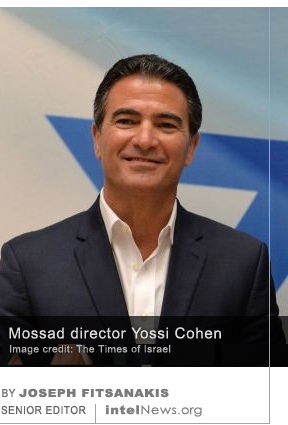
Yossi CohenTHE GOVERNMENT OF ISRAEL is reportedly investigating allegations that Yossi Cohen, who recently stepped down from the helm of the Mossad, Israel’s external spy agency, had an extra-marital affair for two years. It is also claimed that the extra-marital relationship took place while Cohen was director of the Mossad, and that he shared classified information with his alleged mistress, who is reportedly a flight attendant.

Cohen, 59, with four children, assumed the directorship of the Mossad in 2015. He is a 35-year veteran of Israel’s pre-eminent spy agency, which he left briefly in 2013 to chair Israel’s National Security Council and advise the prime minister. He is known as one of former Israeli Prime Minister Benjamin Netanyahu’s most trusted advisers. Cohen grew up in Jerusalem and became a fighter pilot before joining the Mossad. He gradually rose through the agency’s ranks to become its deputy director. Prior to that role, he led for several years the Mossad’s Department of Collections, which handles operations officers around the world. He then led the agency’s Political Action and Liaison Department, which is tasked with facilitating cooperation between the Mossad and foreign intelligence agencies.

According to Israel’s privately owned Channel 13 television, Israel’s Ministry of Justice is currently handling an official complaint, according to which Cohen has been having “a close relationship” for the past two years with a woman who is not his wife, and who is believed to be a flight attendant. Additionally, the complaint claims that Cohen shared classified information with his alleged mistress during the course of their affair. According to Channel 13, the complaint has been handed over to the Attorney General of Israel, Avichai Mandelblit, who is reviewing it.

The Channel 13 report said Cohen has strongly denied the allegations, saying that “there is no flight attendant [and] there is no close relationship”. The former Mossad chief added that he had not been contacted by Attorney General Mandelblit about the complaint, or for any other reason. The television station gave no further information about the alleged complaint, the identity of the flight attendant, or the state of the Attorney General Mandelblit’s investigation.

Earlier this month, it was announced that Cohen would head the Israel-based investment arm of SoftBank, a Japanese-headquartered multinational conglomerate holding company, which specializes in investing in firms in the financial, energy and technology sectors of the economy.

Author: Joseph Fitsanakis | Date: 20 July 2021 | Permalink

Two dozen US diplomats in Vienna show signs of ‘Havana syndrome’, report claims

Vienna Austria

ABOUT TWO DOZEN PERSONNEL of the United States embassy in the Austrian capital Vienna have been experiencing unexplained neurological symptoms that are similar to the so-called “Havana syndrome”, a mysterious medical condition that continues to puzzle brain scientists. The condition is believed to have afflicted at least 130 American and Canadian diplomats around the world in recent years.

The matter first came to light in 2017, when Washington recalled the majority of its personnel from its embassy in Havana, Cuba, and at least two more diplomats from its consulate in the Chinese city of Guangzhou. The evacuees reported experiencing “unusual acute auditory or sensory phenomena” and hearing “unusual sounds or piercing noises”. Subsequent tests showed that the diplomats suffered from sudden and unexplained loss of hearing, and possibly from various forms of brain injury.

Now a new report by The New Yorker’s Adam Entous claims that “about two dozen” personnel at the US embassy in Vienna have shown Havana syndrome symptoms “since Joe Biden took office” in January of this year. If accurate, this number of incidents would mean that the Austrian capital is now the largest Havana syndrome location in the world after Cuba. In his report, Entous cited a spokesman for the US Department of State, who said that department was “vigorously investigating” reports of “possible unexplained health incidents” among US diplomats and other embassy personnel in Vienna. The expression “unexplained health incidents” is the official term that the US government uses to refer to what is informally known as the Havana syndrome.

Meanwhile, the Reuters news agency reported a statement issued on Saturday by the Austrian Federal Ministry for European and International Affairs. It said the ministry was “working with the US authorities on jointly getting to the bottom of this”, adding that the Austrian government took “these reports very seriously”, as they potentially affected “the safety of the diplomats sent to Austria and their families”, which was a “top priority” for the Austrian government.

Author: Joseph Fitsanakis | Date: 19 July 2021 | Permalink

Two decades after 9/11, West must refocus on threats by state actors, MI5 chief says

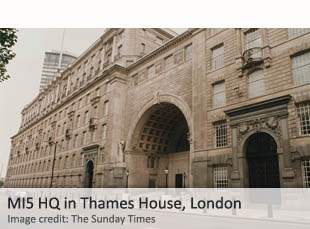
MI5 HQ Thames HouseNearly 20 years after the terrorist attacks of September 11, 2001, it is time for Western intelligence agencies to refocus on stopping covert operations by foreign state actors, according to the director of Britain’s domestic intelligence agency. General Ken McCallum is a 20-year career officer in the Security Service (MI5), Britain’s counter-terrorism and counter-intelligence agency. He assumed the position of director in April of 2020, amidst the coronavirus pandemic.
In a rare public speech on Wednesday, General McCallum said it made sense why, in the aftermath of the 9/11 attacks, Western spy services dedicated unprecedented attention and resources to countering terrorist threats. Efforts during these two decades have concentrated on preventing attacks by religious extremists, both domestically and abroad. General McCallum went on to say that, in light of the ongoing instability in Afghanistan, Syria and elsewhere, religious extremism will continue to require both attention and resources by Western spy agencies.

But he added that, even though counter-terrorism remains MI5’s primary task, the agency recognizes the need to “refocus attention” to threats from state actors. The attention given in the past two decades to non-state groups has allowed countries like Russia, China and Iran to develop “a growing assertiveness” in the areas of covert operations, said General McCallum. As a result, their activities in the fields of espionage, sabotage, and even assassinations, have become “increasingly daring” and threatening.

Spies working for foreign countries have killed targets, stolen sensitive technology, and tried to recruit public figures and other key individuals through blackmail. They have also attacked telecommunications infrastructure and have perfected a host of methods for launching cyber-attacks on both the public and private sectors, with potentially catastrophic consequences, he said.

The MI5 chief illustrated his statements by revealing that British counterintelligence officers have “disrupted hostile power activity” on British soil, which could otherwise have resulted in the killing of a targeted individual. He said that this operation took place after the attempted assassination of former Russian military intelligence officer Sergei Skripal in Salisbury, England, in the spring of 2018, but provided no further details.

General McCallum’s statement came as prosecutors in the United States charged four Iranian intelligence officers with participating in a plot to kidnap Masih Alinejad, an Iranian-American New York-based journalist and human-rights activist, who is known for her critical stance of the government in Tehran.

Author: Joseph Fitsanakis | Date: 14 July 2021 | Permalink

Haiti assassination probe uncovers more plotters with United States ties

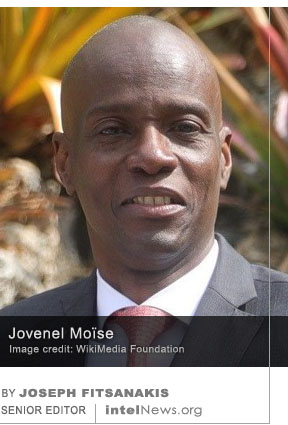
Jovenel MoïseThe United States Drug Enforcement Administration (DEA) has said that at least one of the assailants who killed Haiti’s president, Jovenel Moïse, last week, had been its confidential source in the past. It also appears that one of the middlemen of the operation is a Haitian-born pastor based in the US state of Florida. It was he, according to Haitian police, who hired the assassins through a Venezuelan security company headquartered in Florida. However, this is disputed by the alleged middleman himself, who claims he was “duped”.



In a statement published on Monday, the DEA confirmed media reports that at least one of the men who participated in the assassination of President Moise was “at times […] a confidential source to the DEA”. It also appears that, following the dramatic raid on Moïse’s residence in Port Au-Prince on July 7, the suspect contacted his former DEA handler, who urged him to surrender to the Haitian authorities. The DEA is now believed to be co-operating with the Haitian National Police in its investigation of the assassination.

Additionally, at a press conference held on Sunday, Haitian police officials announced the arrest of an alleged middleman in the murky plot, who allegedly assembled the team of assassins. They named the suspect as Christian Emmanuel Sanon, 63, a native of Haiti who has lived in Florida for over two decades. Although a Christian pastor by profession, Sanon reportedly began to speak publicly against what he regarded as Haiti’s corrupt political elite in the months after the disastrous 2010 earthquake on the island.

According to the Haitian National Police, Sanon recruited the assassins using a “Florida-based Venezuelan security firm”. He then traveled to Haiti “with political intentions”, in the words of Haitian officials. He allegedly used a private airplane, which carried, apart from himself, members of what would eventually become the assassination squad. Haitian officials said that the team was initially assembled as Sanon’s bodyguard, but their mission eventually changed to encompass a “hit-squad” role. One of the alleged assassins is believed to have contacted Sanon several times on his cell phone while being on the run following the assassination.

Interestingly, however, the Associated Press reported that a Florida-based friend of Sanon claimed the 63-year-old pastor had been “duped by people claiming to represent the US State and Justice departments”. These people allegedly told Sanon they wanted to install him as president of Haiti after removing Moise. In any case, Haitian officials do not see Sanon as the mastermind of the operation; however, with Sanon now under arrest, more information about what authorities refer to as “the intellectual authors” of the assassination plot is likely to emerge.

Author: Joseph Fitsanakis | Date: 14 July 2021 | Permalink

Moscow denounces ‘NATO propaganda’ as Albania probes alleged Russian spies

DEFENDER-Europe 21

THE RUSSIAN GOVERNMENT HAS accused media in Albania of channeling “propaganda”, as authorities in the Balkan country are investigating alleged military espionage by two Russian citizens. The case centers on DEFENDER Europe 21, a large-scale multinational military exercise, which is held every year under the auspices of the United States Army and the North Atlantic Treaty Organization (NATO). A portion of the exercise, which brings together nearly 30,000 troops from 26 nations, took place in Albania in April and May of this year.

Late last month, reports in the Albanian media said that the Office of the Prosecutor in the capital Tirana was investigating two Russian and five Czech citizens, who may have engaged in espionage activities. According to the reports, one of the Russian citizens had entered Albania on May 12, and traveled to Durres, Albania’s second most populous city, which is centrally located along the country’s Adriatic coast. Durres is the closest urban center to the site of the DEFENDER Europe 21 exercise. A few days later, the Russian citizen was found deploying a drone, according to the Tirana prosecutor.

The Albanian authorities then began looking into the case of another Russian citizen, who had entered the country in March, and was based in Orikum, a small coastal town southern Albania. Like Durres, Orikum is in close proximity to military training facilities. Albanian authorities have not disclosed any information about the fate of the five Czech nationals. But they said last week that a criminal case had been opened against the two Russians.

Last Friday, the Russian Ministry of Foreign Affairs accused the Albanian media of “fueling the hype” about the two Russians, adding that the case was “an exercise in NATO propaganda”. Meanwhile, the Russian embassy in Tirana said that it had sent a formal inquiry about the criminal case to Albania’s Ministry for Europe and Foreign Affairs. Relations between the former Warsaw Pact allies are currently at a low point. In January of this year, Tirana expelled a Russian diplomat, accusing him of ignoring safety protocols relating to COVID-19. In 2018, two Russian diplomats were expelled from Albania after they allegedly engaged in espionage. Shortly afterwards, Moscow expelled two Albanian diplomats in return.

Author: Joseph Fitsanakis | Date: 12 July 2021 | Permalink

Most of the commandos who killed Haiti’s president were Colombians, police says

Jovenel MoïseNEARLY ALL MEMBERS OF the heavily armed commando team that killed Haiti’s President on July 7 were Colombian citizens, while several served in the military, according to the Haitian National Police. The attack on the president’s residence, located in the Pétion-Ville suburb of Port-au-Prince, began after midnight local time on Wednesday, when a convoy of at least five vehicles carrying dozens of men arrived at the scene.

The men, described as “highly trained and heavily armed”, quickly exited the vehicles and opened fire on the security detail of President Jovenel Moïse. Many witnesses described the assailants as foreign in appearance and speaking either English or Spanish —languages that are not widely spoken in Haiti, where the local languages are Creole and French. These reports were eventually confirmed when the Haitian National Police identified two of the assailants as Joseph Vincent, 55, and James Solages, 35, both American citizens and residents of Miami’s Little Haiti community. Interestingly, Solages describes himself as a “certified diplomatic [security] agent” and is believed to have served as head of bodyguards at the Embassy of Canada in the Haitian capital.

Late on Thursday, Léon Charles, chief of Haiti’s National Police, announced that 17 suspected assailants had been captured alive, seven killed during the raid, while at least eight others remained on the run. He added that all of captured assailants are foreign and all but two are Colombian citizens. Of those, several are retired members of the Military Forces of Colombia. Overall, 26 members of the commando team were Colombian citizens, said Charles. He did not provide further information. Later that same evening, the Associated Press reported that Colombian President Ivan Duque instructed his country’s military leadership to “cooperate in the investigation” by the Haitian authorities.

Importantly, the precise motive of the assailants remains unclear. The attack was almost certainly planned well in advance, and was part of a broader plan to eliminate Moïse, who is championed and reviled by Haitians in equal measure. But the attack also appears to have been combined with an effort to justify the killing, possibly by exposing negative information about the late president following the attack. This would explain why the assailants did not leave Moïse’s residency immediately after assassinating him, but instead ransacked nearly every room of the premises, apparently looking for documents and computer drives.

It is also puzzling how such a heavily armed team, whose members were described by Haitian authorities as “well-trained professionals” did not appear to have an exit plan following the raid on the president’s residence. Their attack was sophisticated enough to penetrate Moïse’s heavy security detail, and even reach its target in a safe room inside the building, reportedly without suffering any losses. However, several assailants were shot dead or injured in firefights that erupted long after the attack. Eventually all but eight members of a 28-member commando team were either killed or captured.

In the hours after the president’s assassination, Haiti was placed under martial law by the Prime Minister, Claude Joseph, a Moïse ally who appears to have the backing of the military. This means little, however, in a country where rival armed gangs control numerous neighborhoods in Port-au-Prince and other major cities and towns. Some of these gangs are affiliated with the country’s two main political parties, the Haitian Tèt Kale Party (which supported Moïse) and the Alternative League for Haitian Progress and Emancipation, which refused to acknowledge Moïse as the legitimate head of state following the national election of 2016.

Author: Joseph Fitsanakis | Date: 09 July 2021 | Permalink

German think-tank researcher arrested on suspicion of spying for Chinese intelligence

Shanghai

A GERMAN POLITICAL SCIENTIST, who worked for years as a senior member of a prominent Munich-based think-tank, has been arrested by German authorities on suspicion of spying for Chinese intelligence. In line with German privacy laws, the man has been named only as “Klaus L.”. He is believed to be 75 years old and to live in Munich.

According to reports, the suspect worked since the 1980s for the Hanns Seidel Stiftung, a political research foundation named after a former chairman of the conservative Christian Social Union (CSU) of Bavaria. The Munich-headquartered foundation is the informal think-tank of the CSU, which is the Bavarian arm of German Chancellor Angela Merkel’s Christian Democratic Union.

As part of his job, Klaus L. traveled frequently to countries in Africa, Asia and Europe, as well as former Soviet states. It is also believed that, for over 50 years, he had worked as a paid informant for the German Federal Intelligence Service (BND) —Germany’s foreign intelligence agency, which is equivalent to the United States Central Intelligence Agency. According to a government press statement, Klaus L. would provide the BND with information relating to his foreign travels, conference attendance and other “certain issues” of interest to the spy agency. In return, the BND allegedly funded some of his travel and conference expenses, and provided him with a regular stipend.

But in the summer of 2010, Klaus L. was allegedly approached by Chinese intelligence during a trip to the city of Shanghai. According to German counterintelligence, he was persuaded by the Chinese to cooperate with Chinese intelligence operatives, and did so until the end of 2019. In November of that year, German police searched his home in Munich, as part of an investigation into his activities. In May of this year, Klaus L. was charged with espionage and on July 5 he was formally arrested.

Interestingly, Klaus L. does not deny that he provided sensitive information to China. He argues, however, that he informed his BND handler about his contacts with the Chinese, and that these were known to German intelligence. He therefore claims that his Chinese contacts were part of a German counterintelligence operation targeting the Chinese government. His trial is scheduled for this fall.

Author: Joseph Fitsanakis | Date: 07 July 2021 | Permalink

Main suspect in potentially momentous hacker-for-hire case seeks plea deal in NY

Computer hacking

IN A DRAMATIC CASE, described by observers as “unusual”, a suspect in a hacker-for-hire scheme of potentially global proportions has told United States government prosecutors he is ready to discuss a plea deal. The case centers on Aviram Azari, a highly sought-after private detective who served in an Israeli police surveillance unit in the 1990s before launching a private career in investigations.

Azari was arrested in Florida in 2019 during a family vacation, and was shortly afterwards indicted in New York on charges of aggravated identity theft, conspiracy to commit computer hacking, and wire fraud. These charges reportedly date back to 2017 and 2018. Azari’s alleged objective was to target carefully selected individuals in order to steal their personal information, including email usernames and passwords. Last year, The New York Times reported that the case against Azari is connected with a potentially massive hacker-for-hire scheme code-named DARK BASIN.

Further information about DARK BASIN was published by Citizen Lab, a research unit of the University of Toronto’s Munk School of Global Affairs and Public Policy, which focuses on information technology, international security and human rights. It said DARK BASIN was orchestrated by an India-based firm called BellTroX InfoTech Services. It also claimed that the company is one of a number of hacker-for-hire firms based in India. These companies are said to be employed by private detectives in Western countries, who are usually hired by large multinationals or wealthy individuals.

Accordingly, the targets of DARK BASIN activities appear to have been investment firms based in the US and elsewhere, as well as government officials, pharmaceutical companies, lawyers, large banks, and even environmental activists who campaign against large multinationals. Additionally, some of DARK BASIN’s thousands of targets appear to be people involved in high-stakes divorce proceedings. Perhaps more alarmingly, among DARK BASIN’s targets are journalists around the world, who seem to have been targeted systematically in efforts to reveal their sources of information.

Azari has pleaded not guilty. But the fact that he his lawyer has now communicated his client’s desire to seek a plea deal with US government prosecutors may be a major game-changer in this case, which may have global ramifications. The Reuters news agency, which reported the latest developments on this case this week, said it reached out to the US Attorney’s Office in Manhattan, but spokesmen there declined to provide any information on Azari’s case.

Author: Joseph Fitsanakis | Date: 02 July 2021 | Permalink

Senior Serb intelligence officials given prison sentences for war crimes

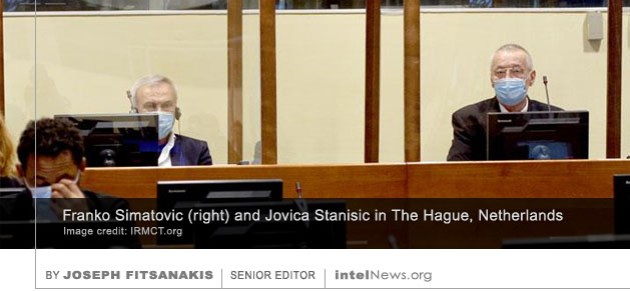
Jovica Stanisic Franko Simatovic

TWO SENIOR FORMER OFFICIALS in the now defunct domestic security apparatus of Serbia have been given prison sentences totaling 24 years, after being found guilty of war crimes by a United Nations court. The crimes of the two officials stem from the Yugoslav Wars, a series of bloody ethnic conflicts that followed the breakup of the former Yugoslavia in 1991.

The two former officials, Jovica Stanišić, 70, and Franko “Frenki” Simatović, 71, deny that they trained Serbian elite police units in methods of exterminating non-Serb populations in various regions of the former Yugoslavia. The two men were initially acquitted of all charges against them by the International Criminal Tribunal for the former Yugoslavia (ICTY). But the initial ruling was quashed, and the two men were tried again, this time by United Nations Mechanism for International Criminal Tribunals, which took over ICTY’s operations after its mandate ended.

Stanišić directed the State Security Service (SDB), which operated under the Ministry of Internal Affairs of Serbia as the country’s primary domestic security agency. Simatović was an intelligence officer who, from 1991 until 1998, commanded the feared Special Operations Unit, known as JSO. The JSO was an elite police force that operated under Stanišić’s SDB. Prosecutors accused the two men of working under direct orders by Serb President Slobodan Milošević, with the aim of ethnically cleansing non-Serbian populations. Milošević died in 2006 in prison at The Hague, Netherlands, where he was held facing charges of genocide and crimes against humanity.

On Wednesday, each of the two men were given 12 years in prison. Simatović has already served eight years in prison, and Stanišić close to five. Both continue to deny the charges against them, and their lawyers said they would appeal the convictions.

Author: Joseph Fitsanakis | Date: 01 July 2021 | Permalink

Secret recordings show Peru’s jailed ex-spy chief trying to change election results

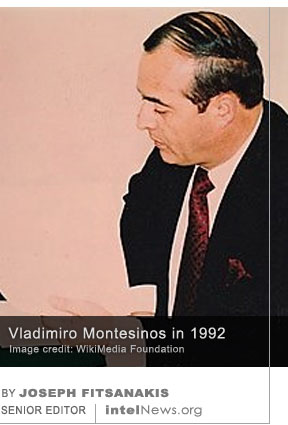
Vladimiro MontesinosAUDIO RECORDINGS RELEASED LAST week appear to show Peru’s imprisoned former spy chief, Vladimiro Montesinos, trying to organize bribes for judges in an effort to alter the outcome of the recent presidential election. From 1990 to 2000, Montesinos headed Peru’s intelligence service, Servicio de Inteligencia Nacional (SIN). He worked in close cooperation with his political patron, Alberto Fujimori, who is currently serving a lengthy prison sentence for corruption and human-rights abuses. Like his boss, Montesinos is currently serving a 25-year prison sentence for setting up a sophisticated network of illegal activities during his SIN tenure. The crimes he committed include drug trafficking, bribing, extortion, as well as embezzlement.
Despite his dramatic fall from power, Fujimori remains popular in Peru. Earlier this month, his daughter, Keiko Fujimori, a rightwing populist, fought a neck-and-neck election contest with leftist school teacher and trade unionist Pedro Castillo. Castillo was provisionally declared the winner of the second and final round of the general election, with 50.12 percent of the votes cast, having received 44,263 more votes than Fujimori. The United States, the European Union and the Organization of American States declared the election as free and fair. But Fujimori, who has vowed to pardon her father and release him from prison if she wins, claims that Castillo’s victory was the result of widespread fraud. Now the National Jury of Elections, set up by the National Office of Electoral Processes, is auditing the election results across the nation.

The plot thickened on Saturday, when a veteran lawmaker, Fernando Olivera, released over a dozen recordings of conversations between the jailed Montesinos and a retired military commander, Pedro Rejas, who is a political ally of Fujimori. In the recordings, Montesinos is heard instructing Rejas to arrange monetary bribes for judges who staff the National Jury of Elections. The purpose of the bribes, says Montesinos, is to secure a victory for Fujimori. He also warns Rejas that if Fujimori does not win the election, she will probably end up in prison for corruption, like her father.

The prison authority of the Peruvian Navy, which oversees the maximum security prison that houses Montesinos, has confirmed that the recordings released by Olivera are authentic, and says it has launched an investigation into the matter. There are also some who believe that Rejas’ involvement in Montesinos’ conspiracy may indicate willingness by the Peruvian Armed Forces to organize a coup, in case Castillo becomes Peru’s next president. Meanwhile, Fujimori has said she felt “indignation” when listening to the recordings of Montesinos’ attempts to secure her electoral victory. She described Montesinos as a “criminal” who “betrayed all Peruvians” as head of the SIN.

Author: Joseph Fitsanakis | Date: 30 June 2021 | Permalink

Kremlin spy participated in secret meeting to fund Italian separatist party

Kremlin, Russia

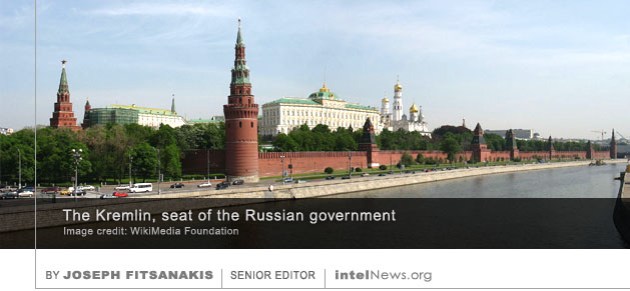
AN ALLEGED EMPLOYEE OF Russian intelligence was present during a secret meeting in Moscow, in which politicians and investors discussed a plan to fund a northern Italian separatist political party. The party, Lega Nord (Northern League, or LN) was established in 1991 as an amalgamation of northern Italian separatist groups whose members seek greater autonomy and are opposed to Italy’s membership in the European Union. Under its current leader, Matteo Salvini, the LN has adopted an hard-line anti-immigration stance and has associated itself with United Russia, the political home of Russian President Vladimir Putin.

In July of 2019, the investigative news website BuzzFeed released audio recordings of a secret meeting that allegedly took place in Moscow’s Hotel Metropol, between members of the LN and Russian emissaries of the Kremlin. The discussion reportedly concerned a plan to sell Russian oil to an Italian firm connected to the LN at a markedly discounted price, which would allow it to compete with Italy’s state-owned energy supplier and at the same time enrich the LN’s election campaign coffers by nearly $70 million.

According to an investigation by Italian authorities, participants at that meeting were Salvini’s former spokesperson, Gianluca Savoini, as well as two other Italians, who managed investment banks and were also supporters of the LN. There were also three Russian participants, including a Kremlin lawyer who works for the Russian Ministry of Energy, and a Russian former banker and tycoon with clsoe ties to President Putin. But the third Russian had not been identified. Until now.

The Italian newspaper L’Espresso, which has led the investigative reporting into the alleged scandal, reports that the Milan Prosecutor’s Office has identified the third Russian participant as Andrey Yuryevich Kharchenko, an alleged employee of Russian intelligence. The paper said that Kharchenko’s identity was supplied to the Italian government by “another Western state” that has been targeted by Russian intelligence in recent years. The investigation into the alleged scandal continues.

Author: Joseph Fitsanakis | Date: 29 June 2021 | Permalink

Sensitive UK defense documents found in bus stop by member of the public

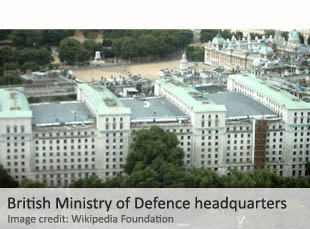
UK Ministry of DefenceSensitive documents belonging to the British Ministry of Defense were found by a member of the public behind a bus stop last week, in what the BBC described as “a major embarrassment” for the British government. The documents number 50 pages; most are marked “official sensitive”, which is a low level of classification, but it means they are still subject to security requirements.

The BBC said it was contacted by “a member of the public, who wishes to remain anonymous”, after he or she found the documents dumped behind a bus stop in the southeastern county of Kent, which borders greater London,. The papers were reportedly in a deteriorated state, as they had been exposed to the elements -including rain- for several days.

According to the BBC, the sensitive documents most likely originated in the office of a senior Ministry of Defense official. They include printouts of email exchanges, as well as a number of PowerPoint slides concerning several timely topics. Among them is a presentation about HMS Defender, a Type 45 Destroyer belonging to the Royal Navy. It is followed by a presentation on the tense maritime incident that took place between Britain and Russia off the coast of Crimea last week.

Another document concerns the defense priorities of the administration of United States President Joe Biden, especially as they relate to the Indo-Pacific region and China. Several emails concern the future of the British military presence in Afghanistan, following the pending withdrawal of US forces from there in September. Yet another set of documents addresses British defense contracts that may irk some of the former European Union member state’s European allies.

The British Defense Ministry said last week it was investigating the details of “an incident” in which sensitive papers were “recovered by a member of the public”. It added that one of its employees, who had been entrusted with the documents, had reported them missing in the days prior to their recovery.

Author: Joseph Fitsanakis | Date: 28 June 2021 | Permalink

Afghans who spied for CIA say they fear retaliation once US forces withdraw

Antony Blinken

AFGHAN CIVILIANS WHO WERE recruited by the United States Central Intelligence Agency as local assets say they fear retaliation by a resurgent Taliban once American forces withdraw from Afghanistan in September. Last April, US President Joe Biden announced that American troops would leave Afghanistan by September 11. The date will mark the 20th anniversary of the terrorist attacks of September 11, 2001, which caused Washington to send troops to Afghanistan in response.

The CIA has been a major component of America’s presence in Afghanistan over the past two decades. When operating in the Central Asian country, CIA officers have routinely relied on local people to collect intelligence, provide translation services, and guard its facilities and personnel. These local assets were typically paid in cash for their services, which were secret in nature and often life-threatening.

Now many of these local assets —possibly thousands— are apprehensive of the pending withdrawal of their American protectors from Afghanistan, and fear retaliation from a resurgent Taliban. According to The Wall Street Journal, these local CIA assets say that “their lives are now at risk”. A large number of them have submitted applications for a US Special Immigrant Visa. This is a State Department program that aims to offer protection to local people who have carried out “sensitive and trusted activities” on behalf of American government personnel abroad.

But the Special Immigrant Visa process is complicated and expensive, and is currently plagued by major delays. The Wall Street Journal reports that, even though the law stipulates Special Immigrant Visa requests must be processed within nine months, applications are currently taking between three to five years to be adjudicated. The Department of State says it is currently working through a backlog of 18,000 applications from around the world. The situation is particularly dire for Afghan CIA assets, says the paper, because many find it difficult to prove they ever worked for the CIA. The spy agency’s record-keeping was minimal throughout its time in Afghanistan, especially in the opening years of the conflict, according to the report. Furthermore, some local assets may not even be named in CIA documentation, so as to protect their identity.

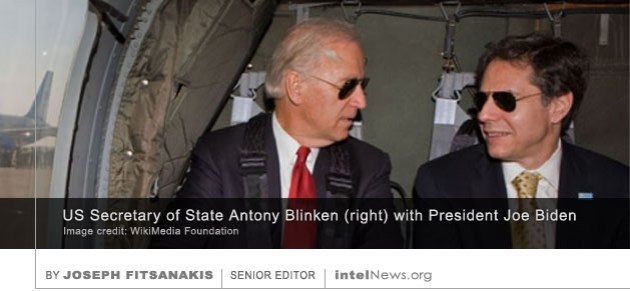
In response to calls for faster processing of Special Immigrant Visa requests, US Secretary of State Antony Blinken (pictured) said earlier this month: “We’re determined to make good on our obligation to those who helped us, who put their lives on the line, put their families’ lives on the line working with our military, working with our diplomats”.

Author: Joseph Fitsanakis | Date: 23 June 2021 | Permalink

Germany arrests Russian PhD student on suspicion of spying for Moscow

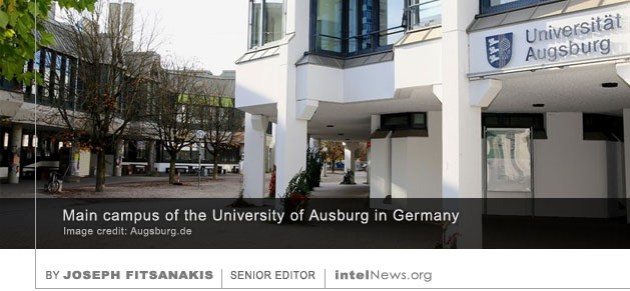
University of Augsburg

A RUSSIAN DOCTORAL STUDENT in mechanical engineering, who is studying in a Bavarian university, has been arrested by German police on suspicion of spying for Moscow, according to official statements and reports in the German media. According to a press statement issued by the Federal Public Prosecutor General’s office in the city of Karlsruhe, the PhD student was arrested on Friday, June 18.

The student was subsequently identified by the German authorities only as “Ilnur N.”, in accordance with German privacy laws. On Monday, however, local media identified the suspected spy as Ilnur Nagaev, a doctoral candidate at the University of Augsburg, which is located 50 miles northwest of Munich. Nagaev reportedly works as a research assistant there, while pursuing his doctoral studies in mechanical engineering.

German authorities maintain that the suspect began working “for a Russian secret service” in early October of 2020, and possibly earlier. He is also accused of having met with an unidentified “member of a Russian foreign secret service” at least three times between October 2020 and June of this year. According to German federal prosecutors, Nagaev shared unspecified information with his alleged Russian handler, and received cash in return at the end of each meeting.

German police reportedly searched Nagaev’s home and work office looking for further clues about the case. In the meantime, a judge at the Bundesgerichtshof (Federal Court of Justice) in the Federal Court of Justice in Karlsruhe, which is Germany’s highest court on matters of ordinary jurisdiction, ordered that Nagaev be kept in pre-trial detention, pending a possible indictment. Neither the Russian nor the German federal governments have commented on this case.

Author: Joseph Fitsanakis | Date: 22 June 2021 | Permalink