In entering Gaza, the IDF will be facing not just Hamas, but Iran’s ‘Axis of Resistance’

Hamas GazaARGUABLY NO COUNTRY BENEFITED more from the American invasion of Iraq than the Islamic Republic of Iran. In a war that lasted over a decade, Washington spent over $2 trillion of its own funds to eliminate one of Iran’s most powerful regional adversaries. In the process, the invasion facilitated the rise of Iraq’s militant Shia movement, which today forms the core of the Iraq’s Popular Mobilization Forces (PMF). Although it is technically an auxiliary branch of the Iraqi security forces, the PMF regularly looks to Tehran for guidance.

The PMF belongs to what Iranian leaders refer to as the ‘Axis of Resistance’ (mehvar–e moqâvemat in Farsi), a term that denotes the extraordinary expansion of Iran’s influence in the Middle East and Central Asia in recent years. In addition to the PMF in Iraq, the Axis of Resistance incorporates an international coalition of dozens of armed groups, militant factions, Shia tribes, and political parties. They range from the Houthis in Yemen and the Hezbollah in Lebanon, to entire branches of the Syrian Armed Forces, and even Shia militias in Afghanistan, Azerbaijan, and Bahrain. The coalition also includes a complex mosaic of armed Palestinian groups, such as Palestinian Islamic Jihad and —increasingly after 2018— Hamas.

These actors are certainly disparate, and often contrast with each other. For instance, relations between Hamas and the Syrians have been strained for years. All of them, however, are united in their common anti-Western stance and contempt for pro-Western states in the Middle East, including Saudi Arabia and Israel. Moreover, their ties under the Axis of Resistance umbrella remain informal and relatively loose. However, they all receive support —including funding and training— from Iran’s Islamic Revolutionary Guards Corps (IRGC), a branch of the Iranian Armed Forces that protects and promotes the ideological inheritance of the 1979 Islamic Revolution.
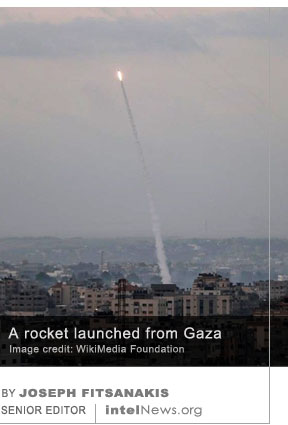
Since 2011, the IRGC has viewed the Axis of Resistance as a vital element of its asymmetric military strategy. Its purpose is to help Iran successfully confront its much stronger adversaries, two of which —the United States and Israel— are nuclear-armed. That is precisely why Tehran has invested nothing short of a fortune to transform Hezbollah into what experts describe as “a force multiplier” that can give Israel a run for its money. In 2014, Tehran launched a similar effort in the Gaza Strip, initially with Palestinian Islamic Jihad —a group that, very much like Hamas, emerged out of the Egyptian Islamic Brotherhood in the 1980s.

The financial arrangement between Palestinian Islamic Jihad and Iran alarmed Hamas, which has controlled Gaza since 2008. Over time, however, Hamas too began to flirt with Iran’s Axis of Resistance, enticed by the lucrative funding and training opportunities offered by Tehran. By 2020, Hamas was actively engaging with the IRGC under the Axis of Resistance umbrella. To a significant extent, the operational sophistication of the October 7 attack on Israel, which was jointly led by Hamas and Palestinian Islamic Jihad, provided clear evidence of Iran’s patronage of these two militant groups. Because of Iran, the Palestinian armed factions in Gaza are today better-armed and better-trained than at any time in the past. They will likely demonstrate that in the coming days or weeks, as the Israel Defense Forces (IDF) begin their ground offensive on Gaza.

The big question, however, is how the other components of the Axis of Resistance will respond to the impending IDF attack. Read more of this post

How Did Israel Miss This Attack? Some Likely Explanations

Gaza HamasTHE HAMAS-LED OPERATION al-Aqsa Flood, which began on October 7, marked the first large-scale conflict within the borders of Israel since the 1948 Arab-Israeli War. However, unlike the coalition of Arab armies it faced in 1948, Israel now confronts an alliance of sub-state groups. Led by Hamas’ military wing, the al-Qassam Brigades, this alliance includes the Syrian- and Iranian-backed Palestinian Islamic Jihad and a number of secular groups, such as the Fatah-aligned al-Aqsa Martyrs’ Brigades, the Popular Front for the Liberation of Palestine (PFLP) and the Democratic Front for the Liberation of Palestine (DFLP).
Such groups are lesser-known than Hamas; however, they often bring with them expertise in niche areas, such as handling networks of informants inside Israel, building sophisticated explosives, employing unmanned combat drones, or procuring specialized weaponry. They are therefore likely to have contributed greatly to the outcome of Operation al-Aqsa Flood. Their participation also enabled Hamas to launch what essentially amounted to a combined arms assault on Israel. The latter included coordinated land, sea and air elements, which were purposefully low-tech. That may explain why the assailants were able to short-circuit and overwhelm the purportedly impregnable security perimeter that Israel maintains around the Gaza Strip.

Iranian and Lebanese Coaching

Putting aside the individual low-tech elements of the operation, its overall level of tactical organization almost certainly points to considerable support from actors beyond the Gaza Strip. Such actors likely include networks of informants within Israel, as well as possibly Iran and its Lebanese proxy, Hezbollah. Both are well-versed in hybrid warfare and have studied Israeli defense systems more extensively than any other regional actor. Additionally, Iran’s Islamic Revolutionary Guard Corps (IRGC) and Hezbollah’s Lebanese Resistance Brigades are seasoned practitioners of deception operations. They likely coached Hamas, not only on how to carry out Operation al-Aqsa Flood, but more importantly on how to prevent Israel and its allies from gathering intelligence about it.

There is no question that an operation of such a magnitude must have taken months —possibly even years— to conceive, develop and organize. Such a complex process would have taken place under the watchful eyes and ears of Israeli and Egyptian intelligence agencies, who have historically faced little resistance in penetrating Palestinian militant groups, including Hamas. Yet none seem to have collected enough intelligence to anticipate the attack. It is equally stunning that the meticulous planning of Operation al-Aqsa Flood appears to have escaped the attention of American intelligence agencies, whose presence in the Middle East is significant. How was that even possible? Read more of this post

NSA, CIA senior officials address artificial intelligence threats and opportunities

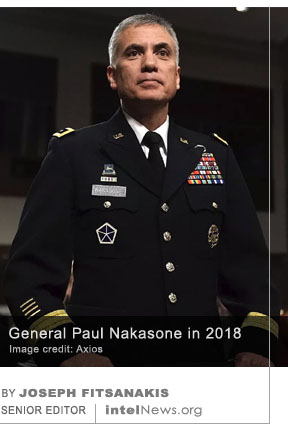
Paul NakasoneLAST WEEK, TWO SENIOR UNITED States intelligence officials shared rare insights on artificial intelligence, as they discussed some of the opportunities and threats of this new technological paradigm for their agencies. On Wednesday, Lakshmi Raman, Director of Artificial Intelligence at the Central Intelligence Agency, addressed the topic during an on-stage interview at Politico’s AI & Tech Summit in Washington, DC. On Thursday, the National Security Agency’s outgoing director, Army General Paul Nakasone, discussed the same subject at the National Press Club’s Headliners Luncheon in the US capital.

Nakasone (pictured) noted in his remarks that the US Intelligence Community, as well as the Department of Defense, have been using artificial intelligence for quite some time. Thus, artificial intelligence systems are already integral in managing and analyzing information on a daily basis. In doing so, such systems contribute in important ways to the decision-making by the NSA’s human personnel. At the same time, the NSA has been using artificial intelligence to develop and define best-practices guidelines and principles for intelligence methodologies and evaluation.

Currently, the United States maintains a clear advantage in artificial intelligence over is adversaries, Nakasone said. However, that advantage “should not be taken for granted”. As artificial intelligence organizational principles are increasingly integrated into the day-to-day functions of the intelligence and security enterprise, new risks are emerging by that very use. For this reason, the NSA has launched its new Artificial Intelligence Security Center within its existing Cybersecurity Collaboration Center. The mission of the Cybersecurity Collaboration Center is to develop links with the private sector in the US and its partner nations to “secure emerging technologies” and “harden the US Defense Industrial Base”.

Nakasone added that the decision to create the Artificial Intelligence Security Center resulted from an NSA study, which alerted officials to the national security challenges stemming from adversarial attacks against the artificial intelligence models that are currently in use. These attacks, focusing on sabotage or theft of critical artificial intelligence technologies, could originate from other generative artificial intelligence technologies that are under the command of adversarial actors.

Last Wednesday, the CIA’s Raman discussed some of the ways that artificial intelligence is currently being put to use by her agency to improve its analytical and operational capabilities. Raman noted that the CIA is developing an artificial intelligence chatbot, which is meant to help its analysts refine their research and analytical writing capabilities. Additionally, artificial intelligence systems are being used to analyze quantities of collected data that are too large for human analysts to manage. By devoting artificial intelligence resources to the relatively menial and low-level tasks of data-sifting and sorting, the CIA enables its analysts to dedicate more time to strategic-level products.

At the same time, however, the CIA is concerned about the rapid development of artificial intelligence by nations such as China and Russia, Raman said. New capabilities in artificial intelligence, especially the generative kind, will inevitably provide US adversaries with tools and capabilities that will challenge American national security in the coming years, she concluded.

Author: Joseph Fitsanakis | Date: 02 October 2023 | Permalink

Canada expels Indian diplomat, accuses India of assassinating Canadian citizen

Sikh KhalistanTHE GOVERNMENT OF CANADA expelled a senior Indian diplomat on Monday, after accusing “agents of the government of India” of having perpetrated the assassination of a Canadian citizen on Canadian soil last June. Canadian Prime Minister Justin Trudeau released information about the alleged assassination during a rare emergency statement to parliament on Monday morning. He also warned India that Canada would continue to work with its allies around the world, including the United Kingdom, to unearth further intelligence about the alleged assassination.
The case involves the killing of Hardeep Singh Nijjar, who was gunned down on June 18, 2023, outside a Sikh cultural center in Surrey, British Columbia. Nijjar was an outspoken activist and a member of Canada’s Sikh community. The adherents of Sikhism follow a monotheistic religion that originated during the late 15th century in what today in northern India’s Punjab region. Many Sikhs support the creation of Sikh homeland, which they refer to as Khalistan —an aspiration that has sparked numerous armed conflicts in India’s history. The government of India considers such aspirations a threat to its national security and regularly refers to leading Sikh activists as terrorists.

Over half of the 1.4 million Canadians of Indian origin identify as Sikhs. This makes Canada’s Sikh population the largest in the world outside of the Punjab region of India. Canadian Sikhs tend to be outspoken in their criticism of the government of India. Many of them campaign openly about what they see as the need for the establishment of an independent Sikh homeland. Nijjar was one such outspoken activist, having risen “to become a prominent advocate for the creation of Khalistan”, according to one recent biographical article. Indian authorities had accused Nijjar of terrorism and had issued a warrant for his arrest.

On Monday, Prime Minister Trudeau referred to Nijjar’s assassination as “an unacceptable violation of [Canada’s] sovereignty, adding that the murdered man was Canadian citizen. He went on to state that Canadian security agencies had been “actively pursuing allegations of a potential link” between Nijjar’s death and “agents of the government of India”. The Canadian leader also called on the government of India “to cooperate with Canada to get to the bottom of this matter”. As of early this morning local time, the Indian embassy in Ottawa was not responding to requests for comment.

Author: Joseph Fitsanakis | Date: 19 Septembrer 2023 | Permalink

Germany charges two with ‘high treason’ for spying for Russia

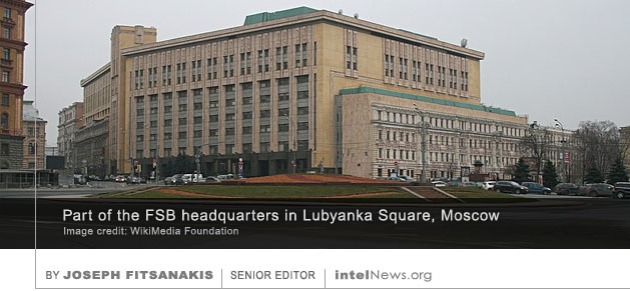
FSB RussiaGERMANY HAS CHARGED TWO men, among them a German intelligence officer, with spying for Russia, in a case that has shocked German public opinion and alarmed Germany’s allies. The two men have been identified only as “Carsten L.” and “Arthur E.”, in compliance with Germany’s privacy laws. Carsten L. is accused of having provided the Russian Federal Security Service (FSB) with intelligence about the Russo-Ukrainian war, in return for nearly $500,000. Arthur E. is believed to have been Carsten L.’s accomplice and to have acted as an intermediate between him and his Russian handlers.

The German prosecutor general has charged both men with “high treason in a particularly serious case”. However, there is no public information about the timeline of Carsten L.’s recruitment by the FSB and his espionage for the Russians. He reportedly met his accomplice, Arthur E., a Russian-born German diamond trader, in Bavaria in 2021. After being recruited by Carsten L., Arthur E. is believed to have traveled frequently between Germany and Russia. During those trips, he is thought to have met with FSB officers in order to provide them with intelligence and receive payments.

When they announced the arrests of the two men back in January of this year, German officials said they had been tipped by a foreign intelligence agency. The foreign intelligence agency had allegedly found a document from the BND’s internal files in the possession of an unnamed Russian spy agency. However, the identity of the intelligence agency that provided the tip to the Germans is among several important details about this case that remain unknown for the time being. Among them are the estimated duration of Carsten L.’s alleged espionage for Moscow, the damage he caused to German intelligence, as well as his motives for spying for the FSB.

Author: Joseph Fitsanakis | Date: 12 September 2023 | Permalink

Leading German university suspends Chinese state-funded researchers

FAU UniversityONE OF GERMANY’S LEADING universities has suspended researchers funded by the Chinese government, citing concerns about academic freedom and industrial espionage. The Friedrich Alexander University of Erlangen-Nuremberg (FAU) announced the suspension of Chinese government-funded researchers in June of this year. In announcing the measure, the university stated that the move was designed to protect academic freedom and freedom of expression among its faculty and staff. Earlier this week, however, German media reported the contents of an internal FAU email, which expressed concerns that the Chinese state could be utilizing government-funded researches as spies.


Founded in Bavaria in 1743, FAU is among Germany’s leading universities. On June 1, it became the first university in Germany to suspend researchers funded by the China Scholarship Council (CSC). The CSC is an outreach unit of the Chinese Ministry of Education, which funds the work of Chinese researchers in foreign universities, while also providing scholarships to foreign citizens who apply to study in China. In January 2023, Swedish daily Dagens Nyheter reported that, in order to become recipients of CSC scholarships, Chinese citizens were required to pledge “support [to] the leadership of the Chinese Communist Party […] and to have a correct world view, outlook on life, and values system”.

On June 1, the FAU leadership announced that the CSC funding methods conflicted with Germany’s Basic Law (the country’s Constitution). Furthermore, according to the FAU leadership, the CSC funding methods violated the principles of academic freedom and freedom of expression for its faculty, as practiced in Germany. On Saturday it was reported that, according to an internal FAU email, university officials also expressed concerns that the Chinese state could use CSC researchers to spy on FAU scientific and industrial research, and to compromise FAU’s data security and intellectual property practices.

FAU’s decision was reportedly met with support by Germany’s Minister for Education, Bettina Stark-Watzinger, who said that German universities and research establishments have “a responsibility to safeguard themselves against espionage activities conduced by students receiving scholarships from the Chinese government”. It is also reported that other universities in Germany and elsewhere in Western Europe are considering following FAU in suspending CSC-funded Chinese researchers.

Author: Joseph Fitsanakis | Date: 31 August 2023 | Permalink

Alleged Islamic State informant sues Danish spy services over prison sentence

PET DenmarkA DANISH CITIZEN IS suing two Danish spy agencies, claiming that he was wrongly jailed for being a member of the Islamic State, when in fact he had been asked by his handlers to join the group as an undercover informant. The lawsuit has been brought in Copenhagen by Ahmed Samsam, a 34-year-old Danish citizen of Syrian origin. Samsam’s father, Jihad Samsam, fled to Denmark from Syria following the 1982 Hama massacre, when the Syrian military violently quelled an anti-government uprising by members of the Muslim Brotherhood.

Ahmed Samsam grew up in Copenhagen with his six siblings. He was involved in numerous criminal activities, including robbery and drugs possession. In September 2012, he traveled to from Denmark to Turkey. From there he entered Syria, intending to join the civil war on the side of the anti-government rebels. Upon returning to Denmark in December of that year, Samsam was imprisoned for a prior criminal offense. It was during his time in prison that members of the Danish Security and Intelligence Service (PET) allegedly approached him, asking him to work as an undercover informant abroad. Samsam claims that he undertook several trips to Syria as an informant between 2013 and 2015. While he was there, he claims that he spied on the Islamic State on behalf of the PET and the Danish Defense Intelligence Service (FE), which also recruited him as a spy.

Samsam eventually returned to Denmark, but in 2017 fled to Spain, allegedly to escape harassment by a rival criminal gang in Copenhagen. In June of that year, he was arrested by Spanish police near the coastal city of Malaga in southern Spain. Samsam was charged with terrorism, after police discovered several photos of himself posing with Islamic State symbols and flags on his mobile telephone. He was eventually convicted to eight years in prison, which were later reduced to six. Since 2020, Samsam has been serving his prison sentence in Denmark.

But, in a lawsuit he brought against the Danish state, Samsam claims he had engaged with Islamic State fighters in Syria at the behest of the PET and the FE, and argues that he should not be jailed for terrorism offenses. However, the Danish intelligence agencies have rejected calls to confirm or deny that Samsam had been recruited by them as an informant. Attorney Peter Biering, who represents the defendants in the case, told the court last week that forcing the intelligence agencies to identify their informants would “harm [the agencies’] ability to […] protect [their sources] and prevent terrorism”. Samsam’s attorney, Erbil Kaya, argues that the Danish state is morally obligated to admit to his client’s role as an undercover informant, even if this is formally prevented by the law of the land.

The trial is expected to conclude on September 8. Several witnesses, including government officials and investigative reporters, have been scheduled to testify in court, almost certainly behind closed doors.

Author: Joseph Fitsanakis | Date: 28 August 2023 | Permalink

Chinese government arrests second alleged CIA spy in 10 days

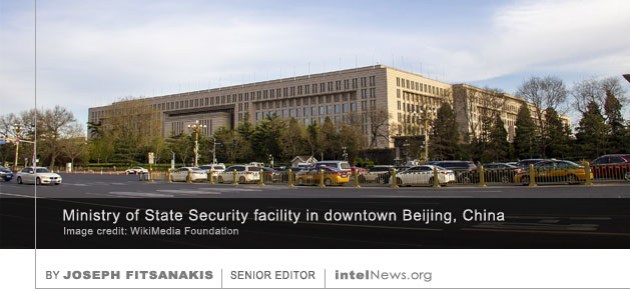
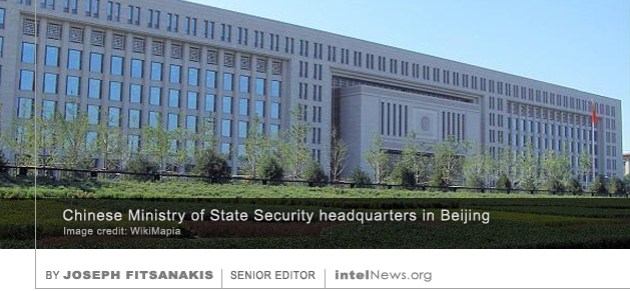
Chinese Ministry of State SecurityFOR THE SECOND TIME in 10 days, the government of China has announced the arrest of a Chinese government employee on suspicion of spying for the United States Central Intelligence Agency (CIA). In a statement issued on Monday, China’s civilian intelligence agency, the Ministry of State Security (MSS), said it had launched an investigation into an official of a government ministry, who was allegedly caught conducting espionage on behalf of the CIA.

The MSS statement did not name the government ministry where the alleged spy works. But it identified the accused by his surname, Hao, describing him as a 39-year-old Chinese national. According to the MSS statement, Hao spent a number of years as a graduate student in Japan. While he was studying in Japan, he allegedly visited the United States embassy in Tokyo, in order to apply for a travel visa. During his visit to the embassy, he met a United States embassy official, who befriended him.

Over time, Hao allegedly formed a close relationship with the unnamed American embassy official. The latter treated him to meals, sent him gifts in the mail, and secured funds for him to conduct research. Eventually, the embassy official introduced Hao to another American official, who, according to the MSS, was a CIA case officer. The CIA case officer allegedly recruited Hao to spy for the United States and instructed him to seek employment at “a core and critical department” of the government upon his return to China.

After completing his studies in Japan, Hao returned to China and secured employment in a government agency. He continued to meet regularly with his alleged CIA handler and other CIA officers, who to whom he “provided intelligence” in return for “espionage funds”, according to the MSS statement. The statement said that Hao’s case remains under investigation and that no official charges have yet been filed.

The MSS statement about Hao’s case came exactly 10 days after the spy agency posted on its WeChat social media account that it had caught another government official spying for the CIA. On August 11, the MSS said it had detained an alleged CIA spy named Zeng, whom it described as a 52-year-old “staff member of a Chinese military industrial group and an important confidential employee” of the Chinese state. Zeng had reportedly been sent to Italy by his employer, presumably in order to pursue graduate studies or receive technical training. While in there, he was allegedly accosted and eventually recruited by an employee of the United States embassy in Rome.

It is not known if the two cases are in any way connected. Government officials in Washington and at the United States embassy in Beijing have not commented on the story.

Author: Joseph Fitsanakis | Date: 23 August 2023 | Permalink

Eighth person detained in sprawling Taiwanese probe of Chinese spy ring

Kaohsiung High Court, TaiwanA SEVENTH PERSON HAS been detained in Taiwan as a result of a broadening investigation into a Chinese spy ring that allegedly provided Beijing with sensitive military intelligence. The existence of the investigation was revealed in January of this year, when the Taiwanese authorities announced the arrests of one retired and six active-duty military officers, all of whom were charged with spying for China.

On January 6 of this year, a retired Taiwanese Air Force colonel, identified only by his last name, Liu, was arrested for spying. According to court documents unsealed at the Taiwan High Court branch in Kaohsiung, Liu retired from the Air Force 2013. Soon afterwards, he began business dealings in China. It was during one of his trips to China when Liu was allegedly recruited by the Chinese government. He then carried out espionage operations on behalf of Beijing for approximately eight years.

Throughout his espionage activities, Liu allegedly used his military contacts to recruit six active-duty Taiwanese Air Force and Navy officers to carry out espionage, in return for monetary payments. The six active-duty military officers were arrested along with Liu on January 6. In April of this year, all seven individuals were formally charged with spying for China, in violation of Taiwan’s Classified National Security Information Protection Act.

Taiwanese government prosecutors alleged that each member of the spy ring received between NT$200,000 and NT$700,000 (approximately US$6,500-23,000) for agreeing to spy for Beijing. As the principal agent, Liu received individual bonuses of between NT$30,000 and NT$100,000 (US$1,000-3,200) each time he gave his Chinese handlers information gathered by one of the members of the spy ring.

On August 16, the Taiwanese government announced that one more individual, referred to as “a field officer” was detained on suspicion of spying for China. The suspect was identified only by his last name, Cheng. He was reportedly arraigned in the Taiwan High Court branch in Kaohsiung, the same court that last January delivered espionage charges against the other seven suspects involved in the spy ring investigation. All eight suspects have been denied bail. Their trial has not yet been set.

Author: Joseph Fitsanakis | Date: 21 August 2023 | Permalink

UK charges three Bulgarians with spying for Russia in ‘major national security’ case

Bizer Dzhambazov and Katrin IvanovaAUTHORITIES IN BRITAIN HAVE charged three Bulgarian nationals with spying for Russia, as part of “a major national security investigation” that led to at least five arrests as early as last February. Two of the Bulgarians appear to be legally married. They have been identified as Bizer Dzhambazov, 41, and Katrin Ivanova, 31, who live in Harrow, a northwestern borrow of Greater London. The third Bulgarian, Orlin Roussev, 45, was arrested in Great Yarmouth, a seaside town in the east coast identity dof England. None of the suspect appears to have a formal diplomatic connection to either Bulgaria or Russia.

The Bulgarians were reportedly arrested in February of this year by the Counter-Terrorism Command of the Metropolitan Police, whose law enforcement mandate includes working on counterespionage cases. Two other individuals who were arrested at the time have not been charged or named. The three suspects have been charged under Section 4 of the United Kingdom’s Identity Documents Act 2010, which prohibits the possession of fake identity documents with “improper intention” and with the owner’s knowledge that they are fake. According to British government prosecutors, the suspects possessed forged passports and identity cards for Spain, France, the United Kingdom, Croatia, Italy, Greece, Bulgaria, the Czech Republic, and Slovenia.

Dzhambazov and Ivanova are believed to have moved to the United Kingdom as a couple in 2013. Both worked in the British healthcare sector —Ivanova as a laboratory assistant for a private company and Dzhambazov as a driver for a hospital. Roussev moved to the United Kingdom in 2009 and worked on the technical side of the financial services industry. He claims to have worked as an adviser for the Ministry of Energy of Bulgaria. He also claims to have previously owned a private company that operated in the area of signals intelligence (SIGINT), which involves the interception of electronic communications.

Bulgaria was one of the Soviet Union’s closest allies during the Cold War. Relations between Bulgaria and Russia plummeted in the 2000s, but pro-Russian sentiments continue to survive among some nationalist segments of the Bulgarian electorate. In June of this year, Kiril Petkov, the leader of Bulgaria’s We Continue the Change party, which today backs Bulgaria’s Prime Minister, Nikolai Denkov, spoke publicly about “Moscow-backed agents” operating inside Bulgaria’s intelligence services. Petkov proposed an ambitious plan to reform the Bulgarian intelligence services in order to “diminish the influence of Russia”. He proposed to do this through the administration of “integrity and ethical tests” to intelligence personnel.

Author: Joseph Fitsanakis | Date: 15 August 2023 | Permalink

China arrests government worker who gave CIA ‘core information’ about military

US embassy Rome ItalyA CHINESE GOVERNMENT EMPLOYEE gave “core information” about China’s military to the United States, after he was recruited by a Central Intelligence Agency (CIA) officer in Italy, a Chinese state agency has said. The allegation was made in a statement that was issued on Friday by China’s civilian intelligence agency, the Ministry of State Security (MSS), on its WeChat social media account.

The MSS statement did not specify the period during which the alleged espionage took place. But it named the alleged spy as “Zeng” and described him as a 52-year-old “staff member of a Chinese military industrial group and an important confidential employee” of the Chinese state. According to China’s state-owned newspaper The Global Times, Zeng had been sent to Italy by his employer, presumably in order to pursue graduate studies or receive technical training. While in Italy, Zeng was allegedly accosted by an employee of the United States embassy in Rome, which the MSS identified as “Seth”.

According to the MSS, Seth was a CIA case officer, who befriended Zeng through “dinner parties, outings and trips to the opera”. The Chinese man “developed a psychological dependence” on Seth and was “indoctrinated” by him “with Western values”, the MSS statement claims. Seth eventually convinced Zeng to sign an agreement with the CIA to conduct espionage, after which the Chinese man allegedly received intelligence tradecraft training. Upon returning to China from his stay in Italy, Zeng is alleged to have carried out espionage on behalf of his CIA handlers. The MSS claims Zeng gave his CIA handlers “a great amount of core intelligence” during “multiple secret meetings” with them.

The information Zeng is alleged to have provided to the CIA concerned “key developments about China’s military” to which he had access through his employer. In exchange for this information, Zeng is accused of having received “a huge amount of [financial] compensation” by his CIA handlers. The latter also promised him that they would help his family emigrate to the United States, as per the MSS statement. The spy agency said that Zeng remains in detention while the case is under investigation. The MSS statement also warned other Chinese citizens living or traveling abroad of “the risks and perils” of recruitment by Western spy agencies.

The Reuters news agency said it contacted the United States embassy in Beijing about the MSS allegations, but received no response.

Author: Joseph Fitsanakis | Date: 14 August 2023 | Permalink

China’s intelligence modernization has outpaced military increases: British report

Chinese Ministry of State SecurityTHE MODERNIZATION OF CHINA’S intelligence community is without parallel in recent history and has even outpaced the funding increases given to the Chinese military, a British government report has concluded. According to the same report, the Chinese government spends more on what it perceives as domestic threats than on external targets involving Western countries and their allies.

The redacted version of the report was issued last month by the British Parliament’s Intelligence and Security Committee, which monitors the activities of the British intelligence community. It concentrates on China’s domestic and global ambitions and discusses the role of the Chinese intelligence services in these pursuits. A theme that permeates the 222-page report is that China’s domestic and international ambitions are interconnected, as Beijing does not distinguish between its key national interests in the domestic and foreign domains. Moreover, the report notes that the Chinese intelligence community plays a central role in both facets.

The report notes that China “almost certainly maintains the largest state intelligence apparatus in the world”, dwarfing those of its Western rivals. The latter are forced to concentrate their counterintelligence work “on those aspects that are most demanding”. The official Chinese intelligence agencies are three, the report notes; they consist of the Ministry of State Security and the Ministry of Pubic Security —both of which are civilian— as well as the Strategic Support Force of the Chinese People’s Liberation Army. The latter provides signals intelligence support, whereas the two civilian agencies carry out a host of intelligence and counterintelligence duties.

Nevertheless, the Chinese state’s “whole-of-government” approach on matters of security means that almost every government agency fulfils some type of intelligence-related role. This makes it difficult to calculate with accuracy the full extent of the Chinese intelligence apparatus, the report notes.

Notably, Chinese intelligence agencies are focused primarily on what the Chinese government perceives as domestic threats to its rule, which Beijing has termed “the five poisons”. According to the report, these consist of: the Taiwanese independence movement; the separatist movements in Tibet and Xinjiang; the Falun Gong religious movement; and pro-democracy activism inside China. Intelligence collection and other operations that relate to the so-called “five poisons” include intelligence activities that take place abroad and target Chinese expatriate communities.

It is also worth noting that, according to the report, Beijing spends “almost 20% more on domestic security than on external defence”. Moreover, the rise in expenditures for intelligence infrastructure and operations is impressive by any standards of assessment and “has outpaced even China’s recent dramatic military modernization” of recent years, the report notes. The increase in spending “appears to have led to an improvement in capability”, the report concludes.

Author: Joseph Fitsanakis | Date: 09 August 2023 | Permalink

Russian spies allegedly impersonated Microsoft staff to hack government agencies

SVR hqMEMBERS OF A PROLIFIC hacker group that many associate with Russian intelligence impersonated Microsoft technicians in order to compromise nearly 40 government agencies and companies around the world. Microsoft security researchers said last week that the “highly targeted” social engineering campaign was guided by “specific espionage objectives” by the hackers.

According to Microsoft, the hackers behind the spying campaign are associated with a prolific hacker group named APT29 (also known as “Cozy Bear” and “Midnight Blizzard”) by cybersecurity researchers. It rose to infamy in 2020, when it was connected with the worldwide SolarWinds attack, which some experts described as possibly being among “the most impactful espionage campaigns on record”. It is believed that APT29 is closely associated with the Russian Foreign Intelligence Service (SVR, pictured).

Starting in late May 2023, APT29 hackers used several previously compromised Microsoft 365 accounts in order to set up internet domains with technical support-themed names. They then used these domains to contact a number of “highly targeted” individuals through Microsoft Teams, pretending to be Microsoft technical support representatives. Eventually, some of their targets were persuaded to provide the hackers with information they received through Microsoft’s multifactor authenticator system, thus granting them full access to their user accounts.

Microsoft did not disclose the identities of the targets, saying only that they were nearly 40 in number, and included government agencies, various multinational technology and manufacturing firms, media companies, as well as non-governmental organizations.

Author: Joseph Fitsanakis | Date: 07 August 2023 | Permalink

Brazil judges block international requests to extradite alleged Russian spy

GRUTHE BRAZILIAN GOVERNMENT IS blocking requests from the United States and Russia to extradite an alleged Russian deep-cover spy, whose forged Brazilian identity papers were discovered by Dutch counterintelligence. Sergey Cherkasov was expelled by authorities in the Netherlands in June 2022, after he attempted to enter the country using a Brazilian-issued passport under the name of Victor Muller Ferreira.

Within a few days of his expulsion, Dutch and American counterintelligence had outed Cherkasov as an intelligence officer of the Main Directorate of the Russian Armed Forces’ General Staff, which is commonly known as GRU. Cherkasov is alleged to have built his forged identity over several years, while operating in Brazil and the United States. Upon returning to Brazil, Cherkasov was sentenced to 15 years in prison for using forged Brazilian identity documents.

Last week, Cherkasov’s sentence was reduced to 5  years, after a court in Brazil dropped some of the initial charges that had been filed against him by the Brazilian government prosecutor’s office. Cherkasov’s lawyers are now arguing that their client does not pose a flight risk and should therefore be allowed to serve the remainder of his sentence outside of prison, wearing an electronic tagging device.

These recent developments are of concern to authorities in the United States. The latter have filed an extradition request for Cherkasov, claiming that he spent several years as a graduate student in an American university while using his forged Brazilian identity papers. During that time, Cherkasov is alleged to have repeatedly communicated with his Russian intelligence handlers, supplying them with information about American politics and policy.

However, the Ministry of Justice and Public Security of Brazil said on Friday that Washington’s extradition request had been denied and that Cherkasov would remain in Brazil. The apparent reason for the denial is that Brazil’s Supreme Federal Court had already approved a similar extradition request for Cherkasov, which was filed in April by the Russian government. Moscow claims that Cherkasov is wanted in Russia for narcotics trafficking. The Russians also deny that the alleged spy worked for the GRU or any other government agency.

Yet, despite claims to the contrary, the Brazilian government appears to be essentially stalling on Moscow’s extradition request. On Friday, Flávio Dino, who serves as Minister of Justice under the administration of President Inácio Lula, stated that Cherkasov would continue to serve his prison sentence in Brazil until further notice. In the United States, CBS News reported that Cherkasov’s extradition to Russia would take place “only […] after the final judgment of all of his cases here in Brazil” has been issued, according to the accused spy’s lawyers.

Author: Joseph Fitsanakis | Date: 31 July 2023 | Permalink

Revealed: Little-known Russian counterintelligence unit that targets foreigners

FSB - JFAN INVESTIGATIVE REPORT BY the Wall Street Journal discusses a little-known Russian counterintelligence unit that targets foreign diplomats in ways that often “blur the lines between spycraft and harassment”. Among other activities, this secretive unit is likely behind a string of operations targeting American citizens, which have led to the arrest of at least three of them since 2018. These include the Wall Street Journal correspondent Evan Gershkovich, who earlier this year became the first American reporter to be held in Russia on espionage charges since the Cold War.

The Journal Text highlights the activities of the Department for Counterintelligence Operations, or DKRO, a highly clandestine unit belonging to the counterintelligence arm of Russia’s Federal Security Service (FSB). It is believed that the DKRO is responsible for monitoring the activities of foreigners living in Russia. The unit reports to Vladislav Menshchikov, director of the counterintelligence arm of the FSB. Prior to his current post, Menshchikov headed the Office of Special Presidential Programs, a Kremlin outfit that operates and safeguards secret underground facilities in Russia’s metropolitan areas.

According to the paper, the DKRO consists of sub-units that focus on various nationalities of foreigners living in Russia, including diplomats. Its first and largest section, known as DKRO-1, focuses on Americans and Canadians. The operations of this sub-unit have intensified significantly in recent times, as relations between Washington and Moscow have worsened. The Journal’s information reportedly came from “dozens of interviews” with senior Western diplomats in Europe and the United States, American citizens that were previously detained and imprisoned in Russia, as well as Russian analysts and journalists who now live abroad.

In addition to Menshchikov, the DKRO has been behind operations that led to the arrests of two other Americans, Paul Whelan (arrested in 2018) and Trevor Reed (arrested in 2019), both of whom were charged with carrying out espionage for the United States. However, most of the activities of the DKRO focus on monitoring the activities of foreign subjects inside Russia. These include journalists and diplomats. Many of the DKRO’s targets have been subjected to campaigns of harassment and intimidation, the Journal claims. Examples include following diplomats’ children to school, breaking into diplomats’ residences to plant recording devices, sabotaging diplomatic vehicles, and even “cutting the power to the residence of the current U.S. Ambassador”.

The paper also reports that, according to American diplomatic staff, the Russian police officers that are posted along the perimeter of the United States embassy in Moscow are in fact “DKRO officers in disguise”. The Journal said it reached out to the FSB and the Kremlin for comment on these allegations, but received no response. The paper also reached out to the United States embassy in Moscow and to the State Department, but officials there declined to comment.

Author: Joseph Fitsanakis | Date: 12 July 2023 | Permalink