Turkey has more spies in Germany than Stasi had during Cold War: expert
August 26, 2016 1 Comment
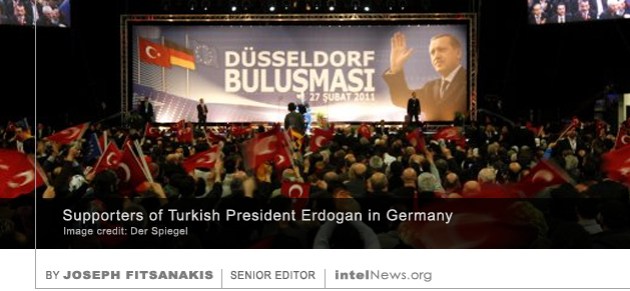 The Turkish intelligence service currently employs more operatives in Germany than the East German spy agency did at the height of the Cold War, according to a German expert on espionage. The comment was made following the disclosure that Turkey maintains close to 6,000 informants and other intelligence operatives in Germany. An unnamed German security official told German newspaper Die Welt on Monday that the informants are operational throughout Germany and are handled by Turkey’s National Intelligence Organization, known as MİT.
According to Die Welt, many of these informants are tasked with keeping tabs on Germany’s large Kurdish community, which Ankara views as domestic threats to Turkish national security. More recently, however, MİT operatives in Germany have been instructed to infiltrate groups of supporters of the charismatic Muslim cleric Fethullah Gülen who lives in the United States. A former ally of Turkish President Recep Tayyip Erdoğan, Gülen and his millions of supporters around the world now oppose the Turkish government and are described as terrorists by Ankara. President Erdoğan has personally accused “Gülenists” of orchestrating the failed July 15 coup in Turkey. In addition to infiltration, MİT informants in Germany are allegedly engaged in psychological operations against perceived opponents of the Turkish government, and sometimes engage in blackmail and intimidation of targeted individuals or groups, according to Die Welt.
Erich Schmidt-Eenboom, one of Germany’s best known independent researchers on intelligence, and a widely published author, said he was surprised that the number of alleged MİT operatives in Germany is this high. If the number of 6,000 operatives is accurate, said Schmidt-Eenboom, it would place the MİT above the level of the Stasi during the Cold War. He was referring to the Ministry for State Security, the intelligence agency of communist-era East Germany, which was known for its extensive networks of informants during the Cold War. Schmidt-Eenboom said that, according to Stasi records, the agency handled approximately 10,000 operatives in West Germany, a country that at the time had a population of 60 million. In contrast, the 6,000 MİT operatives in Germany are primarily tasked with monitoring the Turkish and Kurdish immigrant community there, which numbers no more than 3 million. Consequently, said Schmidt-Eenboom, there are 500 potential human targets for each present-day MİT operative, whereas there were 6,000 West German citizens for every Stasi operative during the Cold War.
The article in Die Welt did not specify whether the alleged MİT informants are paid agents or simply supporters of the Turkish government who have volunteered their services. As intelNews reported earlier this week, some members of the German Bundestag’s Committee on Parliamentary Oversight, including its chairman, Clemens Binninger, plan to launch an official investigation into the activities of Turkish intelligence in Germany. Of particular interest to the committee is the alleged cooperation between German and Turkish intelligence agencies following the failed coup in Turkey this past July.
► Author: Joseph Fitsanakis | Date: 26 August 2016 | Permalink
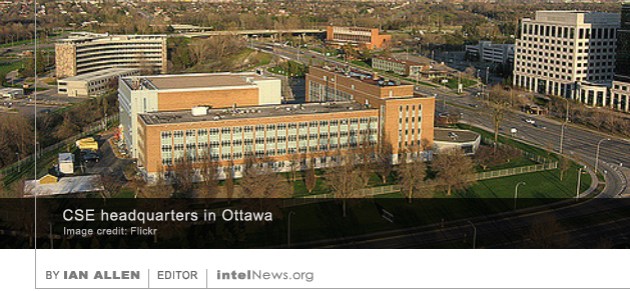 The volume of domestic communications that were intercepted by Canada’s spy agency increased 26 times between 2014 and 2015, according to a recently released report by a government watchdog. The same report states that intercepted information about Canadian citizens, which is given to Canada’s spy agency by the intelligence organizations of other Western countries, has increased so much that it now requires an elaborate mechanism to analyze it. When asked to explain the reasons for these increases, Canadian government officials said they could not do so without divulging secrets of national importance.
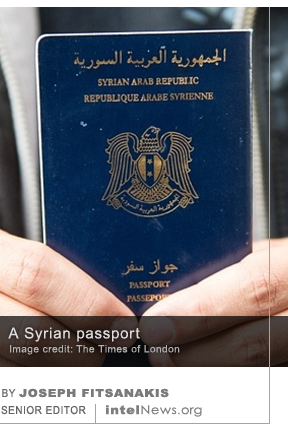 Fake Syrian passports designed for use by members of the Islamic State trying to enter Europe have been found in refugee camps in Greece during an investigation by the law enforcement agency of the European Union (EU). Officials from Europol, the EU agency that coordinates intelligence operations against organized crime across EU-member-states, said that the fake travel documents were found during a fact-finding mission in Greek refugee camps. The mission was part of a larger investigation into the production and use of forged passports by the Islamic State, the Sunni militant group that is also known as the Islamic State of Iraq and Syria (ISIS).
 Saturday’s suicide bombing, which killed over 50 and injured dozens at a wedding in Gaziantep, Turkey, was without doubt the work of the Islamic State. It was yet another attempt by the militant Sunni group to discourage the Kurds from confronting it in battle, by pointing to the deadly consequences. It was also fueled by the desire for vengeance against a population that has consistently resisted the Islamic State’s ideology. Additionally, if confirmed, the use of a child as a suicide bomber by the Islamic State may form a pattern of operational activity that can lead to broader conclusions about the current state of the organization.
 The Turkish government has sent an official request to German intelligence for assistance in cracking down on the members of the so-called Gülen movement, which Ankara claims is behind July’s failed coup plot. The movement consists of supporters of Muslim cleric Fethullah Gülen, who runs a global network of schools, charities and businesses from his home in the United States. The government of Turkey has designated Gülen’s group a terrorist organization and claims it has stealthily infiltrated state institutions since the 1980s. The administration of Turkish President Recep Tayyip Erdoğan accuses Gülen’s supporters of orchestrating the July 15 coup that included an armed attack on the country’s parliament and the murder of over 200 people across Turkey.
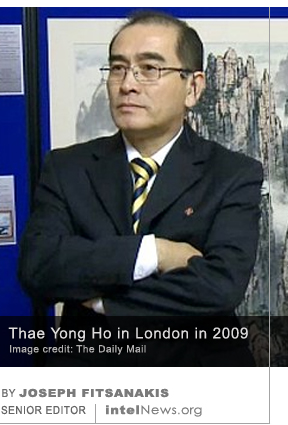 A high-ranking North Korean diplomat, who defected with his wife and children in London, and is now in South Korea, is from a privileged family with a long revolutionary pedigree in North Korean politics. South Korea’s Ministry of Unification confirmed on Wednesday that Thae Yong-Ho, the second-in-command at the North Korean embassy in the United Kingdom, had defected with his wife and children and had been given political asylum in South Korea. As intelNews
 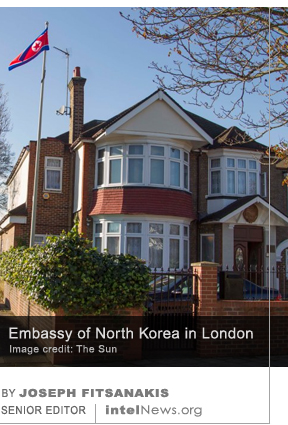 A senior member of North Korea’s diplomatic representation in the United Kingdom, who is considered one of his country’s leading specialists in Western European affairs, has reportedly defected “to a third country” with his family. The alleged defection was first
 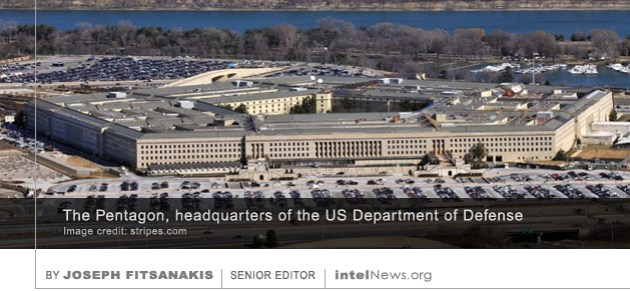 The United States Department of Defense has released details of an agreement with a private intelligence contractor, which experts believe involves the provision of services to American Special Forces working clandestinely inside Syria. The
 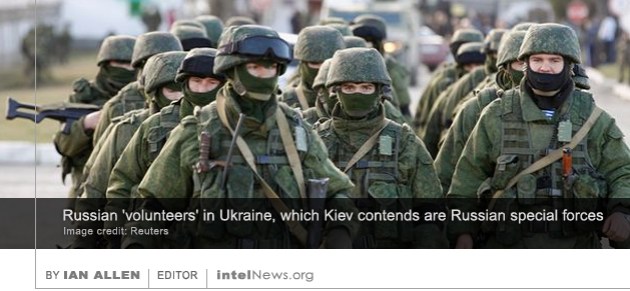 Ukrainian intelligence and defense officials are sharing intelligence with Britain about cutting-edge Russian military tactics in the Crimea and parts of eastern Ukraine. Since the 2014 Russian military intervention in Ukraine, observers have noted the sophisticated tactics used by Moscow. The Russian forces seem to be combining their advanced conventional arsenal with electronic warfare and information operations. The latter include the use of deception, spreading propaganda through social media, and computer hacking. Some experts have described Russia’s tactics in the Crimean Peninsula and the Donbass region of Ukraine as a form of “
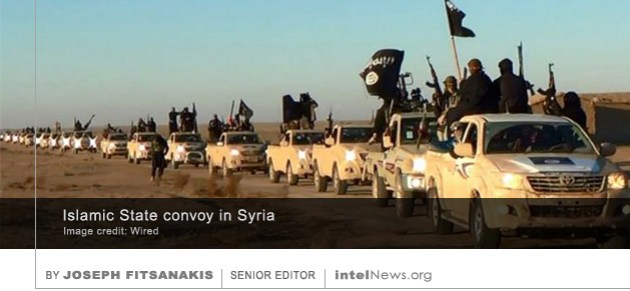 An investigation by Republican lawmakers in the United States House of Representatives has reportedly found that military intelligence analysts were pressured into changing reports on the Islamic State by their superiors. The investigation follows
 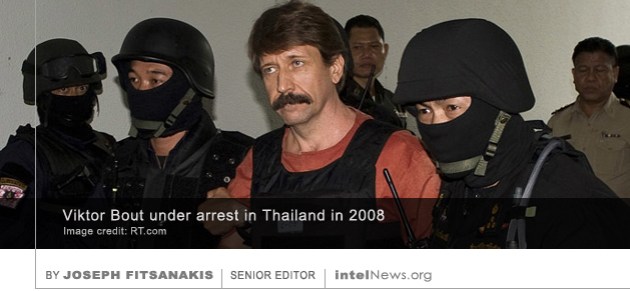 The wife of Viktor Bout, the imprisoned Russian arms dealer dubbed ‘the merchant of death’, said he rejected an offer by his American captors who asked him to testify against a senior Russian government official. Born in Soviet Tajikistan, Bout was a former translator for the Soviet military. After the end of the Cold War, he set up several low-profile international air transport companies and used them to transfer large shipments of weapons that fueled wars in Africa, Asia, Latin America and Europe. He made millions in the process and acquired international notoriety, which inspired the Hollywood blockbuster Lord of War. But his business ventures ceased in 2008, when he was
 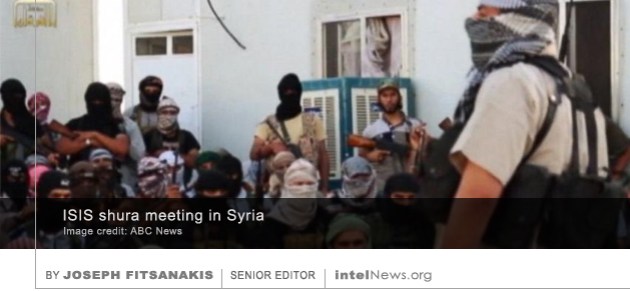 The Islamic State has set up a secretive intelligence agency whose task is to set up sleeper cells abroad and has already sent “hundreds of operatives” to Europe and Asia, according to information emerging from interrogations of suspects. According to The New York Times, the information about the intelligence agency comes from “thousands of pages” of intelligence files from American, French, Belgian, Austrian and German agencies. The documents include information from interviews with captured members or defectors from the Islamic State, which is otherwise known as the Islamic State in Iraq and Syria (ISIS).
 Authorities in Iran have admitted that they executed a former scientist for the country’s nuclear program, who claimed that he was abducted by the United States after disappearing from Iran for a year. Shahram Amiri worked for the Atomic Energy Organization of Iran, the government body that is responsible for operating and regulating the country’s nuclear installations. But in the summer of 2009, while on a religious pilgrimage to the Saudi Arabian city of Mecca, Amiri disappeared. Iranian authorities
 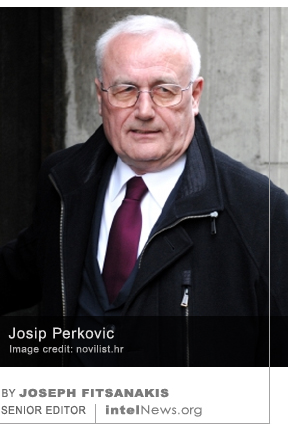 A German court has given life sentences to two senior intelligence officers in Cold-War-era Yugoslavia, who masterminded the murder of a Croat dissident in 1983. Josip Perković and Zdravko Mustać, both former senior officials in the Yugoslav State Security Service, known as UDBA, were








US denies it plans to free top intelligence analyst who spied for Cuba
August 29, 2016 by Joseph Fitsanakis 1 Comment
Montes, who is the daughter of an American military doctor, grew up in Kansas. In 1985 she joined the Defense Intelligence Agency, a US Department of Defense body that collects and analyzes military-related information abroad. Montes quickly distinguished herself in the DIA, and by the mid-1990s she was seen as one of the US government’s most knowledgeable and capable Cuba experts. She was the main author of nearly every major assessment on Cuba that was produced by the US Intelligence Community in the 1990s. But on September 21, 2001, Montes was arrested by the Federal Bureau of Investigation and charged with having committed espionage for Cuba. During her trial, US government prosecutors argued that Montes had been recruited by Cuban intelligence before she joined the DIA, and that she eventually compromised every US intelligence collection program targeting the Caribbean island. The former DIA analyst was also accused of having given Havana the identities of US intelligence officers who had secretly operated in Cuba. In 2002, Montes was sentenced to 25 years in prison, after pleading guilty to having committed espionage throughout her 16-year career at the DIA.
But in recent months, there has been speculation that Montes could be released and allowed to relocate to Cuba. In return, Havana would reportedly extradite to the US Assata Shakur, a former member of militant black nationalist groups in the United States, who is wanted for the 1973 murder of a state trooper in the state of New Jersey. Shakur, whose birth name is JoAnne Deborah Byron, escaped from an American prison in 1979 and resurfaced in Cuba in 1984. The island’s socialist government gave Shakur political asylum, but the FBI has designated her a terrorist.
The rumors about a possible exchange between Montes and Shakur prompted US Representative Devin Nunes, a Republican from California, who chairs the House Permanent Select Committee on Intelligence, to voice concern. In a letter to US President Barack Obama, Nunes urged against Montes’ release. The Congressman described the imprisoned former intelligence analyst as “one of the most brazen traitors in US history” and remarked that she “richly deserved her 25-year prison sentence, and must serve every day of it”. According to El Nuevo Herald, Nunes received a written response from the US Department of State, which said that “the United States government has no intention of releasing or exchanging Montes”. According to the Florida-based, Spanish-language newspaper, the State Department letter “assured” Nunes that it was “responding on the president’s behalf”, suggesting that the Obama administration has no plans to release Montes.
► Author: Joseph Fitsanakis | Date: 29 August 2016 | Permalink
Filed under Expert news and commentary on intelligence, espionage, spies and spying Tagged with Ana Belen Montes, Assata Shakur, Cuba, Devin Nunes, DIA, imprisoned spy swaps, News, United States, US Department of State, US House of Representatives Permanent Select Committee on Intelligence