Germany helped Israel build atom bomb, says leading nuclear expert
April 21, 2015 4 Comments
 By JOSEPH FITSANAKIS | intelNews.org
The government of West Germany secretly funded the Israeli nuclear weapons program during the Cold War, according to a leading German nuclear expert. Today, Israeli authorities continue to deny the existence of the country’s nuclear weapons arsenal. However, it is generally accepted that the country’s atom program began as early as 1952, with the establishment of the Israeli Atomic Energy Commission. By the mid-1960s, Israeli scientists had built at least one nuclear bomb; and by the time the Six-Day War broke out in 1967, the Jewish state had at least two nuclear warheads in its possession.
But how could a small, developing country fund one of the most expensive weapons programs in existence? According to Hans Rühle, one of Germany’s leading nuclear experts, the Israeli nuclear weapons program was primarily funded by the Federal Republic of Germany. Rühle was head of planning for Germany’s Ministry of Defense in the 1980s, and subsequently held various management positions in the North Atlantic Treaty Organization (NATO). In an article published last week in German newspaper Die Welt, Rühle says that Germany was “almost certainly” the financial powerhouse behind the ambitious Israeli nuclear weapons program.
The German expert states that the initial bilateral agreement was struck in 1960 in New York, during a meeting between Israeli Prime Minister David Ben-Gurion and West German Chancellor Konrad Adenauer. The program, codenamed “Aktion Geschäftsfreund” (“Operation Business Partner”) was solidified during a subsequent meeting between the two men in French capital Paris, in 1961. It stipulated that Germany would lend Israel 2 billion deutschmarks (approximately $500 million) for 10 years, under the pretext of developing the Negev desert into land suitable for agricultural production. The project had been zealously promoted by Ben-Gurion ever since he had become leader of his newly founded country.
The deal, says Rühle, was administered through Germany’s government-owned Kreditanstalt für Wiederaufbau development bank, which specialized in providing grants to emerging economies. It bore all the hallmarks of a typical capital assistance program aimed at strengthening West Germany’s economic and political ties with developing countries. However, with the full support of the German government, the funds were secretly channeled to building several nuclear facilities in Israel, including the Negev Nuclear Research Center. The latter’s existence was publicly revealed in 1986 by Mordechai Vanunu, an Israeli engineer who had worked in the top-secret Negev facility from 1976 to 1985. The Israeli Mossad eventually abducted Vanunu from Italy and renditioned him to Israel, where he was jailed.




 By JOSEPH FITSANAKIS | intelNews.org









 intelNews.org
ISIS leader al-Baghdadi mortally wounded in airstrike, say sources
April 22, 2015 by Joseph Fitsanakis Leave a comment
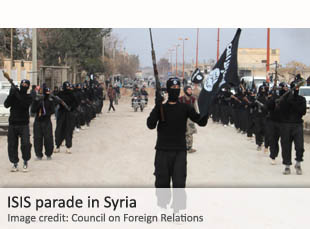
The spiritual leader of the Islamic State is wounded so severely that he is no longer able to command the group’s daily activities, according to sources in Iraq. Abu Bakr al-Baghdadi, a Sunni Islamic cleric who grew up in Samarra, Iraq, was appointed leader of the Islamic State, also known as the Islamic State of Iraq and Syria (ISIS), in May of 2010. Since that time he has served as the public face of the group, which has conquered territory in Iraq and Syria that is equal to that of Great Britain.
For over a month now, reports have emerged in various Arab media suggesting that al-Baghdadi is seriously hurt and fighting for his life. But there has been no confirmation of his whereabouts or fate. On Tuesday, however, British newspaper The Guardian said it had concrete information that the ISIS leader is wounded so gravely that he is unable to supervise the day-to-day operations of the group.
Citing sources in Iraq, including an Iraqi adviser and a Western diplomat posted there, the British broadsheet said al-Baghdadi was seriously wounded on March 18 during an airstrike on an ISIS convoy. The attack allegedly took place in al-Baaj, a Sunni-dominated tribal region of Nineveh Province, in northwestern Iraq. The area is located near the Syrian border, 200 miles west of the city of Mosul, a Sunni stronghold that is currently ruled by ISIS forces. According to the The Guardian’s sources, the ISIS convoy was attacked by jet fighters for routine tactical reasons. Neither the pilots, nor the commanders of the operation, were aware that al-Baghdadi was among the convoy’s passengers. The ISIS leader sustained life-threatening injuries and was unconscious when he was taken at a nearby hospital. Since then he has been recovering, but his life is still under threat.
One source told The Guardian that at one point last month, senior ISIS commanders called for an urgent meeting to appoint a new Emir (leader) for the group, because they were convinced that al-Baghdadi was on the verge of death. They eventually decided, however, to wait until after al-Baghdadi’s demise before appointing a new Emir. Since the ISIS leader’s wounding, the group’s Shura (consultative) councils have taken on an increasingly prominent decision-making role, says the paper.
Filed under Expert news and commentary on intelligence, espionage, spies and spying Tagged with Abu Bakr al-Baghdadi, Al-Baaj (Iraq), Iraq, Islamic State of Iraq and al-Sham, Islamic State of Iraq and Greater Syria, News