MI5 releases documents on Dutch double spy Mata Hari

Mata HariBy JOSEPH FITSANAKIS | intelNews.org
The British government has released a set of documents relating to the capture and eventual execution of Mata Hari, modern history’s most legendary female spy. Mata Hari was born Margaretha Geertruida Zelle in northern Holland in 1876. In 1895 she married Rudolf MacLeod, a Dutch Army Captain of Scottish descent serving the Dutch colonial administration of what is now Indonesia. She eventually divorced the alcoholic and abusive MacLeod, who was 20 years her senior, and joined the circus in Paris. Eventually she became wildly popular as an exotic dancer, a position that placed her in close contact with several influential men in France, including the millionaire industrialist Émile Étienne Guimet, who became her longtime lover. Several of her male devotees came from military backgrounds from various European countries. Most historians agree that by 1916 Zelle was working for French intelligence, gathering information from a host of German lovers. However, in February of the following year she was arrested by French counterintelligence officers in Paris and accused of spying on behalf of the German Empire. French prosecutors accused Zelle of having provided Berlin with tactical intelligence that cost the Triple Entente the lives of over 50,000 soldiers. A set of documents released this month by Britain’s Security Service, commonly known as MI5, reveal that allied intelligence operatives trailed the exotic dancer across several European countries before she was apprehended in Paris. They also allege that, while under French custody, the Dutch spy admitted that she had conducted espionage on behalf of the German Secret Service and that her codename was H21. She is also alleged to have admitted that she received payments of approximately 20,000 French francs for her servicse. The papers also suggest that Zelle admitted that several vials of invisible ink fond in her hotel suite had been given to her by her German handlers. However, the MI5 reports claim that the accused spy “never made a full confession” and “never gave away anyone” as her accomplice, leading the British author of the report to conclude that she must have been “working alone”. Read more of this post

Russian espionage in Germany rising sharply, says Berlin

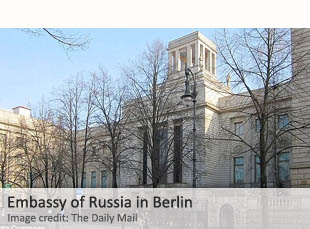
Embassy of Russia in BerlinBy JOSEPH FITSANAKIS | intelNews.org
Russian espionage activity in Germany has reached levels not seen since the days of the Cold War, according to senior counterintelligence officials in Berlin. An article published in weekly newspaper Die Welt am Sonntag on Sunday said Russian intelligence-gathering activities in the German capital center on infiltrating German political institutions and corporations. The Berlin-based publication said Russian spies typically seek to gain “intimate knowledge” of German energy policy as well as corporate practices. Another area of interest for Russian intelligence concerns Germany’s activities in the European Union and the North Atlantic Treaty Organization. Citing Hans-Georg Maassen, Director of the Office for the Protection of the Constitution (BfV —Germany’s primary counterintelligence agency), Die Welt said that no foreign intelligence service is more active on German soil than Russia’s SVR —one of the KGB’s successor agencies. Most Russian intelligence officers “pose as embassy workers”, said the paper, adding that the BfV believes up to a third of all Russian diplomats stationed at the German capital have a “background in intelligence gathering”. According to Burkhard Even, who directs the BfV’s counterintelligence operations, the primary task of Russian intelligence operatives in Germany is to “closely analyze individuals who could be of interest” to Moscow. Those targeted —usually key staffers at the Bundestag (Germany’s federal parliament) or major German companies— are then systematically accosted by Russian ‘diplomats’. The latter often ask to take them out to lunch or dinner, said Maaßen, and will often pick up the bill. Read more of this post

British spy chiefs ‘warn against’ Western military action in Ukraine

Map of UkraineBy IAN ALLEN | intelNews.org
The heads of British intelligence agencies are said to have advised London that interfering militarily in Ukraine would likely prompt a violent Russian response. The Sunday People said last weekend that Whitehall has been advised a Western military interference in Ukraine would “risk spiraling into an all-out war with Russia”. The Labour-supporting paper, which is published by the Trinity Mirror group, claimed that the head of MI6, Sir John Sawers, is understood to have told British Prime Minister David Cameron that the Russian government “will not stand idly by” if Western troops enter Western Ukraine, ostensibly to prevent westward military advances by Russian forces. One “senior source” told The People that the message delivered to Whitehall was that “it’s not worth starting World War Three over Ukraine”. The briefing appears to rest on intelligence acquired from sources in Russia, as well as by MI6 operatives on the ground in eastern Ukraine, which, according to the paper, “have been moving around [eastern Ukraine] covertly, monitoring border crossing points and towns where Russian support is strongest”. Meanwhile on Monday the United States Department of State distributed an 11-page document with photographs alleging that Russian Spetsnaz (special purpose forces) troops are among the occupiers of government buildings in eastern Ukraine. The same document was distributed last week by Ukrainian officials at a meeting of the Organization for Security and Co-operation in Europe. Early on Tuesday, US Vice President Joe Biden, who is visiting Ukrainian capital Kiev, pledged $50 million to help the country’s government carry out unspecified “political and economic reforms”. About a fifth of that amount has been earmarked to help fund Ukraine’s presidential election in late May of this year. Read more of this post

CIA operative who defected to Cuba resurfaces in British film

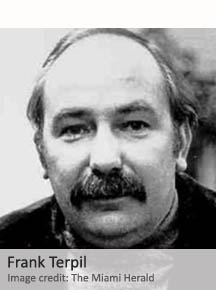
Frank TerpilBy IAN ALLEN | intelNews.org
An operative of the United States Central Intelligence Agency, who defected to Cuba in 1981 to avoid charges of criminal conspiracy, has reemerged in a British documentary film about the late Libyan dictator Muammar al-Gaddafi. Frank Terpil, 74, resigned from the CIA in 1970, allegedly after he was caught running a pyramid scheme in India, where he had been posted by the CIA. Soon after his forced resignation from the Agency, US federal prosecutors leveled criminal charges on Terpil and his business partner. The former CIA operative was also charged with conspiracy to commit murder, after it was found that he had helped facilitate the illegal transfer of over 20 tons of plastic explosives to the government of Libya. Terpil managed to leave the US and reappeared in Lebanon in 1980, shortly before a court in New York sentenced him in absentia to five decades in prison for conspiring to smuggle 10,000 submachine guns to African warlords, including Uganda’s dictator Idi Amin. As agents of various countries started to zero in on Terpil’s Lebanon hideout, he disappeared again and resurfaced in 1981 in Havana, Cuba. Shortly afterwards, Cuba’s General Intelligence Directorate hired him as an operative under the operational alias CURIEL. Since that time, Terpil has been repeatedly mentioned as having played a part in Cuban intelligence operations around the world, but has rarely given interviews. He resurfaced again this month, however, in a documentary entitled “Mad Dog: Inside the Secret World of Muammar Gaddafi”. The film was made by British company Fresh One Productions on behalf of Showtime, an American premium cable and satellite television network. The film’s co-producer, Michael Chrisman, told news agencies that Terpil was interviewed “at his home” in Cuban capital Havana, where he apparently still lives, along with his “much younger” Cuban girlfriend. Read more of this post

Pilot program gives Syrian rebels advanced Western weaponry

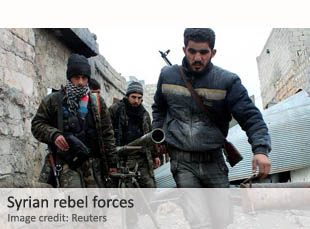
Syrian rebelsBy JOSEPH FITSANAKIS | intelNews.org
A pilot program operated by American and Saudi intelligence services has allegedly supplied Syrian rebel groups with sophisticated Western weaponry for the first time. Last weekend, The Wall Street Journal cited “people briefed on the effort” as stating that “a small number” of advanced American antitank missiles have been offered to Syrian rebel groups. The move is reportedly part of a new clandestine program, which, if successful, could open the door to “larger flows” of sophisticated Western-made weaponry in the hands of Syrian rebels. The paper said that Washington made the decision to give the weapons to the rebels following the collapse of the Western-backed peace talks early this year, coupled by the apparent military victories of Syrian government forces on the ground in the embattled Middle Eastern country. The effort is apparently part of a “small, tailored program”, which The Journal says is coordinated by American and Saudi intelligence services, aimed at “testing the waters” in Syria. Specifically, Washington and Riyadh are trying to discern whether these advanced weapons will fall into the hands of some of Islamist-inspired rebel groups on the ground, some of which have strong links with al-Qaeda. According to the paper, American and Saudi intelligence operatives have funneled “about a dozen” BCM-71 TOW armor piercing antitank systems to at least one rebel group on the ground. The group, Harakat Hazm, emerged earlier this year through the union of several small secular rebel groups in northern Syria. One weapons expert told The Journal that the antitank systems are equipped with a “complex, fingerprint-keyed security device” that should hopefully help limit the number of individuals that can fire the weapons. The article adds that US and Saudi intelligence services have entered a period of closer collaboration aimed at increasing material support for the Syrian rebels. Read more of this post

Saudi Arabia replaces spy chief who failed to deliver on Syria

Prince Bandar bin SultanBy JOSEPH FITSANAKIS | intelNews.org
Saudi Arabia has replaced its intelligence chief, who is widely seen as the architect of the kingdom’s interventionist policy on the Syrian civil war. The government-owned Saudi Press Agency announced on Tuesday that prince Bandar bin Sultan had been “relieved of his post at his own request”. Bandar was born in 1946 to a concubine of crown prince Sultan bin Abdulaziz, 12th son of Saudi monarch King Abdulaziz. In 1983, Bandar was appointed ambassador to the United States, a post he held until 2005. He developed numerous connections in Washington and rose to become a leading operator in Middle East affairs, enjoying to this day very close personal ties with Presidents George H.W. Bush and George W. Bush. In 2012 he was appointed director of the Saudi Intelligence Agency, the country’s primary intelligence organization. Since that time, he has been the primary planner of Riyadh’s hawkish policy on the Syrian civil war, which has been to openly support the rebel groups fighting to oust the government of Syrian President Bashar al-Assad. Saudi Arabia began supplying weapons, cash and intelligence to the Syrian rebels as soon as Bandar took control of the country’s intelligence apparatus. But his once close relations with Washington went sour last year, when he described US President Barack Obama’s refusal to launch military strikes on Syria as a “major shift” in American Middle East policy. He also angered the US by criticizing it’s rapprochement with the Islamic Republic of Iran, which is Riyadh’s major regional adversary. Perhaps most important of all, Bandar appears to have underestimated the strength of the al-Assad administration and over-confidently advising King Abdullah in 2012 that the Syrian government’s days were numbered. The stalemate in the Syrian civil war seems to have frustrated the Saudi government, which began to gradually distancing itself from Bandar’s musings since January. Read more of this post

News you may have missed #876 (analysis edition)

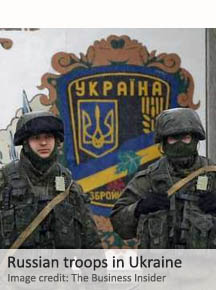
Russian troops in UkraineBy IAN ALLEN | intelNews.org
►►Why did Obama not bomb Syria? In 2011 Barack Obama led an allied military intervention in Libya. Last August, after the sarin attack in Syrian capital Damascus, he was ready to launch an allied air strike to punish the Syrian government for allegedly crossing the ‘red line’ he had set in 2012 on the use of chemical weapons.​ But with less than two days to go before the planned strike, he announced that he would seek congressional approval for the intervention. The strike was later postponed. Why did Obama relent on Syria when he was not shy about rushing into Libya? Award-winning investigative reporter Seymour Hersh argues that the answer lies in “a clash between those in the Obama administration who were committed to enforcing the red line, and military leaders who thought that going to war was both unjustified and potentially disastrous”.
►►What is the role of the FSB in the Ukrainian crisis? On April 4, the Ukrainian Foreign Ministry sent a note to Moscow demanding to know why FSB Colonel General Sergei Beseda visited Kiev in February. The very next day Russian news agency InterFax cited a source in Russian intelligence confirming that visit. Beseda heads the FSB Fifth Service’s Operational Information Department, which is responsible for conducting intelligence activities focusing on the former Soviet republics. Agentura.ru intelligence analyst Andrei Soldatov says that the answer as to why Beseda was in Kiev could be key to understanding the role of Russia’s intelligence agencies in the current crisis and to the Kremlin’s entire strategy in Ukraine.
►►What would a US-Russia war look like? The chances that the US and Russia will clash militarily over Moscow’s invasion of Ukraine are very, very slim. But, says The Week’s Peter Weber, if we learned anything from World War I, it’s that huge, bloody conflicts can start with tiny skirmishes, especially in Eastern Europe. So what would a US-Russia war look like? The US is much wealthier than Russia and spends a lot more on its military. That doesn’t mean a war would be easy for the US to win, though, or even guarantee a victory. As Napoleon and Hitler learned the hard way, Russia will sacrifice a lot to win its wars, especially on its home turf.

White House confirms CIA Director visited Ukraine

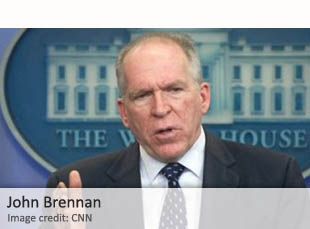
John BrennanBy JOSEPH FITSANAKIS | intelNews.org
White House officials has confirmed that the director of the Central Intelligence Agency visited Ukraine over the weekend, following reports in the Russian media. On Sunday, Moscow urged Washington to respond to allegations in the Russian press that CIA Director John Brennan had made an incognito visit to Ukrainian capital Kiev. The reports alleged that Brennan, who assumed the directorship of the CIA a year ago, traveled to Ukraine on official business under a false identity in order to avoid attention. Russian media further alleged that the CIA head met with a host of Ukrainian intelligence and security officials and advised them on how to respond to the ongoing crisis in eastern Ukraine. Initially, Washington denied comment on the allegations. But early on Monday White House Press Secretary Jay Carney told reporters that Brennan had indeed traveled to Ukraine over the weekend. He said that the White House normally declines comment on the whereabouts of the CIA Director. However, “given the extraordinary circumstances” in the case of Ukraine, he said he was willing to confirm that Brennan was in Kiev over the weekend “as part of a trip to Europe”. He went on to state that he hoped the official confirmation of Brennan’s trip by the White House would suffice to discredit the “false claims being leveled by the Russians at the CIA”. Carney added that there was nothing inherently suspicious about a CIA Director’s trip to a foreign country. He argued that “senior-level visits of intelligence officials [abroad] are a standard means of fostering mutually beneficial security cooperation” and that such visits —some of which have been to Russia— go back “to the beginnings of the post-Cold War era”. Read more of this post

More documents emerge on CIA effort to salvage Soviet submarine

Project AZORIANBy IAN ALLEN | intelNews.org
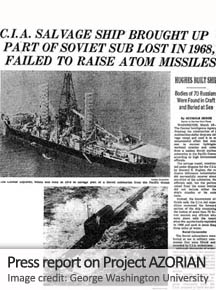
New documents have emerged about a massive effort by the United States Central Intelligence Agency to recover a sunken Soviet nuclear submarine in the 1970s. This blog has written before about Project AZORIAN, a 1974 attempt to recover a Soviet submarine in 5,200 meters of water. The initiative cost the CIA over $800 million, which translates to something like $3 billion in today’s prices. It centered on an effort to salvage K-129, a Soviet Golf II class submarine that had suffered an internal explosion while on a routine patrol mission in the Pacific Ocean, in 1968. The explosion caused the vessel to sink along with the three nuclear ballistic missiles it was carrying and nearly 100 crew members, all of whom died in the incident. The Soviets initiated an immediate frantic effort to recover the vessel but gave up after two months, unable to bring it to the surface. After the Soviets abandoned the site, a number of CIA scientists proposed to undertake an American effort to recover the sunken submarine. This, they suggested, would allow Washington to study the design features of Soviet nuclear warheads, as well as obtain cryptographic hardware that could prove useful in deciphering Soviet naval codes. This prompted the launch of Project AZORIAN, which commenced in 1974, once the Agency secured the necessary funds. As we have indicated before, the recovery team nearly caused a nuclear explosion when the submarine split while being raised, and its body hit the ocean floor. The CIA prepared to enter a new phase of the project in 1975, aimed at launching a second attempt to raise the sunken vessel. But the attempt was cancelled when vague snippets of information about the project were leaked to the press. Nothing more emerged until 2010, when the CIA aired a heavily redacted article about the project, which had originally appeared in the 1980s in Studies in Intelligence, the Agency’s in-house publication. Now, however, intelligence historians are able to rely on 200 pages of mostly fresh information on Project AZORIAN, released under the US Department of State’s Foreign Relations of the United States (FRUS) program. Read more of this post

United States allegedly not sharing Russia intelligence with Ukraine

Russian troops in UkraineBy JOSEPH FITSANAKIS | intelNews.org
The United States is not sharing with the Ukrainian government detailed intelligence or Russia’s military buildup, according to American lawmakers. Moscow is reportedly deploying large numbers of troops along Russia’s border with Ukraine, while US intelligence agencies have allegedly detected the presence of Russian military supply lines that would be required for a land invasion of Ukraine. The US administration of President Barack Obama has publicly expressed solidarity with the Ukrainian government and has warned the Kremlin that any military incursions into eastern Ukraine would constitute a grave “historical error” that would bear serious consequences for the Russian leadership. But according to American news reporting website The Daily Beast, Washington has instructed the American military and intelligence community to refrain from sharing detailed intelligence on Russia’s military buildup with Ukrainian authorities. Details being kept from Ukrainian eyes include “imagery, intercepts and analysis” that pinpoint the exact location of Russian troops along the Ukrainian border. They also include intelligence predictions of how Russian units would deploy during a possible invasion of Ukraine. The Daily Beast, which is owned by Newsweek, cited “US officials and members of Congress” who were briefed by intelligence personnel earlier this week on the situation in Ukraine. They told the news website that senior American military officials have been instructed “to refrain from briefing their Ukrainian counterparts in detail” about information on Russian troop movements held by American intelligence agencies. The Daily Beast quotes Republican Representative Michael Turner, chair of a subcommittee of the House Armed Services Committee that oversees America’s tactical air and land force strength. Turner told the website that he is “not confident” that Washington is “sharing any of that kind of [detailed military] information” with Kiev. Read more of this post

CEO of private bank shot dead in Liechtenstein

Bank FrickBy JOSEPH FITSANAKIS | intelNews.org
The chief executive officer of a private bank in the alpine principality of Liechtenstein has been shot dead at the bank’s headquarters, according to reports. Liechtenstein police said Monday that a 48-year-old bank executive had been shot dead inside the underground car park of the bank’s headquarters. The report said the fatal shooting took place in the village of Balzers, located near Liechtenstein’s border with Switzerland. The police statement did not name the bank or the executive. Later on Monday, however, Swiss news outlet Schweizer Radio und Fernsehen (The Voice of Switzerland) identified the shooting victim as Jürgen Frick, CEO of Bank Frick. Headquartered in Balzers, the family-run bank was founded in 1998 as a private financial establishment. In addition to its Liechtenstein office, Bank Frick also maintains a branch in London’s Mayfair district, in the United Kingdom. Liechtenstein police said on Monday it was looking for a suspected gunman, identified as Jürgen Hermann, a former fund manager, who was spotted in the bank’s surveillance cameras around the time of the shooting. Hermann, who lives in Liechtenstein’s Mauren municipality, was also seen fleeing the scene of the crime in Smart car. Swiss media later reported that Hermann describes himself on his personal website as “the Robin Hood of Liechtenstein” and as the tax-haven’s “public enemy No. 1”. German media said Hermann has been involved in longstanding feuds with the government of Liechtenstein over “financial issues”. In his website, the suspected shooter has uploaded statements demanding that the government of Liechtenstein returns to him “investments worth millions”, which were allegedly “destroyed by the financial mafia of Liechtenstein”. The principality’s police say they found Hermann’s driver license and passport thrown by the side of a road near the river Rhine, and suspect that Hermann might have killed himself. Read more of this post

Analysis: Time for Western spy agencies to refocus on Russia?

Pro-Russian celebrations in CrimeaBy JOSEPH FITSANAKIS | intelNews.org
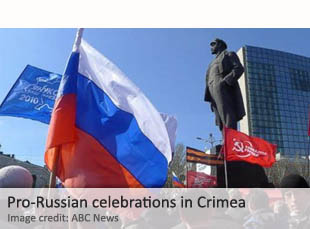
During the Cold War, Western intelligence agencies relied on legions of Soviet specialists to make sense of the Kremlin’s policy maneuvers. The American Intelligence Community in particular was almost exclusively engaged in collecting information on the USSR. To the extent that American intelligence collectors were active in countries other than the USSR, it was primarily in order to monitor Soviet activity. The implosion of the Soviet Union brought about a relaxation of Western intelligence collection efforts against Russian targets, a process that was further fueled by the 9/11 attacks. The latter turned the attention of Western intelligence collectors on Islamist-inspired militancy in the Middle East and other predominantly Muslim regions. The legions of Western Sovietologists and Russia specialists saw their careers stagnate, as counterterrorism became the predominant buzzword in intelligence circles. But the recent invasion and annexation of Crimea by Russia is prompting a reexamination of intelligence collection priorities among Western spy agencies. A recent analysis piece by the Reuters news agency suggests that some Western intelligence planners view the events in Crimea as “demonstrating a dramatic need for renewed focus” on Russia. There is concern among intelligence specialists, says Reuters, that no signals chatter was detected in Russia in the weeks prior to the invasion of Crimea to indicate an imminent Russian takeover of Ukrainian territory. This alleged weakness is coupled by concerns among some foreign-policy planners that the West is potentially entering “a new era of […] confrontation with Moscow”, argues Reuters. If this is true, then Western intelligence agencies will need to replenish their level of expertise on Russia, which, according to some intelligence insiders, “has diminished drastically” in the last decade. Read more of this post

News you may have missed #875 (CIA edition)

Boris PasternakBy IAN ALLEN | intelNews.org
►►Ex-CIA head criticizes Pollard release rumors. General Michael Hayden, the former Director of the CIA, said Sunday that he doesn’t think releasing Jonathan Pollard to save the Israeli-Palestinian peace talks is a good idea. Hayden, a Bush administration appointee, told Fox News Sunday that “it’s almost a sign of desperation that you would throw this into the pot in order to keep the Israelis talking with the Palestinians”.
►►CIA official dies in apparent suicide. An unnamed senior CIA official has died in an apparent suicide this week from injuries sustained after jumping off a building in northern Virginia. A source close to the agency said the man who died was a middle manager and the incident occurred after the man jumped from the fifth floor a building in Fairfax County. CIA spokesman Christopher White confirmed the death and said the incident did not take place at CIA headquarters in McLean, Va.
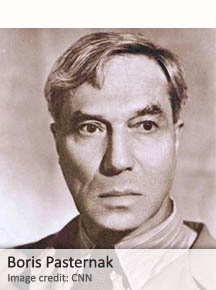
►►How the CIA turned Doctor Zhivago into a Cold War weapon. Newly disclosed documents indicate that the operation to publish Boris Pasternak’s Doctor Zhivago in several Eastern European languages was run by the CIA’s Soviet Russia Division, monitored by CIA director Allen Dulles and sanctioned by President Dwight Eisenhower’s Operations Coordinating Board, which reported to the National Security Council at the White House. The board, which oversaw covert activities, gave the CIA exclusive control over the novel’s “exploitation”. The “hand of the United States government” was “not to be shown in any manner”, according to CIA records. IntelNews has reported previously on allegations that the CIA may have influenced teh Swedish Academy’s decision to award the 1958 Nobel Prize for Literature to Pasternak.

US created fake social network firm to foster dissent in Cuba

Cell phone user in CubaBy JOSEPH FITSANAKIS | intelNews.org
A United States government agency secretly created a bogus social networking platform in order to foment political unrest in Cuba, according to a report by the Associated Press. Over 40,000 subscribers regularly used the ZunZuneo social networking service that began operating in the communist Caribbean island in 2009. The service, dubbed “Cuba’s Twitter” was based on SMS messages sent via mobile telephone subscribers. Its rapid success was attributed to the strict controls over Internet usage that are in place in Cuba, as well as the population’s relative lack of access to networked computers. But The Associated Press revealed on Thursday that ZunZuneo was in fact a secret program devised by the US Agency for International Development (USAID), which is a federal body operating under the Department of State. The news agency reported that the US government was able to conceal its role in building and sustaining the network by operating through a complex system of front companies set up in the Cayman Islands and in Spain. The latter were used to register ZunZuneo’s parent company and to pay the company’s bills, as well as to route millions of subscribers’ text messages without the involvement of servers based on US soil. The report stated that ZunZuneo’s corporate website even carried “bogus advertisements” strategically placed to give the site a realistic corporate look. It is worth noting that the social networking service suddenly stopped working in 2012, without providing a warning or an explanation to its tens of thousands of subscribers. But the Associated Press said the reason the service was terminated was that the US taxpayer’s money used to sustain the program simply run out. The news agency argued in its report that the program was covert in nature and should have been subjected to Presidential authorization and Congressional scrutiny. Read more of this post

Senate report: CIA misled US government about torture

CIA headquartersBy JOSEPH FITSANAKIS | intelNews.org
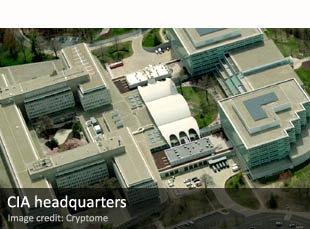
A United States Senate report on the use of torture to extract intelligence from terrorism detainees accuses the Central Intelligence Agency of severely overstating the usefulness of the information gained. Details of the long-awaited report, produced after a four-year investigation by the Senate Select Committee on Intelligence, have been leaked to The Washington Post. The paper reports that the probe is a damning indictment on the CIA’s ‘enhanced interrogation’ program, implemented during the administration of President George W. Bush. The report contains over 20 different conclusions. But the most critical are that the CIA misled the government and the American public by: (a) understating the severity of the interrogation methods used; and (b) overstating the actionable intelligence extracted through torture. The Post cites unnamed “US officials” who have reviewed the Senate report as stating that the CIA’s ‘enhanced interrogation’ program “yielded little, if any, significant intelligence”. According to one source, in some cases the Agency proceeded to waterboard terrorism detainees after recognizing that all actionable intelligence had already been extracted from them. In one instance, says the paper, nearly all valuable intelligence gained from al-Qaeda operative Abu Zubaida was extracted by CIA interrogators before he was subjected to waterboarding nearly 100 times. Notably, the Senate report also highlights deep divisions within the CIA, as many units protested the practices employed under the Agency’s interrogation program. But The Post also quotes “current and former officials” who are critical of the Senate report for containing “factual errors” and “misguided conclusions”. One CIA veteran told the paper that the 6,300-page document reflected “Federal Bureau of Investigation biases”, and that CIA officials are critical of the fact that one of the report’s main authors is a former FBI analyst.
Read more of this post