North Korean hackers behind ‘sophisticated’ effort to elicit views of experts
December 13, 2022 2 Comments
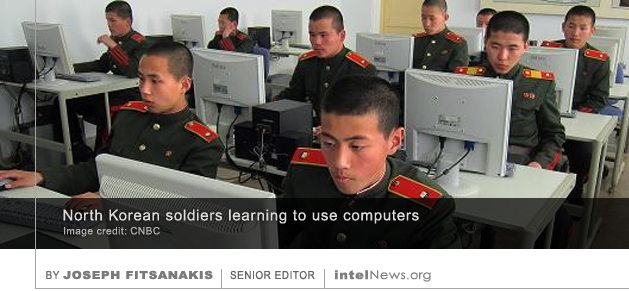 A NOTORIOUS NORTH KOREAN hacker group is believed to be behind a “sophisticated” effort to elicit the views of international experts on issues that are of concern to Pyongyang, according to an investigation by Reuters. The news agency said its reporters had managed to uncover this previously unreported campaign with the help of cybersecurity experts and five individuals who had been targeted by the North Korean hackers.
The North Korean hacker group that is alleged to be behind this elicitation campaign is known among cybersecurity experts as Thallium, or Kimsuky. It has been active since at least 2012 and has orchestrated intensive “spear-phishing” attacks against international targets. Similarly to other hacker groups that have been active in the past decade, Thallium’s operations have centered on tricking its targets to download malware on their personal electronic devices, or to share sensitive information, including passwords.
Lately, however, the group has changed its tactics in striking ways, according to Reuters. Instead of trying to steal secrets, it has been involved in a campaign aimed at eliciting the views of Western experts on North Korean affairs. It has been doing so by directly contacting these experts with requests to review policy papers, or by commissioning opinion pieces on various aspects of North Korean politics, economy and society. The requests are camouflaged to appear as originating from respected think-tanks, universities or consultancy firms.
Since January of this year, when the first experts began to be contacted, “multiple” individuals have fallen victim to this elicitation campaign, according to experts at the Microsoft Threat Intelligence Center (MSTIC). They include policy experts working for Western governments, think-tank and university researchers, as well as human-rights campaigners. They have all fallen victim to “sophisticated” requests that use polished language and appear legitimate, according to Reuters.
In most cases, the elicitation emails promise a payment of $300.00 in return for reviewing a manuscript, authoring a short opinion piece, or recommending another expert who may be able to provide these services. However, none of the individuals who proceeded to provide these services have ever received any funds. Cybersecurity experts, who reviewed the elicitation campaign, told Reuters that the hackers never intended to provide any payments to targets.
► Author: Joseph Fitsanakis | Date: 13 August 2022 | Permalink
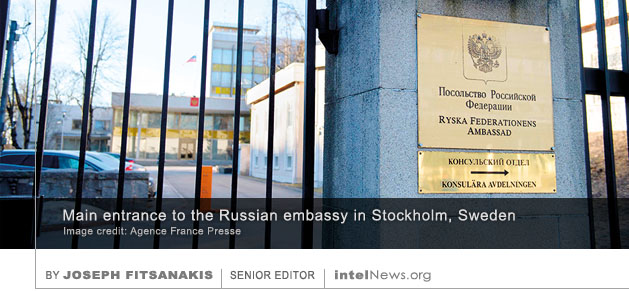 NUMEROUS UNANSWERED QUESTIONS SURROUND the arrest of a Russian married couple in Sweden, on charges of espionage. The arrest took place in dramatic fashion in the early hours of Tuesday, November 22.
  ISRAELI AUTHORITIES HAVE STEPPED up measures to protect its senior intelligence and security figures, over concerns they may be targeted by agents of the Iranian state, according to news reports. The news comes amidst widespread concerns that the ongoing shadow conflict between Israel and Iran is escalating in the shadow of the Russo-Ukrainian war.
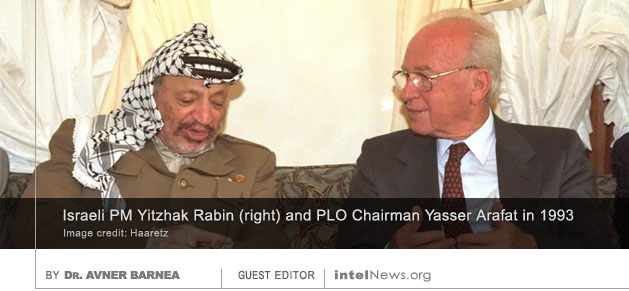 LAST WEEK, THE CHAIRMAN of the Israeli Religious Zionist Party, Bezalel Smotrich, who will soon be appointed as a cabinet minister, alleged that the Israel Security Agency (ISA) encouraged the killer of the late Israeli Prime Minister, Yitzhak Rabin. Smotrich’s allegation shocked many Israelis, because of the unfortunate timing —it was uttered close to the annual Remembrance Day for Prime Minister Rabin, who was assassinated by radical rightwing activist Yigal Amir 27 years ago. But also because of the unacceptable content, which echoes conspiracy theories that have accompanied Rabin’s assassination for many years. To counter these conspiracy theories, it is fitting to discuss the failure to defend Rabin that did occur under the responsibility of the ISA.
 ISA to infiltrate extreme rightwing groups. The Committee did not ask: could the ISA’s intelligence have prevented the murder?
 FEMALE TARGETS OF CONSPIRACY theories propagated by QAnon adherents face up to 10 times more online harassment and abuse than male targets, a behavioral study of pro-QAnon online users has found. QAnon refers to an American-rooted conspiracy theory that views former United States President Donald Trump as a central figure in a behind-the-scenes battle against a sinister cabal of enemies, known as the “deep state”. According to QAnon adherents, “deep state” elites (politicians, entertainment figures and other celebrities) consist of Satan-worshiping cannibals who traffic children for sex. QAnon adherents also believe that these elites will be routed during “The Storm”, a final reckoning between Trump and the “deep state”, which will result in the arrest and physical extermination of all elites.
 AUTHORITIES IN SWEDEN HAVE charged two brothers, one of whom worked in a highly secretive Swedish intelligence unit, with spying for Russian military intelligence for a decade, according to news reports. The charges resulted from a six-year investigation led by the Swedish Security Service (SAPO), which is the country’s counterintelligence agency. SAPO reportedly launched the probe in 2017, based on suspicions that it harbored a spy in its personnel ranks.
 IT IS DIFFICULT TO argue against the widely shared view that clandestine human intelligence (HUMINT) is replete with ethical dilemmas. These are inherent in the process of gathering intelligence via the use of human sources or covert agents. Yet it is possible —indeed desirable— for intelligence agencies to implement well-regulated ethical approaches to clandestine HUMINT, according to Dr. Stephan Lau, a junior professor of psychology and member of the Faculty of Intelligence at the Federal University of Administrative Sciences in Berlin, Germany.
 AN ALLEGED RUSSIAN DEEP-cover intelligence operative, who was arrested by Norwegian police last week, spent years building his fake cover in Canada, while studying there as a Brazilian citizen, according to reports. Norway’s Police Security Service (PST)
  REPORTS FROM KUALA LUMPUR SUGGEST that Malaysian agents operating in the service of Israeli intelligence carried out the kidnapping of a Palestinian engineer, Omar al-Balbaisi, on September 28.
  As intelNews
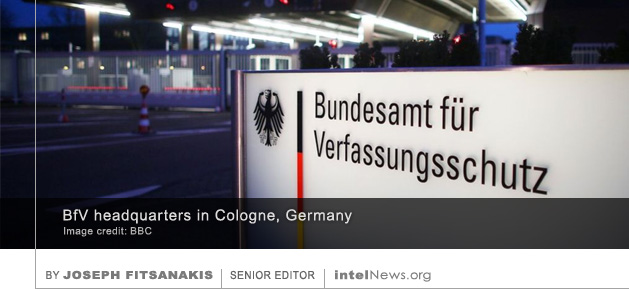 LAST SUMMER, GERMAN EMBASSY staff in Russia issued an entry visa to a Russian national, despite warnings by at least two European security agencies that he was a known intelligence officer, according to a report. The incident has fueled persistent allegations that Berlin’s counterintelligence posture against Russia is ineffective.
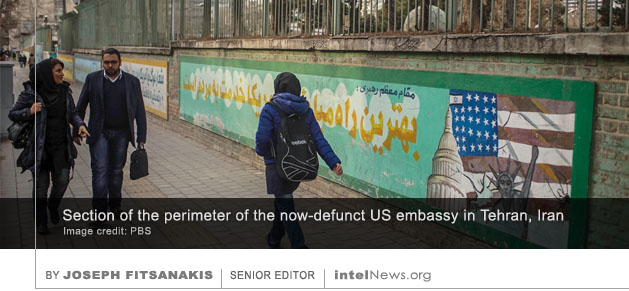 A YEAR-LONG INVESTIGATION by the Reuters news agency attempts to shed light on the alleged arrests of more than a dozen Iranian spies, who claim to have worked for the United States Central Intelligence Agency. Periodically Iran claims to have captured members of alleged CIA spy rings operating across its territory. For instance, in 2019 Iran’s Ministry of Intelligence
  MUCH HAS BEEN WRITTEN about the wartime intelligence exploits of the Allies against Japan. Such exploits range from the United States’ success in breaking the Japanese JN-25 naval code, to the
  Attachés, and Intelligence Failures: The Imperial Japanese Navy’s Efforts to Establish Espionage Networks in the United States Before Pearl Harbor”.






 intelNews.org
Qatargate corruption scandal probe widens to include Moroccan spy services
January 2, 2023 by Joseph Fitsanakis 1 Comment
On December 9 and 10, Belgian and Italian police arrested a dozen politicians, European Parliament aides, civil servants, lobbyists, and members of their families. Over €2 million in cash and other assets has since been seized by authorities, as a Europe-wide investigation continues. Those arrested included Eva Kaili, vice president of the European Parliament, which is among the core legislative bodies of the European Union. Kaili and her co-conspirators are accused of selling their ability to influence European Union policies on Qatar, in exchange for cash and other perks. Although the government of Qatar vehemently denies having a role in the scandal, it is widely believed that operatives linked to Qatari authorities facilitated the bribes.
During the past week, however, several reports in European news outlets have been alleging that, in addition to Qatar, the Kingdom of Morocco also appears to have been involved in parallel efforts to buy influence within the European Parliament. Early clues of this development surfaced during the week of December 12 in the Belgian broadsheet Le Soir and the Italian daily La Republica. The reports focused on an intelligence operative codenamed M118, who allegedly worked for the General Directorate for Studies and Documentation (DGED), the foreign spy service of Morocco.
Last week, a new report in the German newsmagazine Der Spiegel supported the theory that M118 is Mohamed Belahrech. Belahrech is allegedly an identified DGED operative, who is believed to have recruited two members of the European Parliament from Italy, Antonio Panzeri and Andrea Cozzolino, as well as Francesco Giorgi, Kaili’s Italian partner. Giorgi, a key figure in Qatargate, remains in custody. Der Spiegel also claims that Abderrahim Atmun, Morocco’s ambassador to Poland, led the Moroccan government’s efforts to recruit the three Italians. According to the report, the three were in direct communication with Mohamed Yassine Mansouri, director general of the DGED.
► Author: Joseph Fitsanakis | Date: 02 January 2023 | Permalink
Filed under Expert news and commentary on intelligence, espionage, spies and spying Tagged with Belgium, corruption, covert operations, DGED (Morocco), European Parliament, European Union, influence operations, Morocco, News, Qatar