Controversial French former spy chief found dead in Paris
June 6, 2013 5 Comments
 By JOSEPH FITSANAKIS | intelNews.org |
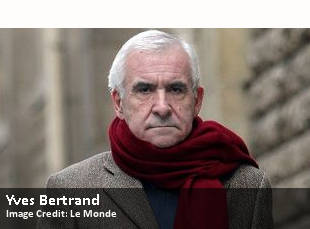
The retired director of a now-defunct French intelligence agency, who was involved in several politically charged court cases in recent years, has been found dead in his Paris apartment. From 1992 to 2004, Yves Bertrand, headed the Direction Centrale des Renseignements Généraux (known widely as RG), the domestic intelligence service of the French police. Bertrand, who once described himself as “a minesweeper for the republic”, was a reclusive figure that zealously guarded his privacy and avoided any contact with the French media. In 2007, however, he was thrust into the public spotlight after he was involved in the so-called Clearstream Affair. The controversy centered on a list of names of European government officials who had allegedly received bribes in return for authorizing weapons deals with Taiwan. French investigators searched Bertrand’s Paris apartment and confiscated nearly two dozen volumes of his personal notebooks, in hopes of uncovering inside information linking the Clearstream affair with leading French politicians, including conservative frontrunner Nicolas Sarkozy. In 2008, numerous excerpts from Bertrand’s confiscated diaries found their way into the French press. They included embarrassing revelations about the lives of many French public figures, including politicians. Read more of this post









 By IAN ALLEN | intelNews.org |










News you may have missed #840
June 7, 2013 by Ian Allen 3 Comments
►►S. Korea prosecutors might seek ex-spy chief’s arrest. Prosecutors said Monday they will decide sometime this week whether to seek an arrest warrant against Won Sei-hoon, who headed South Korea’s National Intelligence Service (NIS) for about four years until early this year. He is suspected of ordering agents to post a slew of politically sensitive comments on the Internet in order to sway public opinion in favor of the ruling party candidate prior to the December 19 national election. Won, who headed the NIS under former President Lee Myung-bak, has been barred from leaving the country pending investigation.
►►CIA self-described whistleblower writes about life in prison. In 2012, former CIA officer John Kiriakou pleaded guilty to violating the Intelligence Identities Protection Act. In January of this year, he was sentenced to 30 months in a low security prison in Loretto, Pennsylvania. In a letter released by his lawyer, Kiriakou describes his day-to-day life behind bars, from his own tiny cell to an almost anthropological study of the lunchroom and the relatively rare prison fights.
►►Comment: End the spy budget secrecy in Israel. Since the establishment of the Israeli state, the security establishment has enjoyed confidentiality with regard to the details of its budget, justified by the need to keep secrets from enemy intelligence services. This lack of transparency has impaired public scrutiny of security expenditure, which represents a large chunk of the Israeli economy. When the watchful eye is distant, the temptation is great to inflate job slots, exaggerate salary increments and hike up pension conditions.
Filed under Expert news and commentary on intelligence, espionage, spies and spying Tagged with 0 CIA self-described whistleblower writes about life in prison, 0 Comment: End the spy budget secrecy in Israel, 0 S. Korea prosecutors might seek ex-spy chief's arrest, CIA, corruption, government secrecy, intelligence funding, Israel, John Kiriakou, National Intelligence Service (South Korea), News, news you may have missed, South Korea, United States, US Intelligence Identities Protection Act, whistleblowing, Won Sei-hoon