Would UK, USA, share intel with independent Scottish spy agencies?
January 29, 2013 3 Comments
 By JOSEPH FITSANAKIS | intelNews.org |
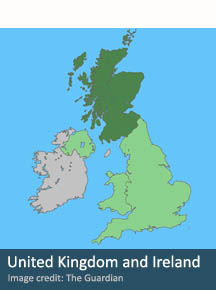
Scotland plans to set up its own security and intelligence agencies if its people vote in favor of independence from the United Kingdom in 2014, according to policy planners. But critics contend that it might be some time before Scotland’s spy organizations are trusted by their sister intelligence agencies in Britain and the United States. The Scottish National Party (SNP) which won an absolute majority in the Scottish Parliament in the 2011 election, has put forward a plan for a referendum proposing Scotland’s full independence from the UK, to be held in late 2014. On Monday, the Scottish Parliament’s Committee on Foreign Affairs met in Edinburgh to conduct an official inquiry into the possible foreign policy implications of an independent Scotland. Nicola Sturgeon, the SNP’s Deputy Leader and Deputy First Minister of Scotland, told the Committee that an independent Scotland would have to build a domestic intelligence agency to combat security threats such as terrorism, organized crime and cyber attacks. She said the agency would serve the interests of the Scottish people and the Scottish government, but would maintain “very close intelligence sharing with the rest of the UK”. According to Sturgeon, given that Scotland shares “an island with the rest of the UK”, a Scottish domestic security service would inevitably find itself “sharing intelligence and sharing our response to some of these threats”. She also suggested that an independent nation of Scotland would have the option to establish an “external security service” modeled on Britain’s MI6, also known as the Secret Intelligence Service. But Committee members opposed to independence directed heavy criticism against the minister’s plans, arguing that the financial cost of replicating existing UK intelligence and security structures would be colossal. They also warned Sturgeon that Scottish intelligence agencies would have to prove that they were reliable and safe before they struck intelligence-sharing arrangements with British and American organizations. Read more of this post




 By IAN ALLEN | intelNews.org |










Syrian President’s mother said to have ‘defected’
January 30, 2013 by Ian Allen 4 Comments
Arab media reports appeared to confirm yesterday an allegation made last week by a senior American diplomat that the mother of embattled Syrian President Bashar al-Assad had abandoned the country. Speaking to CNN last week, Ambassador Robert Ford, who served as the United States’ envoy to Syria until he was recalled by Washington in 2011, said Anisah Makhlouf al-Assad had escaped to the United Arab Emirates. The 78-year-old widow of late Syrian President Hafez al-Assad, who ruled the country with an iron fist from 1970 until his death in 2000, is a revered figure among government supporters. As the current President’s mother, she is said to exercise significant influence on the Syrian regime’s core decision makers, despite her advanced age. According several reports in Arab media, Anisah has now joined her daughter Bushra al-Assad in the Emirates. Bushra, who is the Syrian President’s oldest sister, escaped with her five children to the Gulf oil state in July 2012, after her husband, Assef Shawkat, Syria’s deputy Minister of Defense, was assassinated by the opposition in Damascus along with two other senior Syrian government officials. In his CNN interview, Ambassador Ford argued that Anisah’s defection showed that, “little by little, the inner core [of the Syrian regime] is weakening” as its members are “flaking off. They themselves know they are losing”, he added. Read more of this post
Filed under Expert news and commentary on intelligence, espionage, spies and spying Tagged with 2011 Syrian uprising, Anisah Makhlouf al-Assad, Anisah Makhluf al-Assad, Bushra al-Assad, defectors, News, Robert Ford, Syria, United Arab Emirates