First interview in 57 years for chief of Germany’s most secretive spy agency
February 19, 2013 5 Comments
 By IAN ALLEN | intelNews.org |
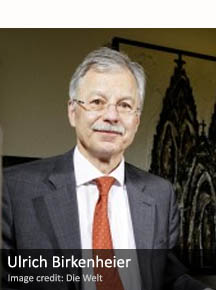
The head of the German military’s counterintelligence service, which is widely seen as the country’s most secretive intelligence organization, has given the first public media interview in the agency’s 57-year history. Most readers of this blog will be aware of the Federal Republic of Germany’s two best-known intelligence agencies: the Federal Office for the Protection of the Constitution (BfV), tasked with domestic intelligence, and the Bundesnachrichtendienst (BND), the country’s primary external intelligence agency. Relatively little is known, however, about the Military Counterintelligence Service (MAD), which has historically been much smaller and quieter than its sister agencies. As part of the Bundeswehr, the German armed forces, the MAD is tasked with conducting counterintelligence and detecting what it terms “anti-constitutional activities” within the German armed forces. It is currently thought to consist of around 1,200 staff located throughout Germany and in at least seven countries around the world, including Kosovo, Afghanistan, and Djibouti. Until recently, the MAD was so secret that its headquarters, located in the west German city of Cologne, bore no sign on the door. For generations, its senior leadership remained unnamed in the public domain. This changed on Monday, when Ulrich Birkenheier became the first Director of MAD to speak publicly in the nearly six decades of the agency’s existence. Birkenheier, who assumed the leadership of MAD in July of 2012, told German newspaper Die Welt that it was time for a “paradigm shift” and that the agency felt the need “to explain [its] task and work to the outside world”. In his interview, Birkenheier explained that members of the German armed forces are routinely targeted by foreign intelligence agencies, while far-right extremist groups are represented in the ranks of the German military. Read more of this post

 This morning I

 By JOSEPH FITSANAKIS | intelNews.org |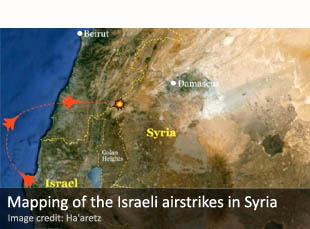









New information emerges on Hezbollah commander’s assassination
February 20, 2013 by Joseph Fitsanakis 2 Comments
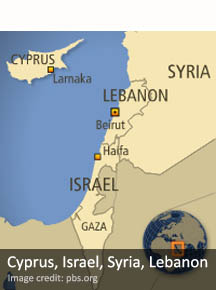
A Lebanese newspaper has published the most detailed account to date of the 2008 assassination of Hezbollah commander Imad Mughniyah. The car explosion that killed Mughniyah in Syrian capital Damascus on February 12, 2008, is widely believed to have been the work of the Mossad, Israel’s foremost covert-action agency. Mughniyah was among the founders of Hezbollah, the Shiite militant group that controls large parts of southern Lebanon. At the time of his assassination, Mughniyah headed the Hezbollah’s security apparatus and was among the organization’s most senior intelligence officials. On Tuesday, Arabic-language newspaper al-Akhbar , which is based in Lebanese capital Beirut and is informally affiliated with Hezbollah, published a detailed article that reads like an unclassified version of the militant group’s internal investigation into Mughniyah’s killing. The article claims that “Hezbollah is absolutely positive that Israel was behind […] the operation from A to Z”. It says that Mughniyah’s assassins “were not Syrian citizens”, but rather entered Syria from abroad and stayed there six weeks while planning and executing the assassination operation. The article also claims that the Mossad recruited a Syrian expatriate, who visited Damascus on a regular basis in order to provide logistical support for the operation. This included renting a villa in the outskirts of Damascus and purchasing at least three vehicles to be used in the operation. Read more of this post
Filed under Expert news and commentary on intelligence, espionage, spies and spying Tagged with assassinations, Damascus (Syria), Hezbollah, Imad Mughniyah, Israel, Kfar Suseh (Syria), Lebanon, Mossad, News, Syria