News you may have missed #713 (analysis edition)
April 12, 2012 2 Comments
 By IAN ALLEN | intelNews.org |
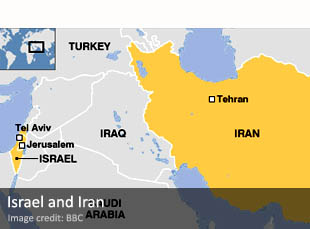
►►Israel wary of changes in the Arab world. For decades, Israel had been hoping for change in the Arab world. Yet now that the region is in upheaval, its not just Israeli citizens who are concerned. The government has shown a preference for walling itself in rather than exploring new opportunities. The Jewish state has tried to integrate itself into the Middle East for decades. Now it is trying to cut the cord between itself and the surrounding region, blocking out the changes in its neighborhood.
►►Melting Arctic may redraw global geopolitical map. If, as many scientists predict, currently inaccessible sea lanes across the top of the world become navigable in the coming decades, they could redraw global trading routes —and perhaps geopolitics— forever. This summer will see more human activity in the Arctic than ever before, with oil giant Shell engaged in major exploration and an expected further rise in fishing, tourism and regional shipping. But that, experts warn, brings with it a rising risk of environmental disaster not to mention criminal activity from illegal fishing to smuggling and terrorism.
►►Why Indian intelligence doesn’t work too well in Pakistan. Sources in the RAW, India’s external agency, say India lacks both political will and the capability to carry out a hit inside Pakistan. “We do not have the mandate to do what Mossad does. Our charter does not include the job of getting [or assassinating] people from other countries. If such political will is there, the agency would be able to do it”, says a senior RAW official. Another former officer, who has spent a considerable time studying these outfits, attributes it to the fundamental difference between India and Pakistan in dealing with espionage. “It takes a great deal of money and time to cultivate sources in foreign soil. We don’t have either in plenty, unlike countries in the West. Pakistan’s ISI is better off in this as the state sponsors terrorism”, he says.









 By IAN ALLEN | intelNews.org |
 By IAN ALLEN | intelNews.org |








Analysis: Biometric passports, iris scanners, worry undercover spooks
April 13, 2012 by Joseph Fitsanakis 2 Comments
False passports are to intelligence operatives what petrol is to automobiles. In the absence of forged travel documentation, intelligence officers working undercover are unable to operate internationally without revealing their identity. This is why, traditionally, intelligence operatives are known to “use and discard false passports like hand wipes”, in the words of one knowledgeable source. But according to a fascinating article by veteran intelligence correspondent Jeff Stein, authored for Wired magazine’s Danger Room blog, “the day of the trench-coated spy easily slipping in and out of countries on false papers multiple times [may be] coming to an end”. The reason is “the electronic curtain [that] is descending all over the world”, most notably the increasing deployment of iris recognition devices and biometric passports at airports and hotels around the world, says Stein. Over the coming decade, iris scanners, which employ mathematical pattern-recognition techniques to identify individuals by their irides, will become increasingly common at international airports. The same applies to biometric passports, namely travel documents with embedded microchips that store a massive amount of personal information. These technologies are ostensibly being introduced in international transport hubs in order to combat transnational terrorism and organized crime. But they are also expected to heavily interfere with the work of undercover intelligence operatives, says Stein, especially as they are being introduced in popular spy routes, in countries such as India, Jordan, United Arab Emirates, as well as in several European Union entry points. He quotes an unnamed “career spook” currently working for the Central Intelligence Agency as a consultant, who explains that an undercover officer’s biometric identity will be forever linked to the passport that he or she first uses to enter these countries. If the officer were to try to enter these countries again, using a different alias, alarm bells will ring: “you can’t show up again under a different name with the same data”, says the CIA consultant. Read more of this post
Filed under Expert news and commentary on intelligence, espionage, spies and spying Tagged with Analysis, biometrics, CIA, forgery, Jeff Stein, non-official-cover, travel documentation